More bloody vampires

Marianne de Pierres is scoping for readers’ (and viewers’) favourite vampires at her blog, while Nicole Adams has assembled a dubious top 14 vampire stories at hers. Good to see Dracula and Nosferatu made the Phlebotomy cut, despite their lack of supplementary cross-media tie-ins that seem to inform the rest of the selection. Nothing like a list to get tongues wagging, eh?

To whit, I’ve already listed my favourite vampire movies, so, riffing off MdP, here’s my pick of the screen vampires:

Bela Lugosi’s Dracula

Max Shreck’s Orlok

Klaus Kinski’s Orlok

Gary Oldman’s Dracula

Christopher Lee’s Dracula

Ingrid Pitt’s Carmilla

Near Dark’s vampire gang

Buffy’s Drusilla (and Spike, and Darla)

Catherine Deneuve’s Miriam

Willem Dafoe’s Shreck

Tom Cruise’s Lestat

Kirsten Dunst’s Claudia

Udo Keir’s Dracula

That’s 15 and quite a mouthful. I wonder if Kiefer Sutherland and David Boreanaz are unjustly omitted? And you know better than to mention Edward here, right?

So what is it about these screen portrayals that makes them stand out for me? Let’s see. Udo’s a maniac, Cruise excelled where no one expected him to. Shreck is impossible to forget and both Kinski and Dafoe paid amazing homage (Kinski in Vampire in Venice was also divine). Lugosi and Lee are likewise iconic. Near Dark is gritty and nihilistic. Dunst, Oldman, Deneuve and Pitt all offer nuances of characterisation you just don’t often get in a screen vampire. Buffy’s bunch are simply damn good fun, each in their own way. If there’s a theme running through these portrayals, it might be one of dealing with immortality – there’s a loneliness to these vampires, an otherness, that strikes deeper than the usual predator of the night depiction. They might be sexy, zany, insane, downright nasty, but all seem to suffer from the common malaise of being more-or-less alone in their timelessness. Maybe that’s part of why their performance lingers long after the credits have ended.

  • I’ll be rabbitting on about the evolution of vampires in literature and screen at the Melbourne Science Fiction Club’s mini-con on May 22. More details when they’re available.
  • The Hurt Locker

    Kathryn Bigelow, the director who gave us splendid vampire movie Near Dark (one of my favourites) and equally enjoyable SF flick Strange Days, really hits the mark with The Hurt Locker.

    I finally caught the Oscar-winning movie last night, and wow.

    The title is certainly apt, with the film following the events that befall a team of bomb-disposal experts in Baghdad with the arrival of a new leader, Will James (Jeremy Renner).

    James is an adrendalin junkie, much to the concern of his new team-mates: after all, when you’re defusing bombs, you’d like a steady hand on the wire-cutters.

    This is no Good Morning Vietnam or Blackhawk Down or, thank God, The Green Berets. There is no singular enemy for the team to overcome, no overarching narrative of right vs wrong, no great moralising: it’s a very personal story about men reacting under the most dire of pressure, and the relationship that forms between them.

    Bigelow has shot this brilliantly in a semi-documentary style that gives it emphasis without playing too many emotional violin strings (and in fact, music is used scarcely and brilliantly).

    The acting is superb (with notable roles for Ralph Fiennes and Guy Pearce, the tension palpable at times, the story unpredictable in its events if not its conclusion. And, like most good war movies, it leaves you asking, why.

    I expect The Hurt Locker (official site and YouTube preview) will rank in the best movies of my year.

    Here’s a sample of the superb music in the film, Khyber Pass by Ministry, played over the closing credits.

    Shudder, er, Shutter Island

    Shutter Island is director Martin Scorsese’s new baby, and I finally caught it, late in the season, after being enticed by its Gothic whodunit trailer.

    The island is an asylum for the violent criminally insane, back in 1954, with the impact of World War II and the Cold War adding undercurrents to what begins as an investigation into an escape and quickly develops into a far deeper, and more complex, mystery.

    Leonardo DiCaprio is the investigating Federal Marshall who brings a whole baggage train of issues to the case as he faces off against the head psychologist played by Ben Kingsley.

    The acting is uniformly superb, and I’m pleased to be able to vanquish thoughts of the execrable Titanic (just drown, won’t you?) while watching him work.

    And Scorsese works up some delightful atmosphere with his bedlam visions.

    But the movie falls sadly short of the mark that it could’ve and should’ve reached, and a damn sight sooner than its almost 140-minute running time.


    There were a few warning signs that things were going pear-shaped from the get-go: unnecessary info dumps and a strange meeting between two cops, an overwrought score that thankfully settled down as the story progressed, and then the unnecessary expositions mounting up as the increasingly obvious (and slightly dubious) conceit was unveiled. I kept hoping for a further twist in the tail to unravel the conceit, but it wasn’t to be. There was, however, a very enjoyable and rather pointed, I mean poignant, closing scene.

    And poor Max Von Sydow was wasted — he’s right up there with Christopher Lee on the list of actors who deserve chunkier roles, in my book — and an entire subplot told in flashback seemed all but irrelevant to the story in hand.

    Good, but not great.

    Among the trailers was the new ‘reimagining’ of a Nightmare on Elm Street: it looks tasty.

    Alice in Underland, er, Wonderland

    johnny depp as mad hatter in Alice in Wonderland

    First impressions of Tim Burton’s addition to the Alice in Wonderland canon: it’s pretty darn cool.

    A few of us saw it in 3D and agreed the extra dimension was pretty much overkill and at times a little distracting, except for the absolutely stunning end credits.

    I have studiously ignored reviews and comments about the movie — I usually do when I know I want to see something, and I’ve managed to stay blissfully ignorant, except for a few comments about the film not being particularly well received (critically), and Johnny Depp’s portrayal of the Mad Hatter being panned.

    This isn’t Alice in Wonderland as I remember it, but I’m not a purist; I don’t have much affection for the original story or film versions since. It’s just a fine yarn to me, and so Burton’s monkeying around with it hasn’t raised my hackles. But I can see why it might rub some up the wrong way.

    I enjoyed Depp’s very edgy Hatter, and the “almost 20” Alice played with suitable innocuousness by Mia Wasikowska, and Helena Bonham Carter (the bobble-headed Red Queen) is always a delight. The critters were fine, Alan Rickman adding a lovely dourness to the grub, and the Cheshire cat’s coming and going was a lot of fun.

    Burton seems to have had a foot in two camps, unable to completely let go his love of the Gothic (eg the whimsical White Queen’s necromantic tendencies (played sweetly by Anne Hathaway)), but still conforming to the fact that this was a Disney film; I’m not sure it straddles both audiences well.

    But there are some absolutely gorgeous “sets”: twisted bare trees, soft light through dust and fog, a ruined chess-set battlefield and final battle sequence between a dragon-like Jabberwocky and Alice that was just lovely (the scene reminded me a lot of a striking piece of fantasy art by the wonderful Clyde Caldwell).

    I don’t think I needed to see Alice in 3D and I don’t think it’s something I need on my shelf — it skated a little thin for my liking — but I enjoyed it for its darkly tinted escapism, which sometimes is just the ticket.

    Here’s a trailer.

    Also, in the theatre there was a poster for a new Tron movie: not a remake, but a sequel, I’m told. Here’s a trailer for that: it looks flash and the sound, even through my wee PC speakers, sounded pretty hot.

    Top five vampire and werewolf movies

    With Daybreakers (review) and The Wolfman (review) chewing up the big screen, here’s my pick of five vampire and five werewolf movies that are ahead of their respective packs. Feel free to chip in:

    5 must-see vampire movies

    1. Near Dark (1987): Director Kathryn Bigelow takes a vampire gang on the road – the v-word is never mentioned – and mayhem ensues, with help from a superb cast. Tangerine Dream provide the soundtrack.

    2. Dracula (1931): Bela Lugosi helps imprint Bram Stoker’s Dracula as the archetype for decades to come, with gorgeous atmospheric cinematography.

    cf Dracula (aka The Horror of, 1958) in which Christopher Lee adds his indelible stamp on the character in the first of Hammer’s long series of Dracula flicks.

    3. Nosferatu (1922): A German silent film adaptation of Bram Stoker’s Dracula, not suffering at all from copyright conflict with Stoker’s widow.

    cf Nosferatu The Vampyre (a 1979 riff by Werner Herzog with Klaus Kinski in the title role: glorious!) and Shadow of the Vampire (2000) in which John Malkovich and Willem Dafoe have far too much fun bringing a behind-the-scenes tale of the making of Nosferatu to amazing life.

    4. The Hunger (1983): Whitley Strieber’s novel is made all the more classy with Susan Sarandon, Catherine Deneuve and David Bowie caught in a sunlit net of love, blood and death, beautifully directed by Tony Scott.

    5. Vampire Lovers (1970): Ingrid Pitt is sensational as Camilla in this Hammer take of Sheridan Le Fanu’s classic lesbian love story.

    cf other Hammer standouts Vampire Circus (1972, in which a travelling circus comes to town) and Twins of Evils (1971, a sexy tale of a vampire seeking to tempt — you guessed it, twins in diaphanous gowns — to his way of life. er, death).

    * You’ll notice my cop-out with the ‘see alsos’: just couldn’t decide on five from such a vast field that includes worthies such as Interview with the Vampire and Lost Boys. Maybe I should’ve gone for a top 10.

    5 must-see werewolf movies

    ginger snaps werewolf movie

    1. The Wolfman (1941): Lon Chaney Jr does for the werewolf what Bela did for the vampire.

    cf The Curse of the Werewolf (1961), another ‘traditional’ man-becomes-monster scenario given gravitas by Oliver Reed (who quite possibly was a werewolf; he was certainly a wild man!).

    2. The Howling (1981): Psychiatry meets the beast within. No guesses as to who wins in this stylish attempt to move the werewolf into modern society.

    cf Wolf (1994) with Jack Nicholson and Michelle Pfeiffer for a similar attempt with a great latrine moment.

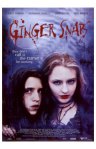
    3. Ginger Snaps (2000): Puberty is truly blue for two sisters caught up in the change. Two sequels are also notable for actually taking the story somewhere new.

    4. The Company of Wolves (1984): Neil Jordan directs Angela Lansbury in a fairy tale about men who are hairy on the inside. You’ve been warned, Red!

    5. An American Werewolf in London (1981): great soundtrack, cool corpses and Jenny Agutter. What’s not to like in this fine balance of pathos and humour?

    * While we’re in shapeshifter mode, feline-lovers should head over to Cat People, both the 1942 original and the 1982 remake for some quality time.

    Trivia bonus: David Bowie was a vampire in The Hunger and contributed this lovely song to the 1982 Cat People soundtrack.

    The Wolfman – neither a howler nor a howling success

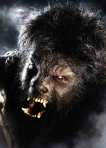
    the wolfmanI’m halfway through watching The Wolfman — the new one, with Benicio Del Toro going all fur and fangs — and I’m thinking, I’m sure I’ve seen this movie before, but it was in black and white. I wonder if this new effort shouldn’t have been as well, just to make the point.

    The delight (and dogged duplication) in the premiere werewolf movies of yore is clear in this effort, directed by Joe Johnson. Lots of moon shots, lots of foggy forests and silhouettes. Gypsies. Mobs with flaming brands. The village tavern that falls silent when the stranger enters. And absolutely nothing new.

    But don’t let that put you off. It’s a solid, if uninspiring and strangely uncompelling, effort. The love story is such an undeveloped and fleeting thing, the tension between father and prodigal son so underplayed, the concentration on werewolfy rampaging with lots of gibbets so great, that it’s hard to get into the characters much at all.

    The music, by reliable Danny Elfman, isn’t always used to best advantage, either. It’s not bad, it’s just used out of context at times, trying to make tension and jump! surprise! where there doesn’t need to be any.

    But my goodness, there are other times when the suspense does kick in, and all those stereotypical Gothic scenes are portrayed in full cinematic glory: ruins, sweeping staircases, misty forests, gibbous moons through the spindly branches of trees. There’s even a decrepit, sprawling mansion in need of a serious cobwebbing and sweeping, complete with family tomb (I wouldn’t have been gobsmacked to see a headstone out the back with maybe Karstein written on it, or Usher, or Ligeia). Some not-too-shocking family secrets. Oh yum!

    There are some adorable scenes set in old London town, and the whole is enlivened by Hugo Weaving as a Scotland Yard detective with a fascinating past, regrettably only mentioned in passing. I almost wish we’d seen more of his story: the echo with his previous, infamous case would have been delicious. And spare a thought for poor Art Malik, hidden in a beard as a servant with more silver bullets than he has brooms (neither of which he proves much use with).

    I wouldn’t be cleaning my Universal and Hammer classics from the shelf to make way for this one, but lovers of that kind of werewolf movie will find something to appreciate in this recycled homage.

    Daybreakers – what a bloody mess

    daybreakers movie poster

    Oh dear. And it seemed like such a good idea at the time. The vampires have taken over the world and established a night-time society, sadly seemingly stuck in much the same pattern of commerce as ours, but alas, they’ve literally drained their food supplies to the point of extinction (humans be warned: this could happen to you). It’s a race: to track down the last humans, to synthesise a blood replacement, or find a cure. At the end of the day, the future of the planet actually comes down to corporate greed. The leeches!

    Daybreakers fails to deliver on its promise. Once the story starts and people start talking, it quickly turns into a bloody mess. Maybe that’s me looking for a shiny new take on vampirism when all that was ever on offer was just more schlock hanging off a neat idea. Nothing wrong with schlock, mind you; it’s just, I wanted more from this. I’m not sure why.

    The Spierig brothers’ previous movie, Undead, was gloriously schlocky, even with aliens, and I loved it. So maybe I shouldn’t have expected this to be any different.

    But, what the hell is with the bats? I haven’t seen such horrible effects since Hammer Horror (hurray, back online and makin’ movies!) dangled a stuffed one on wires and jigged its wings about. The bats, flitting about both night and day and glorying in swooping the camera, were inappropriate, cheap, tacky.

    And where was the logic? Does not drinking human blood make vampires turn into primal bat-things, or doesn’t it? If vampires can survive on pigs’ blood a la Nick Knight, then why don’t they? Why does mixing blood with your coffee (just coffee, we presume, the only foodstuff on-screen – viscera notwithstanding) make it palatable? Why does Ethan (and his little heart-monitoring do-hickeys) not burn but Willem gets toasty scarred? Why does throwing gratuitous buckets of blood and hosting cannibalistic frenzies (really blurring the line between vampire and zombie, there, lads) make boys coo with glee?

    And isn’t it a sad day, really, when you have to (presumably to secure funding) throw some weird-arse colour filter over your lens to try to disguise the fact you shot your movie in Australia, not the US of A. Location was hardly a factor in the plot, so why force the crap accents on otherwise wonderful actors? Admittedly, I was familiar with a hell of a lot of the scenery in Daybreakers, it being filmed around my former hometown, but I’m still scratching my head about the massive Moreton Bay fig having pride of place on a ridge somewhere in Nowheresville, USA.

    Stupid lookouts who get surprised in daytime when they’re standing in the middle of a massive open space with 360-degree visibility; humans who simply must charge around in convoys at night; a seemingly endless stream of last-minute saves by the handy off-screen ally. And even in 2019 we’re still trying for the (presumably) heart shot with a crossbow. Oh God. And did I mention the bats??

    I’m sorry, but ‘because it looks cool’ is not a sufficient answer.

    So, Daybreakers for me is a B-grade vampire movie, maybe flitting down around the C+ level, which puts it on a par with the rest of the Aussie crop. Sigh.

    [Addendum: What I liked about Daybreakers: the concept; the visualisation of the vampire society; the fact that being a vampire didn’t automatically make everyone a martial arts expert; no wire work; female lead Claudia Karvan not being made into some kind of sex-glamour-combat heroine (but she gets jumped twice, dude, so a little nous might’ve been nice); that the hero’s brother has the actual hero’s arc; Sam Neill]

    Here, have some decent bats, care of a certain Nick Cave and his Birthday Party. And someone pass me a copy of Near Dark and a bottle of red. Cheers.

    The Road – a damn fine journey

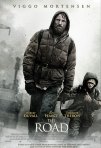
    the road, movie poster

    Fans of Cormac McCarthy’s post-apocalyptic novel The Road can breathe easy — the movie is a damn fine adaptation.

    In fact, it’s probably one of the best that I’ve seen.

    The mood of the book is perfectly captured on-screen, thanks to wonderful sets depicting the ruins of civilisation and the death of nature. Abandoned cities, broken roadways littered with wrecked cars, devastated forests, wildfires and electrical storms all show the grim future. The actual event is barely mentioned, no blame apportioned. It just is.

    As in the book, the movie does not provide a strict narrative journey, but rather a series of vignettes marking the progress of a father (Viggo Mortensen) and son (Kodi Smit-McPhee) through this blasted landscape, with flashbacks to the father’s life with his wife (Charlize Theron) before, during and after the calamity fell.

    On the road, father and son have to dodge cannibal gangs while they head south, every day a search for warmth, shelter and food. Other stray travellers they meet are viewed with suspicion, providing a crux for the film’s thematic centre.

    I felt a little let down by the conclusion in the book, but the movie, while changing it only slightly, manages with deft subtlety to make it work, and work brilliantly. Likewise there are some minor changes to events in the novel, but none are jarring, and all work to enhance the on-screen story.

    There were some likely lads in our theatre who might have been expecting some kind of Mad Max/Cyborg storyline, and I suspect by their chatting and quick departure that they left disappointed by this thoughtful portrayal of the hopelessness and drudgery of life on the road. Or maybe they’d got the wrong cinema and only stayed in the hope of Theron getting her kit off — more disappointment, there, boys. But my goodness, doesn’t she just chew up the camera?

    The casting (including Guy Pearce and Robert Duvall) was uniformally superb, some actors almost indistinguishable underneath their soot and grime and filthy teeth.

    A soundtrack by Nick Cave and Warren Ellis enhanced the tone without being overly dramatic or sentimental, the camera work was striking without being flashy; there was nothing not to like about this movie.

    Director John Hillcoat has delivered an amazing reading of McCarthy’s novel that both readers and non should enjoy.

    Up in the Air

    In Up in the Air, George Clooney plays a professional traveller. He’s got negotiating airports down to a fine art as he closes in on his key goal in life: to be one of the elite travellers to clock 10 million frequent flyer miles. In this goal, he is aided by his job, flying around the globe but chiefly the USA as a hired gun, firing employees for gutless bosses. He also sidelines in presenting talks about his way of living life, known as the empty backpack: Clooney’s character Ryan Bingham doesn’t believe in weighing himself down with possessions nor responsibilities, applying that philosophy to relationships, even family. And yet he can show remarkable understanding, if not compassion, for the victims of corporate downsizing he faces every day.

    It is a well-rendered story, the casting spot-on: Vera Farmiga as his love interest gobbled up the screen, and Anna Kendrick fitted her suit as ingenue and foil perfectly.

    The movie has a lot to say about family and humanity, and hits emotional buttons without using a sledgehammer. The ending is sublime, and I’m still not sure to what extent Bingham’s journey has been altered. Has he learnt something or is it simply too late for him to make the most of his lesson?

    Maybe it’s simply a case of what goes up, must come down…

    As someone who loves travel, and has recently battled the burden of an accumulation of possessions, I found much to appreciate in this tale. Life is a balancing act, somewhere between being happy on the ground and being light enough to fly. And happiness, this film tells us in no uncertain terms, is best enjoyed when shared.

    Australian vampire movies

    With Daybreakers about to hit the big screens, here’s a quick round-up of other Australian vampire movies:

    Barry McKenzie Holds His Own, 1974. Directed by Bruce Beresford. Stars Barry Crocker, Barry Humphreys and Donald Pleasance.
    : Barry, reprising his role from The Adventures of (1972), must save Dame Edna Everage from European Count von Plasma.

    Bloodlust, 1992. Directed by Jon Hewitt and Richard Wolstencroft. Stars Jane Stuart Wallace, Kelly Chapman and Robert James O’Neill. Windhover Productions. [Videorecording: VHS]
    : A low-budget vampire heist flick with cult appeal (banned in the UK) in which quasi vampires encounter gangsters and religious extremists on the streets of Melbourne.

    Outback Vampires, 1987. Directed by Colin Eggleston. Stars Richard Morgan, Angela Kennedy and Brett Climo. Somserset Films. [Videorecording: VHS].
    : A quasi-comic take along the lines of Rocky Horror Picture Show in which three travellers find themselves hosted by vampires in an isolated mansion near a decrepit outback town.

    Queen of the Damned, 2002. Directed by Michael Rymer. Stars Aaliyah and Stuart Townsend. Los Angeles: Warner. [Videorecording: DVD].
    : An American movie adapting two Anne Rice books, The Vampire Lestat and Queen of the Damned. Shot in Victoria (substituting for the US and UK) with numerous Australians in the supporting cast. (My account of being an extra on the film is here.)

    Thirst, 1979, directed by Roy Hardy. Stars Chantal Contouri and Shirley Cameron. FG Films. [Videorecording: DVD, Umbrella].
    : The descendant of Elizabeth Bathory is seduced by a blood-drinking cult using brainwashing techniques, causing hallucinatory footage.

    This list of movies is taken from a survey I made of Australian vampire stories published before 2007. It’s comprehensive but not complete. Additions are welcome.