Emilie Autumn at the Espy: so Victoriana!

emilie autumn

The Gershwin Room at St Kilda’s Espy (aka the Esplanade hotel) was the perfect setting for last night’s ‘Asylum’ gig by Emilie Autumn, a sideshow to her tour with the Harvest Festival. The American performer loves her Victoriana, melding lace and feathers with lashing of goth and steampunk, and the Espy’s peeling paint, pressed metal ceilings and ageing blemished mirrors suited the show to a tee. Or perhaps to a ‘tea’ might be more appropriate …

Emilie is a powerhouse, at home on the keyboard and the violin, with a decent range in her vocals and oodles of expression, and a deftness when it comes to interacting with her adoring audience, most done up to the nines.

She also has her support crew — Captain Maggot, voluptuous Veronica and dotty Contessa — to keep things lively on stage, including tea parties, lesbian pantomime and a girl-on-girl kissing sideshow called the Rat Game. Contessa and Maggot are adept at fire twirling, and Veronica plays a mean keyboard, too. Maggot is a particularly cool character, piratical in nature and small of stature, but possessed of wicked expressions and a top sense of balance, appearing as she does at one stage on stilts.

But there’s no doubt this is EA’s show, and she’s a fascinating ring mistress for this vaudevillean presentation set inside an asylum for wayward girls. Last night’s gig felt much tighter than when I last saw her in late 2009 doing much the same. Last night’s set also featured the title song of her forthcoming album, ‘Fight Like A Girl’, which suggests a similar musical direction to the winning Opheliac.

There were a few minor sound glitches, particularly early on, but songs including ‘Liar’, ‘Opheliac’, ‘I Want My Innocence Back’ and ‘Dead is the New Alive’, performed to thumping backing tracks, evoked effusive responses from the phone-wielding crowd. The only place the show seemed to slip away was towards the end, with a series of might-have-been final tunes proving false.

The encore was a cheeky singalong to a recording of Monty Python’s ‘Always Look on the Bright Side of Life’, with EA promising a speedy return to Oz. Keep your dance card open for that one!

Tycho Brahe and Psyche electrify the Espy


It was arranged a week ago and barely publicised, but the Tycho Brahe and Psyche gig at St Kilda’s legendary music haunt the Esplanade Hotel (the Espy) was one of those cosy gatherings that fans salivate over for years after.

Tycho Brahe, from Brisbane, operating in duo mode with Ken Evans on bass and vox and Georgina Emery on keys and backing vocals, opened for German-based duo Psyche in the Espy’s basement room: tiled floor, cats and dogs wallpaper, and oh the cute rudeness in the band room tucked away behind yet another flight of stairs!

I was thrilled to hear Tycho cover Joy Division’s ‘Atmosphere’, Real Life and Depeche Mode; they pulled Psyche’s Darrin Huss, originally from Canada, up to take lead vocals on ‘Tainted Love’ with its neat segue into the Dr Who theme. They closed with a new track, ‘Love Rocket’ , and it was a blast.

Ken reports that the home studio is operational once more, though work still remains to be done since the family home was submerged during January’s disastrous Brisbane floods.

Psyche were largely unknown terrain for me — they have an excellent track on the Brisbane flood fundraiser Surge and Subside — and they put on an entertaining show, drawing on 30 years worth of material. Darrin was perhaps best described as exuberant as he pranced and yowled for the best part of two hours, giving it his all. Ken returned to do backing vocals on a Yazoo track (‘Situation’?), and there was another Joy Division cover (‘Disorder’, if memory serves) amongst others. ‘Gods and Monsters’ was one track that stood out in the EBM assault overseen by Stefan Rabura.

It was a fun night with an appreciative crowd drawn from across the spectrum: fish nets, tight jeans, checked shirts, sloppy t-shirts. With such a great vibe, it was a definitely a good gig for the psyche.


Collide’s Counting to Zero really does add up

American duo Collide remind me a little of Massive Attack, but the midnight version. I’ve got a promo copy of their latest and seventh studio album, Counting to Zero (Noiseplus), on high rotation, and their electro cruise is so smooth – find a place under the lasers in the fog and let your slo-mo bat-catching go wild. Suggested track: ‘Lucky 13’, suitably slinky beats with singer kaRIN hitting some sultry notes down low.

It doesn’t pay to get too complacent, though. They like a little mid-song pause, a little change of tempo, just to keep you on your toes. See ‘In the Frequency’ for a fine example: fuzz guitars making highlights, and a gradual fade to grey, setting up the heavier bass attack of ‘Clearer’.

kaRIN and programming partner Statik perpetuate their distinctive sound – her fetching pipes remain the lead instrument as the layers of music builds and fades in step – while pushing their studio savvy out all the speakers. There are shards of Vangelis, Goldfrapp, John Foxx, Portishead … some Middle Eastern notes, too. The album is both perfect mood music for a chill-out as well as a funky stereo-sound experience.

counting to zero by collide

The tone is set from the opener, the slow-building ‘Bending and Floating’, a doorway into a rich electronic landscape the name of which kind of says it all, really. Across the 11 tracks, the vocals do float above the electronic current, and there’s some bending going on, too: keyboard and strings on the exemplary title track with gorgeous guitar courtesy of Scott Landes, a quietly catchy lead track in ‘Mind Games’, a fractured electro snatch and grab in ‘Tears Like Rain’.

‘Human’ is a slow burn, kaRIN exercising some range to bring added emotion – “who’s going to fix you when you’re broken?” – to an outfit who can come across as sonically icy rather than fiery.

‘Further from Anything’, with Secret Meeting collaborator Dean Garcia (of delicious, departed Curve) on bass, changes gears nicely for a last-half jolt before the slide to the end, concluding with the poppy (and suitably named) closer, ‘Letting Go’.

With more than half the songs clocking in at more than five minutes, the album takes almost a full hour to unwind, and it can lull. kaRIN’s default vocal setting is a lullaby croon and it will take you away – to a good place.

Stormlord Rising, Snow Crash, Kraken, The Broken Ones, Phoenix Rising: one of these things is not like the others

Recent reading:

stormlord rising by glenda larke

Glenda Larke’s Stormlord Rising, book 2 of the Watergivers series, and quite superb. Just like book 1, The Last Stormlord (reviewed here). In which Larke beautifully uses landscape to sculpt her cultures, right down to the vernacular. Gives religion a thumping, stage-manages her rather large cast very well, manages to cause her characters a few headaches along the way as well. I was particularly chuffed at how book 2 feels quite self contained, while still managing to provide plenty of reasons to read book 3. Which I will do, very shortly.

snow crash by neal stephenson

Snow Crash by Neal Stephenson. Fair to say that this, along with William Gibson’s Neuromancer (gushed about here), is a core plank of cyberpunk? Still holds up, after all these years, even if no one has bothered to fix that bothersome literal role/roll model. Coolest pizza delivery peeps evah! Will soon be lining up for his massive Reamde — wish me luck.

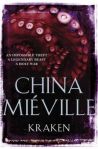
kraken by china mieville

Kraken, what passes for a romp in the land of far-too-talented China Mieville. A little cloudy in its cleverness in places — inky, one could say — as a vibrantly realised magical London (nice nod to a previous short story concerning cartography, too) and uber-clever dialogue as cults and other interested parties are caught up in the tentacles of a plot to bring about apocalypse. Evolutionary stuff!

the broken ones by stephen irwin

The Broken Ones, in which Stephen M Irwin gives Brissie a haunted makeover while trashing the place. Occult conspiracies, a tenacious detective and true chills. It’s Irwin’s second novel and, IMHO, shows the maturation of a mighty promising talent. I’ve burbled on about this one over at ASiF. I’m quite looking forward to Irwin’s next book.

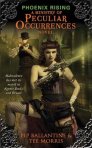
phoenix rising

And then there’s Phoenix Rising, by Pip Ballantine and Tee Morris. Sadly, a few factors combined to hobble my reading of this one, the first in a series. I say sadly because I was, despite the steampunk lingerie on the cover, really quite keen, thanks to the combination of a Kiwi heroine and rather spiffy dialogue. But then there’s the solo attack in Antarctica carried out in thigh-high boots and a fur coat, the willy nilly distribution of literal and spelling errors, the (non-authorial) disconcerting use of American spelling in a story about a Commonwealth agency in Victorian London: I do hope the new world order of international publishing isn’t all about the lowest common denominator (that’s you, America, or rather, it’s not ‘u’). It certainly isn’t about proofreading, is it? Anyway, maybe it was my flu making me more ornery than usual, but I just couldn’t wade through the glibness and clumsiness. I’ll keep it on hand for another shot, because I really do like that librarian, sorry, archivist, on the cover sipping tea.

Hot act to follow: Fever Ray

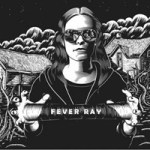
Is this an awesome cover or what? Actually, if you said or what, you can go away and write your own blog post.

Fever Ray had a song, The Wolf, on the soundtrack for the Red Riding Hood movie which was, arguably, the best thing about the movie. Well, the eponymous Fever Ray album (2009) is just as awesome.

This band — the solo project of Swedish musician Karin Dreijer Andersson — was made to make soundtracks.

Such atmospheric electronica, and then Dreijer Andersson’s voice beaming out from the very low to the almost childish high. It’s compelling stuff.

It’s grand, too, to hear the accent in her voice; a little like Bjork, not afraid to show her roots. Apparently, the male-sounding vocals are also hers, run through a transformer.

fever ray solo debut album

The debut album (she and her studio collaborators have been around; Karin and brother Olof form The Knife) opens with a monkish ‘If I Had A Heart’ and builds from there. The electronica underpins the tunes but leaves plenty of space; ’80s sounds feel thoroughly modern with great use of stereo effects. And the whole thing feels like a movie waiting to be written.

Some of the lyrics can be obtuse, but there are delightful vignettes of life — suburban, urban, defiance, the unity and despair of love.

There’s a little bit of slink on ‘I’m Not Done’; catchy ebb and flow on the haunting ‘Keep the Streets Empty for Me’; a Celtic dirge feel on closer, ‘Coconut’. A consistent, cohesive, captivating album.

‘Stranger Than Kindness’ is one of two bonus tracks on the deluxe release, which includes a DVD. ‘Wolf’ was released as a single in March.

The Burlesque Hour in Melbourne: with added Meow Meow

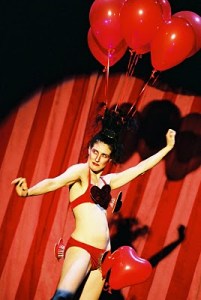
moira finucane burlesque performer

Moira Finucane

Burlesque has come a long way from sequins, boas and corsets with an aim to tease. That’s certainly the understanding presented by The Burlesque Hour, a production playing at Melbourne’s delightful warehouse basement club fortyfivedownstairs.

The club plays a big part in the event’s success, boasting terrific atmosphere with cabaret seating around a central catwalk, Chinese lanterns, vintage timber floor and pressed metal ceiling, and some of the friendliest door and bar staff you could hope to exchange greetings with.

Created by Jackie Smith and Moira Finucane, the show — it goes longer than an hour, thankfully — shatters the stereotypical notions of striptease, burlesque, nudity and female sexuality.

In the show we saw, Finucane was the lynchpin, carrying the politics from the catwalk to the back row with balloon-bursting ease. Her bag lady ascending to heaven was a truly poignant display in a night of great variety.

The Angels’ ‘Am I Ever Gonna See Your Face Again’ was destroyed by having a woman in showgirl feathered bikini carrying the tune; same again with gender-inverting drag queen-lip synced opener The Divinyls’ ‘I Touch Myself’. Prince’s ‘Purple Rain’ was put to art snob-bashing good use, with a tip of the hat to the water wall at NGV as well as Poe’s ‘The Raven’, and a Flashdance-esque saturation to boot. The front rows looked pensive when the pre-song umbrellas and plastic sheets were handed out, and again when the second act set a cracking start thanks to a whip-wielding Sosina Wogayehu in dominatrix mode.

Thing was, Finucane does not conform to magazine cover concepts of celebrity good looks — no facelift, no perky tits, no Brazilian. She was, if memory serves, the only performer to appear fully naked.

The staging was superb throughout, simple but striking: cigarette smoke through black cloth, streamers of green cloth, black blood splattering naked flesh.

Elsewhere, there were heavy metal dance routines from Holly Durant and Harriet Ritchie and sheer, strawberry-flavoured elegance from MC Maude Davey.

Davey added a fine note of sexual politics by appearing nude but for long gloves, headpiece and extensive necklace while singing ‘I Want a Little Sugar in My Bowl’: such a crack-up to see a naked woman flirting over the removal by teeth of one of said gloves, even as the song’s metaphor was literally stripped.

meow meow cabaret performer

Meow Meow

And there was Meow Meow, cabaret star par excellence who dazzled with an amazing range and theatrical presence, adroit at audience interaction, humour and pathos. In one of her three numbers, she out-Palmered her friend Amanda with a rendition of Dresden Dolls’ ‘Missed Me’. She was the latest guest artist to appear in the show’s nine-week run, ending next month.

Meow Meow appears later this year at the Malthouse in Little Match Girl.

The Burlesque Hour shattered expectations, unleashed beauty and the beast in the one package, and provided food for thought to take home. Yes, burlesque sure looks different down in the basement. I hope the hour strikes again soon.

Disparate dystopian adventures: Wither and America Pacifica

Dystopia is hot, especially in young adult fiction where The Hunger Games is probably the leader of the pack. I’ve read two new additions to the field recently, and these two debut novels could hardly be more different.

I don’t normally bother to post negative reviews. I don’t think they do anyone much service, either the book nor the reviewer. After all, most stories will find an audience, and it makes more sense to me to promote good reading rather than deride less satisfactory experiences. Which leads me to Wither, by Lauren DeStefano, with which I’ve made an exception.

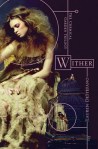
wither by lauren destefano

My review is somewhat withering, and I thought long and hard about posting it (in hindsight, I should’ve not used the word bullshit; I do regret any snarkiness). But at the end of the day, the book annoyed me so much, I felt opening the discussion was worth it.

I have three core beefs with the book. The first is in the world building: a shambolic thing, coming across as shallow and ill-conceived and paying little attention to what could have been, and should have been, an examination of a society in which people barely live past their teens. What does this do the economy, to social cohesion, to the very psychology of those living with built-in expirations?

The second source of disgruntlement was in the heroine, a passive creature, admittedly caught in a rough spot but not being proactive enough in trying to extricate herself.

And the third, the thing that really stuck in my craw and induced me to write that dually damning review, was the fact that I just could not get past the fact that this book is built on a foundation of sexual slavery. Not arranged marriage, not some kind of celebrity matchmaking, but slavery; slavery with the apparent purpose of genetic experimentation through procreation. What a dire situation — one existing today — this could’ve been. And as I say in the review, the real pity of it all is that DeStefano can write, and her characters are beautifully drawn and the romantic elements are deftly handled.

america pacifica by anna north

By contrast, America Pacifica by Anna North is a dark, gritty visualisation of a world gone down the gurgler. I had a few qualms with the world building here, also — the story is set on a Pacific island where refugees from a new ice age struggle to retain the vestiges of the civilisation they have lost — but found the heroine engaging and gutsy — there was no romance in the sacrifices she had to make to uncover the truth of her mother’s disappearance — and, most satisfactorily, enjoyed the social examination that North brought to the story. It doesn’t hurt that the final scene is to die for. The full review is here.

Stake Land: getting its point across

stake land vampire movie poster

This is the apocalypse with fangs, indie-style, as envisaged by director and co-writer Jim Mickle. Stake Land tracks young Martin, orphaned by a ravaging vampire, who is taken under the wing of solitary hunter Mister (co-writer Nick Damici). Shotguns, arrows, spears and stakes (no fire) are their arsenal against a zombie-like plague of vampires who have turned the USA and, it is suggested, the world, into a wasteland. The pair have a plan — to drive to New Eden, an idyllic, vampire-free zone (once again, the American fascination with Canada as a haven is front and centre).

Along the way, they pick up passengers including a nun, a pregnant singer and an ex-marine. The group scavenge food and fuel on their way north via a series of fortified towns, which try to maintain the conventions of society amidst the carnage.

A map of America reveals a number of zones of control, each posing dangers to travellers, and none moreso than the realm of the Brotherhood: a fanatical bunch of religious nutters who not only think the vampire plague is a sign of the apocalypse, but revel in it, seeking to make it worse, not better. Rape and murder are their tools of trade and they pose the greatest obstacle to the travellers.

The story meanders a bit, struggling to find a high level of suspense and direct conflict. This is largely due to it being a road journey linking various separate set action pieces which don’t always serve the plot. The characters do make some overly stupid mistakes towards the end. However, it does carry a mood of melancholy and desperation you’d hope to find in such a bleak scenario, and is pleasantly understated — there isn’t too much chatting and the performances are restrained.

Stake Land is a gritty, realistic film where the vampires are very much monsters, essentially zombies with a vulnerability to sunlight and dicky tickers, if you can get a hunk of wood through their reinforced rib cage. The actual rules by which the vampires are created remain obscure, and this does weaken the credibility of the premise a little. While a degree of confusion about the origin of the plague is to be expected in a world gone to hell, and it isn’t necessary within the context of the film, I’d have liked a clear indication as to how the vampirism spreads so I could better appreciate the threat to the characters, who do engage in a lot of hand-to-hand combat.

There is a suggestion that there are different generations — some are too tough to stake and can only be stopped by a stake to the back of the head, for instance — and indeed there is mention of mutations of vampire — some are capable of higher thought, most seem to be little more than animals. But yet, a bite appears to be a likely way of making a vampire, which suggests vampirism as contagion.

But this movie is not about the vampires; in fact, a zombie plague would’ve worked just as well, and there is little difference between the two as depicted here.

No, the sharp end of the flick is aimed at the religious right as Mickle tests society’s thin veneer when it’s brought under stress, and vampires were just a handy critter for some cool effects and fight scenes. All that blood, and there is something cool about an ornery mysterious stranger riding into town and popping a bag of extended canines on the bar, isn’t there?

In some ways, the story has the mood of The Road, but that slice of post-apocalyptic America has far more intensity. Stake Land does, however, deliver a well-acted, good-looking and above-average adventure where the humans can be just as inhumane as the monsters. Tasty, but not overly filling.

A Golem Story: here’s mud in your eye

a golem story theatre poster

A Golem Story is playing at the Malthouse Theatre in Melbourne’s Southbank district, and what a grand theatre it is. The Malthouse is a reconditioned industrial building, dating to 1892, with a sensitive touch given to that history. So lots of exposed beams and raw brick and a mezzanine level giving access to one of the theatres. And a long bar (as you’d expect from a former brewery), and a separate coffee counter with scrumptious desserts. And a separate restaurant, which I haven’t sampled. There’s even a typically Melbourne laneway area for those who want to take the air, or pollute it with their noxious nicotine habit. There’s even a wee bookshop with titles theatrical and dramatic.

Golem was staged in one of the downstairs theatres — there are three in total — and the set was spectacular. With seats ranged around three sides of the central stage, the rear wall of slatted timber was fronted by a grid sporting candles. The central stage was a rough timber floor which could be lifted away to reveal a mud hole — just what you need for making a golem.

The play is set, for the most part, inside a synagogue in Prague where the authorities are responding to the disappearance of some children by threatening a purge of the scapegoat Jewish ghetto. The opening scene has a young woman prone under a low-hanging candelabrum that is to die for. It gets cranked up and down by a winch at the back of the stage: it clunks most atmospherically and is one of the few physical props used in the play. At times, light beams through the rear wall to make criss-cross patterns on the floor; a spotlight weaves to show the golem’s location but it is left to the audience to fill in the details of the creature, created by the Rabbi to defend his people.

The aforementioned young lady is the centre of the piece; a rather mysterious woman employed as the maid who has undergone a severe trauma at the hands of one of the Rabbi’s former students who has shuffled off his mortal coil. There is magic and intrigue, and lots of discussion about humankind’s right to create life in the shape of itself a la God, and humour from an almost farcical emperor who is more dangerous than his camp demeanour might suggest. And of course there’s the faithful of the synagogue, primarily the driven Rabbi and his diffident, doubting student.

One of the most striking elements of the play is the music: male choir, at times joined by the young woman (the only female actor), and one over-long solo as actors scramble up ladders to light that impressive wall of candles though the lag — at least for those of us who can’t appreciate the drama of the song due to it being sung in, presumably, Yiddish — perhaps isn’t quite justified by the eventual effect.

The story itself is engaging, thanks to the power of the actors and their splendid singing voices, though there’s a wee logic bounce that, well, despite the explanation, kind of sticks in my throat in much the same way as a stone tablet inscribed with the secret name of God sticks in the mouth of a golem: we both find it hard to swallow. I can’t say more about that because it would ruin the attempted twist in the tale, though really, the twist is not that unexpected. Fortunately, it doesn’t really matter to the overall impact of the story.

Golems rule, okay?

Patricia Piccinni’s fantastic body of work

patricia piccinini vespa sculpturepatricia piccinini sculpture

And I thought Ron Mueck’s sculptures were amazing…

And fair enough, they are. But Patricia Piccinni’s work, on show at the Art Gallery of South Australia in Adelaide, blew my socks off. Not only are her sculptures incredibly life-like, right down to the dimples, the hairs in the moles, the subtle blue veins under the skin, but they take us into the future. Strange critters imbued with incredible personality inhabit this vision, a vision largely made in a human laboratory. Cloning and gene splicing are among the issues that Piccinni’s sculptures examine, and most carry more than a hint of melancholy. A purposely spliced pig-like creature carries a litter destined to be spare parts; another creature is made as a breeding ground for hairy-nosed wombats. A young girl plays with over-sized stem cells as though they were blobs of plasticene. Two boys play with a hand-held game machine, but they wear the faces of old men.

Also in the exhibit are some cool trucks and even cooler mopeds given animalistic life, photography and audio-visual displays.

But it was the incredible emotion that Piccinni fostered in her fabulous future creatures that elevated this exhibition into the truly remarkable.

Will we — can we — still love our creations tomorrow?

  • Lisa Hannett also saw the exhibit and describes it with far more eloquence here.