Rec160: The End Times of Markusz Zielinski, by Keith Stevenson – a race to the end

Novel

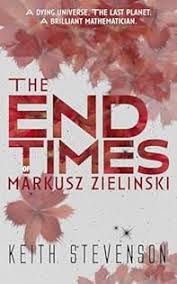
Title: The End Times of Markusz Zielinski

Author: Keith Stevenson

Publisher: self-published @ https://www.keithstevenson.com/books/end-times/

In which the Australian writer and publisher turns from the enjoyable space opera of his Lenticular books to harder science fiction, portraying the mad scramble to save a last outpost of life from a collapsing universe. Once again, Stevenson provides a living culture, enough details of the factions and entities to make the world believable without bogging down in details. Indeed, there’s not much room for minutiae, as the story unfolds apace, the conflict driven by a political agenda of greed, ego and self-interest. The titular Markusz, a mathematician who may just be able to save what’s left if given the chance, has the clever foil of a ‘ghost’ of his dead wife as well as a strong supporting cast to contextualise the science clearly enough to allow the reader to follow along. And then there’s the question of the strange haven deep within the planet itself, and the mysterious connection to the force devouring the universe. It’s a blast.

Rec160: The Ministry of Time, by Kaliane Bradley – time well spent

Title: The Ministry of Time

Author: Kaliane Bradley

Publisher: Sceptre/Hachette, 2024

If you were to pick up The Ministry of Time, you may wish to flick straight to chapter 5, which opens thusly: “September found me in Pimlico, on a bench with Margaret Kemble*. The air was bisected by an iron hinge of autumn cold. Sparrows guested along the kerb, waltzing with the limp yellow leaves.” The “I” is the civil servant assigned to help Antarctica explorer Graham Gore acclimatise to life in the near future after he has been plucked from his own time (detailed in inserts). This is, as the name suggests, a time travel story, in which the pair are caught up in a beautifully presented attraction and dastardly deeds. As the quote shows, the writing is gorgeously descriptive, adding to superb character work and an engaging premise. But this excerpt should be enough to send you back to the start of this accomplished debut, and continue on, which is kind of what time travel is all about.

* We love Margaret (aka 1665). She is a fabulous character.

Conflux, here we come

I’m very chuffed to report that Kirstyn and I will be guests of honour at Conflux, Canberra’s festival of speculative fiction in October this year.

Conflux has always been a fabulous convention, offering plenty of information about the craft and business of writing as well as a great opportunity to hang out with writers and readers, united in their love of all things spec fic.

It’ll be challenging and fun to be taking part as a guest, especially as a double bill with Kirstyn (others are yet to be announced), and I’m looking forward to meeting old friends and making new ones.

I expect I’ll be banging on about the enduring allure of vampires, the Gothic, and climate fiction, and whatever else pops up.

Attending conventions has been a valuable element in my journey as a writer, and I’ve always appreciated opportunities to give back to that. This will be next level, though!

I encourage genre writers to investigate such opportunities, to get insights into the industry, meet like-minded souls, and be part of the community. So come on down, the water’s fine. Memberships are now open.

Rec160 – Companion

Film

Title: Companion
Director: Drew Hancock
Stars: Sophie Thatcher, Jack Quaid

When it comes to robots being given a rough deal, Companion is right up there with Blade Runner. As with the recent M3gan, Companion poses a question about the role of robots in our society, but where M3gan devolved into a simplistic string of killer robot set pieces, Companion sticks the landing, never abandoning its underlying themes. The only misstep is the announcement at the start about who kills whom. Sophie Thatcher is eminently watchable as Iris, caught up in a plot about which the less said the better so as to enjoy this proficiently composed thriller of reveals and hurdles. It kicks off with a group of friends arriving for a stay at an isolated mansion, whereupon schemes come undone and secrets are unveiled, all with a resultant and refreshingly banal body count as pressure mounts. With shades of Westworld and I, Robot (of course), Companion impresses with its intelligence and focus that would easily reward a second viewing.

rec160: Lotus Blue, by Cat Sparks

NOVEL

Title: Lotus Blue

Author: Cat Sparks

Publisher: Talos, 2017

In this debut novel from Canberra-based Sparks, Australia is a wasteland dotted by the fortress cities of the elite and the struggling outposts of the poor exposed to brigands, storms and the encroaching toxic sands of the Dead Red Heart. Star rides in one of the Vans that ferry goods and travellers across this blighted landscape. She is, not, however, like her compatriots, and when fate intervenes, the secret of her origin places her in the most dangerous of positions: a potential weapon both for and against a new menace. For buried in a sand-covered bunker, the titular AI has awakened, bringing with it cyborg soldiers and intelligent machines to further its designs. Former Templar soldiers caught between human and machine, the charming shyster Grieve, and wealthy fortune hunters are all swept into the search for the fearsome weapon. The result is a striking adventure story set in an intriguing world of wheeled boats, killer hi-tech storms and cybernetic wizardry.

>> Read an interview with Sparks about Lotus Blue @ the Australian Women Writers Challenge

rec160: Dream Scenario

MOVIE

Title: Dream Scenario

Director: Kristoffer Borgli

Stars: Nicolas Cage, Julianne Nicholson

Studio: A24, 2023

This is being pegged as a comedy, but a laugh fest it ain’t. It serves its chuckles with a strong side of pathos, physical violence and creepiness; a seduction scene is one of the most uncomfortable in recent memory. Zebras, Jung, social media, and marketing are all in the mix as a dull, moribund college professor, played convincingly by Nicolas Cage amidst a superb cast, finds his sense of ineffectiveness manifesting in the dreams of many around the world. Empathy for Paul will vary, as he has been coasting along with his ambition of writing an academic book based on a decades-old theory still trailing behind him. When the dreams burst into viral celebrity, he eagerly snatches the sudden popularity, but the two-edged sword bites hard when his dream self goes Freddy Krueger. Moments of genuine discomfort take a science fictional turn as the ramifications of the bizarre outbreak play out, a truly horrifying concept worthy of early Black Mirror.

rec160: Godzilla Minus One

MOVIE

Title: Godzilla Minus One

Studio: Toho Studios, Robot Communication, 2023

Director: Takashi Yamazaki

Starring: Kamiki Ryunosuke, Minami Hamabe

Japanese with English subtitles

If you want to know how to invest a creature feature with heart, you could do worse than turn your attention to this Japanese kaiju film. While it taps the lore of the long-running Godzilla movies and rewards the big screen with sound and visual effects, it invests its story with a surprising degree of emotion for the genre. Pilot Shikishima is struggling with the aftermath of World War II, during which he encountered the yet-to-be mighty monster in a prelude to the core story. For Shikishima and his fellow veterans, especially being on the losing side, the war is hard to shake. Add the bold Noriko and an orphan baby to Shikishima’s world, and the three make an unconventional unit of survivors. Then, of course, there’s the monster and its offer of redemption amid the destruction. The anti-war theme is pointed but not overblown, the final salute to a vanquished foe speaking volumes. A fabulous addition to the canon.

rec160: Traitor’s Run

NOVEL

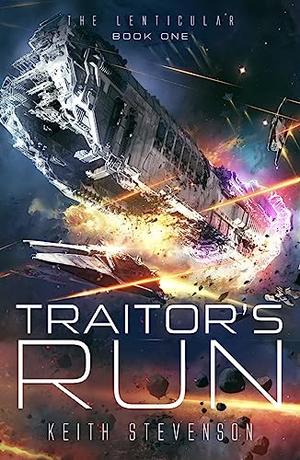
Title: Traitor’s Run: The Lenticular, Book 1

Author: Keith Stevenson

Publisher: Coeur de Lion, 2023

It’s been a few years since I first spied an early draft of this space opera, and my, isn’t it taller! The story is an accomplished presentation of interstellar empire building, pictured through the eyes of Udun and Rhees. Udun is regarded as a misfit among the empathic Kresz due to his adventurous spirit. He is presented in first person, our entry into the physiology, culture and planet of his insular people, who face world-changing rivalries among their Houses. As Earth’s Hegemony seeks to spread its influence into the Kresz’s chunk of space, known as the Lenticular, Rhees, a disgraced human fighter pilot, is thrust into a conspiracy of epic proportions. Their points of view sufficiently described the setting that a data file on the Kresz and glossary felt almost superfluous. Rather, I was on board for the ride as events pile pressure on both characters, leaving the story poised for the middle book of the trilogy. Sign me up.   

The Art of Being Human: A Speculative Fiction Anthology

In which FableCroft Publishing presents its first anthology in six years, ‘celebrating the connections and creativity that make us human’.

Image: Bru-n0 @ Pixabay

In which I have a story, my first in two years. One of 24 from writers from here and overseas.

The invitation to submit a story for The Art of Being Human came during a period of Covid-induced turmoil – restrictions and lockdowns, broken supply chains, working from home. Deaths.

At a time when live entertainment and the arts were among those sectors especially suffering, they were also elevated: online performances and gatherings became a lifeline, as well perhaps as a reminder that, like the natural world around us, these pursuits were too easily taken for granted. As were their practitioners.

And so ‘Exposure’ came to light, a combination of some of my favourite subjects as I tried to find a way to address the anthology theme: the place of art in our society, what it means to me, and what it can offer in a time of cataclysm, whether it be the short-term upheaval of a pandemic or the ongoing catastrophe that is climate change. I find it hard these days to write anything that isn’t touched by climate change – it is, as we are finding as a society and as a species, ubiquitous.

The story developed from a mental image of a Polaroid camera in a box in a dusty, warehouse-like room. You can read the result for yourself, with the Kickstarter now available – this is the only place to go if you’d like a print copy, and digital copies are also available.

As Tim Winton recently told the ABC,

I don’t think art needs an excuse to exist. We need beauty in our lives so we don’t go mad.

Hopefully, ‘Exposure’ has captured some of that sentiment.

A prize for Watermarks, the thesis

It is an absolute thrill to be able to share the news that my PhD thesis, (short title) “Watermarks”, has been awarded the Aurealis Awards Convenors’ Award for Excellence.

The award, to quote the Aurealis website:

is awarded at the discretion of the convenors for a particular achievement in speculative fiction or related areas in that year that cannot otherwise by judged for the Aurealis Awards.

This award can be given to a work of non-fiction, artwork, film, television, electronic or multimedia work, or one that brings credit or attention to the speculative fiction genres.

To be more accurate, I guess, it was the exegesis that received the award, as the creative component was not included; the judges considered the non-fiction element of the thesis only.

The thesis, minus the creative component, is available to read at Academica.edu. In short, again borrowing from the AA website, the thesis

examines the benefits of the application of science fiction approaches and tropes to climate fiction with the aim of breaking down barriers to understanding climate change and adopting mitigation measures. In particular, it looks at mosaic fiction, and examines three Australian texts – Things We Didn’t See Coming (Amsterdam), Clade (Bradley) and Nightsiders (Isle) – as case studies that draw on the mosaic form and SF to create affective and effective climate fiction

Unfortunately, I had already made plans for the night of the awards (25 July 2020) when the date was announced, and it never occurred to me to send in an acceptance speech on the off-chance. My apologies, and gratitude, again to the hardworking crew who make these awards happen. And heartfelt thanks to my supervisors at The University of Queensland for their brilliant support, my wife for putting up with a PhD student in the house, and all those others who helped ferry me along the journey. The award is a lovely postscript to a challenging and rewarding endeavour.

I’ve been to so many Aurealis Awards nights because they are such a great opportunity to celebrate the achievements of Australian speculative fiction, and just catch up; I’m especially bummed to have not been (tele)present at the one ceremony where I actually won something!

Do check out the full list of finalists to get an idea of what’s happening in the field; it’s a great reading list.