Zero History by William Gibson: luke-cool espionage fashionably portrayed

I’m a big fan of William Gibson, the man who brought us Neuromancer and helped forge the cyberpunk movement and a great deal of our internet nomenclature in one fell swoop. And has continued to take a poke at near-future technological change in and on society.

His most recent novel, Zero History, returns to characters introduced in Pattern Recognition and Spook Country – a lot of them have names beginning with H – and further delves into industrial espionage, marketing and fashion.

Hollis Henry is back in Hubertus Bigend’s traces, looking for a mysterious clothes designer, with assistance from former bandmate Heidi Hyde and former addict Milgrim (who comes across as a sad, neglected fallout from a Le Carre novel circa Smiley’s People).

Add some gadgets, some pithy one-liners and weird decor, and that’s about it, really.

The story builds on its predecessors but does stand alone, though having read the previous volumes will deliver a bigger payoff. The writing is descriptive and label-laden, as you’d expect, but the commentary isn’t particularly biting and the action doesn’t really grab, partially because the threat level seems quite low. Neither of our narrators, Hollis and Milgrim, are in the loop, reducing us to bystanders on the rim of the action as Bigend’s curiosity leads them into vaguely dangerous ground.

In some ways, the mundane nature of the characters’ desires, framed within the hyper-real world of Bigend’s manufacture, is part of the appeal; in other ways, there is a feeling that a soap opera is being brought to a close, family trees tidied, rewards handed out, just desserts delivered, even if the chemistry of attraction might seem to be missing.

Zero History is enjoyable and comfortable, but not compelling, a bit like old jeans when we’re used to something a little more shiny from this label. Not so much lukewarm as luke-cool.

Wheeler Centre continues to wow, Tut is on his way!

If you haven’t checked out the Wheeler Centre’s amazing program of mostly free events, now is a great time to do so. This month, they are hosting much-awarded Shaun Tan, best-selling Kate Morton and tunesmiths Stephen Cummings and Clare Bowditch, amongst others. Not bad diversity, that.

And in other events to keep an eye on, it’s worth noting that an uber expensive Tutankhamun exhibit is on its way to Melbourne next year. Despite the level of crass commercialism suggested by the article, I still *shiver in anticipation*.

Feed by Mira Grant: the flavour really hits you

feed by mira grant

Feed is a clever zombie novel from pseudonymous Mira Grant, right down to its title: not only does it refer to the famed zombie appetite, but to western society’s appetite for connectivity – hence the RSS symbol on the cover.

In the world of Feed, the zombies reign. Created by a little-understood man-made contagion, the reanimated dead roam the wilds while an underpopulated and “uninfected” society lives in communes rated by risk. Travel has been reduced to a bare minimum, and the media – a major focus of the story’s plot – has suffered a severe reversal. Traditional news providers now face serious competition from bloggers, who have organised into their own corporations vying for ratings and the dollars they bring with them (I’m sure Rupert Murdoch would be fascinated by their income model!) to feed the connectivity needs of a largely sedentary and isolationist population. The bloggers are broken into distinct zones of interest: fictionals, who write stories that may or may not be based on current events (including slash); newsies, who act as journalists; and Irwins, nicknamed after Australia’s croc hunter Steve, who are the daredevils of the blogosphere, risking life and limb for the sake of entertainment.

Feed’s core characters comprise one of each: sister Georgia (George, newsie) and Irwin brother Shaun and their tech-savvy fictional “Buffy”. The Morgans are rather special, having been, Bindi-like, raised in the spotlight of the blogosphere since the zombie outbreak was hijacked by their parents as a fame platform. This, and the zombie death of their infant brother, informs the pair’s relationship. It’s a lovingly rendered co-dependency and one of the book’s great strengths.

The story is told primarily from George’s point of view, with neat quotes from various blog posts by her and others.

We are given the history of the outbreak and how the world has changed since, how technology and society have evolved to deal with the new circumstances. It’s very clever and quite believable (insomuch as you can make a zombie plague believable).

The story follows the trio as they are invited to join the election campaign of a US senator running for the presidency. And here is where it goes slightly off-track, with opposing forces acting in not entirely logical ways to achieve their outcomes, and the reactions of the public and officialdom likewise conforming more to authorial need than real-world likelihood. That a key piece of evidence required to trigger the story’s conclusion is handed over on a platter further diminishes the trajectory.

And yet these are small things that could’ve been overlooked were it not for the most annoying factor of all: the Morgans. Georgia is 22 but already jaded and cynical, the bearer of a noxious self-importance that erodes her likability as the story progresses. She and her team know more about everything than everyone they meet: politicians, security staff, experienced journalists are all minnows by comparison. Even their technology is superior to that of the American secret service. Her single-minded dedication to the ‘truth’ puts her into the category of fanatic, and fanatics are by their very nature, unreliable, unsociable and boorish. Not really what you want for a main character, and one who espouses her own virtues with such cocky assurance for more than 550 pages.

From what we see of Shaun, he suffers a similar ego-centric view of his place in the world.

There is an element of self-delusion that Grant reveals, most tellingly when George sets out to rip into a candidate whose policies she doesn’t like. Vowing to ask the hard questions and take it up to the man, what she actually does is present a set of standard, largely non-reactive questions which he answers in sound bites according to his platform. Nothing new is revealed, no pressure is brought to bear, and yet she proclaims it a victory, even though she is forced to add an op ed piece to reinforce the win. More of this approach, showing that just maybe the kids aren’t up the spotless standard they think they are – that just maybe someone else also knows what they’re doing — might’ve helped to humanise them to the point of being sympathetic heroes.

It’s easy to appreciate their youthful cynicism: America’s news services, particularly of the broadcast variety, are by and large woeful, little more than a dull amalgam of reality television and opinionated commentary slavishly devoted to domestic introspection. And in fairness, Australia is following a similar route, blurring the line between entertainment and information, reportage and commentary, in electronic, print and online media.

All of which isn’t to say that the characterisation isn’t good or even realistic: the Morgans are of an age and possess a background that make their self-absorption perfectly understandable, and it is certainly a fair call to tell a story through the eyes of obnoxious characters (in fact, I’m sure the very character traits that I found off-putting will probably endear the Morgans to other readers). I just wish that such a beautifully drawn and considered post-zombie apocalypse world could have been explored through the experiences of more likable characters.

Aussies score World Fantasy awards

x6 collection of novellas

Great news: prolific editor of award-winning anthologies Jonathan Strahan and fantasy writer extraordinaire Margo Lanagan have added World Fantasy awards to their sagging trophy shelves 🙂 Margo’s is extra sweet because her most excellent novella Sea-Hearts was published in Aussie small press publication X6 (coeur de lion publishing). Go you good things!

Pat Benatar at the Melbourne Palais

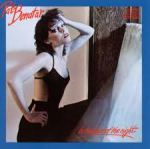
heat of the night by pat benatar

Andy, I think you would’ve loved it. We already had a bit of a thing for Pat Benatar, didn’t we, harking right back to that punk-lacy 80s heyday and tracing back to In the Heat of the Night: that debut that put that unmistakable voice on the world stage (and the guitar of songwriter Neil Giraldo, not to be forgotten).

She’s still got it, mate. In spades. Even if the mix at the Palais on Wednesday night felt at times as if I’d put my head inside a Rotorua mud pit. Her voice, all mid-tour husky but still hitting and holding the highs, a little croon here, a snarl there. OK, not so much of the snarling, 58 next January and all, and dressed in a suit with white cuffs, barely raising a sweat I shouldn’t think with that stage saunter. But she can still belt it out: All Fired Up to open, Love is a Battlefield to close, a trail of major and minor hits in between.

She and Giraldo have got the husband-wife banter down pat (no pun there, don’t hit me, damnit), as you’d expect after 29 years of wedded togetherness. It came to the fore when they straddled stools and “Spider” swapped his electric for an acoustic and, well, there was a feel, he said, like we were all sitting in their lounge room, which was on the money but also weird, given that when they’d finished passing the water cup back and forth, they belted out their trademark power pop: You Better Run, if I remember, and definitely I Don’t Want to be Your a Friend. Banter-rock-banter-rock, a tale for almost every song: that’s how the night went, never really finding any momentum but fun all the same.

Giraldo played piano intro on a couple of tunes, but I reckon – don’t know if you’d agree about this — that they could’ve got a keyboard player in and saved them the heavy lifting and us the backing tape. Still, great drums and bass when they were in play, which you need to give this kind of pop music real grunt.

It made me feel a little sorry for the Bangles, who supported, the now-trio coming across on stage as a little rusty — not that they ever really had the vocal chops, as much as we might’ve enjoyed Manic Monday or Hazy Shade of Winter back in the day. Walk Like An Egyptian got the punters up, I’ll give’em that, and there’s a new album on the way next year, and you’ll be happy to know they still look poppy though I was too far back (but in the centre, mate, Pat right in front, yes indeed) to see if Susanna Hoffs still has the cute eye-roll thing going on.

Benatar was where it was at, for an on-schedule 90 minutes. There was the new take on the torch song, Benatar exhorting the crowd to hold aloft their lit-up mobiles — ‘take pictures, I don’t care’ — for the arm-waving We Belong, and Giraldo finished off the encore with a neat little Godfather riff (an ode to his Sicilian heritage, I gather, given a previous reference).

You know the thing that really kicked? The spare seat next to me. It’s been bugging me for years now, in one form or another, and funnily enough it was Shadows of the Night — only the second song in — that really made it bite. You can never tell what’s gonna get you, can you?

It’s been a hell of a year, brother: The Cult, Concrete Blonde, Benatar. Wish you were here.

**

  • Set list (not in order and probably not complete, 27/10): All Fired Up (opener), Shadows of the Night, Hell is for Children, Invincible, You Better Run, We Belong, Somebody’s Baby, Hit Me with Your Best Shot, I Don’t Want to be Your Friend, Love is a Battlefield (closer), encore: Let’s Stay Together, Heartbreaker.
    **

    There’s footage at YouTube of Giraldo and Benatar singing I Don’t Want to be Your Friend taken at the previous night’s gig — Benatar played back-to-back shows in Melbourne. The song starts around the 3:30 mark.

    Set list (not in order, not complete): All Fired Up (opener), Shadows in the Night, Hell is for Children, Invincible, Promises in the Dark (?), You Better Run, We Belong, Hit Me with Your Best Shot, I Don’t Want to be Your Friend, Love is a Battlefield (closer), encore: Stick Together and Heartbreaker.

    15 years since her last tour to Oz; sidelined by child-rearing.

    31 years together with guitarist ‘Neil Spider’ Geraldo (29 as husband and wife),

    Turning 58 in January

    Acoustic guitar, stools, passing water in open sign of marital bliss

    Piano intros on some tunes, but maybe adding a keyboardist to the drummer and bassist could have saved them the trouble and also allowed them to dispense with the annoying backing track.

    Mobile phones aloft – safer than lighters, certainly – for the We Belong lovers’ anthem.

    A Godfather instrumental into closing song Heartbreaker.

  • Anne Rice, Muslim-based super heroes, and pigeons as music critics

    A quick pass of the Guardian UK reveals these juicy morsels:

    SEEING THE LIGHT: Anne Rice on why she left the Church (again) and still thinks angels are cool

    This is crazy. There is no basis in scripture for any anointed hierarchy, let alone a male hierarchy. It’s just not there. And how in the world did this man-god die, preaching against the temple, and then we wind up with St Peter’s in Rome? How did that happen? There were so many issues where I thought the church was flat-out immoral. I had to leave.

    CRITICS TAKE FLIGHT: Pigeons, famous for crapping on the Kings of Leon and ending their concert, take aim at recent music in a laugh-out-loud funny review (okay, it’s from July and I’m still catching up, but how can you go past gems such as this?)

    Now we’re usually drawn to cheesy music – reggae buskers, organ grinders, Kevin even exploded by flying too close to the speakers at a Ted Nugent gig once – but this is too much even for us. The jaunty upstrokes! The overpowering odour of 1996! The fact that this song insists you think of that droopy-faced streak of piss Neil Hannon having sex! Crap in its mouth! CRAP IN ITS MOUTH!

    FIGHTING FOR RIGHT: And this rather timely piece about a bunch of Muslim-inspired superheroes forging an alliance with DC’s heroes. Here’s a taste of the border-breaking article, courtesy of The 99 creator Dr Naif al-Mutawa:

    “In Kuwait, it’s so sad, it’s funny. When I was growing up, Animal Farm was banned. At least in the Soviet Union they understood the problem was that it’s about anti-totalitarianism, whereas in Kuwait it was banned because it had a pig on the cover.”

    Let Me In – not the right one

    Hammer Horror has returned to the big screen with a remake of a Swedish vampire film based on a best-seller by John Ajvide Lindqvist. The studio has left itself plenty of room for improvement.

    Let Me In tells the story of a lonely 12-year-old boy who befriends a lonely 12-year-old vampire (‘I’ve been 12 for a very long time’) in the lonely snow-covered city of Los Alamos. The roles are played superbly by Kodi Smit-McPhee and Chloe Moretz (she carries a real sense of otherness, that age beyond her apparent years), ahead of a cast who also perform wonderfully.

    The love story between the two is the core of the book, a what can perhaps most kindly be described as langourous unfolding, set against the backdrop of a police investigation into cult-like deaths in the neighbourhood, a broken family and social disillusionment. The Swedish movie (for which Lindqvist wrote the screenplay), a beautifully photographed rendition, dropped the police angle, while the Hammer version has neglected the social dystopia.

    Sadly, Hammer has also neglected the elements of Lindqvist’s story that gave it its impact — pedophilia and sexual ambiguity — and instead opted for twee CGI and some questionable narrative devices. An introductory discussion of religion and evil is left to wither, an attempted cyclical opening fails to deliver, a basement haven appears out of nowhere and, unlike in the book, serves no purpose.

    Owen (names have been Anglicised, removing yet another layer of ambiguity from the vampire) is an only child with a single mother — mum is kept offstage, blurred, out of shot, while father is a mere voice on the phone. Camera work is excessively stylised, using blur and extreme close-up to magnify the sense of isolation.

    There is no getting past the book’s lack of narrative tension, but I couldn’t help feel that the Hammer version is a watered down and uninspired echo of what is an emotionally effective and atmospheric text, thanks in part to the combination of the Swedes having already taken the arthouse road and the filmmakers lacking the fortitude to present the gutsiest parts of Ajvide’s story.

    Billy Thorpe – a eulogy from Tangier

    I saw Billy Thorpe play twice, back around 2006 supporting touring internationals, and there was no mistaking the man’s talent with voice and guitar, and charming, unaffected stage presence. He rose to fame with the Aztecs, a veteran of Australia’s formative rock n roll years, and he was in fine fettle still. I was particularly impressed with new material he played from a forthcoming album to be called Tangier, inspired and influenced by his time living in Morocco. And then he died, in February 2007, and Tangier was a work in progress still, and there was a real feeling that we’d not only lost a music great, but a special piece of music as well.

    Fortunately, Thorpe’s family and mates have rallied and Tangier is now on the shelves. It’s a beauty, too.

    There are Middle Eastern influences aplenty as songs range from Zeppelinish rock to slow-burning, percussion-led numbers and the foot-tapping, hand-twirling instrumental Gypsy. Jack Thompson adds spoken word to two, and there are plenty of strings of choiral backdrops that make this a lush, atmospheric production.

    Since You’ve Been Gone, a dirge for his mother powered by acoustic guitar, organ and hand claps, carries extra weight.

    Songs such as Marrakesh and Tangier, the latter with news broadcasts incorporated into the text, are clear odes to the country and its profound impact on Thorpe, while seven-minute Fatima funks it up.

    Long Time, the album’s second instrumental, is a contemplative affair with guitars leading the journey that leads into the grandiose, martial In a New World, a cinematic spoken word with Thompson doing the honours.

    Further adding to the album’s diversity is We Will Be There, a gospel-flavoured track that’s almost a capella, segueing beautifully into the closer, the rapturous Out of Here, a bopping track showing off Thorpe’s vocal high range.

    With songs referencing angels, death and loss, Tangier carries an extra emotional level, but even stripped of that, it stands as a damn fine album. It serves as a fitting farewell that shows us not only what we’ve lost, but what we gained from a life lived large.

    Concrete Blonde storm Melbourne’s Palace

    bloodletting by concrete blonde

    The penultimate gig of their Australian tour, at Melbourne’s Palace theatre last night, found Concrete Blonde in fine form indeed as they celebrate the 20th anniversary of their breakout album, Bloodletting.

    Lead singer Johnette Napolitano is clearly relishing performing: she was relaxed and smiling, utterly gleeful as she called support band Melbourne-based Graveyard Train up to provide backing vocals on the whimsical Ghost of a Texas Ladies Man and the grin never left her face.

    For the Brisbane gig, four nights before, I’d hugged the barrier to catch every expression from this big-hearted singer, but this time I hung back on the rail of the balcony to take in the scene and let the music do its stuff.

    The lighting was simply effective, the stage bathed in lancing red spots for the opening Bloodletting (again segueing from a tape of the ominous bassline of Bauhaus’s Bela Lugosi’s Dead) flicking to greens and blues for the chorus, and thereafter continuing to reflect the mood and highlighting solos.

    With Jim Mankey on guitar — occasionally smiling, a big display from a man who tends to not give much of himself away on stage preferring to let the guitar do his talking — and Gabriel Ramirez on drums, Johnette laid down some thundering basslines as the band rocked out.

    But Johnette’s voice was the key instrument, showing nuance and power as she cajoled, mourned and raged. When I was Fool exploded, Your Haunted Head became a jam, Run Run Run was as hard and heavy as you please. The crowd sang along, the chorus especially noticeable on Happy Birthday and the closer, Tomorrow Wendy (about a woman with AIDS who commits suicide), during which Johnette issued a plea to support gay teenagers and reduce the instance of suicide. She changed the finale of the song, saying she’d think everything would be all right, yes she did.

    It was a shame there were a few in the packed house who didn’t respect the band’s request to forgo taking photographs — honestly, dickheads, do you really think flash from a distance is going to achieve anything but annoyance for the artists and those around you? (sigh: that’s a rant for another day)

    There was a lovely dig at BP on Everybody Knows (she plugged the upcoming Leonard Cohen tour after this cover) — the Gulf has not been forgotten — and she added what sounded like a Native American chant to the cover of Midnight Oil’s Beds are Burning.

    Humble and self-effacing, yet passionate and possessed of one the most striking voices, Johnette — in her 50s — appears to occupy a happy place indeed in her musical career.

    How fortunate we are that she continues to share the love.

  • The set list was, as far as I could tell, the same as in Brisbane, though they played Someday last night and I didn’t note it on Tuesday; possibly I missed it in my recollection, though last night’s gig did last the best part of two hours, a little longer than Brissie.
  • Fonts of creativity

    So what typeface do you like to write with? That’s the question asked of these authors at this site, and it’s interesting reading, how a typeface can help a writer grapple with the process. It seems the typewriter era still leaves a mark on the font of choice! A friend changes font with each draft as he edits, to keep the text fresh, which is something I haven’t tried, but probably should if the amount of repetition in my latest piece is any guide.

    And while we’re at it, here’s another piece in defence of typography — some interesting history on the evolution of typefaces.

    For the record, I prefer to type in Times New Roman — I like my serifs.