More good stuff, inc. Aussie dark fantasy at Apex

Still catching up after some touring — more on that once I’ve sorted through the metric s-load of photos and try to remember where I was for the past month — but it’s worth a peep over at Apex, where Tansy Rayner Roberts surveys a bunch of Aussie writers about their weird stuff. Interesting stuff, about our love-fear relationship with the bush and the sun, and a great quote from Margo Lanagan:

“I’m regularly surprised by how timid and squeamish some readers are”

  • I couldn’t get to the Digital Writers Conference in Brisbane, but Alan Baxter was a panelist and his report makes me jealous! Alan also reports on the launch of Hope, a suicide awareness anthology that has an enviable TOC of spec fic writers — the Paul Haines story in particular pops out and demands attention; get it anywhere you can!
  • Two very informative writer-bloggers have been prolific while I’ve been away and I’m still trying to catch up, but for starters, I loved the suspense and tension post from Terribleminds, and Ian Irvine has given prolific a bad name, actually, not only unveiling his own painful path to publication but getting guests in to share their writerly wisdom e.g. this excellent post from Stephen M Irwin on the first step.
  • It’s Nanowrimo — I’m not indulging, have already done a couple of sprints this year and needing a little chance to catch a breath before the new year. There’s some wisdom from Patrick Duffy for those who are, though.
  • Our fellow World Fantasy colleague Ellen Gregory has provided a glimpse into both the con and San Diego’s Old Town. World Fantasy is a superb conference for writers due to its focus on the business, even if this year’s program was a little less interesting for my interests. A panel on the social impact of true immortality was an eye-opener, however; I hope I can find my notes! Plus there was the ‘for the hell of it’ Aussie party catered by the always generous Garth Nix, Jonathan Strahan and Sean Williams, and the Brits did a great job of raising interest in Brighton 2013, though the Marmite almost cost them the goodwill!
  • Another snippet of nom nom nom: for those unpublished writers with a YA MS hot to trot, check out the Hardie Grant call as posted at Perilous Adventures.

  • I am a judge for the Aurealis Awards. This post is the personal opinion of the writer, and does not necessarily reflect the opinion of any judging panel, the judging coordinator or the Aurealis Awards management team.

    Cornholed by a thematic devil wombat, and other writerly observations

    “If you dance with the Devil Wombat, you get cornholed by the Devil Wombat.”

    This is an example of a theme, as espoused by Chuck Wendig over at his blog: there are 25 superb points about the importance of theme to a story, and some have got me totally cracked up. Laughing and learning at the same time: gold. Plus, what’s not to love about a devil wombat?

    In other news:

  • From theme to suspense: Ian Irvine, whose website I’ve recommended before due to his insightful advice on the publishing industry, has offered a whole bunch of summaries about building suspense in a story. There’s a bit of crossover, but overall, it’s good stuff.
  • The Australian Horror Writers Association, which fell into something of an open grave this year, looks as if it’s scrambling out, announcing a dedicated page for its mag, Midnight Echo (subs for issue 7, theme of ‘taboos’, open Oct 1 — OMG that’s tomorrow, where has the year gone?) and promising rejuvenation in the new year. The mag is having a subscription drive: you can win stuff.
  • Speaking of zombies, Cam Rogers has expressed his love here. And Chuck McKenzie’s Necroscope is still shambling along nicely, nom nom nom.
  • And Michael Pryor is, for those patient souls looking for almost guilt-free procrastination, has listed a vid of ‘how writers write‘.
  • And then there’s this (reported at the Guardian UK — where, non-writerly, you can listen to the whole new Zola Jesus album, Conatus, but having done so, I think it might be a slow burner, a bit like her Stridulum II which has great tracks but kind of wears all at once…): Amazon’s new line of Kindles, including the Touch and the Fire. Resistance to the juggernaut is becoming futile with the plummeting price point, restrained only by geography, it seems.

  • The Waterboys and Fred Vargas: say again?

    A French detective on the trail of a vampire killer. Two Aussie blokes stealing water from a bunch of fascists. The connect, I hasten to add before tries to have me committed or at least reports me to Archery Australia for drawing a particularly long bow, is between the quote marks.

    Yep, dialogue.

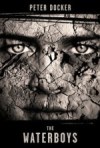
    the waterboys by peter docker

    The Waterboys is Peter Docker’s second novel, and it’s a beauty. The Western Australian writer, who also has the acting string on his bow, has delivered a beautiful depiction of an Australia that never was but might’ve been/should’ve been/might yet be/never could be. It deals with a white bloke who’s in tight with the Countrymen: at their core, indigenous Aussies of Western Australia who forged an amazingly enlightened understanding with English colonists. Part alternate history, part science fiction, part fantasy, the rendering of landscape and spirituality is stunning. You can read a full review of Docker’s dystopian/eutopian vision at ASiF.

    One of the elements that really struck me about the book was the dialogue. It’s as sparse as that desert country, but it’s steeped in character and personality. As such, it complements the prose very well indeed. There’s very little information relayed, either, just the bare bones, because the story is not about explanation — it’s about acceptance. What will be, will be, already is, already has been: time is a very different fish to our Western linear or even circular understanding.

    For a novellist to convey so much information about story and character through virtual stillness is a hell of a feat.

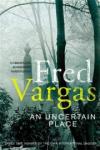
    an uncertain place by fred vargas

    Fred Vargas, French crime writer extraordinaire, is at the other end of the scale, to some extent. I read her An Uncertain Place a little while ago because of the presence of vampires in the text — the crime under investigation relates to the generational damage caused by a family feud in the way back when, with an outbreak of ‘vampirism’ and the resulting bloodshed that followed. So, no fangs, but lots of chinwagging.

    Vargas is also a practitioner of sparse, in that the contemporary world is barely sketched. Paris? Pshaw. The inspector’s office? Well, there’s a cat on the photocopier, and it’s a very cool cat; it made me smile to read about it.

    I didn’t much enjoy the book — it is an English translation from the French but I don’t think that was a factor — for a couple of reasons, primarily the personality of the chief detective — kind of beige, really, and there’s a sacre bleu comment for Vargas fans — and way too many coincidences propping up the investigation.

    But two things I did enjoy: one, the way that little pieces of information, in this case mostly historical anecdotes about men eating unlikely things, kept cycling through the text, sometimes with different metaphorical impact. Tasty.

    And secondly, and this is where the bow string twangs even if the arrow goes adrift, the boldness of the dialogue, not just in execution but in display. I had to stop reading at one stage and flip back, because I realised that in the space of some three pages of almost pure dialogue, there were barely any dialogue tags. Admittedly, it was a one-on-one conversation, so keeping up wasn’t that big a task, but still … Obviously, Vargas has nailed her characters in their speech, to be able to pull that off.

    The upshot of the two works, and the reason for sharing, is that it made me think of all the nodding and gesturing and sighing and godawful stage directions I throw around in my manuscripts to try to keep the identity of the speaker clear.

    And then here are these two very different writers, both saying more with less, and saying it with a distinctive voice.

    I hear what they’re saying.


    Art and artifact and market value

    Alan Baxter shows a pretty cool head on the issue of the .99c prince for e-books, and his post also touches on another issue that’s been banging around since a writers’ group discussion a month ago: what’s my price?

    This comment from Alan really hit a nerve with me:

    I love getting contributor’s copies of books I have stories in, because I’m a vain fucker and like to point to the brag shelf and say to people, “Yes, I have work in all those anthologies. And those are my novels. Ahaha.” Shut up, I need validation.

    Validation. Yes indeed. Because I too like my trophy book, however vain that may sound. Because when the doubt sets in, as it frequently does, it’s comforting to look at a shelf of published works and say, well, those editors all thought my work was okay. So, maybe I should turn the TV off and press on with this yarn.

    The thing is, who are those editors? What kind of benchmark are they setting? Is that anthology something I’m proud to have on my CV, or is it just a another centimetre of paper adding weight to the shelf?

    It all comes down to what the writer wants. And how much they value their work.

    I’m inclined to agree with Cat Sparks, who wrote earlier this year in WQ magazine that, for someone who wants to show they’re serious about their writing, one byline in one well-respected title is worth more than 20 in no-name nil-visibility publications.

    Your CV — your bibliography — is an indicator of the kind of writer you are: quirky, top-shelf, developing, esoteric …

    There’s a market for any story, I suspect. There seems to be no shortage of cowboys roaming the internet range, offering to publish your finely crafted yarn in return for ‘exposure’. Not even a contributor’s copy, but they might offer you a discount to buy your own. These outfits strike me as being particularly predatory, using their contributors not only as material but as a primary market as well.

    Of course, there isn’t a lot of money in publishing at the bottom end of the scale. There’s probably an argument at the moment that there’s not a lot of money at any end of the scale, except for those few exceptional sellers who help finance the rest.

    One pay scale that, anecdotally, seems to be increasingly common is the royalty share. It’s nice of the publisher to count you in in the profits, even nicer if that’s in addition to an up-front payment and/or a contributor’s copy, but I wouldn’t be holding my breath waiting for the cash to roll in. Take a look at the formula being used to calculate the royalty, the lifespan of the contract, the likely sales of the antho … It is at least a gesture and it does encourage the contributors to help market the antho.

    And then there markets that offer no payment, but contributor copies. I don’t mind this tier at all. It’s honest and it’s contractually clean, and it shows respect for the contributors. It’s your story; of course you want to see what we’ve done with it. Here, show your friends …

    And hey, if you can get someone to actually pay you money for your work, a token payment or otherwise, all the better. That’s a serious benchmark. That’s a sign of commitment and professionalism (you hope).

    Some anthologies just sound so cool, you want to be in them. Some magazines have serious cache. Some themes stretch your boundaries, challenge your abilities. Some are published for good causes. Some have ace editors. All good reasons to submit, regardless of the pay packet.

    It’s fairly common to hear a writer squee, not so much about being in an antho, but about who else is in it. Yeah, there’s a buzz, rubbing shoulders with your role models.

    I suspect, too, that your requirements from a market might be more generous if you’re prolific and able to pepper the groovy anthos at all levels of the food chain.

    If you’re like me, and squeezing out a short story is akin to pulling a length of barbed wire in one ear and out the other, then you probably want to make those sales count.

    Me, I like the pretty, even more than I care about the money, in some ways. Money is good, but money goes away. That book, it lingers. I like a book that looks good, that has an editor who tries to get the best out of my story and a publisher who thinks enough of my work to, at the very least, give me my trophy for effort: my contributor’s copy. In the flesh. On the shelf.

    And then, the art

    You might notice that the word ‘art’ is contained within ‘artifact’. In the case of books, that’s not the spurious segue it might at first appear to be. Part of my love of physical books is the art: the cover, most obviously, but the stock, the font, the layout, the feel, the comfort … It’s the same reason I still by CDs as my first option.

    carrotLee Battersby has been exploring not so much the physical art of the artifact, but the actual art of the story. I liked his take on it, as illustrated by a carrot — yes indeed! — very much, and added my two bobs’ worth at his invitation.

    Up the critique without a paddle

    texas chainsaw massacreTo be critiqued or not to be critiqued: that is the question.

    Or at least, it has been lately: two of my crit group have blogged on the subject. Lamellae offers a five-post selection of pros and cons; Ellen Gregory ponders the ramifications of a recent going-over of the first chapter of a new work in progress.

    It’s a bold move, submitting such raw copy to a crit group. After all, the group is looking for problems, and damn but they will find them! The question is, how relevant are they for a still unformed work? The issue for the writer is, what are they looking for from the critique — world building and character weaknesses, perhaps? Does this feel like the right place to start this story? The worst thing is to allow the feedback to derail the work (unless, of course, it’s really that dire; sometimes, you need someone to tell you to ditch stuff, even stuff you love, because it just doesn’t fit — ah, my darlings, dead on the cutting room floor). All those drops of red blood, I mean ink, coming from the marked-up pages aren’t necessarily a death sentence. But yeah, watch your adverbs as you progress, sort out that character’s motivations, make the magic system a bit more transparent … take those informed opinions on board and you might save yourself a bucket-load of rewriting later.

    A crit group is invaluable, to my mind, as long as it is a group of peers who will, constructively and respectfully, push you to be the best storyteller you can be. It’s easier if that respect extends to the genres in which you work; my experience in workshops with mixed genres has not been as fruitful as those where everyone came in with a base understanding of how the supernatural ‘works’, or at least were open to the concept. In much the same way that I struggled to care about the minutiae of X and Y’s relationship: when does something happen? Mind you, the uninitiated can be great for spotting logic holes and areas that have been glossed over because of an assumption of what the reader will already know the tropes.

    There’s a skill in not only giving critique but receiving it. Thick skin helps. A preparedness to take on board the advice, in hand with an instinct to know what is relevant and what isn’t. Different critiquers have different strengths: some are great at logic and story, others at character and motivation, others again at grammar. A group with a mix of strengths is very handy for getting that story as tight as it can be.

    The simple fact is, that the author is, more often than not, a terrible editor of their own work. They know the story, but not necessarily the one that’s on the page. They have blind spots, to both story and to prose. There are two tricks for better self-editing: one is to read the work aloud, the other is to print it out in different fonts for each edit. Both help to highlight poor construction and break down the haze of familiarity. I always edit on paper, once I’m at that stage.

    And I rely on my crit group to save me from myself. And hope that, in return, I can also offer some useful advice. Politely, constructively and respectfully.

    On commentary writerly

    typewriter keys

    Blogs, blogs, blogs. Who can keep up with them? Nicole Murphy has some of the sting out of the Google Reader task by assembling a fine collection of recent blog posts about the craft and recent headlining happenings, both with a focus on spec fic.

    Further afield, The Creative Penn and Jay Kristoff both target steampunk in all its dubious glory but undoubtable fun, with Penn featuring Phoenix Rising, which sits on my to-read shelf, and Jay offering an ongoing history and commentary of the movement.

    Terribleminds offers irreverently good ways to make your characters interesting — pain is the primary method — and Patrick O’Duffy (who shares my love of Batman, bless) also puts characters through their paces. Make’em work, make’em hurt could be a motto.

    It’s great fun going through these blogs — am I hurting my characters enough has been at the forefront of my mind — because anything that makes you reassess your work has got be to be beneficial. A fresh approach, a new understanding of process, a way to break out of the comfort zone: all helpful and, indeed, necessary for the writer looking to develop. But at the end of the day, all the reading (blogs AND raw material — you know, actual books ‘n’ stuff) in the world ain’t gonna amount to more than interesting conversation at the bar if you ain’t writing.

    The winter’s day of our discontent

    flowers in sunshine

    It was one of those glorious winter days when it actually feels like spring: cherry blossoms beside the path, birds all a’flitter, wattle in bloom, sun just a touch too warm and bright coming through the leaves … It was a joy to be outside.

    It was the kind of day that makes it all the harder to turn one’s back to the window and take up, yet again, the keyboard. Not for the first time, I found myself asking, why am I doing this? Shouldn’t I be driving to Dromana for lunch or picnicking in the park or trying to find someone’s dog to take for a walk? A simple beer garden would do justice to a day like this. Some rhythm n blues by the bay, hell yes.

    But here I am in my imaginary world, a world that no one else might ever get to see.

    Why writers write is one of those topics that surfaces every so often, often followed closely by the observation that most folks believe that they can write: I’d like to write a book one day. Or, as Dmetri Kakmi confronted in a recent blog post, ‘I might be a bit of a writer myself’.

    jack nicholson in the shining

    All work and no play . . .

    The post was an eloquent and passionate defence of writing as art, or at the very least, vocation. In it, he posits that writers write because if they don’t, they’ll die. I get that. I tried to stop. I couldn’t. The voices just wouldn’t leave me alone, and my ego wouldn’t let them lie still on the page: I just wanted to share. Sorry about that. But hey, there’s always room for one more outback vampire story, right? RIGHT?

    Louise Cusack has offered some insight into what drives writers: why they use this medium to express themselves, to find a sense of belonging, to explore their world . . .

    Which leads to, why do we write what we write? These days, there is a real sense that writing can be a business: churn out the product, score big with throughput. McDonald’s for the literarily inclined. Hey, it’s a market: go for it. Not many jobs allow you to indulge your super spy / princess bride / secret life from home in your pyjamas and get paid for it.

    My only caveat there: at least learn the trade craft. I expect my plumber to know his tools; I expect my authors to know theirs. The art / industry grey area does not excuse ignorance: take a grammar course FFS.

    So, do we write the stories that so attracted us to reading in the first place? I know that a large part of what motivated me to seek publication of my writing was my perception of an absence of the stories I liked to read, set in my own country. Why did all these wonderful adventures have to happen in England or America? Why didn’t these people speak my language? Why did I have to translate their idiom to enjoy stories such as these? Snow at Christmas: WTF? Snow: WTF? (I have since experienced snow. I can see the attraction, but still: WTF?)
    dr frankenstein and his monster

    It's alive! Mouhahaha!

    I suspect many writers — the ones who see the craft as art or vocation, not just a money-spinner (and good luck with that) — get over that, grow bored with that little pond and go diving out into the wider ocean of possibilities. New genres, cross-genres; new platforms. New voice, new style, new terrain.

    They choose challenge over comfort, for both themselves and their readers. They’ve probably got something to say, and are seeking new ways to say it.

    Of course, finding a publisher who will want to take the risk on their talent spreading their wings, threatening to erode that almost mythical beast known as ‘the readership’ (you know it; it demands on pain of excommunication from its hip pocket the next book right now damnit!) … economic rationalism vs art. E-publishing to the rescue?

    There’s also a certain masochism in the writing game: parties missed, friends and family neglected, sunshine lost. All for the sake of the art. Or the job, if you think of it like that. The two probably aren’t mutually exclusive, but there might be some compromise in there. I don’t think anyone should be neglecting friends and family, not for art and not for job. Life’s too short. That’s the discipline, to not only write the work, but to not write the work. To make time for the important people who also deserve our attention.
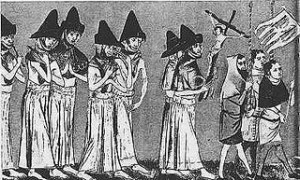
    flagellants

    Not tonight, darling. I have to, um, write.

    So why write? It’s a largely anti-social and self-absorbed way to make a crust — if you’re lucky. It is, contrary to popular supermarket aisle opinion, not easy to deliver a well-crafted read: writing, editing, publishing, marketing.

    Bottom line: writing is fun. Taking that intangible inner life and transferring it onto the page for others to share and transfer into their own inner life (the creation of multiverses). Arranging and rearranging the words into the ideal form, so that the form itself is pleasing as well as the world so created. Playing god with the benefit of a backspace key. And all the richness of language, a global pool of knowledge and culture, to draw from. And I mentioned the pyjamas, right? Right.

    It’s worth missing a few days of sunshine. The question remains, though: how many? Maybe until it ceases to be fun. Maybe, that depends on some personal formula of discipline, external commitments, expectation and pragmatism.

    And maybe that comes down to who we write for. To what we want to receive from our writing: a few hours of distraction or escape; a pat on the back — from anyone; a pat on the back from someone we admire; filthy lucre; a warm inner glow. All of the above. Louise says,

    Many writers have gone to their graves without ever having published a book, perhaps never having shown their work to another soul, which sounds terrible and tragic, and it would be if they’d tortured themselves about that. But that only matters if the showboat part of us is the important part. What if the thing that counts most is the creation of the story, the liberation of the characters from whatever pocket of imagination they’ve been hiding in, out onto the page or the screen?

    There’s probably some analogy about trees falling in forests and stories unread in there somewhere, but it’s a nice day. The kind that provokes rambling, not just in the outdoors but on the page as well (so it seems). So I might go smell the roses. I’ll call it research, or recuperation, or downtime or somesuch.

    McKee on Story, and the nature vs nurture argument about writing courses

    Robert McKee Story seminarI attended Robert McKee’s seminar on thriller writing recently. It was a revealing event: an entire cinema packed with writers chasing insight into how to write a thriller. It was a microcosm of just how booming the writing industry is, fuelled in part by the opening of the self-publishing market due to affordable and relatively easy ebook and POD technologies. I don’t really think of the other bodies in the room as competitors, just contemporaries: I’m a big believer in the phenomenon in the writing industry perhaps best epitomised by the Amazon button that says if you liked this book, you might also like …

    But there I was, me and my contemporaries, for a very long day, receiving a summary of the various styles of thriller, the identifying qualities of same, and then the nitty gritty: component parts, structure, conflict and, perhaps most usefully, the idea of switching positive-negative valencies within each scene, sequence and act.

    McKee is famed for his book Story and the seminar industry he’s spun out of it, and I got a lot out of the day (Ellen Gregory provides a handy summary in a series of blog posts). The physical seminar was easier to digest than the written work, I found; McKee’s focus is on screenwriting, but the basics apply equally as well to literature. I was mentally checking off, and occasionally wincing, as McKee unfolded his theories (Se7en was his case study). Anything that makes you look at your process, at the components of your craft, that helps you hone your skills, is valuable: up to a point. You still have to write the damn story. And you still have to have a story worth writing. Ah, now there’s the rub.

    Cameron Rogers gives the McKee school of writing class a serve, while finding useful insight in the simple three-act scenario of Lennon and Garant: put a likeable person up a tree; throw rocks at them; get them down from the tree. I like that.

    (I’ve only recently discovered Cam’s blog: it’s a time-killer, both erudite and fun with far too many interesting YouTube clips. And, god, Music of Razors is still on the Shelf of Woe, waiting for that heady day when I get to that to-read pile.)

    Which suggests, courses for horses. But can ‘writing’ be taught?

    As Dmetri Kakmi wrote in a recent defence of writing as vocation, there’s a school of thought that says everyone has a novel in them — which is probably true in terms of content. But perhaps not everyone, even with a McKee seminar and a couple of handy books (I favour Stephen King’s On Writing as an inspirational text) on the desk, is capable of delivering that story in an effective and engaging way.

    While I’ve learnt a lot from writing courses — I wish I’d done my Year of the Novel with Kim Wilkins a decade earlier, when I first seriously turned my hand to getting a novel written and having it published (and being paid for it, damn it!) — I like to think, in line with Dmetri’s ‘rant’, that there is a talent as well as a skill. I think the skill can be honed; I think the talent comes from prolific reading, exercising of imagination and curiosity about the human condition. If talent is a pool of creative lava, then a writing course — the right writing course — might help channel that lava into a fruitful channel. No burnt fingers, no gelatinous puddle. There are plenty of good ideas out there, but good ideas well crafted, well, that’s another story.

    I’ve read a bunch of yarns that have plenty of spirit, but are let down by deficient craft. I’ve read even more than have a modicum of craft, but little spirit. It’s where craft and spirit combine that we get that story that sticks: the one we have to tell all our friends about.

    Dmetri says if you have to ask if you’ve got what it takes, you don’t; I think we prove it to ourselves every time we choose the keyboard over the sunshine, or at least, we test ourselves along those lines. Writers are, by nature, by and large, insecure creatures: as with any artist, their passion is placed in the public arena and invites both the brickbats and bouquets. Do I have what it takes — to get to the end? To sell this story? To make a reader give a damn?

    At the end of the day, we’re writing to our own standard. Some folks will be happy to just sell a story to any market, paying or otherwise. The byline is enough. Others want cash up front as recompense for all the days of sunshine they’ve missed out on. Some churn out plastic, others are artists; sometimes, both might make a living out of it. Some have quantitative goals: units sold, cash earned. Others, a qualitative goal: to write as well as their hero, or to write an award-winning work.

    We set our own benchmarks and I’m in no position to rank them, but I do set a base level of competence for someone calling themselves a writer: respect for the words, respect for the language. You don’t have to be an uber stylist but at least know where to put the full points. At least know what the words mean. And readers should be discerning on this. A 99c price tag, not even a free download, should excuse abuse of language. Incompetence and willful ignorance should never be excused.

    King talks about his ideal reader, and I think that’s part of the benchmark. Who do we want to impress with this story? Who will we hold our breath for, while we wait for the shake or the nod?

    I’m glad I did the McKee seminar; I enjoyed the lens his observations brought to my appreciation of my work. But I still have to apply the lessons learnt. And I still have to answer the question: do I have what it takes? No amount of courses is going to solve that riddle; that one is answered only in the doing.

    Looking for words in the rabbit hole


    Queensland Writers Centre CEO Kate Eltham played the white rabbit, and a bunch of we Alices gave chase: the goal, 30,000 words in three days. Some gathered in Brisbane while others of us, the diaspora of Queensland writers and other interested parties, joined in online, sharing totals and motivational mentions of caffeine.

    How liberating to be given permission to abandon all but the most major of priorities in order to devote three solid days to wordage. For wordage was the goal; quality could come later. The aim was to get that story down, or at least a solid chunk of it.

    My goal was a little different, though. I’d already hammered out a bit over 90K of a novel, but I had to write and insert a second point of view character to help fill in some gaps, add some suspense and provide some contrast. It’s a fairly brutal story, this one; moments of levity are to be grabbed wherever they can be had!

    ms pages on a kitchen table

    There's a story in there somewhere: grappling with scene progression.

    I thought I had eight scenes to write, expecting no more than 1000 to 2000 words for each, and it turned out I had 10 to write, and they amounted to about 11,000 words. It took two days, averaging maybe 500 words an hour. Some of the other rabbit holers did meet their 10,000 words a day quota — w00t!

    The third day of the rabbit hole was devoted to smoothing out those new scenes, reconfiguring the existing text to accommodate the new material and ensuring continuity. As is the way of things, a whole new character emerged, with enough legs to play a bigger role in a follow-up should such a thing occur. I’m tempted to call her Alice, in honour of the rabbit hole, but I’ve already got a character with that name tucked away waiting for her chance in the spotlight, so for the moment she’s Felicity because A. she’s felicitous and a felicitator but, ironically, not particularly happy, and B. I still owe two sisters a character named after them after inadvertently slipping an Amanda cameo into The Darkness Within. I have managed to slip in an Alice nod to the rabbit hole, though; I hope it survives to the final cut.

    In tribute, here’s a cool clip of the Sisters of Mercy performing Alice, one of my favourite SoM songs and the inspiration for the aforementioned character in waiting. Note: The Sisters are touring with Soundwave Revolution: this is very exciting.

    So, three days of fairly solid wordsmithing later, what have I got other than square eyes and a slight case of jetlag?

    About 108,000 words of first draft manuscript littered with notes and sporting a most satisfying cross-hatch at the end (the mystical The End only comes when the draft is ready to be subbed — that is truly The End). And the possible beginning for a short story: what could be the second to come out of this universe.

    Will the MS go anywhere? Well, that’s always the question, isn’t it? But the story feels good — rough but good — and, regardless, I enjoyed myself in my plunge down the rabbit hole, bumped into some new writers online and learnt some stuff along the way. Would I do another rabbit hole? Most definitely. It’s a three-day trip, man. Just ask Alice.

    Writing in the pub … living the dream!

    In the past couple of weeks, a wee group of us have been trotting down to the local and setting up laptops for a writing session.

    The boozer has comfortable booths that offer some seclusion from the hurly burly, such as it is on a weekday afternoon — the occasional zombie stumbling in from the pokies room, that blinking expression that suggests, Has anyone seen my life?; tradies catching a quick liquid lunch; suits huddled over their meal. So not too distracting. The pub also has a really neat ceiling of timber trusses and panelling, a bit like a cathedral, so it rewards that desperate heaven-wards stare for inspiration. And the staff don’t mind us hanging out there, occasionally feeding off their power and keeping the coffee machine burbling away.

    Usually we’ll have a chat over lunch (the pub’s got a pretty keen menu) and a glass or two of red, and then it’s down to it. Though the last time, we got down to it first, and then finished off with dinner, because it was parma night. Regardless of the schedule, this is the beauty of the pub session. Our needs are catered for, no one has to wash up, and the loos are clean. And most importantly, there are no domestic distractions: no wifi to tempt a quick google check or email perusal, no sudden urge to go hang out washing or feed the cat; no, ahem, blog post to write instead. No escape from the blinking cursor and the blank page waiting for ideas to fill it. It’s the equivalent of walking up to a brick wall of creativity and bashing your head against it.

    We are each other’s dictionary, thesaurus, sounding board. Sympathetic ear (‘yeah, it’s annoying when characters go bad’; whip (‘just right the damn thing!’).

    It’s interesting that the three of us who meet regularly are all at different stages of our manuscript: one is editing those final scenes (yay!), another is pushing on past the first one-third mark, and me, I’m still trying to work out what the hell this story is about. Yup, actually doing some planning, trying to work both forward from the start that I’ve got on the page and backwards from the ending I’ve got in my mind.

    And the pub session seems to be doing the trick for all of us. Especially now that we’ve figured out the line between greasing the machine and bogging it — somewhere between two and three glasses!

    Ellen, one of my cohorts, shares her thoughts about the pub outings here.