I’ve scoured the Aussiecon4 program online and come up with these appearances at the convention, at Melbourne’s Convention and Exhibition Centre, for those who might like to catch up (outside of the bar area):
Saturday, Sept 4, 5pm
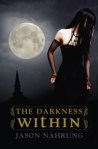
If anyone has a dusty copy of The Darkness Within lying around they’d like signed (or maybe an anthology such as Dreaming Again), I’ll be in Room 201-02 with pen in hand. (I believe Guest of hHnour Kim Stanley Robinson, amongst others, is also signing at that time.)
Sunday, Sept 5, noon
A reading in Room 215
Sunday, 1pm
Presenting a chat (for teens only) about the evolution of the vampire from Dracula to now, in Room 218.
Sunday, 2pm
I’ll be joining some very cool people indeed to support the anthology Dreaming Again (probably my proudest publishing credit), in Room 211 (keep your eyes, or ears, peeled, as there *might* be an audio version of my story ‘Smoking, Waiting for the Dawn’, available during the con).
Monday, Sept 6, 1pm
Joining a discussion on the taboos in dark fantasy, again with some very cool people, in Room 211.
I’m very happy indeed to be able to support the worldcon through this participation, so I hope some folks can come along to any and all of these: the more input the better 🙂
Death’s big business — cutthroat, too. This is brought home to Pomp (alas, the circumstance!) Steven de Selby, a minor rung in the corp’s Brisbane ladder, when everything goes to Hell. Helping spirits pass over to the great fig tree under the world is a family talent, though there are those who have spurned the calling. Not Steven, who finds the task of Pomping somewhat cushy: it pays well, and the only effort he has to make is visiting the recently departed once in a while to make sure that unruly denizens of the netherworld — Stirrers — don’t pop into the recently vacated meat and take it for a test drive. But now the old firm is suffering a shake-up and the new broom is sweeping mighty clean indeed. Steven’s on the run, his life in tatters and under considerable threat. Through south-east Queensland he flees, with a gorgeous ghost watching his back (and other bits of his anatomy as well). Steven’s gonna have to step up and set things to right, or die in the attempt, and all of Australia — if not the world — is at stake.
Death Most Definite, the first of a series, is the debut novel (with an awesome, Angel-like cover) of Brisbane’s Trent Jamieson (a man whose prose I’ve long admired and who I have had occasion to share a drink with). Here, he’s wearing his heart on his sleeve. It’s an endearing feature of his prose — the man’s a short story genius — that the emotions run high and true, more often than not. The prose is on the money — fast and self-deprecating, with touches of beauty where appropriate, and insights into the morality of modern life (and a further insight into Trent’s CD collection — but hey, if any story was befitting of London Calling for its soundtrack, this is it).
Brisbane stands up quite well to its central role as sub-tropical battleground, its smallness of city and bigness of town adding to Steven’s woes. Just goes to show, you don’t need to be in Manhattan to have an enjoyable apocalypse. The supernatural elements, particularly the rituals, are suitably visceral, and should satisfy the eye of those looking for awards shortlists.
For the most part, the pace of this crime/horror thriller skips along nicely, smoothing over the couple of logic potholes that are adequately filled by the time we reach the denouement which sets up the next leg of the arc. Steven is a cool dude, a philosophical slacker and easy mark who rises to the occasion and provides pathos, a few chuckles and plenty of slick gory moments along the way.
Madigan Mine has been officially launched! A most excellent crowd attended at Melbourne’s Carlton Library (three cheers for the brilliant staff) to see a metaphoric bottle of bubbles broken over the bow of Kirstyn McDermott’s debut novel. Lucy Sussex (who has her own launch coming up) did the honours, fitting the Melbourne-set thriller into the wider context of Australian Gothic and saying some very nice things about Kirstyn’s prose.
It was grand to see such support for a local writer, with publisher Pan Macmillan sending representatives, including the artist who designed the superb cover.
BRET Easton Ellis is on his way to Melbourne so I thought I’d better swot up, starting with Lunar Park (2005; his only book since then, Imperial Ballrooms, came out last month and is a sequel to his debut, 1985’s Less Than Zero).
Lunar Park is a very clever book, all about a writer called Bret Easton Ellis whose career path seems to mirror the drug-snorting, much-screwing celeb career path of the real life character (there’s a fascinating interview with Ellis in the Guardian about his new, drier, quieter life, and his public persona). It also offers some of the spookiest scenes I’ve read in ages, as fictional Ellis realises the mansion he shares with his wife, their son and her daughter is, shall we say, under a cloud. And it’s not just the fact that the wild child is grasping on to what passes as a normal life when you’re famous and your missus is an actress. Mixed in with acerbic observations about a certain well-to-do class of society is a plot of vanishing teenagers and some even stranger goings on at chez Ellis; there’s a son’s difficult relationship with his deceased father and the whole issue of fitting into this strange, new family; there’s drugs and booze and a certain girl at the university where he teaches who he’d really like to screw; there’s the dog, a truly delightful character.
The climax left me a little underwhelmed, but the writing was so smart and, despite some long (very long) sentences here and there (that for the most part worked), accessible, the characters so engaging (if the narrator is a tad, well, useless (he’s an addict so, d’uh)), that I really didn’t mind the letdown. The denouement was fetching, so maybe that helped.
FAMILY is also central to Tomorrow, When the War Began, but the focus is different and the comparison ends there. While Ellis and co are snogging and snorting in McMansions, Ellie and her small band of high school pals are sweating it out in the Australian scrub in the aftermath of an invasion by an unnamed and unidentified foreign power. All we know is that the soldiers probably hail from Asia or the Pacific — you do the math. John Marsden doesn’t say, at least not in the first three books. Given Australia’s traditional xenophobia, it’s probably wise to keep it obscure, but I can’t help feeling that wanting to know where the invaders were from would be on the minds of the invaded. It’s a small thing, and it’ll be interesting to see how the makers of a movie based on his series (opening in August), first released in 1993, tackle the subject of just who launches this comprehensive strike with an eye to colonisation.
Ellie’s from the bush, a rural town where most of her friends are farmers’ kids, so they know there way around machinery, animals and the scrub. They’re resourceful and plucky, and altogether human. Watching the characters rise to the occasion, mature under the pressure, grow and change, is part of the joy.
One of the most compelling features of the story is the way Marsden balances the action with the insight — this war is not patriotic, it’s survival, and questions of hate, morality, love and the future under foreign rule are handled with such care it’s a pleasure to read. There are some explosions — Ellie’s mates work out that they have a compulsion to fight for their land and their way of life against those who would take it by force. But the kids don’t turn into commandos overnight. They don’t use karate and explosives and guns with an innate Hollywood sensibility. Rather, they use their nous, they learn from their mistakes, and they pay a physical and moral price for making some hard decisions. Thoroughly enjoyable.
Aurealis releases a set of “classic Australian SF” novels (published originally 1880s-1930s; I suspect the SF is speculative fiction rather than pure science fiction) with introductions by some of the today’s best talent.
And Macabre, a door-stopper of a volume that showcases Australian horror stories from yore to now. Due out in September.
I’ve been trying to keep up with the pile of ‘to read’ books, and struggling. The pile never seems to go down! But here’s some recent ones I’ve ticked off:
I finally got to Magic Dirt, a collection of shorts from over-achieving Australian Sean Williams. There are a bunch of lovely stories here, most with a preface from the author about how they came to be. Two of my favourites are ‘Passing the Bone’, a gorgeous take on the zombie story, and ‘White Christmas’, a very different approach to the apocalypse. There a goodly number of SF stories, some concerned with Williams’ ongoing fascination with the idea of just how humanity might cope with the distances of space, and other post-human conundrums, and one that isn’t spec fic at all.
Note: There is also a superb Aussie rock band called Magic Dirt.
And for something completely different, I rolled Rant, by Chuck Palahniuk. This was a delightfully quick read, the story of the eponymous Rant being told through the accounts of those around him, documentary style. It’s cleverly done and the characters are drawn with considerable relish and appeal, and I much enjoyed the dystopia that the alternative history provides with all its Ballard-lite car crashing and diurnal/nocturnal divide. I didn’t quite go for the final conceit of just what was happening here (it belongs to a certain plot device that I always have trouble getting my head around), but didn’t mind so much, the ride had been so enjoyable.
Over on the non-fiction shelf, there’s A Field Guide to Demons, Fairies, Fallen Angels and Other Subversive Spirits, by Carol and Dinah Mack. This survey of, well, the title says it all, really, was going pretty well as it discussed fey folk of water, mountain, forest and soforth. It sets out each entity by description, then a little story about them, and then a section on disarming and dispelling them: identify, case study, coping technique. But the guide loses traction with a few of its inclusions, the spirits being so specific (such as St Anthony’s demons) and so powerful (such as Kabhanda and several deities) that the guide’s ‘disarming and dispelling’ section is rendered irrelevant, there being neither disarming nor dispelling available (it might as well have been renamed ‘put your head between your legs and kiss your arse goodbye’). The inclusion of psychological entities such as Freud’s Id and Jung’s Shadow seemed a step too far. Still, as an introductory guide to mythology, not bad, and the introduction to the role of spirits within each domain gave cause for reflection.
On a similar theme, there’s Anthony Finlay’sDemons: The Devil, Possession and Exorcism, the author being a former Catholic priest who offers up a history of Christianity’s relationship with Satan and his minions and the Church’s changing attitude to possession and Satan. It’s a good starting point for an overview of how Satan came to his position within Christian dogma, Finlay showing a lovely balance between logic and faith as he charts the course in conversational, approachable prose. There’s some discussion of the role of evil in the world and Christianity’s loss of ground to materialism and atheism and other alternative viewpoints. Finlay cites historic cases of possession, introduces pop culture portrayals through the likes of The Exorcist, but doesn’t reveal too much detail about his own experiences. I suspect this book is aimed at readers from within the Church, but I found the basic history and information to be thought-provoking.<p
Here's a fitting sign-off:
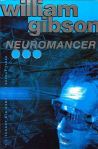
Neuromancer, by William Gibson, blew my socks off when I first read it. It came out in 1984, helped forge the cyberpunk movement and threw a few words into our technical lexicon. It still rocks. A sweet moment: reading this masterpiece of cyber intrigue and corporate shenanigans with Billy Idol’s Cyberpunk album drowning out the worst of the commuting interference. I love Gibson’s style, his flawed characters, his requirement that the reader keep up, his depictions of cyberspace and razorgirls, the plot twists and stinging conclusion — all of it, really.
Today I rolled another yarn, putting that commute to good use: a brand new story from Chris Bongers, a Brisbane writer who’s in the zone with her first book getting attention from the Children’s Book Council, and I wouldn’t be surprised if Henry Hoey Hobson does too. Chris sent it down as a nod, one I was proud to receive — it seems my penchant for using a coffin as an ice box at our Halloween parties has made an impression! In the Twilight age, it might be easy to think the Fright Night-style cover indicates yet another slipstreaming YA love-in-the-dark affair, but thankfully, it ain’t so. Chris grew up in the central west of Queensland and that dry, larrikin humour is tickling under the surface of this book, an affecting tale of a young fellah and his mum trying to cut it in the big smoke. It’s a yarn about family and fitting in and acceptance, the voice is spot-on, and the Addams Family elements made my day. The details of the Brisbane launch are here.
Which leads me to the other big news: Lucy Sussex (who has her own book launch coming up soon as part of the Melbourne Writers Festival — details TBC) is to launch Kirstyn McDermott’s Madigan Mine at the Carlton Library on August 2 at 7pm. The book is now officially out. Do come along if you can and help make a night of it. More details here.
I’ve been away from the keyboard for the past 10 days — more on that later, once I’ve caught up — and in my splendid offline absence, folks have been busy doing stuff:
Trent Jamieson’s upcoming debut novel, Death Most Definite, scored a lovely review
Melbourne’s Rjurik Davidson has announced a tidy little collection, The Library of Forgotten Books.
While on the road, I managed to catch up with:
Singing the Dogstar Blues, by Alison Goodman: a thoroughly enjoyable YA read in which a misfit muso befriends a misfit alien at a school for time travellers, and family secrets are revealed. The book was so much fun, with such superbly sketched glimpses of future earth and alien culture.
Target 5, by Colin Forbes: this was one of my favourite novels when I was 13, the copy rather bent, and I enjoyed revisiting, but found the story about extracting a Russian defector over Arctic ice a little over-the-top, the writing not as shiny as I remembered, but the pace still as strapping.
The Ghost Writer, by John Harwood: what a superb Gothic tale this turned out to be, with short stories in the text providing mirrors for the current day action as a young fellow from Australia strikes up a written friendship with a girl in England that proves a catalyst for some stunning familial revelations.

 I’ve scoured the Aussiecon4 program online and come up with these appearances at the convention, at Melbourne’s Convention and Exhibition Centre, for those who might like to catch up (outside of the bar area):