Glory Box: glorious burlesque

cast for glory box by finucane and smith

I love Meow Meow. She’s an awesome performer, fearlessly shattering the performance walls; stylish with a great voice, charismatic and opinionated, a kind of singing stand-up comedian with her ability to mix laughs and social commentary. She was guest last night at Glory Box, the latest production of Finucane and Smith, and the two-hour show was every bit as entertaining and provoking as last year’s Burlesque Hour.

Some of the pieces are repeats, all the better for another viewing: Salome’s unveiling, the balloon-bursting Queen of Hearts, the concluding Get Wet for Art that requires the front rows to shelter under brollies. There’s clever illusion — where does the naked woman hide that hanky? — and stunning trapeze and hoola hoop action; there are spraying apple pieces in keeping with the Eden/sin/Pandora theme, smooches, cross-dressing, the shattering of sexual identity preconceptions … and the thing that struck me at that other performance and again here, the simple joy of the female form, sans airbrushing, surgery and other unrealistic expectations. Writer Christos Tsiolkas contributes the script for a be-suited duet, ‘I Have a Confession’, a slap in the face of homophobia. And as before, the performers get out and about amidst the audience, packed into the basement level of the very cool fortyfivedownstairs.

Meow Meow’s ‘Down Dolly Down’ set encapsulates the political context perfectly, and her ‘Be Careful’/All the Girls with piano accompaniment is sheer class. That she pulls off such impact while, for example, rotating slowly on a lazy susan or lit by her own torch is all the more reason for applause.

Glory Box is a glorious romp indeed, with Jimi Hendrix, Portishead, Prince, Salt-N-Pepa on the playlist, and a message in the medium that is revealing in more ways than one.

AWWNYRC#8: Debris by Joanne Anderton

This is the eighth book I’m reading as part of my list of 10 for the Australian Women Writers 2012 National Year of Reading Challenge.

Debris

by Jo Anderton

Angry Robot, 2011, ISBN: 978 0 85766 154 8

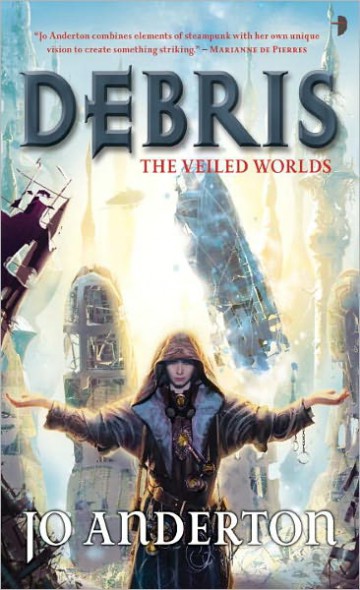
debris by joanne andertonDEBRIS, by Joanne Anderton, was initially published in the UK in 2010, but I’ve read the US edition that followed a year later. So, that clarification out of the way, it’s a pretty fine debut novel from the Sydneysider.

The world is fascinating: one where the haves build things, power things, move things by manipulating matter in the form of pions, while the have nots are left with far more mundane methods of constructing and lighting their world. As with any economy, there is ‘waste’ matter: in the case of pions, there is debris — random matter that can interrupt the systems of pions and cause lights to go out, water not to heat, even buildings to become unstable. As there are highly regarded wielders of pions, there are scorned debris collectors — akin to nightsoil collectors.

This first person account is that of Tanyana, a highly skilled and talented architect, whose career takes a plunge for the worse when an outside force destroys her crowning glory, leaving her broken in body and unable to manipulate pions.

What begins as a study of a person who no longer finds themselves in the upper echelons of society, shunned by her peers and unable even to pay her rent, changes emphasis to a mystery as Tanyana discovers she’s also a gifted wielder of debris, set on a course to uncover a great social secret and a threat to the world.

australian women writers challenge 2012The first volume of a series, Debris is a highly enjoyable tale in which Tanyana’s view of the social strata is rebuilt through her own experience with the under classes. Tanyana is convincingly drawn and likeable and her society is well described. The pion technology, melding with a Dickensian norm, is innovative and rather fetching, especially as the ‘silver’ in Tanyana’s body reacts to external threats with all the yummy visuals of Witchblade.

The second half lags a little as the conspiracy elements of the story overtake the more social aspects and the narrative drive falls a little short — my compulsion to get to the climax wasn’t great, but I was enjoying the world exploration and the unveiling mystery; I enjoy stories where the perception of history is at odds with the reality. A little vagueness in the description, the interruption of action scenes with dialogue and introspection, also served to slow the story in these crucial latter stages. While Tanyana’s arc here is satisfyingly self-contained, the underlying big-picture narrative hasn’t left me hungry to know what happens next.

Debris is a rewarding read, steeped in shadow and intrigue, and Anderton, through this and her highly regarded short fiction, has clearly pegged herself as an Aussie writer on the rise.

Read more about Joanne at her 2012 Snapshot

Previous Challenge reviews:


Things to do in Melbourne: dinner and Macbeth

Last night, there was steak, seafood and Macbeth. It’s a winning combination, even if the play wasn’t quite as noms as the dinner.

Il Primo Posto is at Melbourne’s Southbank. It’s a welcoming space, unlike many of the corporate aquariums that line the river walk, given warmth and character by its mural wall, wooden shelves and dashing burgundy feature wall. The staff are efficient and friendly, and the food — the food is spot on in size, quality and price.

We got to the Arts Centre with the bell — not just the theatre bell calling us to our seats, but the Bell Shakespeare Company, performing my favourite work by the Bard, Macbeth.

The stage was set with turf and grass, suitably crunchy for adding to suspenseful creeping scenes, and a key feature was a reflective ceiling — it had a more dramatic effect farther back, I think, based on what I saw at intermission. Lighting was superb.

Among the highlights: Lady Macbeth, played by Kate Mulvany, and the beautifully balanced and passionate relationship with Macbeth; the sensation of spirit possession in the cleverly singular witch, Lizzie Schebesta; Macduff’s emotional speech on reception of news of his family’s death; the way in which dead Banquo exits the stage as the dinner scene is set up around him; the sex/violence dynamic between Macbeth and the witch. Great fake blood, too!

Some of the things that didn’t work quite so well for me: the truncated, even jumpy, second half, especially the absence of the scene explaining how it is that the woods can march; slow motion while actors deliver soliloquies; the confusion about whether the witch is still the witch when playing minor characters. Why keep Macduff’s family’s death scene but deny Lady Macbeth her post-dinner ramble?


One striking aspect of the play was the unexpected humour. There was an ironic, even Ocker, vein that elicited laughs in places one wouldn’t normally expect, while the one character often played for laughs — the gatekeeper — presented in part as quite dour. Lady Macbeth suffers a bout of hiccups, highly effective at beginning and end, but a tad disruptive in the midst of a heavy emotional monologue. And Macbeth himself, looking impish with a constant crouch and hunch and arms akimbo, at times more Rumpelstiltskin than tortured king, giving air to that jarring Aussie twang once in a while. The costumery was understated Australian, too, with the men’s uniforms of jeans and work shirts topped occasionally by formal blue military coats, and woollen jumpers to the fore.

This is another version that seems to put more weight on the role of the witch/es not just as oracles of fate but manipulators or even victims of it. I’m not convinced that reframing is required, given the sheer power of the tale about self-fulfilling prophecy.

It was a bold, even challenging production, and overall I enjoyed it, not just for what it did so very well — some wonderful scenes will linger for a long time indeed — but for what it dared to do. And kudos for programming Fever Ray for the departure song: a perfect beat to leave on after such a striking final moment.

Roil: full steam ahead!

roil by trent jamiesonRoil is the first book of the The Nightbound Land duology (Angry Robot) by Brisbane author Trent Jamieson, and it’s fabulous — in more than one meaning of the word.

Trent’s always had a way with words — in all fairness, his debut series, The Business of Death — didn’t do him justice. It was a different style, quick and spare to match that corporate clickety-click of deeds done darkly. Roil is sumptuous, taking me back to some of his short fiction I remember fondly (that reading in Toowong cemetery? priceless; ditto Wordpool, ah); from its prose to its world building, you can sink into Roil in near perfect comfort.

In this fantasy world, a vast bank of preying darkness is creeping north to devour the few remaining human cities. A cruelly prgamatic mayor plots how to save his people; an Old Man is unleashed to try to stave off the inevitable, no matter the cost; a young drug-addled man and militant woman are caught up in the plots and violence.

Our hero, David, while addled, is capable, and has some surprises in store as Old Man Cadell takes him, however grudgingly, under his wing. Heroine Margaret is ruled by vengeance and packs a mean ice pistol. The support cast is well drawn but add to the edginess — Trent doesn’t shirk in the dispatch department.

He also handles horror tropes beautifully, whether it be zombies — both Haitian and Romero varieties — or the vampire-like Old Men, dragons, hellhounds and other fabulous members of his imaginative bestiary.

Likewise, the technology melds the best of steampunk, akin to Scott Westerfeld style, with living airships and jet-powered fighter planes, lasers and cool swords, steam trains, magic and mechanisations blended to produce icy weaponry and devastating weapons of destruction.

This is society on the edge of destruction and pragmatism rules. Has their industrial complex triggered this quasi environmental calamity?

Each chapter is introduced by an extract from a text — historical, autobiographical — lending the book a sense of timeliness, contrasting real events with recorded ones. For someone familiar with the Brisbane writing scene, some of the names of places and historians spark a grin, too.

The prose slips from omniscient reportage to intimate point of view, and it’s here on the nitty gritty level that there’s ash in the eye. Not much, but enough to cause the occasional blink. Angry Robot really does need to clean up its act in the proofing department — it’s not doing its writers nor its readers any favours with such shoddy work. Inconsistencies abound, in: line spacing to indicate a change of point of view within the scene; italics for direct thoughts; capitalisation; the spelling of focussed. No text is without its typos, and there are a couple of missing words; but the repeated old brought/bought blunder? haphazard punctuation and run-on sentences…?

This book, thankfully, more than overcomes these typographical quibbles. How fortunate that it’s taken me so long to get to Roil that the second and final book, Night’s Engines, is out now!

The Cult’s Choice of Weapon is bang on target

the cult album choice of weaponThe new album from The Cult, Choice of Weapon, is now on repeat in the office. It rocks. Oh my, how it rocks.

Ian Astbury and Billy Duffy have embraced their rock ‘n’ roll roots (even riffing off ‘She Sells Sanctuary‘) and delivered a punchy 10-track album. I haven’t had time to dissect it properly — lyrically, there’s plenty of the usual spiritualism and imagery, and I suspect some reflection on the shadowy side of celebrity and society — but it sure does chug along. The rhythm section is massive and Astbury gives his all on vocals.

Adding to the shiny is the packaging of the two-disc version: it’s a wee hardcover book packing an extra disc with four previously released EP tracks — absolutely brilliant presentation that makes the album a splendid artifact with lyrics and artwork.

Allmusic.com said ‘Choice of Weapon is the Cult’s finest moment in 23 years’ — read the full four-star review — and as much as I enjoyed Born Into This, it’s hard to disagree if it’s four-on-the-floor you’re after.

The track ‘Lucifer’ is currently available at the band’s website as a free download. Truly tempting!

  • An interview with Ian Astbury from 2007

  • AWWNYRC#7: The Resurrectionists adds to a fine body of work

    This is the seventh book I’m reading as part of my list of 10 for the Australian Women Writers 2012 National Year of Reading Challenge.

    The Resurrectionists

    by Kim Wilkins

    HarperCollins, 2000, ISBN: 073226797 8


    resurrectionists by kim wilkins

    THIS is the third novel by Brisbane’s Kim Wilkins, one I’ve criminally and unaccountably not read until now. It’s interesting to look back at this, seeing how accomplished she was even back then: the prose is fairly tight, the narrative spot on, the characters engaging.

    The story is told in two time lines, one in 1790s England and the other contemporary. In the past, a pair of daring lovers move into a cottage in a village near, and modelled on, it would appear, Whitby, there to encounter some seriously unnatural goings on in the suitably Gothic basement of the church. In the modern era, Aussie cellist Maisie Fielding journeys to the same cottage in the wake of her grandmother’s death, to find that those goings on are still, ahem, going on.

    The setting lends itself wonderfully to the creeping dread: coastal storms, winter snow and isolation, and a village that keeps its secrets close and viciously guarded.

    Maisie is going through a rough time personally, filled with doubt about her relationship with her opera singer lover Adrian, at sixes and sevens with her overbearing mother and ineffectual father; a few months sifting through her grandmother’s life — a life she never got to know, her mother and grandmother not having got on — seems like just the ticket for getting her head straight.

    australian women writers challenge 2012But there’s the diary left by Georgette, and there’s her grandmother’s legacy, the attractive gypsy boy down the road and the not small matter of Maisie’s hidden psychic power to contend with. This is no simple holiday … especially when the spooky strangers come a’knocking and Maisie is left to feel very unwelcome indeed.

    Told from several points of view, the Aurealis Award-winning story is a compelling jigsaw: Georgette sets the scene, Adrian adds domestic pressure, the unlikely villain offers tension as plans collide … and it all comes together as Maisie faces both her past and her future against a very old magic indeed.

    While there are a couple of niggling elements in the plot — the way in which Georgette’s diary is compiled, the absence of a possible ally — they are more than overshadowed by the bold denouement that makes this a truly memorable read.

    Previous Challenge reviews:


    A Confusion of Princes: YA space opera is on target

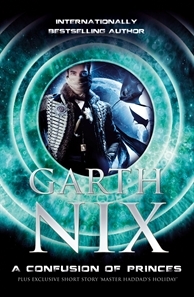
    a confusion of princes by garth nixGarth Nix has unveiled his A Confusion of Princes, and it’s a great read starting with that fetching title. One of the most interesting elements is how he’s taken its computer game origins and incorporated them into the world building — in particular, the respawning, made familiar to viewers of the remade Battlestar Galactica.

  • My full review is at ASiF, but in short: most excellent fun with a serious message at its heart.
  • Dark Shadows shines a light on writing tips

    We saw Dark Shadows last night. Oh my goodness. Michelle Pfeiffer was wonderful, the settings and particularly the porcelain/egg shell witch stuff were delightful, but over all: a train wreck. Still, in an effort to get my money’s worth, I came away with some notes, assembled quickly here (there are spoilers, but I don’t see how anything can spoil the movie more than watching it).


    1. Pick you story.

    Dark Shadows ran as a daily serial for how long? So lots of material to sift through. <I tried to watch the 1990s remake recently: it hasn’t travelled well.> What to include? How about not everything? Save the werewolf girl for later, or at least foreshadow her inner hairiness, for instance. No, when presented with so many story ideas, best to pick just one, and add a subplot or two, but make sure you have that narrative drive from beginning to end. So it might be a love story or a love gone wrong/revenge story; it might be a family drama; it might be a vampire trying to deal with society 200 years later; it might be how a vampire helps a boy and his dead mother find a happy ending. It’s probably not all of those things at once.


    2. Pick your tone.

    So many ways to approach such material… a once wealthy family brought under by a scheming, vengeful witch, and then along comes a vampire from the past to help put things right. Is this a comedy? A kitsch retro bit of fun pie? Is it a horror story, a melodrama, a thriller? Pick one, leaven it with another, and work it, baby. But don’t bounce between them willy nilly, and for pity’s sake don’t suck your few slightly funny gags dry. Alice Cooper’s a girl’s name. Oh my. A family that has the big balls. Oh dear.


    3. Characterisation is key.

    It’s about the people, innit. So you have a cool cast of characters, each with their own thang, and then you give a glimpse of each and forget about them. Instant or reincarnated love? Two people in one house who believe in ghosts? Two hundreds years of obsessive love? Hm, somewhere along the line, they need to meet. But most of all, perhaps, that hero needs to be heroic, not a cad; or if he is a cad, he needs to realise it. But our vampire hero treats the help wrong and, on this occasion, he picked the wrong gal to use and discard, and hell hath no fury, right? What exquisite blackmail it is to have to make love to the pretty witch — tell me again why she still loves the cad? As Depp’s Barnabas admits, he’s not a gentleman.


    4. Story that works for a greater whole.

    So you kill the psychologist and you catch the bad dad thieving and there will be ramifications. Won’t there? You kill a bunch of folks and there will be ramifications … won’t there? History repeats with the torch-wielding mob baying for your blood and — they go home when told to. No, when the hero suffers a setback, it has to have an impact. The worst thing happens and it means something, damnit; it doesn’t get swept under the carpet.


    5. Make sure your theme is up to date.

    So this is probably being overly harsh, but damn.. Dark Shadows seems to have embodied those far simpler times when those with money could get away with anything. Murder is fine as long as the family’s fortunes and social standing is upheld. The staff should know their place and even the most accomplished, self-made witch with 200 years of achievement under her cauldron just wants to be loved.


    A case study of how to do it: after we got home, we had a palate-cleansing viewing of The Addams Family movie. Now that’s kooky.

    Going metal at MICF: Andrew O’Neill and Steve Hughes

    andrew o'neillEnglish comedian Andrew O’Neill wears green heels, jeans tight enough to show off an enviable pair of pins, black top, red lipstick and nail polish. His Melbourne International Comedy Festival show is entitled Alternative but the core theme is one of how easily he can be distracted: by the internet, by television, by shiny things. The show is filled with distractions — zany asides, mostly — and littered with pop and metal references. He has a Dr Who tattoo. He’s witty and intelligent and he has something to say and doesn’t mind coming out and saying it — about the class divide, about hipster appropriation of culture, about societal constraints on being who you want to be; in his case, he’s a lover of heavy metal, an overt transvestite, an athiest with a grudging respect for the Norse gods (just in case).

    His own spruiker and roadie, he’s playing the suitably metal Pony, a small, slightly smelly club tricked out in red and black with an upstairs performance space cosy enough for the full house to appreciate his boss eye sight gag. The gig ends with a bit of a singalong in ‘Jesus was a Cockney’. Lovely dovely.


    We gladly paid to see O’Neill; the tickets to Steve Hughes were complimentaries for review purposes.


    steve hughes Hughes is another metal head, but where O’Neill wears heels and talks about the outdated and outlandish vision of what it means to be male, the Aussie comedian, now relocated to the UK, still thinks a man should steer clear of Starbuck’s, pull up his pants, grow a beard and not act like a faggot. Or a poofter. Yes, such people still exist, and they can fill the Melbourne Town Hall. It’s a strange world, Hughes says repeatedly, and listening to the chortles and guffaws as he harangues and postulates for 90 minutes, I can’t agree more.

    What starts out as amusing anecdotes, deftly told in Aussie vernacular, descends into a diatribe of sometimes contradictory pseudo-spirituality, anti-establishment, pro-drugs anti-police conspiracy theory with all the subtlety of a bludgeon.

    Clearly, Hughes’s take on the Big Issues isn’t for me. And I think, if I’ve interpreted the psychobabble rightly, Hughes will understand if I say it’s not me, it’s them.

    MICF: Sarah Kendall and Daniel Kitson

    It was the night for intelligent comedy at last night’s Melbourne International Comedy Festival outing, with pre-show drinks at Cabinet and a pleasant dinner break at Time Off in Fed Square where Massive Attack and Joy Division albums were on the stereo. Oh yes.

    sarah kendall First up was Sarah Kendall at the Victoria Hotel. Kendall, 35 (there’s some laughs in that), resident in the UK for the past 12 years, tells us she’s that woman with the screaming toddler on the jet plane. Her Persona show reveals a dry delivery and acid wit — and incredibly expressive eyes — as she explores the world her daughter is growing up in. Some subjects covered are pole dancing, banana innuendo, depictions of women in advertising and, most wonderfully, a nighty-night sequel to the ugly duckling fairytale in which growing up to be pretty is not the answer to being bullied and marginalised.

    daniel kitsonAfter dinner, with ‘Disorder’ still whispering in my mind, we headed down to the Arts Centre for UK comedian Daniel Kitson. Kitson’s mission in Where Once Was Wonder is to share his thoughts on the meaning of life, exemplified in three stories, taking 90 minutes. Intellectually arrogant, confronting and very bloody funny, Kitson is an unreliable narrator but sure knows how to string a yarn together. Suspense, divergence, segue, meta references and ‘denial’ river puns, all combine for a superlative performance.

    He makes the audience complicit, whether about vegetarianism, ideology, typecasting or the bleeding obvious. ‘I’ve got a lisp, don’t know if you’d noticed. I’m very brave.’ Or words to that effect.

    By the end of the show, he’s undercut the diatribe he espoused at the beginning; he’s shared thoughts about image and personality and character, about certainty and uncertainty and seizing moments and living with principles and undermining those principles when it’s convenient or easy to do so; the audience is highly amused and guilty and guiltily amused.

    A dangerous pair, Kendall and Kitson; though chalk and cheese in delivery, they both manage to get the message across amid the laughter. Brilliant stuff.