Feed by Mira Grant: the flavour really hits you

feed by mira grant

Feed is a clever zombie novel from pseudonymous Mira Grant, right down to its title: not only does it refer to the famed zombie appetite, but to western society’s appetite for connectivity – hence the RSS symbol on the cover.

In the world of Feed, the zombies reign. Created by a little-understood man-made contagion, the reanimated dead roam the wilds while an underpopulated and “uninfected” society lives in communes rated by risk. Travel has been reduced to a bare minimum, and the media – a major focus of the story’s plot – has suffered a severe reversal. Traditional news providers now face serious competition from bloggers, who have organised into their own corporations vying for ratings and the dollars they bring with them (I’m sure Rupert Murdoch would be fascinated by their income model!) to feed the connectivity needs of a largely sedentary and isolationist population. The bloggers are broken into distinct zones of interest: fictionals, who write stories that may or may not be based on current events (including slash); newsies, who act as journalists; and Irwins, nicknamed after Australia’s croc hunter Steve, who are the daredevils of the blogosphere, risking life and limb for the sake of entertainment.

Feed’s core characters comprise one of each: sister Georgia (George, newsie) and Irwin brother Shaun and their tech-savvy fictional “Buffy”. The Morgans are rather special, having been, Bindi-like, raised in the spotlight of the blogosphere since the zombie outbreak was hijacked by their parents as a fame platform. This, and the zombie death of their infant brother, informs the pair’s relationship. It’s a lovingly rendered co-dependency and one of the book’s great strengths.

The story is told primarily from George’s point of view, with neat quotes from various blog posts by her and others.

We are given the history of the outbreak and how the world has changed since, how technology and society have evolved to deal with the new circumstances. It’s very clever and quite believable (insomuch as you can make a zombie plague believable).

The story follows the trio as they are invited to join the election campaign of a US senator running for the presidency. And here is where it goes slightly off-track, with opposing forces acting in not entirely logical ways to achieve their outcomes, and the reactions of the public and officialdom likewise conforming more to authorial need than real-world likelihood. That a key piece of evidence required to trigger the story’s conclusion is handed over on a platter further diminishes the trajectory.

And yet these are small things that could’ve been overlooked were it not for the most annoying factor of all: the Morgans. Georgia is 22 but already jaded and cynical, the bearer of a noxious self-importance that erodes her likability as the story progresses. She and her team know more about everything than everyone they meet: politicians, security staff, experienced journalists are all minnows by comparison. Even their technology is superior to that of the American secret service. Her single-minded dedication to the ‘truth’ puts her into the category of fanatic, and fanatics are by their very nature, unreliable, unsociable and boorish. Not really what you want for a main character, and one who espouses her own virtues with such cocky assurance for more than 550 pages.

From what we see of Shaun, he suffers a similar ego-centric view of his place in the world.

There is an element of self-delusion that Grant reveals, most tellingly when George sets out to rip into a candidate whose policies she doesn’t like. Vowing to ask the hard questions and take it up to the man, what she actually does is present a set of standard, largely non-reactive questions which he answers in sound bites according to his platform. Nothing new is revealed, no pressure is brought to bear, and yet she proclaims it a victory, even though she is forced to add an op ed piece to reinforce the win. More of this approach, showing that just maybe the kids aren’t up the spotless standard they think they are – that just maybe someone else also knows what they’re doing — might’ve helped to humanise them to the point of being sympathetic heroes.

It’s easy to appreciate their youthful cynicism: America’s news services, particularly of the broadcast variety, are by and large woeful, little more than a dull amalgam of reality television and opinionated commentary slavishly devoted to domestic introspection. And in fairness, Australia is following a similar route, blurring the line between entertainment and information, reportage and commentary, in electronic, print and online media.

All of which isn’t to say that the characterisation isn’t good or even realistic: the Morgans are of an age and possess a background that make their self-absorption perfectly understandable, and it is certainly a fair call to tell a story through the eyes of obnoxious characters (in fact, I’m sure the very character traits that I found off-putting will probably endear the Morgans to other readers). I just wish that such a beautifully drawn and considered post-zombie apocalypse world could have been explored through the experiences of more likable characters.
Pat Benatar at the Melbourne Palais

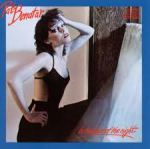
heat of the night by pat benatar

Andy, I think you would’ve loved it. We already had a bit of a thing for Pat Benatar, didn’t we, harking right back to that punk-lacy 80s heyday and tracing back to In the Heat of the Night: that debut that put that unmistakable voice on the world stage (and the guitar of songwriter Neil Giraldo, not to be forgotten).

She’s still got it, mate. In spades. Even if the mix at the Palais on Wednesday night felt at times as if I’d put my head inside a Rotorua mud pit. Her voice, all mid-tour husky but still hitting and holding the highs, a little croon here, a snarl there. OK, not so much of the snarling, 58 next January and all, and dressed in a suit with white cuffs, barely raising a sweat I shouldn’t think with that stage saunter. But she can still belt it out: All Fired Up to open, Love is a Battlefield to close, a trail of major and minor hits in between.

She and Giraldo have got the husband-wife banter down pat (no pun there, don’t hit me, damnit), as you’d expect after 29 years of wedded togetherness. It came to the fore when they straddled stools and “Spider” swapped his electric for an acoustic and, well, there was a feel, he said, like we were all sitting in their lounge room, which was on the money but also weird, given that when they’d finished passing the water cup back and forth, they belted out their trademark power pop: You Better Run, if I remember, and definitely I Don’t Want to be Your a Friend. Banter-rock-banter-rock, a tale for almost every song: that’s how the night went, never really finding any momentum but fun all the same.

Giraldo played piano intro on a couple of tunes, but I reckon – don’t know if you’d agree about this — that they could’ve got a keyboard player in and saved them the heavy lifting and us the backing tape. Still, great drums and bass when they were in play, which you need to give this kind of pop music real grunt.

It made me feel a little sorry for the Bangles, who supported, the now-trio coming across on stage as a little rusty — not that they ever really had the vocal chops, as much as we might’ve enjoyed Manic Monday or Hazy Shade of Winter back in the day. Walk Like An Egyptian got the punters up, I’ll give’em that, and there’s a new album on the way next year, and you’ll be happy to know they still look poppy though I was too far back (but in the centre, mate, Pat right in front, yes indeed) to see if Susanna Hoffs still has the cute eye-roll thing going on.

Benatar was where it was at, for an on-schedule 90 minutes. There was the new take on the torch song, Benatar exhorting the crowd to hold aloft their lit-up mobiles — ‘take pictures, I don’t care’ — for the arm-waving We Belong, and Giraldo finished off the encore with a neat little Godfather riff (an ode to his Sicilian heritage, I gather, given a previous reference).

You know the thing that really kicked? The spare seat next to me. It’s been bugging me for years now, in one form or another, and funnily enough it was Shadows of the Night — only the second song in — that really made it bite. You can never tell what’s gonna get you, can you?

It’s been a hell of a year, brother: The Cult, Concrete Blonde, Benatar. Wish you were here.

**

  • Set list (not in order and probably not complete, 27/10): All Fired Up (opener), Shadows of the Night, Hell is for Children, Invincible, You Better Run, We Belong, Somebody’s Baby, Hit Me with Your Best Shot, I Don’t Want to be Your Friend, Love is a Battlefield (closer), encore: Let’s Stay Together, Heartbreaker.
    **

    There’s footage at YouTube of Giraldo and Benatar singing I Don’t Want to be Your Friend taken at the previous night’s gig — Benatar played back-to-back shows in Melbourne. The song starts around the 3:30 mark.

    Set list (not in order, not complete): All Fired Up (opener), Shadows in the Night, Hell is for Children, Invincible, Promises in the Dark (?), You Better Run, We Belong, Hit Me with Your Best Shot, I Don’t Want to be Your Friend, Love is a Battlefield (closer), encore: Stick Together and Heartbreaker.

    15 years since her last tour to Oz; sidelined by child-rearing.

    31 years together with guitarist ‘Neil Spider’ Geraldo (29 as husband and wife),

    Turning 58 in January

    Acoustic guitar, stools, passing water in open sign of marital bliss

    Piano intros on some tunes, but maybe adding a keyboardist to the drummer and bassist could have saved them the trouble and also allowed them to dispense with the annoying backing track.

    Mobile phones aloft – safer than lighters, certainly – for the We Belong lovers’ anthem.

    A Godfather instrumental into closing song Heartbreaker.

  • Let Me In – not the right one

    Hammer Horror has returned to the big screen with a remake of a Swedish vampire film based on a best-seller by John Ajvide Lindqvist. The studio has left itself plenty of room for improvement.

    Let Me In tells the story of a lonely 12-year-old boy who befriends a lonely 12-year-old vampire (‘I’ve been 12 for a very long time’) in the lonely snow-covered city of Los Alamos. The roles are played superbly by Kodi Smit-McPhee and Chloe Moretz (she carries a real sense of otherness, that age beyond her apparent years), ahead of a cast who also perform wonderfully.

    The love story between the two is the core of the book, a what can perhaps most kindly be described as langourous unfolding, set against the backdrop of a police investigation into cult-like deaths in the neighbourhood, a broken family and social disillusionment. The Swedish movie (for which Lindqvist wrote the screenplay), a beautifully photographed rendition, dropped the police angle, while the Hammer version has neglected the social dystopia.

    Sadly, Hammer has also neglected the elements of Lindqvist’s story that gave it its impact — pedophilia and sexual ambiguity — and instead opted for twee CGI and some questionable narrative devices. An introductory discussion of religion and evil is left to wither, an attempted cyclical opening fails to deliver, a basement haven appears out of nowhere and, unlike in the book, serves no purpose.

    Owen (names have been Anglicised, removing yet another layer of ambiguity from the vampire) is an only child with a single mother — mum is kept offstage, blurred, out of shot, while father is a mere voice on the phone. Camera work is excessively stylised, using blur and extreme close-up to magnify the sense of isolation.

    There is no getting past the book’s lack of narrative tension, but I couldn’t help feel that the Hammer version is a watered down and uninspired echo of what is an emotionally effective and atmospheric text, thanks in part to the combination of the Swedes having already taken the arthouse road and the filmmakers lacking the fortitude to present the gutsiest parts of Ajvide’s story.

    Billy Thorpe – a eulogy from Tangier

    I saw Billy Thorpe play twice, back around 2006 supporting touring internationals, and there was no mistaking the man’s talent with voice and guitar, and charming, unaffected stage presence. He rose to fame with the Aztecs, a veteran of Australia’s formative rock n roll years, and he was in fine fettle still. I was particularly impressed with new material he played from a forthcoming album to be called Tangier, inspired and influenced by his time living in Morocco. And then he died, in February 2007, and Tangier was a work in progress still, and there was a real feeling that we’d not only lost a music great, but a special piece of music as well.

    Fortunately, Thorpe’s family and mates have rallied and Tangier is now on the shelves. It’s a beauty, too.

    There are Middle Eastern influences aplenty as songs range from Zeppelinish rock to slow-burning, percussion-led numbers and the foot-tapping, hand-twirling instrumental Gypsy. Jack Thompson adds spoken word to two, and there are plenty of strings of choiral backdrops that make this a lush, atmospheric production.

    Since You’ve Been Gone, a dirge for his mother powered by acoustic guitar, organ and hand claps, carries extra weight.

    Songs such as Marrakesh and Tangier, the latter with news broadcasts incorporated into the text, are clear odes to the country and its profound impact on Thorpe, while seven-minute Fatima funks it up.

    Long Time, the album’s second instrumental, is a contemplative affair with guitars leading the journey that leads into the grandiose, martial In a New World, a cinematic spoken word with Thompson doing the honours.

    Further adding to the album’s diversity is We Will Be There, a gospel-flavoured track that’s almost a capella, segueing beautifully into the closer, the rapturous Out of Here, a bopping track showing off Thorpe’s vocal high range.

    With songs referencing angels, death and loss, Tangier carries an extra emotional level, but even stripped of that, it stands as a damn fine album. It serves as a fitting farewell that shows us not only what we’ve lost, but what we gained from a life lived large.

    Concrete Blonde storm Melbourne’s Palace

    bloodletting by concrete blonde

    The penultimate gig of their Australian tour, at Melbourne’s Palace theatre last night, found Concrete Blonde in fine form indeed as they celebrate the 20th anniversary of their breakout album, Bloodletting.

    Lead singer Johnette Napolitano is clearly relishing performing: she was relaxed and smiling, utterly gleeful as she called support band Melbourne-based Graveyard Train up to provide backing vocals on the whimsical Ghost of a Texas Ladies Man and the grin never left her face.

    For the Brisbane gig, four nights before, I’d hugged the barrier to catch every expression from this big-hearted singer, but this time I hung back on the rail of the balcony to take in the scene and let the music do its stuff.

    The lighting was simply effective, the stage bathed in lancing red spots for the opening Bloodletting (again segueing from a tape of the ominous bassline of Bauhaus’s Bela Lugosi’s Dead) flicking to greens and blues for the chorus, and thereafter continuing to reflect the mood and highlighting solos.

    With Jim Mankey on guitar — occasionally smiling, a big display from a man who tends to not give much of himself away on stage preferring to let the guitar do his talking — and Gabriel Ramirez on drums, Johnette laid down some thundering basslines as the band rocked out.

    But Johnette’s voice was the key instrument, showing nuance and power as she cajoled, mourned and raged. When I was Fool exploded, Your Haunted Head became a jam, Run Run Run was as hard and heavy as you please. The crowd sang along, the chorus especially noticeable on Happy Birthday and the closer, Tomorrow Wendy (about a woman with AIDS who commits suicide), during which Johnette issued a plea to support gay teenagers and reduce the instance of suicide. She changed the finale of the song, saying she’d think everything would be all right, yes she did.

    It was a shame there were a few in the packed house who didn’t respect the band’s request to forgo taking photographs — honestly, dickheads, do you really think flash from a distance is going to achieve anything but annoyance for the artists and those around you? (sigh: that’s a rant for another day)

    There was a lovely dig at BP on Everybody Knows (she plugged the upcoming Leonard Cohen tour after this cover) — the Gulf has not been forgotten — and she added what sounded like a Native American chant to the cover of Midnight Oil’s Beds are Burning.

    Humble and self-effacing, yet passionate and possessed of one the most striking voices, Johnette — in her 50s — appears to occupy a happy place indeed in her musical career.

    How fortunate we are that she continues to share the love.

  • The set list was, as far as I could tell, the same as in Brisbane, though they played Someday last night and I didn’t note it on Tuesday; possibly I missed it in my recollection, though last night’s gig did last the best part of two hours, a little longer than Brissie.
  • Concrete Blonde rock Brisbane

    bloodletting by concrete blonde

    Any doubts that Concrete Blonde might have mellowed as a rock band were put to rest in Brisbane’s Hi-Fi Bar on Tuesday night. So too any doubts not already dispelled by the Scarred solo album that frontwoman Johnette Napolitano has not grown into a consummate performer who is content, if not happy, in her skin.

    Melbourne’s Graveyard Train — horror movie lyrics to a country-blues beat rounded out by banjo, double bass and a well-hammered length of chain — ably softened up the sizeable crowd who comfortably filled the tiered, industrial-themed room (bare bricks, exposed ducts, concrete and — just so you know you’re in a rock venue — a sticky timber floor).

    Our posse lined the barrier directly in front of Johnette’s mic, prepared to sacrifice sound quality for a close-up of one of the few singers I would call an idol: talented, emotive, uncompromising.

    We were not disappointed.

    Johnette’s bass — unadorned gloss black with simple, sweeping lines — combined with the drums of Gabriel Ramirez (who stepped up to the sticks for the Group Therapy tour when drummer Harry Rushakoff fell off the radar, and has stuck around) to lay down a thumping beat, at times reaching into the chest to alter the heart beat, at others tickling the throat or making a mild tremor under the feet. The velvet curtain hanging at the front of the stage billowed in time like a lung.

    And Jim Mankey, Johnette’s foil and anchor, stood unflappable and so very casual, whether filling in the background with his trademark guitar wail and chug or cutting loose on a solo for Hendrix’s Little Wing.

    The stage was simply lit, emphasised with an occasional billow of fog, and was adorned only with black muslin around the drum kit and a scatter of huge red roses — this tour marks the 20th anniversary of Bloodletting, a breakout album with vampire themed tunes leading the way.

    The stage belonged to Johnette Napolitano.

    Wearing a Spanish-influenced black dress, her movements were laced with Flamenco in bare feet and deliberate movements of the hands and arms; at other times, she would twirl the bass as she rocked out, at others pluck the strings as if each was a thorn to be pulled. A tattoo of a cross, filled with Celtic knotwork and surrounded by simple stars, adorned her chest, and her long, black hair at times fell as a curtain across her so very expressive kohl-darkened eyes, lending a hint of Japanese horror movie, a sense of mystique.

    Watching her descend into the emotional space for When I Was A Fool, led by Jim’s guitar, was an exquisite pleasure, and then to be carried aloft as the song built to its explosive crescendo …

    There were many such moments — Heal It Up, Your Haunted Head and more — in a set that ran almost to two hours and offered at least 21 songs drawn from the band’s studio catalogue (with Bloodletting most highly represented, naturally), skipping only the Mojave album (and the band’s debut, the eponymous Dream 6 before they took on their current moniker).

    A rock aesthetic ran through much of the set, kicking off with opener Bloodletting and putting fire into typically slow-burning tunes such as I Don’t Need a Hero. The pace eased when Jim took up the acoustic and Johnette rested the bass for a ballad set — Mexican Moon with Flamenco dance included — and was brought to a close with the poignant Tomorrow, Wendy, which saw Johnette slowly fold to hands and knees as the lament for lost life and innocence wound down, to arise on knees with a single red rose held aloft into a perfectly aimed spotlight.

    Unexpected delights such as Run, Run, Run, Your Haunted Head and Days and Days raised the roof — Johnette crossed herself before laying down a massive, manic bassline to intro one — and her voice soared, with Janis Joplin-like verve at times, on tunes such as Heal It Up. The encore consisted of the Midnight Oil hit Beds Are Burning and the raucous Still in Hollywood.

    It was one hell of a way to open their Australian tour, and signalled there’s plenty of life left in the trio yet.

    Songs, not in order: Bloodletting, Joey, Scene of a Perfect Crime, Someday, When I Was A Fool, Run Run Run, Happy Birthday, God Is A Bullet, Ghost of a Texas Ladies Man, Haunted Head, True, Little Wing, Everybody Knows, Mexican Moon, Heal It Up, Caroline, Days and Days, Tomorrow Wendy, I Don’t Need a Hero, Lullabye, Beds are Burning, Still in Hollywood.

  • A remastered anniversary edition of Bloodletting is available, with six extra songs.
  • Tim Burton’s nightmare

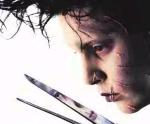
    johnny depp in edward scissorhands

    Note to self: do not — DO NOT — leave it until the last minute to visit a best-selling exhibition.

    I was mightily impressed by the Tim Burton exhibition at Melbourne’s ACMI, even if I could only see maybe half of it through the barely moving wall of heads and shoulders. There were LOTS of the gothically inclined directors drawings, both artistic and conceptual, dating back to his childhood, a stint with Disney, and of course, his famous work — Edward Scissorhands, A Nightmare Before Christmas, Sleepy Hollow, a touch of Sweeney Todd, to name some of my favourites.

    In fact the exhibition was heavy on the artwork, showing his preoccupation with distorted perspective, particularly with the human form, body modification, zany critters, the lonely and the outsider, a touch of disfunctional family and the opposites that attract. Particularly eye-catching was a display of costumes featuring The Mad Hatter’s exquisite outfit from Alice in Wonderland, Catwoman’s slinky bodysuit from Batman (the Batmobile was parked in the foyer!) and, of course, Edward’s striking leather and scissor gloves. Add some puppets and sculptures and audio-visuals and you have a comprehensive round-up of the man’s career.

    The audio tour (a mere $5, taking the price of admission to only a very reasonable $24) definitely value-added, with commentary from curators and Burton himself about the themes of his work.

    And how great was it to see and hear Vincent Price in short early films being screened as part of the exhibit: a bizarre Hansel and Gretel with edible architecture and the touching stop-motion Vincent.

    I’m sorry I didn’t take the opportunity to see the exhibit at a more relaxed time, but I’m glad I went, if only to appreciate the sheer magnitude of Burton’s creativity and imagination.

    Recent viewing: Splice, Cube and Toy Story 3

    Splice is a new SF flick from Vincenzo Natali, who directed Cube and has, over at IMDB, an intriguing note about having Neuromancer in development (about time someone did, if it’s Gibson’s awesome yarn).

    It follows the travails of two scientists, the couple Clive (Adrien Brody, far geekier than his himbo turn in Predators) and Elsa (Sarah Polley), who create a new critter using animal and human DNA. It starts out really well. A little bit spooky a la Alien, some serious ethical issues being bandied about, the pressure of commercial considerations, ego: a lovely simmering soup of issues that we’re ready for, given the state of bioscience these days.

    Then it turns into more a treatise on child-rearing — if you can’t do the time, don’t commit the crime — and then it kind of falls away into a warning about men being little more than dicks with the intelligence enough to get themselves into trouble, the primal drive to re-create, the way that upbringing can also spur a kind of hereditary legacy.

    The acting is superb and the special effects stunning without being overstated, though I suspect it would not pay to dwell too long on the actual science represented on-screen. This is extrapolative SF: go with it.

    Splice is enjoyable and skates along with some clever notions, but never quite fulfils the promise it carries.

    I also watched Cube recently, and found it wonderful in its simplicity. A group of apparently ordinary folks, each bringing something special to the table, find themselves trapped inside a massive cube composed of many, many rooms, some with lethal traps. They have to work together to puzzle their way out before lack of food and water kills them. It’s a spooky premise because there is no prospect of outside intervention or even intention. What follows is a case study of the human rat under pressure, and how the characters, such diverse personalities, react is half the fun.

    Toy Story 3 is the surprise movie of the year for me. I went only on the recommendation of a friend, and was swept away by its tight storytelling and enjoyable characterisation. It’s dark stuff, possibly too dark for really young viewers — some of the toys are downright mean and there are some nasty situations. The premise is that a bunch of toys, who have their own life when not under scrutiny by humans, face an uncertain future as their owner, Andy, prepares to go to college. Andy’s grown up, so what is to become of his toys: the attic or the dump? Themes of abandonment, hurt, family are prevalent, and they tug on the heartstrings with surprising power for the third in a series. Take a tissue for the closing scenes.

    Afterlife — spirited television

    Afterlife tv series

    I finally caught up with the 2005-06 British television show Afterlife last night, wrapping up the concluding episodes of the second, final series, and I’m … touched. It’s sublime viewing, elegant and spare and raw, at times uncomfortable and others moving, and not always giving what you might expect but always satisfying.

    Robert Bridge is a psychologist who sets out to tear down a medium, Alison Mundy, but finds that debunking her links with the spirit world is harder than he’d expected. Both he and Alison have their own ghosts to contend with over the short, sharp, beautiful 14 episodes, penned by Stephen Volk.

    Lesley Sharp is brilliant as brittle Alison, lonely and alcoholic, beset by her ‘gift’, while Andrew Lincoln plays the cool scientist perfectly, revealing tenderness and vulnerability as the series goes on. The acting across the board is sensational, adding to the visceral feel of this beautifully shot, beautifully crafted story.

    There are no easy answers, no glamour, no outrageous special effects. It’s simply some of the most effective, affecting television I’ve seen in ages. I can’t believe it took me this long to find it. I suspect last night’s conclusion will haunt me for a very long time.

    Tip: don’t go hunting previews for this on YouTube or elsewhere. If you catch one of the segments from the final episode, it will spoil the series.

    Android Lust — the Human Animal

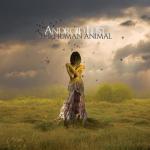
    android lust album the human animal

    The latest offering from Android Lust, Shikhee’s one-woman outfit fleshed out with a whole bunch of studio and live performance talent, is a slick affair. The edges of in-your-face album The Dividing have been filed off, but there’s plenty of sting in the lyrics and rewarding musicianship to boot.

    The Human Animal opens with Intimate Stranger, with a NIN-like build of ominous synths and whispered male vocals, then Shikhee’s trademark siren call kicks in and the song evolves into a synth-laden rocker. The song title is perhaps indicative of what follows: a meditative though not necessarily quiet exploration of the base impulses of the human animal.

    There’s an ongoing theme of obsession, lust, self-abasement, love gone awry — nothing new there for this artist — all humming along on the industrial beat with some superb touches: highlights from guitars and violin, heartbeat bass, and some captivating changes of pace.

    What gives her music a real edge is her distinctive vocal style — the raw need is obvious, whether in earthy, rasping lows or that soaring, nail-scratching high — and canny phrasing. Saint Over is a good example — fuzz guitar and clever key changes, and a winning lyric: “Tried to show my concern while I thought
    About my cat and my laundry”.

    It’s not all industrial blur: check the strut and swing of God in the Hole, for instance, and the percussive drive of It’s On You, the quiet keys on the introspective 1minute30 The Return, the jazzy strut and drum break of A New Heaven.

    There’s no filler here, each song distinctive within itself, yet fitting the overall feel of the album making it truly cohesive. Suspicions about a remix of God in the Hole closing out the album are laid to rest: it’s a sublime re-imagining, transforming a marching beat to a dirge and putting extra emphasis on the words. Nice.

    The Human Animal shows further development, maturation perhaps (it *has* been four years since her last album), of an artist exploring the inner and outer self. It’s an album that triggers the urge to go back and load the stacker with the albums to date — this is the fourth studio LP — to track the ongoing journey of a remarkable talent.