Tea Party not that lo fi at the Hi Fi

tea party band jeff stuart chatwood jeff martin jeff burrows

Hopes for an insight into the Tea Party‘s new album, currently being recorded, at last night’s gig at the Hi Fi bar in Melbourne were dashed. What the three-piece did reveal was a powerful set built on Jeff Martin’s acoustic guitars, with Jeff Burrows and Stuart Chatwood laying down their always dependable rhythm groove.

Martin’s voice was showing the signs of previous gigs in Sydney and Brisbane and, presumably, the recording process, but the occasional threadbare note added to the emotion of staples such as ‘Requiem’ and ‘Messenger’, and the deeply personal ‘Oceans’. With his voice rasping, Martin rose to an audience member’s suggestion and sung the introductory note to ‘Soul Breaking’, to much applause.

The Hi Fi’s no-frills basement stage offered a great view, illuminating Burrows’ intensity and industry behind the kit.

The band, coming off their reunion tour last year after a hiatus of six years, were in full command, playing songs from pretty much all their albums for 90 minutes or so, with ‘Save Me’, ‘The Bazaar’ and ‘Walking Wounded’ among the crowd favourites. A (poorly remembered) medley included instrumental the ‘Badger’ and ‘Midsummer Day’. A rousing ‘Sister Awake’ ended the set, and the trio clearly enjoyed belting out an electric, sadly distorted ‘Overload’ for the encore.

Based on the killer tour last year and last night’s comfortable and confident outing, the stage seems set for the Tea Party to fulfil Martin’s promise that the new album is going to be something special. Meanwhile, we take heart from his parting promise that they’ll be seeing us soon — a new album demands a tour!
Fine crime: Luther and Creole Belle

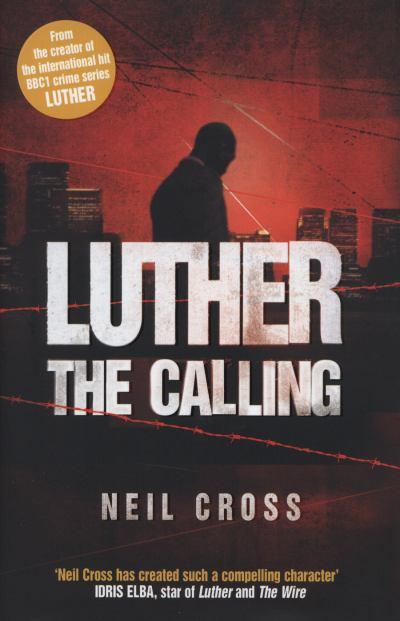
luther the calling by neil crossInfluenced by both the superb television mini-series and a review by Karen Brooks, I picked up the novel Luther the Calling by Neil Cross. It’s the prelude to the TV show, ending where the show begins. And it’s brilliant.

Cross wrote the screenplay for the show, then, influenced by the performance of Idris Elba in the titular role, wrote this novel with that performance in mind. He nails Elba and his co-stars to a tee.

But that replication of the screen isn’t the winning element of the novel. No, it’s the writing, and the characterisation, the insight; it’s the use of small details to paint a big picture, of crafted prose. Much of the book is told one point of view to a scene. I like that: it’s clean, I can ride along with the character. And then, there’s this one violent moment. We are led up to it knowing what’s about to happen, following each character, four or more, walking and driving and living, and then they intersect and — bam! One par each, bang-bang-bang. It’s the stuff of adrenalin and chaos and works perfectly, guided no doubt by that screenwriter’s eye for cut scenes.

I knew how this book would end, that final scene, and it didn’t matter one jot. The characters carry me through their sublimely drawn landscape toward the inevitable moment with the clock ticking ever faster. Superb.

creole belle by james lee burke

And then there’s Creole Belle, number 19 in a series about detect Dave Robicheaux in Louisiana, from the pen of James Lee Burke. He writes in the first person from Dave’s point of view, tired and insightful and often bemused and confused, an author and a character who show their age on the page. He also writes about other characters in the third person, but from Dave’s omniscient view. It’s problematic, but I went with it, because the voice is as compelling as the flow of the Mississippi, and I love that part of the world and Burke brings it alive. He uses landscape, lushly drawn, and history to backdrop his story and to mirror his character’s state of being. With the weariness of the veteran solider and cop, he offers commentary on the state of the world and how it got where it is, bad or good, and where he thinks it might be heading. He’s a cool guy to hang around with as he tries to solve an apparent kidnapping that leads to far much worse, a state of corruption that harks back to Nazi Germany and reaches into the Gulf oil spill. With Dave and the force-of-nature Clete on the trail, there’s hints of superstition and religion, southern style, and plenty of friction; there’s a real-world sweat to this yarn that makes it hard to put down.

It’s narration, so you know that Dave’s gonna make it, but the collateral damage brings in the suspense. And the fact that this is Dave’s 19th adventure doesn’t matter at all; I picked up the novel and didn’t feel I’d missed a thing not having read the preceding titles, even though this begins directly in the aftermath of the previous, essentially part two of that arc.

Rich back story and the relationship between Dave and Clete is the key, anchored in time and place that makes me wish once more for a beignet and cafe au lait and a deeper understanding of this fascinating part of the world.

Dealing with aliens, and humans, in Hunter’s Run

hunters run science fiction novelHunter’s Run is a novel that took some 30 years to get to the shelf. Brainchild of Gardner Dozois, it’s had help from his friends George RR Martin and Daniel Abraham to get it across the line. And it’s so good that they persisted.

The story involves a Hispanic colony on a planet way out in the black, and a rather nasty man, the prospector Ramon Espejo. He has a mercurial relationship with his lover Elena, doesn’t play well with others, has to self-medicate to handle the stress of being in town. He’s most at home in the wilds, digging for minerals, living off the land.

But on this one trip, he discovers a secret: the real reason the alien Enye are helping spread humanity across the stars. It isn’t pretty.

There are a few aspects of the novel that make it a cut above. The first is the way it depicts the new world, drawing on the settler’s analogues and superstitions and how they adapt without adapting much at all, really. The second is how aliens are depicted, in both biology and culture. And the third is how it explore the sense of identity, because Ramon gets a chance to examine his life and the direction in which it’s headed and make some decisions about that. It’s handled superbly.

I’ve always been troubled with how a villain with amnesia, say, given that chance to redefine themselves, often make the decision to veer towards the social norm than their previous predilection for villainy. It’s an interesting nature vs nurture exercise. Hunter’s Run delivers are far more satisfying examination than most.

The prose is clean and the world well drawn and the action unpredictable, and Ramon and Elena are alive on the page, compelling if not likeable.

There are interviews with each of the three authors at the back of the book that reveal its drawn-out path to publication and some of the issues they dealt with, such as alien construction and the motivations of their characters. Illuminating stuff!

Highly recommended, even if you’re not looking for hints on planning your own alien civilisation and offworld colony.

The Hobbit, or, Over the Top with Bilbo!

Oh dear. This is what happens when you try to out-lord Lord of the Rings with a much simpler, shorter tale. The Hobbit has gone from a journey into maturity for young Bilbo, to a rip-snorting adventure with set pieces more at home on a Disney ride. Orcs! Goblins! Revenge!

Admittedly, all the over-the-top derring do does help the almost three hours of movie pass more quickly than it feels, although it remains a tedious affair devoid of the warmth and suspense that the original three of Peter Jackson’s franchise mustered so very well.

I lost count of the wonderful hair-dos sported by the dwarves. Was mildly glazed by the repetition of events from the other movies, such as summoning eagles with a whisper to a moth or an outstretched hand winning the ring toss. Was bemused by the lack of continuity of events in the Shire as depicted in Fellowship.

And overall just a bit saddened that, to win the respect of his travelling companions, it wasn’t enough for Bilbo to be courageous and clever, but he had to kill something, too.

Hobbit wasn’t a bad movie, just a dull one, with music, sound effects and scenery among the highlights. It finally found some emotional resonance with the interplay between Gollum and Bilbo, too little, too late.

Where LOTR had me lining up for the DVDs — indeed, we just watched the extended versions again, a form of cleansing, perhaps — I won’t be dashing out for the Hobbit, and more’s the pity.

Hitchcock: a master in suspenders

hitchcock movie posterTHE movie Hitchcock is an absolute delight. It stars Anthony Hopkins, almost unidentifiable behind the dapper girth of the titular director, and Helen Mirren as his wife, Alma Reville, and either one is worth the price of admission. What a pleasure to watch these two conspire and joust! And there’s Michael Wincott, oh gravel-voiced villain who, should anything I write ever be made into motion picture, I would beg to have involved. Let’s break the usual casting and make him the damaged good guy, or least the damaged guy of ambiguous morality, up against, say, Edward James Olmos playing against type as the wily villain, or at least, the wily guy of ambiguous morality. But I digress.

Hitchcock is the story behind the making of Psycho, financed by Hitch and his missus when Paramount said no. ‘They just want more of the same,’ Hitch says, or words to that effect. He’s having none of it. He’s bought up every copy of Robert Bloch’s book Psycho he can find just to try to preserve the mystery; he’s not going back to North by Northwest territory now.

There’s so much to love in this tale. It’s cleverly dovetailed by what could be scenes from Hitchcock’s famous television show, starring a brilliant appearance by a crow; the performances are on the money across the board — yay too for Toni Collette bringing it home; and Hitchcock is portrayed with a degree of realism, both good and bad aspects of his character on show. Insights into the Hollywood machine and Hitchcock’s career are also very cool.

There’s a clever score, too, and a final pun that made me chuckle and my wife groan; the movie hits extra heights in its attention to small details. Masterpiece is probably too strong a word, but it’s a damn fine character study of a fascinating couple making an extraordinary film; perhaps file next to Ed Wood.

the girl movie posterFOR contrast, you could check out 2012’s other Hitchcock movie, the HBO-BBC collaboration The Girl, a portrayal of the relationship between Hitchcock and his star Tippi Hedren of The Birds and Marnie.

This is a much more grounded narrative, not quite as accomplished in its attention to details, and Hitchcock is a far less sympathetic character as he sexually harasses Hedren through the course of her two starring roles.

The acting, with Toby Jones and Sienna Miller in the lead roles, is accomplished. It’s interesting to note, also, the difference in how the two movies depict Alma and Hitchcock’s PA, Peggy Robertson.

The behind the scenes of the filmmaking work to illustrate Hitch’s spiralling obsession with his starlet, who gamely resists his advances, even after the trauma of five days of scratching, pecking and pooping on the set of The Birds. The attitude toward the director wanting his ‘cut’ in the industry is underplayed but condemning.

Kind of glad we saw the films in the order we did, not only because of the chronological nature of them, but in the character-destroying depiction of the director offered by The Girl. The relationship with Alma is likewise given a new angle, and the closing scene’s parallel with a key scene in Marnie is so clever. Not quite up there with Hitchcock for focus, but worth the look as the other side of the coin. Or lens.


Wendy Rule unveils new tracks

singer wendy rule with snake tattooMelbourne singer Wendy Rule played her last hometown gig last night before setting off for another northern hemisphere sojourn. She was backed by her usual band of William on percussion, Rachel on cello and husband Tim on guitar and Indian flute, though a guitar hassle meant Tim was sidelined from time to time.

The 303 Club at Northcote was bunkerish, hot and intimate, with carpet on the sloping floor for the sitters and sofas around the walls that sported eclectic paintings that tagged this an alternative, innocuous venue.

The sound was superb, controlled by Siiri Metsar who has produced previous albums for Rule and will be producing her next one, due to be cut mid-year. With just three new songs under her belt, Rule admitted she had her work before her, but expected her forthcoming trip to North America — including a week at the desert retreat that has already proven a creative space for her — to help fill the gap.

Amid standards such as ‘Artemis’ and an impromptu ‘Hecate’ — the guitar refused to downscale for ‘Creator Destroyer’ — and ‘Deity’, Rule unveiled her three new tunes, at least one of them for the first time.

‘Home’ carried a longing to putting down roots somewhere uncrowded; ‘After the Storm’ (I hope I remember this rightly) was a tour de force of swell and crash, mirroring the lightning storm and nature-scented morning after that inspired it; and ‘Black Snake’ was a ripping, pagan ode dedicated to the serpent leading not to expulsion but self-discovery and actualisation.

Other songs on the night, spread across two sets and broken by anecdotes and personable chatter as stage fans were turned on and instruments misbehaved, included the infectious percussion of ‘Wolf Sky’, the gorgeous harmonies of ‘Horses’ and a capella ‘My Heart is like an Open Flower’, as well as several from her most recent album, Guided by Venus.

This was a wonderful gig to start the year with, and one that offers the promise of a winning album to come if that desert country continues to weave its magic.


Android Lust, telling tales without words on Crater Vol 1

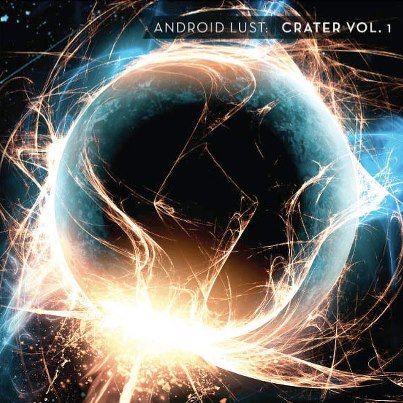
crater vol 1Android Lust (US-based Shikhee) knows how to get down and dirty, electronically; she’s been flying my industrial flag since Nine Inch Nails went on hiatus, Trent Reznor heading off to greener, arguably happier places with his new outfit and his soundtrack work for movies and, most recently, a video game.

Now, on Crater Vol 1, AL is following that trajectory and proves just as adept.

I wish I knew the narrative guiding this album — and it is an album, ebbing and flowing across a sonic terrain of synthesisers, keyboards, vocalisations. How interesting, though, to mix up the playing order and seeing how that changes the nature of the tale …

I’m getting a low-fi NIN vibe on ‘I Need to Know’ — probably the most likely candidate for a single and one of only three songs here, AL’s voice restrained amid the fuzz and keys. ‘From the Other Side’ has breathy vocals gliding like morning fog over flowing, bouncing rhythms that echo AL’s previous footprints. On ‘Here and Now’, she again channels previous patterns to set what feels like the sublime point of no return.

Of course, the beauty of the instrumental album isn’t necessarily the story the artist has in their head, but the one it tells inside your own. Here, there is water, grey with clouds; travel, solitude .. there are mountains and perhaps, stark cherry blossoms, yearning, indecision.

‘First Man’, a halfway marker, feels like the closing of a curtain on the first act, the sensation exacerbated by the slow, woodwind and bamboo-style opening of the proceeding piece, ‘When the Rains Came’, building like a spring rainstorm from the first drops to the downpour, all golden from distant, low-slanted sunlight.

Yaakuntik is a one-minute bridge; ‘Precipice’ closes the album with an eight-minute sail through a lapping lake, a place of stillness and quiet beauty, fading into an inky night. Not so much a fall from a precipice as a gentle subsidence, a tender acceptance.

Had the album been named River Styx, it would’ve suited perfectly. Crater — what does it mean? The Pacific rim of fire? A caldera? Dust settling after the moment of impact? Ooh …

Funded by a Kickstarter campaign, Crater Vol 1 shows an artist making a foray into new terrain, so very smoothly, and provides a most pleasant aural zone where one can trail one’s fingers in another’s dreams and make them one’s own.

Crater Vol. 1 is due to be in general release by the end of the month. I take heart that the name suggests there’s more to come.

Armageddon, or, 50 minutes of Abbe May is not enough


So the world was meant to end, last week, was it Friday or Saturday? Something like that. So it seemed appropriate to hit the Toff in Town on Thursday night — the eve of destruction! — for the Karmageddon tour of Western Australian rocker Abbe May.

Last year’s Design Desire was a rockin’ bluesy outing with a leather ‘n’ lace voice; the titular single from the forthcoming Kiss My Apocalypse album is more on the lace side, synth-driven and slinky. The Toff gig was all about the slink: velvety tunes building with synth and rhythm section, pressure mounting, to the point where it was like, strap on that guitar and cut it loose, girl. Rock the house!

But just as we were reaching the point of eruption, 50 minutes in and with a smokin’ cover of Motels’ ‘Total Control’ under our belt, time was called and the band left and the disco began, and we were left to finish our drinks and then wander down on a clear and mild Melbourne night to knock back a last pre-train coffee in Fed Square and talk armageddons and Karmageddons and the friction between art and commerce, as you do.

Now to await the arrival of Kiss My Apocalypse, which on the strength of Thursday promises to be a strong, smooth, cohesive album. And man, didn’t ‘Karmageddon’ just pop live!

Meantime, season’s greetings, and a safe — apocalypse free — summer to all!


American Horror Story, all boxed up

American Horror Story season 1

Connie Britton, Dylan McDermott and Taissa Farmiga arrive at the ‘murder house’.

Has it been a year already? Ghosts of Christmas past or what?

Last year we scoffed down American Horror Story, an incredibly thoughtful and homage-laden haunted house story with some exceptional ghost work. Well, season three has just been commissioned, and the first season has recently been released on DVD.

I got sent a review copy of the DVD package, and it’s handsome.

Do not watch the extras if you haven’t watched the show. Half the fun is trying to work out the back stories of the characters and, indeed, work out who’s a ghost and who isn’t, and who will become one and who won’t. So an extra profiling the who and the how of the spooks is great to recapture or put things in perspective, but will screw up the show.

Film fans will enjoy the info about the title credits — great to see some Nine Inch Nails input there! — and the ‘making of’ likewise sheds some light while talking up the show.

Strangely, for a show that worked hard to avoid cliche even while exploiting so many tropes, the ‘Murder House’ extra, dressed up as a ghost tour visit riffing from the show, added little that wasn’t covered elsewhere, and let the side down.

The commentary from creator Ryan Murphy on the pilot isn’t overblown and provides some interesting tidbits and insights.

Online, there’s a shallow doco site about crime scenes/haunted places, and it covers six in Australia. They’ve misspelt Boggo Road in Brisbane and bollocked up the text for Snowtown (awesome movie, by the way!). Sigh.

Still, watching the pilot again reminded me of just how superb Jessica Lange is in this show — indeed, the performances are first rate across the board — and I reckon it will reward a second viewing to appreciate all the bits ‘n’ bobs the makers have used to set up the succinct 12-parter. I remember being a tad disappointed with the final episode’s touch of twee and apparent set up for season 2 (falsely, because 2: Asylum, is all new), so another viewing could indeed be illuminating.

One for the Xmas pressie list, for sure.

Collide, bent but far from broken

collide band

Listening to electro duo Collide is a little like walking by the ocean; a quiet, calming ocean. But as with that aquatic environment, beneath the surface, there are currents to pull you in unexpected directions, rips to take you deeper. And that is what the mammoth remix double album Bent and Broken (Noiseplus), kindly downloaded to me by the band, has explored, tagging the essence and developing the core of the music to take it further. So not just those calming rhythms, but the crash and foam as well.

Prime example is ‘Chaotic’, from the 2008 album Two Headed Monster, itself a rollicking, infectious tune. There are three versions on Bent and Broken — one mesmerising with strings, another yet more chaotic with electro pop and whizz, the third even further ramped up with the fuzz into a dancefloor firecracker.

There are also three versions of ‘In the Frequency’, making it equal favourite for remixing, and two of four others. All up, there are 26 tracks split 15/11 on Bent and Broken, mostly reimagining Two Headed Monster and last year’s Counting to Zero (reviewed here): two hours of largely dreamy soundscape. There is also a sprinkling of new material: ‘Orgy’, a worthy cover of a The Glove song that makes the most of kaRIN’s understated snarl; straight-up Collide-style ‘Bent and Broken’, and a cinematic cover of Queen’s ‘She Makes Me’ featuring acoustic guitar.

Matched with Statik’s musical chops — this album’s production rewards listening through headphones — kaRIN’s vocals are one of Collide’s assets: distinctive, seductive, malleable, swinging from seductive to ominous to pacific.

So I probably could’ve done without the fast-forward/rewind whimsy of ‘kaRIN, You’re Not Yourself Today’, but it’s a single blip on an otherwise smooth journey.

collide album bend and brokenA highlight is dreamy ‘Lucky 13 (Damaged mix)’, ramped up with industrial stylings that provide a darker, almost ironic cast. It doesn’t surprise it comes courtesy of Android Lust, whose next album is being Kickstarted towards completion.

‘Tears Like Rain (Cloudburst mix)’, such an awesome line from the movie Blade Runner, here drops the pace into maudlin territory, gentle keys creating the soft pitter patter of hopes and dreams slowly melting; the Psych-Nein mix transports ‘Tears Like Rain’ into a casbah discotechque.

‘Clearer (Serrated Edge mix)’ is smoother than the name suggests, but has one of the heavier beats and widest ranges, from an almost industrial attack to minimal electronic hand claps.

And so on, with extra beats here, trip hop there; candlelight anthem here, dancefloor there.

The album closes with a seven-and-a-half-minute meditation of ‘Utopia’. Ahh.