Love, death and astrophysics. And poetry, of course. That’s the bottom line of Wild Surmise, a two-person play now showing at Melbourne’s Malthouse Theatre, based on the verse novel by Dorothy Porter.
It’s a wonderful show, a little over an hour long, sharp, affecting, endearing. Jane Montgomery Griffiths is Alex, sometimes narrating herself in the third person, sometimes the first, always on the ball. How effortlessly she changes accents!
And balancing her is Humphrey Bower’s Daniel, Alex’s husband, disaffected university lecturer, lover of poetry, terminally ill, watching life and his wife’s love slip away and helpless to hold on to either. At least he has his poets for some slim comfort … and that lemon tree, that garden, that morning coffee.
Alex is an astronomer with a passion for Europa and, more tragically, American counterpart Phoebe; trapped between the cold light of her lover and the dark days of her husband, she is forced to declare at one gripping point, ‘My life is fucked.’
Powered by Porter’s stunning prose, replete with astronomical and oceanic metaphors, the play runs on the passion of the two leads, who deliver such honest, proficient performances, it’s hard not to get swept up in their drama. There is humour, sorrow, such longing …
Once again, the Malthouse stage setting is to the fore, the two often separated by a glass wall successively stripped of pages of text to reveal the mirrored room beyond. There are four chairs and two coffee machines and the lighting is spot on.
Amazing, isn’t it, how such a simple set, and such a simple set-up, can be so powerful in the hands of skilled artisans.
Add in a splendid dinner served and eaten inside an hour at the Malthouse’s restaurant, and it was a very filling evening indeed.
The play opened last night and runs until December 2.
When the author of Duet — her first entry into the world of the depressingly named women’s literature field as a writer — announced the sale, she told me I’d hate this book. I bought it anyway, taking confidence in the fact Kim’s fantastical work was consummate and, besides, Hachette had whacked a ‘love this book or your money back’ sticker on the front.
That offer has no doubt expired by now, but it doesn’t matter, because I didn’t hate Duet. It was, however, an eye-opener.
This is the genre of the big tell, it seems, with motivations and feelings writ large — this is the genre of emotion, after all. And what a rollercoaster it is.
Two women who look so very much alike — one English, one German — share a false identity that propels them both into the spotlight, where both discover that fame and even fortune don’t deliver on their promise.
Angie, born poor and living rough, is discovered by music producer George who crafts her a pop career in the 1970s. It’s not so much sex, drugs and rock’n’roll as just the prescription pills, exacerbated by an abduction.
As Angie goes into rehab, George has had the good luck to stumble across Ellie, Angie’s lookalike with a brilliant set of operatic pipes, who is more than happy to escape rural poverty for a shot at the bigtime as Angie’s doppelganger.
The path to the charts has been anything but smooth for both women, but more setbacks are in store for all involved. There’s amnesia, marriage of convenience, thwarted love, all revolving around a slowly unveiled family secret that both destroys and resurrects.
Watching the characters manoeuvred through the various stages of life to finally arrive at the climax is a pleasure, as each change of fortune sets them up for the next with all the assuredness of dominoes.
There’s a little sparkle to enliven the text, too, thanks to phrases such as ‘the Seine dreaming of the ocean’, and some delightful springboards to end chapters as the mystery of the duo’s past unfolds.
Set against exotic backdrops in Europe as well as an isolated Greek island and the Australian coast and outback, it’s a global tour of ambition, regret and desire. This is a romance, so of course true love will out, but it’s all about the how. I was a little disappointed at just how neatly the boxes were ticked off by the final page, even if there were casualties along the way, but I am a cynical non-breeder so that disappointment should be expected.
While Duet is certainly outside my usual reading ground, I quite enjoyed this dip into the unfamiliar, thanks in large part to the twists and especially the Gothic influences to kept me interested.
* The final 10 has turned out a little different to the plan. C’est la vie.
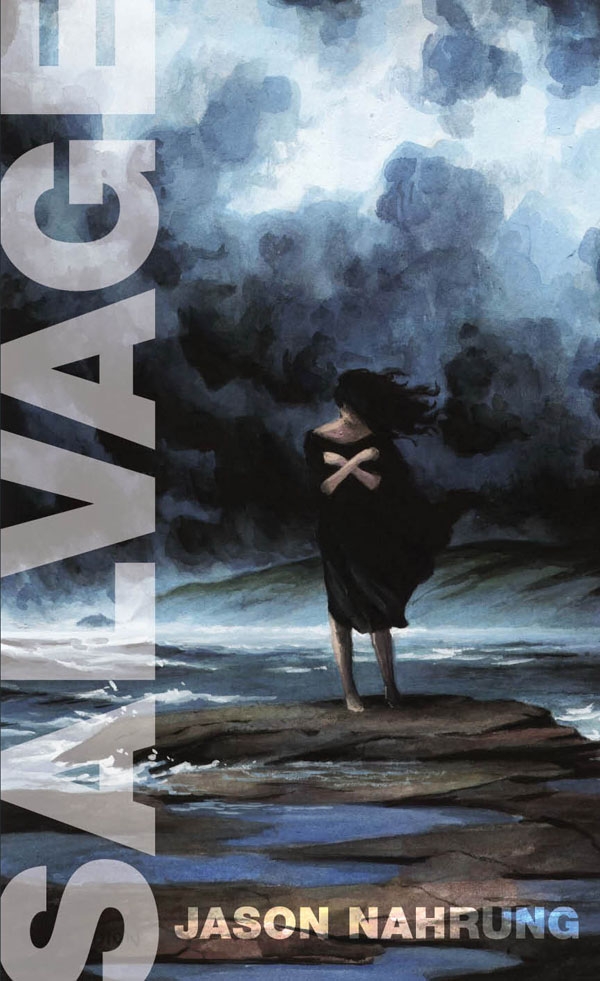
Sean the Bookonaut has reviewed Salvage, most kindly, and it’s so pleasing to see reviewers respond to the relationship drama of the story and treat the narrative with such sensitivity, for it is a slow-build, this one, and it is anchored in matters of the heart. And of course, it’s very pleasing indeed to see reviewers enjoying it!
The Galactic Suburbia podcast has also mentioned Salvage, again kindly, in the reading lists of both Tansy and Alex, and again focusing on the relationship of the heroine with her husband and the woman who gives her pause for thought. Favourite quote courtesy of Alex: ‘compassionate and cold-blooded’. You probably need to hear it in context, but it made my ears warm with satisfaction.
Rowena Cory Daniells has been running an informative series of blog interviews with women fantasy writers — Australia is privileged and perhaps, the suggestion is, unusually blessed, with a high ratio of talented ones. But now she’s branching out, kindly inviting me in with some thoughtful queries about writing and publishing. She’s also giving away a copy of Salvage, so let’s read who you’re favourite vampires are: my money’s on Bram Stoker’s version of Dracula, simply because he blew my 16-year-old mind. I’ve listed 15 of the best movie vampires here, in case you need some inspiration, and top 5 vampire and werewolf movies to chew over.
Which is as good a time as any to mention again the forthcoming launch in Brisbane, on August 10 at Avid Reader, and the Twelfth Planet Press Showcase at Melbourne Writers Festival on August 26, at the Yarra Building.
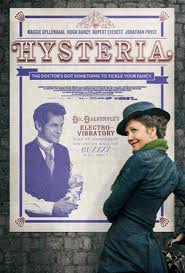
THERE is a moment in the newly released movie Hysteria, which traces the invention of the vibrator in the late 1800s, where the humour to be extracted from doctors masturbating women to release their ‘hysteria’ runs into the horror wall: the feisty heroine, played brilliantly by Maggie Gyllenhaal opposite the rom com’s leading man Hugh Dancy, faces institutionalisation and forced hysterectomy. The engine of her dire straits is her father.
While the movie has its laughs, its social commentary, both of class and sex, is telling. The medical condition of ‘hysteria’ was only dismissed in the 1950s, the movie’s afterword tells us. It takes a lot of Rupert Everett’s hijinks as electrical experimenter and comic moments with mating ducks to relieve that uneasiness.
SURGICAL maltreatment of women as a way of dealing with perceived hysteria, or lunacy, is very much to the fore in Emilie Autumn‘s new album, Fight Like a Girl, which landed this week. It offers a narrative, musical arc set in an asylum for women — some of the music is from a planned Broadway show — but this is not the home for wayward girls so endearingly and sexily brought to the stage in her previous live show. Rather, this is the surgery where those ‘wayward’ girls are locked away to keep their brash sense of self and identity from unbalancing the patriarchy. Women as objects to be used, as threats to be neutralised, is the theme.
The ranging styles of the songs, from the upbeat defiance of the titular single to the violin ballad of ‘What Will I Remember?’, the vaudeville of ‘Girls! Girls! Girls!’ to the funereal ‘Goodnight, Sweet Ladies’, is clearly rooted in the dramatic production. And what a dark show it promises to be, with drug therapy and incarceration, and threats of sterilisation, rape, mutilation and murder among the offerings.
Tellingly, the album opens with the strongest, most strident songs, giving the impression of a revolution being quashed as the songs then travel into the asylum. A number of shorter tunes, some instrumental, suggest bridges between scenes, before the album draws to a close with the military beat of ‘One Foot in Front of the Other’, a hint of recovery and the promise of round two.
Along the way, there are treats in the minimalist electro of quite terrifying ‘Take the Pill’, harpsichord-driven ‘If I Burn’ and the seven-minute menace of ‘Scavenger’.
She’s quite the multi-talented artist, Ms Autumn, and this album, a different beast with some familiar stripes to her breakout Opheliac, suggests, even after just a couple of listens, further rewards in store.
How good was it to see Stuart Chatwood caressing those keyboards? Jeff Burrows going restrained Animal on the drums up the back, silhouetted by that spectacular backlighting beaming out across the Palais like some kind of mystical door opening? And Jeff Martin, being Jeff Martin, up the front of the Tea Party for the first time since they called it a day seven years ago?
Very bloody good.
Sure, the sound was always a pain with the feedback buzz and increasing muddiness. The lighting at times a little overbearing. The medleys a little ad hoc, not quite as smooth in the transitions as we’re used to.
Oh, there might be a few cobwebs still hanging off the trio, but after two hours of blasting out hits such as ‘The River’, ‘The Bazaar’, highlights in ‘Fire in the Head’ and ‘Psychopomp’, and on, to an encore culminating in ‘Sister Awake’/’Paint It Black’), they proved they’ve still got IT.
Throw in the theremin on ‘Lullaby’ (if memory serves), ‘Shadows on the Mountainside’ and a wee slice of ‘Hallelujah’ — more Cohen than Buckley — with ‘Heaven Coming Down’, ‘Release’, ‘Temptation’ and more, and last night’s opening gig of the Reformation tour in Melbourne was quite the emotional rollercoaster. More fun than Luna Park next door. And somehow, walking out into a cool, light shower of rain was the perfect end to what might be a new beginning for the Canadian trio.
They’re recording this Australian tour for a live album; will the studio follow?
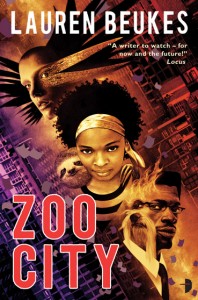
Lauren Beukes is looking like being one of those authors I just have to follow. I read the first chapter of her second novel, Zoo City, today over lunch, and within those few pages, however badly hyphenated on my Kindle app, despite having to read the very first line twice, I was:
engrossed by her world: a touch of dystopia with magical totem animals
familiar with her character enough to know I give a damn: touched by magic, with a nasty past and not a lot of future
intrigued by the story: there’s a mystery here
engaged by the writing: economical dialogue, and prose that’s to the point but with just the right amount of opinionated, fetching description.
Mission accomplished, then. Unless the book takes a swerve into Stupid, I’m on board. I greatly enjoyed her Moxyland, a multiple point-of-view thrill ride. I can’t wait to see where Zoo City takes me.
This is the promo video for the new album by Konqistador, late of Melbourne and North America, now of Istanbul, and it’s the barest taste of the thoroughly entertaining Suada.Fortunately, they’ve kindly made audio tracks of the album available at YouTube so you can indulge before you buy (have a listen, name your price, download away at bandcamp).
I’ve been thrashing it lately — four days of writing have been conducted largely to this, Kidneythieves and Android Lust; Gary Numan’s Jagged can’t be far off — so here’s a guided tour:
Suada is an intriguing album. Emotional, transportative, at times meditative, others stirring, a real sine wave of sparse and dense.
‘Harcanan Kotu’ opens with a chop and change of percussion, bass and fuzz, borrowing a riff from ‘Evil Gotten Evil Spent’ on Konqistador’s ‘Courage Riot album which showed strong Middle Eastern influences.
There follows three tracks that are more obviously rock tunes: ‘Albastru’, gothic and seductive with a delicious hint of menace; ‘Suada’, showcasing the world music and electronic elements with a jaunty beat; and ‘Brancovan’, offering hints of poppy hair metal, a wonderful anthem that leaps from the speakers and demands attention.
There follows a more scenic second stretch, introduced by the low noise of ‘Izul’ that suggests a mysterious, perhaps spooky journey ahead. Wind noise and muted arabesque vocals further suggest a lost time or remoteness, slowly giving way to electro, almost SF, effects evoking the weird, the Gothic and the haunted. A superb introduction, it probably doesn’t stand alone as well as other pieces here.
This lends the album a feeling of being a collection of mini-landscapes, an anthology rather than a novel, and what an enjoyable journey it is.
Izul is followed by ‘With Eyes Shut’, a sweeping choral opening complemented by belly dance jangle and whispered lyrics, industrial sounds contrasting with the drums giving way to electric guitar-led cruise and some bursts of subdued electronica to provide some light and shade.
This is where I was most likely to drift off – not necessarily a bad thing – and ‘Rafqa’ pulled me back after the fade.
‘Rafqa’ bustles with percussion and vocals. It stands out for being a relatively straightforward song amidst the more atmospheric offerings of this section – a transition or perhaps demarcation between the more instrumental works?
The album jumps to ‘From the Ruins’, a comparatively sparse Greek guitar-and-synth instrumental that drops us back into a more desolate, though relatively pacific, landscape.
Dreamy ‘Keykubat’ is much more lush; it brings percussion to the fore, with ethereal vocals, synths and a gradual building of tension. It wouldn’t have been out of place on Trent Reznor’s soundtrack to The Girl with the Dragon Tattoo. It hits a lot of my buttons thanks to the vocals and synth textures.
‘Huzun’ offers a quiet fall away to keyboard/electronic instrumental with choir, an interlude that gives way to percussion and then changes gear with swelling requiem organ under a driving percussive beat and then into fade.
And finally we have the closer ‘O Yar Katit Darom’, resetting yet again with its quiet start. The vocals add to its meld of Arabia and India; quite a contrast to ‘Huzun’. It’s a particularly long piece at 13 minutes, caught in its percussive groove before again we have the swell, reminiscent of Ministry’s ‘Khyber Pass‘. The SF effects add contrast, a flying saucer landing in the middle of a bazaar, perhaps with a windstorm in effect, indicating the end of a musical wander through varied yet complementary sonic terrain.
IF something more retro is your style — say, ’80s dancey and all Depeche Mode-y / Human League-y — have a taste of Christopher Anton’s Spaceships and Dreamers (Part One). You have permission to boogie.
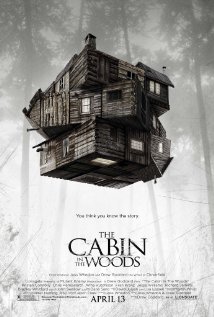
We saw Cabin in the Woods last week. The venerable Astor Theatre was packed to the rafters with out and proud nerds. They lapped up the Joss Whedon horror flick like popcorn, cackling throughout and applauding its finish. It was all very mysterious.
The movie was not to my taste, I have to say. Sure, I got my chuckles — just chuckles — from the occasional pithy line, and enjoyed the appearances by former Buffy the Vampire Slayer cast members, but the clever meta content and genre self-awareness seemed to pull back from making any real point — afraid of insulting the fans, perhaps — and the story, engaging enough to begin with as it troped along, slowly sank under the weight of its own increasingly unbelievable world building. Quite strange, how Buffy fought time and again to save the world, and here its ending is applauded. Loudly and possibly sycophantically. Meh.
Meanwhile, on the Astor website it seems the old theatre might be operating under a cloud. That’s a pity.
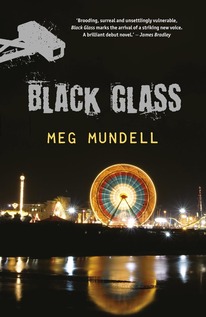
This is Melburnite Meg Mundell’s debut novel, and it’s a cracker. Once again*, we have Melbourne being gloomified in a near-future dystopia in which that mighty gap between the haves and the have-nots is bringing the city to the brink of anarchy. In the glass towers, the government manipulates its embedded media to try to keep a lid on. On the streets, the undocumented lower classes slink through the shadows, dodging security cameras and police patrols to earn a crust through corporate sabotage. And then there’s the young turks, looking to draw attention to the corruption at the top and the suffering at the bottom through increasingly violent demonstrations.
Into this tense social battlefield come two sisters, divided by an unfortunate incident, one seeking the other, and both forced to engage with the world beneath the veneer of identity cards and taxable wages.
The sisters provide the emotional thrust of the story, while other points of view are offered by a journalist delving into the underworld and a ‘moodie’ — a cross between tech and artist who uses lights, sounds and smells to exert subtle emotional control over people, usually in a crowd: say, keeping gamblers happy, helping concert-goers get frenetic without being destructive.
And then there are the walk-ons, often undescribed, mere transcripts of conversation as their conversations offer extra explanations and bridge scenes.
It’s a fetching combination of character-driven narrative and reportage, as shiny as the black glass that hides the corporate shenanigans, but not dark enough to be opaque.
All the pieces fit together and the ending is sublimely satisfying. It reminded me a little of the most excellent Moxyland, by South African Lauren Beukes, with its ensemble exploration of social strata.
Black Glass has figured in a bunch of Australian awards short-lists this year; it wouldn’t surprise if Mundell goes all the way in the future.
In other words, it’s as unsatisfying as the Creationism it appears to espouse. So bitterly disappointing in so many ways, the nicest thing I can find to say about it is that it looked nice. Ben Peek offers a more detailed analysis.
Me, I’m off to watch Alien, when Ridley knew how to tell a story with heart, and then Aliens, to be reminded how you can actually give a damn for a multi-character movie.

 Love, death and astrophysics. And poetry, of course. That’s the bottom line of Wild Surmise, a two-person play now showing at Melbourne’s Malthouse Theatre, based on the verse novel by Dorothy Porter.