It’s the Murray, darling

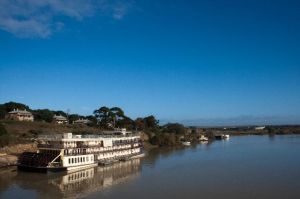
murray princess docked at murray bridge

Murray Princess docked at Murray Bridge

The Murray-Darling river system is the closest thing Australia’s got to the Mississippi, an inland highway paved with muddy water and boasting more chicanes than an F1 circuit. But she ain’t what she used to be. Not only is the river no longer a conduit for transporting people and supplies, but its very future is on the line. At the moment there’s a bunfight going on as four states who have an interest in that watery flow try to work out how they can all continue to profit without either sinking its dependent communities or totally destroying the imperilled environment they rely on. Fortunately, flooding rains that devastated some regions of those states earlier this year have bought the beancounters an extension by refuelling the river, removing the urgency that years of drought and dwindling water supplies had caused.

Last weekend, I got to take a float on a South Australian stretch of the Murray, churning our way by diesel-driven paddlewheeler — the largest in the southern hemisphere, the company boasts — from Mannum downstream to Murray Bridge, where we had a wander through the historic Round House, then upstream to the vicinity of Walker Flat before heading back down to Mannum.

The PS Murray Princess is operated by the Captain Cook line. It was a very pretty boat, built in 1986, with lots of dark timber interiors in its common areas. Our cabin was just big enough: a wardrobe, small ensuite in which I had to stork-bend to get under the shower head, a single bed on either side of the door that opened directly onto the deck, a heating vent in the bathroom that meant barely any blankets were needed, a wee window to let in some cool winter air. Twenty-four hour coffee and biscuits (Arnotts, a once-Australian icon, a little like the river in its riverboat heyday) and refills of drinking water were available in the lounge.
sunset on the murray

The lounge was a lovely space, two floors linked by spiral staircases in timber and brass, and a floor to ceiling window that showed the paddle doing its thing. When the sunlight was right, little rainbows would appear in the paddle’s spray. The ground floor had an unused bar and lots of tables and chairs; the upstairs mezzanine had a library and games box and more tables.

The bar was a small space at the nose, with the actual bar servicing both it and the adjacent dining room, the largest room on the boat. Its chief features were a timber strip down the centre for dancing and a two-sided breakfast bar.

Meals were safely Australian: various meats and veges, pasta and quiche and cheese platter with one lunch, buffet breakfast. Sensational seafood, including grilled barramundi.

The boat was at perhaps two thirds of its 120 passenger capacity and we were the youngest. The complimentary bus to and from Adelaide could’ve been mistaken for a retirement home outing, a veritable bowling alley of grey hair and bald spots when seen from the rear seats. We were surprised by the demographic but the cruise company had better insight: the entertainer was in his seventies, adept at clarinet and electric organ, spicing up the old-time tunes with a touch of Michael Buble and saxophone as the party lights rotated on the mostly vacant wooden dance floor into the early evening.
tree on the murray river

The river itself was the star attraction, usually showing one steep set of cliffs on one bank, the other flat land most often given over to agriculture but consistently dotted with towns and small outposts of rather fancy holiday shacks. Holiday houseboats were common, moored like mile markers in the reeds along the banks. At night, our boat would simply nudge its way into a berth and tie up to some handy gum trees — what magnificent specimens those river gums were. We went ashore a couple of times for a closer look. One stroll revealed a midden, canoe trees and the ongoing dysfunction the white middle class suffers in dealing with race relations. We walked away before the compulsion to jab the guide in his jaundiced eye became overwhelming.

The cliffs — they become more dramatic the farther upstream you travel, apparently — were vertical in places, with tenacious saplings sprouting along their bases. They were often dotted with bird nest holes, and circling hawks were common company for the duration of the journey. The birdlife was abundant — ducks, egrets, cormorants, pelicans downstream and black swans, a cheeky willy wagtail who might’ve been a fellow passenger, swallows. The birds were coming back, we were told, after the drought had forced them to relocate elsewhere. Many were still over at Lake Eyre enjoying the big wet.
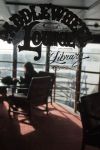
library on the murray princess

We spent much of the voyage with our laptops and souvenir coffee mugs in the lounge or with a glass in the bar, where the prices were very fair indeed ($12 cocktails, $8.50 Coronas, wine about $8 a glass), making occasional dashes outside to photograph something gorgeous sliding by.

We were fortunate to have timed our flights in a window between the air traffic disruption of volcanic ash clouds drifting in from South America; a number of fellow passengers had brought the train across from Perth or Melbourne, praising the comfort and the food but a bit wary of the swaying motion. No such trouble on the Murray: it has a placid surface, though muddy and dotted with leafy detritus from the recent fresh. You can shower in it, but you wouldn’t want to drink it.

Three nights was probably enough time to spend largely constrained to the Princess’s decks and lounges, but it was a leisurely exploration that empowered laptop time and casual conversation and offered a glimpse of Australia’s history and geography. I’m glad I went, but I’m not checking All the Rivers Run out of the video store any time soon. Though I am tempted to jump ship and read Fevre Dream yet again!

  • More pictures.
  • clouds over the murray river

    Patricia Piccinni’s fantastic body of work

    patricia piccinini vespa sculpturepatricia piccinini sculpture

    And I thought Ron Mueck’s sculptures were amazing…

    And fair enough, they are. But Patricia Piccinni’s work, on show at the Art Gallery of South Australia in Adelaide, blew my socks off. Not only are her sculptures incredibly life-like, right down to the dimples, the hairs in the moles, the subtle blue veins under the skin, but they take us into the future. Strange critters imbued with incredible personality inhabit this vision, a vision largely made in a human laboratory. Cloning and gene splicing are among the issues that Piccinni’s sculptures examine, and most carry more than a hint of melancholy. A purposely spliced pig-like creature carries a litter destined to be spare parts; another creature is made as a breeding ground for hairy-nosed wombats. A young girl plays with over-sized stem cells as though they were blobs of plasticene. Two boys play with a hand-held game machine, but they wear the faces of old men.

    Also in the exhibit are some cool trucks and even cooler mopeds given animalistic life, photography and audio-visual displays.

    But it was the incredible emotion that Piccinni fostered in her fabulous future creatures that elevated this exhibition into the truly remarkable.

    Will we — can we — still love our creations tomorrow?

  • Lisa Hannett also saw the exhibit and describes it with far more eloquence here.
  • Things to do in Melbourne #5: the RAAF Museum

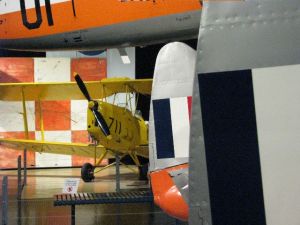
    tiger moth at RAAF Museum Point Cook

    Tiger Moth at RAAF Museum Point Cook

    The RAAF Museum is only minutes from the Melbourne CBD, housed in several hangars at the Point Cook airbase. Incredibly, it’s free, even if you do have to stop at a checkpoint — no boom gate, no alligator teeth, just a strident sign telling you to ‘stop and Wait!’ — to have your details recorded by a sentry.

    At the end of the road, in the HQ hangar, is a walk-through history of the RAAF with plenty of displays — uniforms, documents, pieces of planes and info boards — and a couple of audio-visual elements, including a rather stoic letter home from an aviator setting out on what was to be his last mission. There are also some souvenirs from Manfred von Richtofen’s Fokker — the museum lays full claim to the Aussies having shot down the Red Baron with ground fire rather than giving the kudos to a Canadian airman, the other version I’ve heard. There was also, at our visit, a special display set up about the repatriation of two MIA Canberra crew from Vietnam.

    There’s a hangar with a raised viewing platform showing restoration works — the key project at the moment is the rebuilding of a mostly wooden Mosquito: projected completion time, 10 years. In another, attached to the main building, is a collection of RAAF aircraft and further career displays about life in the service over the years, a second has yet more aircraft from across the years viewable only from a raised platform, and yet another has the big three: a Canberra bomber, a Phantom and an F1-11. A second F1-11 is on its way.

    The display hangars were chilly barns on the rainy day we visited, dodging showers to cross from one hangar to another, and it was a shame the planes could only be viewed from restricted through worthwhile angles, but still, the set-up was impressive and the absence of jingoism was a relief. Time it right and you can see a plane get taken for a spin and chat with the pilot, or at least you might be able to yarn with a volunteer veteran who can provide some first-hand recounting about the service and the restoration projects.

    Photography is restricted (I’ve Flickred a couple here) and access for disabled visitors can be arranged. There’s no cafe but there are loos and a small souvenir shop — and a donation box to help keep the good work going.

    Point Cook is the birthplace of the RAAF, the second oldest separate air force in the world (after the RAF), so it’s the right spot for such a monument. Well worth a look for the historically and/or aeronautically minded.

    Branching out in the Dandenongs

    dandenong ranges

    The overcast day wasn’t the most photogenic but an afternoon’s drive up the Dandenong Ranges provided a reminder of just how magnificent the forests up there are. And so close to Melbourne, too.

    There are enough man-made attractions to occupy visitors, whether the sculptures of William Ricketts or the parking-challenged tourist trap of Sassafrass — yeah, I got tired of looking and drove on — but it’s the air and the leaves and the incredible soaring trunks of Dandenong Ranges National Park that took my breath away. We eschewed the $5 per car fee to take a happy snap from the Sky High outlook and contented ourselves with the free Kalorama view before negotiating the trail down to the Olinda Falls. Fresh air for the soul, this, even on a cool, cloudy day.

    The picture shows Dad and Kirstyn checking out one of the long-time local residents. Some more photos here.

    A drive in the clouds

    sign in yarra ranges national park covered in mist

    The open road: there’s no tonic like it. Today I drove out of the urban sprawl, past the strip malls and industrial estates, into the farmland and vineyards of the Yarra Valley. I wound up past wee small villages greeting the chill autumn day with tendrils of blue wood smoke and leaves turned orange, up to Warburton where the Yarra River runs clear over shallows, up into the ferny Yarra Ranges National Park where the trees tower straight and bark-dripping. And there I found clouds and slushy dirt road and the chill, surreal silence of standing in mist. The only thing to spoil that ascent was the knowledge that what goes up must come down; that when the metaphorical clouds lift, the mountain remains.

    I suspect I’ll be seeing more of Warburton and its mountains and streams and highway townships in the not too distant future. Here are some pictures of why.

    Swancon, Ditmars and a darn fine time

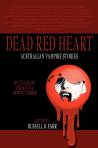
    dead red heart australian vampire stories

    Swancon, the annual get-together of Aussie spec fic fans held in Perth — usually at Easter — doubled as the country’s national science fiction convention — the 50th — this year. It’s a four-hour flight from Melbourne and worth every frequent flyer mile.

    This year’s convention was held in the Hyatt and the venue was a good slab of the reason the con went so well — chiefly, the foyer, which offered a raised lounge encircling a non-functioning fountain featuring elephants, lions and a Cleopatra’s needle aimed like a rocket at the lofty atrium roof. The foyer also had a bar which featured a Hyatt-priced drinks list and some of the most harried bar staff I’ve ever had the pleasure of waiting to be served by. Honestly, if you’re a hotel hosting an SF convention, you need to heed the warnings about our thirst levels. Sure, some folks wander around dressed as giant chipmunks (I’m told it was a raccoon, but I truly believe it was a chipmunk, or possibly a squirrel: just he or she was in disguise because it was masquerade night), but we do like a drink when we haven’t seen each other for so darn long. Especially our pals in the west, who have churned out 36 Swancons so far but don’t get to come east anywhere near as often as they should. (That four hours can be a costly trip.)

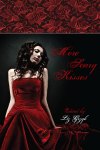
    more scary kisses paranormal romance anthology

    The beauty of the foyer was that it provided a natural gathering place. I’m not sure the various bridal parties, holidaying families and Eastering businessman appreciated the confluence, but I thought it was grand: here was the perfect alternative panel of writerly types drawn from all around the country, and overseas (very happy to hear that Glenda Larke has designs on returning to her native West!).

    The guests were Sean Williams, Justina Robson and Ellen Datlow — Sean and Ellen are always great value and Justina proved so engaging I bought her book — Lila Black has been “tortured and magic-scarred by elves, rebuilt by humans into a half-robot, part-AI, nuclear-fuelled walking arsenal”, and that’s just part of the blurb for Selling Out.

    Some organised highlights included the delayed appearance of the Paul Haines collection The Last Days of Kali Yuga, a gorgeously produced title from Brimstone Press; Paul’s reading of a new story proved a very emotional moment.

    Another enjoyable launch was the Ticonderoga Publications double — More Scary Kisses and Dead Red Heart — in which I’ve got some yarns. The launch also marked 15 years for TP — not a bad achievement at all!

    There were panels of interest covering the craft of writing, the business of writing and all manner of stuff relating to fandom and movies and conventions.

    We ate far too much curry — Anzac Day and Easter combined to keep sleepy Perth very snoozy indeed — but the curry at the little place across the road was damn fine and they did a respectable breakfast as well, bless their holiday-defying work ethic.

    There was a masquerade ball — it went off, I was told, and there was a most excellent Japanese lantern girl costume and a ginormous lizard and Little Red Riding Hood and the aforementioned squirrel-in-disguise — but I was late back from the dinner hunt and, you know, there was a great impromptu panel being conducted in the foyer at the time… followed by a room party! Yes, the sound proofing at the Hyatt meant we could squeeze 20 people into a room and spill chips and some truly, um, intriguing confectionary puddings around the place.

    Cat Sparks has posted her Swancon photos

    There was also awesomeness at the Ditmar awards — fan-nominated and voted on by members of the natcons — which started with the decoration of mighty pillars in the auditorium as rocket ships and finished at the last announcement. I’ve listed them below, but draw attention to my wife’s win for her short story, ‘She Said’ (a tie with the inimitable Cat Sparks!), and the special awards (not listed below) won by Paul Collins (A Bertram Chandler) and Lucy Sussex (Peter McNamara award) and Anita Bell (the Norma K Hemming award for her novel, Diamond Eyes).

    Shaun Tan and Andrew Ruhemann must be reeling — a Ditmar on top of their Oscar for The Lost Thing!

    But most of all, the best thing about Swancon was the people: my buddies from Brisbane — I miss you guys! — and all over the place, all coming together to congratulate and commiserate and enjoy the camaraderie of those who value imagination as one of the most prized of human faculties.

    DITMAR AWARDS

    Best Novel: Power and Majesty, Tansy Rayner Roberts (HarperVoyager)
    Best Novella or Novelette: ‘The Company Articles of Edward Teach’, Thoraiya Dyer (Twelfth Planet Press)
    Best Short Story (tie): ‘All the Love in the World’, Cat Sparks (Sprawl, Twelfth Planet Press) and ‘She Said’, Kirstyn McDermott (Scenes From the Second Storey, Morrigan Books)
    Best Collected Work: Sprawl, Alisa Krasnostein, ed. (Twelfth Planet Press)
    Best Artwork: ‘The Lost Thing’ short film (Passion Pictures) Andrew Ruhemann & Shaun Tan
    Best Fan Writer: Alexandra Pierce, for body of work including reviews at Australian Speculative Fiction in Focus (Twelfth Planet Press)
    Best Fan Artist: Amanda Rainey, for Swancon 36 logo
    Best Fan Publication in Any Medium: Galactic Suburbia podcast, Alisa Krasnostein, Tansy Rayer Roberts, & Alex Pierce (Twelfth Planet Press)
    Best Achievement: Alisa Krasnostein, Kathryn Linge, Rachel Holkner, Alexandra Pierce, Tansy Rayner Roberts, & Tehani Wessely, Snapshot 2010
    Best New Talent: Thoraiya Dyer
    William Atheling Jr Award for Criticism or Review: Tansy Rayner Roberts, for ‘A Modern Woman’s Guide to Classic Who’

    things to do in Melbourne #4 — dinner and a show, with added penguins!

    No smoking sign

    Melbourne’s a great town for dining out — it prides itself on its culinary culture, in fact. Which makes the reason for it to cling to the foul tradition of smoking in al fresco dining areas rather puzzling. Just recently the Monash City Council caved to business pressure and gave up a proposed ban; the businesses were more concerned about losing their smoker market — who would continue to eat out anyway — than attracting the much bigger non-smoker market. A curious piece of business intelligence, but there you go. Old habits — and old smokers, for that matter — die hard. And it looks as if the council will continue to chip away, so good on ’em. But that’s not the point of this here rumination

    Rather, it’s to direct your attention to the rather groovy Butterfly Club in South Melbourne. We went there a couple of Sundays ago, not so much for the show, but the decor. How very hipster of us! But seriously, it’s such a lovely venue, long and narrow in an old shop/residence, with a bar downstairs and another up, both with lounging rooms attached, and the most wonderfully squeaky wooden stairs to the loo with a view of who’s waiting in line, and in the front room, the performance space with its fold-down theatre chairs and the most rudimentary of lighting. It’s like having a cabaret in your own lounge room. And everywhere, there is kitsch: old books and here a Robocop action figure and there some island masks, vintage lamps and bits of boats … wonderful stuff.

    We chanced upon Christine Moffat, performing Really Nice Day, with able support from a male pianist who had his role to play, and even the audience was dragged into the conceit. It was a lovely kidnap tale with a healthy dose of psycho, interspersed with musical numbers that helped move the narrative along. I’ll never listen to ‘Dream a Little Dream of Me’ in quite the same way again!

    Anyhoo, after the show we had dinner around the corner at the Groove Train (with Butterfly Club discount, no less), which probably isn’t up there on the city’s fine dining guide but ain’t to be sneezed at (billowing clouds of nicotine notwithstanding) for a filling well-priced meal, and then — penguins!

    One benefit of daylight saving is you can have your 6pm show and a meal and still get to St Kilda by twilight. Twas a chill little breeze plucking at our coats and the sea was a metallic cobalt colour when we got there, kind of grateful we hadn’t tried to squeeze into the crowded beachside eateries — especially the one with Eddie Maguire bellowing at people to come eat their entrees over the PA. Yikes!

    No, much better the slow walk along the jetty and out to the rock wall, where some intrepid little penguins (formerly known as fairy penguins) had braved the city side of the protective mesh fence. There’s a rookery out there, amazing given the proximity to smelly old humanity with its dogs and lower order specimens who have, in the past, delighted in destroying little penguins (hence the fence).

    How amazing is it to be able to wander a manmade structure in a busy bay, and be able to spy wobbling penguins climbing the rocky ramparts, extending their fragile little community into foreign territory? And even more amazing is it to be able to snaffle a soft-serve ice cream — with nuts — on the walk back?

    Pseudo Echo love an adventure at the zoo

    lion at melbourne zooThe lions enjoyed Pseudo Echo. At least, that’s how I interpreted the wonderful roars and coughs coming from the nearby enclosure while the veteran synth pop band sang the night down at Melbourne Zoo.

    The zoo’s Twilight concert series proved the perfect accompaniment to a cloudless evening as we sprawled on the grass and munched on fair-priced and tasty Asian meals with pinot noir and cheese platter chasers.

    Children gambolled in the dark as the crowd sang along to a parade of hits: ‘Listening’, ‘Love an Adventure’, ‘Funky Town’, ‘Living in a Dream’ and more. No sign of the ’80s hairdos, but the music was as vibrant and fun as ever, with a short-haired, bearded Brian Canham out front on vocals and guitar, and some wonderful drum work.

    pseudo echo

    Pseudo Echo at Melbourne Zoo

    Before support The Hiding signalled it was time to hit the turf, unroll the picnic blanket and pop the cork, we had an hour and a half to wander a large portion of the zoo, taking in the giraffes, seals and aformentioned lions. It’s always a bittersweet visit, zoos: cats prowling their petty slice of turf, living the easy life but seeming to simply not belong behind the wire. The zoo is beautifully landscaped but, especially having seen many of the animals in the wild, I couldn’t help but feel a touch of sadness. It’s the price of conservation and, in some cases, preservation, I expect.

    Regardless, it was great to Pseudo in the wild. Let’s hope they continue to prowl!

    Things to do in Melbourne #3 — Old Melbourne Gaol by night

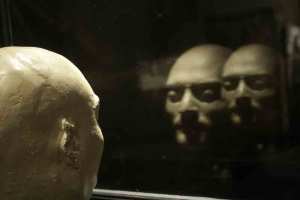
    ned kelly's death mask at old melbourne gaol

    Ned Kelly's death mask

    There’s a definite air to the Old Melbourne Gaol that’s enhanced by a night visit.

    Dating back to the mid 1800s, the then imposing building was erected as a response to the lawlessness of the gold rush, our guide told us. It was built according to the latest of law enforcement principles, which did not include plumbing — one of the most notable elements of the rather confined cells is the absence of a loo. Just the thought of a game of pass the bucket in an overcrowded cell after lights out was enough to induce a vow of sticking to the true and narrow.

    Our guide, affecting an Irish accent, took the character of one of the gaol’s hangmen, and led us through the three storeys of utilitarian cellblock to point out the conditions of the day, the art of a good hanging, and some of the more infamous inmates, of whom 135 ended their lives at the end of a noose.

    Death masks and info boards fill in some details; those waxen countenances, eyes and mouths shut inside their glass boxes, radiate a certain mystique with their crimes outlined around them.

    The gaol’s star attraction is Ned Kelly. The bushranger, who was executed here, has a strong presence, including biographical details, death mask and replica armour, as well as several artifacts including a pistol taken from his last stand at Glenrowan, complete with bullet damage to the grip.

    After the candlelit tour, we were set loose, with the lights on, to take photographs and explore the various dioramas and information displays, though the building was still far from bright and retained its sense of loneliness.

    While the gaol’s ‘haunted’ status is mentioned in PR material, the tour managed to avoid the topic, and there were no ghost stories nor scary theatrics (though a few customers did manage to spook each other; those little screams did travel well!). The atmosphere of the stones and bars was more than enough to conjure a sense of dread and despair.

    Photographic conditions were rather dim, but there are some pix over at Flickr.

    Things to do in Melbourne #2 — Moreau at NGV International

    Gustave Moreau has turned out to be something of a surprise package. I rolled up to NGV International for its Gustave Moreau and the Eternal Feminine exhibition expecting a bunch of, well, second-tier oil-rendered classical views of some cool myths, and was pleasantly enlightened.

    Mr Moreau, painting in the 19th century and not someone whose works I was acquainted with, might have started in such terrain, but his use of wide-ranging cultures, abstract elements, patterns and different media, proved there was a lot more going on.

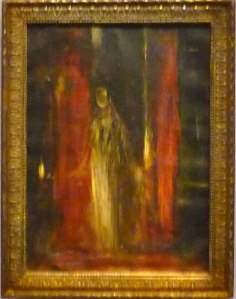
    Lady Macbeth by Moreau

    Lady Macbeth by Moreau


    I loved his Salome series — sadly, this exhibit of more than 100 of his works did not include a couple of key pieces referenced with working sketches — and two exquisite pieces, one showing three sirens as the vaguest of shapes lurking on the shadowed shore, the other a featureless Lady Macbeth roaming the gloomy castle with a taper. There were others, of course, ghostly renderings, emotive splashes of bright oil amidst the dark, textures of oil and inlaid pieces of coloured stones. This article from The Australian gives a much more informed overview.

    The Apparition by Moreau, showing Salome encountering the ghost of John the Baptist

    Also showing, and free, is Unnerved, a survey of modern art from New Zealand on loan from the Queensland Art Gallery. There are a lot of photographs, a striking sculpture of a seal balancing a piano, and some audio-visual presentations, as well as paintings and installations. Post-colonial themes abound. I particularly liked Lisa Reihana’s large digital images reflecting Maori heritage.

    It’s impressive that a collection such as this is free.

    I can also recommend lunch at Persimmon, a restaurant tucked away at the rear of the gallery flanked by water features and offering a view of the gardens. For $55 a head, we enjoyed two courses — we had a prawn salad each for starters and lamb backstrap and pork belly for mains, with a glass of chianti and coffee, and tickets to Moreau. The food was delicious — note that the kitchen shuts at 2.30pm, though the restaurant hours are till 4pm, and the gallery’s till 5pm.

    Note that you’ve got till the end of February to catch the Rock Chicks exhibition at the nearby Arts Centre: free, and a wonderful introduction to the history of women in Australian rock and pop.