Writing round-up

Writing: it’s easy, right? Take a couple of weeks, knock out that yarn that’s been banging around in your noggin’ ever since you read that thriller on your Gold Coast holiday back in whenever and reckoned, hell yes, once I’ve done the important stuff in my life, I’ll write a book and that’ll be luvly.

Here’s a Facebook post from Ian Irvine about his new yarn:

I’ve done 10 hard drafts of Vengeance, plus written more than 80 background docs on story planning, character creation and analysis, world-building and story analysis documents. And spent something like 2,800 hours on it thus far.

Ian also has a handy bunch of info on his website: the truth about publishing, writing tips, marketing tips … well worth a long, slow read, possibly with note-taking.

Meanwhile, I’ve had a ‘yes indeedy’ with a solid chuckle thanks to Patrick O’Duffy’s post about, mostly, punctuation that riles him. E.g.,

(The Oxford comma) bleeds energy from the sentence like a speedbump on a suburban street, and dribbles into the eye like birdshit

After the rain

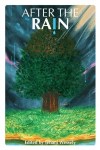
And finally, but most definitely not least, a minor crow moment. As you might have gathered from Ian’s post, sometimes, the yarns take time. They take iterations. They take hair-pulling and wailing and gnashing of teeth. This one here (well, you can’t see it, but trust me, it’s here, the recalcitrant bugger) has been a burr under my saddle for more than a week now, little more than a page or six of incoherent, barely related scenes, ideas, descriptions, dialogue lines … Damn it, just write yourself, why don’t you? Who are you and what do you want? It’s still not telling me. But it’s all very worthwhile when you get a mention in dispatches such as at this review of After the Rain* over at ASiF (where I have been known to drop the occasional review, myself).

Also pleasing is the mention of Robert Hoge’s ‘The Shadow on the City of My Sky’, a gorgeous story that I saw when we were critique buddies way back when, and am very pleased to see in print and being deservedly praised. Peter Ball’s ‘Visitors’ was another of my favourites from that anthology; I’m glad it got tapped here, too. Peter’s work is awesome: check it out.

So, the lesson from today’s internet surfing/procrastination is this: work hard, mind the punctuation, do your best and hope someone appreciates the end result.

* I’m judging collections and anthologies for the Aurealis Awards this year, but After the Rain is not up for consideration due to its publisher being involved in the awards. So I can say with a clear conscience that the antho, regardless of my story being in it, is very solid indeed.

Up the critique without a paddle

texas chainsaw massacreTo be critiqued or not to be critiqued: that is the question.

Or at least, it has been lately: two of my crit group have blogged on the subject. Lamellae offers a five-post selection of pros and cons; Ellen Gregory ponders the ramifications of a recent going-over of the first chapter of a new work in progress.

It’s a bold move, submitting such raw copy to a crit group. After all, the group is looking for problems, and damn but they will find them! The question is, how relevant are they for a still unformed work? The issue for the writer is, what are they looking for from the critique — world building and character weaknesses, perhaps? Does this feel like the right place to start this story? The worst thing is to allow the feedback to derail the work (unless, of course, it’s really that dire; sometimes, you need someone to tell you to ditch stuff, even stuff you love, because it just doesn’t fit — ah, my darlings, dead on the cutting room floor). All those drops of red blood, I mean ink, coming from the marked-up pages aren’t necessarily a death sentence. But yeah, watch your adverbs as you progress, sort out that character’s motivations, make the magic system a bit more transparent … take those informed opinions on board and you might save yourself a bucket-load of rewriting later.

A crit group is invaluable, to my mind, as long as it is a group of peers who will, constructively and respectfully, push you to be the best storyteller you can be. It’s easier if that respect extends to the genres in which you work; my experience in workshops with mixed genres has not been as fruitful as those where everyone came in with a base understanding of how the supernatural ‘works’, or at least were open to the concept. In much the same way that I struggled to care about the minutiae of X and Y’s relationship: when does something happen? Mind you, the uninitiated can be great for spotting logic holes and areas that have been glossed over because of an assumption of what the reader will already know the tropes.

There’s a skill in not only giving critique but receiving it. Thick skin helps. A preparedness to take on board the advice, in hand with an instinct to know what is relevant and what isn’t. Different critiquers have different strengths: some are great at logic and story, others at character and motivation, others again at grammar. A group with a mix of strengths is very handy for getting that story as tight as it can be.

The simple fact is, that the author is, more often than not, a terrible editor of their own work. They know the story, but not necessarily the one that’s on the page. They have blind spots, to both story and to prose. There are two tricks for better self-editing: one is to read the work aloud, the other is to print it out in different fonts for each edit. Both help to highlight poor construction and break down the haze of familiarity. I always edit on paper, once I’m at that stage.

And I rely on my crit group to save me from myself. And hope that, in return, I can also offer some useful advice. Politely, constructively and respectfully.

On commentary writerly

typewriter keys

Blogs, blogs, blogs. Who can keep up with them? Nicole Murphy has some of the sting out of the Google Reader task by assembling a fine collection of recent blog posts about the craft and recent headlining happenings, both with a focus on spec fic.

Further afield, The Creative Penn and Jay Kristoff both target steampunk in all its dubious glory but undoubtable fun, with Penn featuring Phoenix Rising, which sits on my to-read shelf, and Jay offering an ongoing history and commentary of the movement.

Terribleminds offers irreverently good ways to make your characters interesting — pain is the primary method — and Patrick O’Duffy (who shares my love of Batman, bless) also puts characters through their paces. Make’em work, make’em hurt could be a motto.

It’s great fun going through these blogs — am I hurting my characters enough has been at the forefront of my mind — because anything that makes you reassess your work has got be to be beneficial. A fresh approach, a new understanding of process, a way to break out of the comfort zone: all helpful and, indeed, necessary for the writer looking to develop. But at the end of the day, all the reading (blogs AND raw material — you know, actual books ‘n’ stuff) in the world ain’t gonna amount to more than interesting conversation at the bar if you ain’t writing.

The winter’s day of our discontent

flowers in sunshine

It was one of those glorious winter days when it actually feels like spring: cherry blossoms beside the path, birds all a’flitter, wattle in bloom, sun just a touch too warm and bright coming through the leaves … It was a joy to be outside.

It was the kind of day that makes it all the harder to turn one’s back to the window and take up, yet again, the keyboard. Not for the first time, I found myself asking, why am I doing this? Shouldn’t I be driving to Dromana for lunch or picnicking in the park or trying to find someone’s dog to take for a walk? A simple beer garden would do justice to a day like this. Some rhythm n blues by the bay, hell yes.

But here I am in my imaginary world, a world that no one else might ever get to see.

Why writers write is one of those topics that surfaces every so often, often followed closely by the observation that most folks believe that they can write: I’d like to write a book one day. Or, as Dmetri Kakmi confronted in a recent blog post, ‘I might be a bit of a writer myself’.

jack nicholson in the shining

All work and no play . . .

The post was an eloquent and passionate defence of writing as art, or at the very least, vocation. In it, he posits that writers write because if they don’t, they’ll die. I get that. I tried to stop. I couldn’t. The voices just wouldn’t leave me alone, and my ego wouldn’t let them lie still on the page: I just wanted to share. Sorry about that. But hey, there’s always room for one more outback vampire story, right? RIGHT?

Louise Cusack has offered some insight into what drives writers: why they use this medium to express themselves, to find a sense of belonging, to explore their world . . .

Which leads to, why do we write what we write? These days, there is a real sense that writing can be a business: churn out the product, score big with throughput. McDonald’s for the literarily inclined. Hey, it’s a market: go for it. Not many jobs allow you to indulge your super spy / princess bride / secret life from home in your pyjamas and get paid for it.

My only caveat there: at least learn the trade craft. I expect my plumber to know his tools; I expect my authors to know theirs. The art / industry grey area does not excuse ignorance: take a grammar course FFS.

So, do we write the stories that so attracted us to reading in the first place? I know that a large part of what motivated me to seek publication of my writing was my perception of an absence of the stories I liked to read, set in my own country. Why did all these wonderful adventures have to happen in England or America? Why didn’t these people speak my language? Why did I have to translate their idiom to enjoy stories such as these? Snow at Christmas: WTF? Snow: WTF? (I have since experienced snow. I can see the attraction, but still: WTF?)
dr frankenstein and his monster

It's alive! Mouhahaha!

I suspect many writers — the ones who see the craft as art or vocation, not just a money-spinner (and good luck with that) — get over that, grow bored with that little pond and go diving out into the wider ocean of possibilities. New genres, cross-genres; new platforms. New voice, new style, new terrain.

They choose challenge over comfort, for both themselves and their readers. They’ve probably got something to say, and are seeking new ways to say it.

Of course, finding a publisher who will want to take the risk on their talent spreading their wings, threatening to erode that almost mythical beast known as ‘the readership’ (you know it; it demands on pain of excommunication from its hip pocket the next book right now damnit!) … economic rationalism vs art. E-publishing to the rescue?

There’s also a certain masochism in the writing game: parties missed, friends and family neglected, sunshine lost. All for the sake of the art. Or the job, if you think of it like that. The two probably aren’t mutually exclusive, but there might be some compromise in there. I don’t think anyone should be neglecting friends and family, not for art and not for job. Life’s too short. That’s the discipline, to not only write the work, but to not write the work. To make time for the important people who also deserve our attention.
flagellants

Not tonight, darling. I have to, um, write.

So why write? It’s a largely anti-social and self-absorbed way to make a crust — if you’re lucky. It is, contrary to popular supermarket aisle opinion, not easy to deliver a well-crafted read: writing, editing, publishing, marketing.

Bottom line: writing is fun. Taking that intangible inner life and transferring it onto the page for others to share and transfer into their own inner life (the creation of multiverses). Arranging and rearranging the words into the ideal form, so that the form itself is pleasing as well as the world so created. Playing god with the benefit of a backspace key. And all the richness of language, a global pool of knowledge and culture, to draw from. And I mentioned the pyjamas, right? Right.

It’s worth missing a few days of sunshine. The question remains, though: how many? Maybe until it ceases to be fun. Maybe, that depends on some personal formula of discipline, external commitments, expectation and pragmatism.

And maybe that comes down to who we write for. To what we want to receive from our writing: a few hours of distraction or escape; a pat on the back — from anyone; a pat on the back from someone we admire; filthy lucre; a warm inner glow. All of the above. Louise says,

Many writers have gone to their graves without ever having published a book, perhaps never having shown their work to another soul, which sounds terrible and tragic, and it would be if they’d tortured themselves about that. But that only matters if the showboat part of us is the important part. What if the thing that counts most is the creation of the story, the liberation of the characters from whatever pocket of imagination they’ve been hiding in, out onto the page or the screen?

There’s probably some analogy about trees falling in forests and stories unread in there somewhere, but it’s a nice day. The kind that provokes rambling, not just in the outdoors but on the page as well (so it seems). So I might go smell the roses. I’ll call it research, or recuperation, or downtime or somesuch.

McKee on Story, and the nature vs nurture argument about writing courses

Robert McKee Story seminarI attended Robert McKee’s seminar on thriller writing recently. It was a revealing event: an entire cinema packed with writers chasing insight into how to write a thriller. It was a microcosm of just how booming the writing industry is, fuelled in part by the opening of the self-publishing market due to affordable and relatively easy ebook and POD technologies. I don’t really think of the other bodies in the room as competitors, just contemporaries: I’m a big believer in the phenomenon in the writing industry perhaps best epitomised by the Amazon button that says if you liked this book, you might also like …

But there I was, me and my contemporaries, for a very long day, receiving a summary of the various styles of thriller, the identifying qualities of same, and then the nitty gritty: component parts, structure, conflict and, perhaps most usefully, the idea of switching positive-negative valencies within each scene, sequence and act.

McKee is famed for his book Story and the seminar industry he’s spun out of it, and I got a lot out of the day (Ellen Gregory provides a handy summary in a series of blog posts). The physical seminar was easier to digest than the written work, I found; McKee’s focus is on screenwriting, but the basics apply equally as well to literature. I was mentally checking off, and occasionally wincing, as McKee unfolded his theories (Se7en was his case study). Anything that makes you look at your process, at the components of your craft, that helps you hone your skills, is valuable: up to a point. You still have to write the damn story. And you still have to have a story worth writing. Ah, now there’s the rub.

Cameron Rogers gives the McKee school of writing class a serve, while finding useful insight in the simple three-act scenario of Lennon and Garant: put a likeable person up a tree; throw rocks at them; get them down from the tree. I like that.

(I’ve only recently discovered Cam’s blog: it’s a time-killer, both erudite and fun with far too many interesting YouTube clips. And, god, Music of Razors is still on the Shelf of Woe, waiting for that heady day when I get to that to-read pile.)

Which suggests, courses for horses. But can ‘writing’ be taught?

As Dmetri Kakmi wrote in a recent defence of writing as vocation, there’s a school of thought that says everyone has a novel in them — which is probably true in terms of content. But perhaps not everyone, even with a McKee seminar and a couple of handy books (I favour Stephen King’s On Writing as an inspirational text) on the desk, is capable of delivering that story in an effective and engaging way.

While I’ve learnt a lot from writing courses — I wish I’d done my Year of the Novel with Kim Wilkins a decade earlier, when I first seriously turned my hand to getting a novel written and having it published (and being paid for it, damn it!) — I like to think, in line with Dmetri’s ‘rant’, that there is a talent as well as a skill. I think the skill can be honed; I think the talent comes from prolific reading, exercising of imagination and curiosity about the human condition. If talent is a pool of creative lava, then a writing course — the right writing course — might help channel that lava into a fruitful channel. No burnt fingers, no gelatinous puddle. There are plenty of good ideas out there, but good ideas well crafted, well, that’s another story.

I’ve read a bunch of yarns that have plenty of spirit, but are let down by deficient craft. I’ve read even more than have a modicum of craft, but little spirit. It’s where craft and spirit combine that we get that story that sticks: the one we have to tell all our friends about.

Dmetri says if you have to ask if you’ve got what it takes, you don’t; I think we prove it to ourselves every time we choose the keyboard over the sunshine, or at least, we test ourselves along those lines. Writers are, by nature, by and large, insecure creatures: as with any artist, their passion is placed in the public arena and invites both the brickbats and bouquets. Do I have what it takes — to get to the end? To sell this story? To make a reader give a damn?

At the end of the day, we’re writing to our own standard. Some folks will be happy to just sell a story to any market, paying or otherwise. The byline is enough. Others want cash up front as recompense for all the days of sunshine they’ve missed out on. Some churn out plastic, others are artists; sometimes, both might make a living out of it. Some have quantitative goals: units sold, cash earned. Others, a qualitative goal: to write as well as their hero, or to write an award-winning work.

We set our own benchmarks and I’m in no position to rank them, but I do set a base level of competence for someone calling themselves a writer: respect for the words, respect for the language. You don’t have to be an uber stylist but at least know where to put the full points. At least know what the words mean. And readers should be discerning on this. A 99c price tag, not even a free download, should excuse abuse of language. Incompetence and willful ignorance should never be excused.

King talks about his ideal reader, and I think that’s part of the benchmark. Who do we want to impress with this story? Who will we hold our breath for, while we wait for the shake or the nod?

I’m glad I did the McKee seminar; I enjoyed the lens his observations brought to my appreciation of my work. But I still have to apply the lessons learnt. And I still have to answer the question: do I have what it takes? No amount of courses is going to solve that riddle; that one is answered only in the doing.

Manuscript Monday joins the Friday Pitch

typewriter keys

Worth checking out if you’ve got a manuscript in your pocket: Pan Macmillan has opened its doors to submissions with Manuscript Monday, an initiative very similar to Allen and Unwin’s long-running Friday Pitch.

Both invite writers across a variety of genres within fiction and non-fiction to submit a synopsis and first chapter, and both promise quick replies, so if you haven’t heard within a month (Pan Mac) or a fortnight (A&U), you know you can hunt elsewhere.

Looking for words in the rabbit hole


Queensland Writers Centre CEO Kate Eltham played the white rabbit, and a bunch of we Alices gave chase: the goal, 30,000 words in three days. Some gathered in Brisbane while others of us, the diaspora of Queensland writers and other interested parties, joined in online, sharing totals and motivational mentions of caffeine.

How liberating to be given permission to abandon all but the most major of priorities in order to devote three solid days to wordage. For wordage was the goal; quality could come later. The aim was to get that story down, or at least a solid chunk of it.

My goal was a little different, though. I’d already hammered out a bit over 90K of a novel, but I had to write and insert a second point of view character to help fill in some gaps, add some suspense and provide some contrast. It’s a fairly brutal story, this one; moments of levity are to be grabbed wherever they can be had!

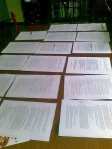
ms pages on a kitchen table

There's a story in there somewhere: grappling with scene progression.

I thought I had eight scenes to write, expecting no more than 1000 to 2000 words for each, and it turned out I had 10 to write, and they amounted to about 11,000 words. It took two days, averaging maybe 500 words an hour. Some of the other rabbit holers did meet their 10,000 words a day quota — w00t!

The third day of the rabbit hole was devoted to smoothing out those new scenes, reconfiguring the existing text to accommodate the new material and ensuring continuity. As is the way of things, a whole new character emerged, with enough legs to play a bigger role in a follow-up should such a thing occur. I’m tempted to call her Alice, in honour of the rabbit hole, but I’ve already got a character with that name tucked away waiting for her chance in the spotlight, so for the moment she’s Felicity because A. she’s felicitous and a felicitator but, ironically, not particularly happy, and B. I still owe two sisters a character named after them after inadvertently slipping an Amanda cameo into The Darkness Within. I have managed to slip in an Alice nod to the rabbit hole, though; I hope it survives to the final cut.

In tribute, here’s a cool clip of the Sisters of Mercy performing Alice, one of my favourite SoM songs and the inspiration for the aforementioned character in waiting. Note: The Sisters are touring with Soundwave Revolution: this is very exciting.

So, three days of fairly solid wordsmithing later, what have I got other than square eyes and a slight case of jetlag?

About 108,000 words of first draft manuscript littered with notes and sporting a most satisfying cross-hatch at the end (the mystical The End only comes when the draft is ready to be subbed — that is truly The End). And the possible beginning for a short story: what could be the second to come out of this universe.

Will the MS go anywhere? Well, that’s always the question, isn’t it? But the story feels good — rough but good — and, regardless, I enjoyed myself in my plunge down the rabbit hole, bumped into some new writers online and learnt some stuff along the way. Would I do another rabbit hole? Most definitely. It’s a three-day trip, man. Just ask Alice.

Continuum’s dark fairytale magic

vampire woman by victoria frances

Continuum is over, my throat is sore, I’m a little tired: standard convention hangover, then. Kirstyn has a new Chronos award — for Madigan Mine. There was much talk of vampires, fairytales and steampunk. A debate about the pros and cons of immortality…

In short, it was an excellent con, with long dinners and impromptu panels at the bar, great company, some slivers of inspiration amongst the panels. Catherynne M Valente was an amazingly giving and erudite and witty guest who cut a hell of a rug on the dancefloor. Her comments about reviewing, made during a Writer and the Critic podcast, are worth catching up with.

Two of the most affecting panels I attended were both, not surprisingly, darkly themed, and I’ll single them out from what was a very strong line-up.

The first was late on opening night, Friday, and involved the attraction between horror and beauty. Kyla Ward read a superb poem in her inimitable, theatrical fashion; Kirstyn read from her spooky-sexy short story ‘Monsters Among Us’; and Talie Helene lifted the roof with an acapella rendition of a ghost folk song. Discussion was informed and interested and on-topic and reluctant to stop.

The next morning, Talie and Kyla backed up on a dark poetry panel with Earl Livings and Danny Lovecraft. Kyla blew the room away with an excerpt from ‘The Raven’ and Talie pretty much felled anyone left standing with some truly wrenching World War I poems. Great stuff. And do note that P’rea Press is releasing a collection of Kyla’s poetry later this year!

In my absence, the last short story I had roaming in the wild found a home — very happy about that! — and Devil Dolls and Duplicates in Australian Horror received a fetching review. Add in a splendid night last night with friends from up north and the good time vibe has definitely lingered…

We’ve already bought our memberships for next year’s Continuum, which is the natcon and boasts the awesome paring of Kelly Link and Alison Goodman as guests of honour. And then there’s the bid from Canberra for the 2013 natcon (at Anzac weekend) and London’s push for the 2014 Worldcon … Let the good times roll!

Chronos winners

(the awards are for Victorian residents)
Best Long Fiction: Madigan Mine, Kirstyn McDermott (Pan MacMillan Australia)
Best Short Fiction: ‘Her Gallant Needs’, Paul Haines (Sprawl, Twelfth Planet Press)
Best Artwork: Australis Imaginarium cover, Shaun Tan (FableCroft Publishing)
Best Fan Writer: Alexandra Pierce
Best Fan Written Work: Review: The Secret Feminist Cabal by Helen Merrick, Alexandra Pierce
Best Fan Artwork: Continuum 6 props, Rachel Holkner
Best Fan Publication: Live Boxcutters Doctor Who at AussieCon IV, Josh Kinal and John Richards
Best Achievement: Programming at AussieCon IV, Sue Ann Barber and Grant Watson (lovely to hear these guys pay tribute to the non-Victorians who also contributed to the programming, an awesome effort all-round)

Note: the amazing Conquilt of signatures is up for grabs on eBay till 20 June.

Emerging Writers Festival: the fun ‘slide’ of writing

Finally dragged my carcass down to the Emerging Writers Festival last night, thanks to Kirstyn being on a panel about speculative fiction and then the urging of EWF party animal Alex Adsett to see Not Your Nana’s Slide Night.

The panel went well if quietly, moderated by Rjurik Davidson with Alison Croggon (her Gift still ranks as one of my favourite fantasy books), Kirstyn and Paul Haines (his Last Days of Kali Yuga collection is out now, get it while you can because the publisher has folded*). There was talk of breaking taboos and other-worldly examinations of our own, and process. Apparently, Twitter commentaries are the new meter of popularity (?) for events: certainly, they illustrate how different people will home in on different things, and hear them differently.

The slide night at the Trades Hall, complete with bar, was a cracker. Nine writers talked to a series of 20 slides, each slide on screen for 20 seconds, and the diversity was wonderful and entertaining indeed. A dry-witted introduction to Scotland, a crayon-ish exploration of a small town devoted to museums (lost clothing, body discardations, bicycles in a bus masquerading as a museum of transport), a holiday in Barcelona bouncing off America’s Next Supermodel, Indian food, suggestions for what should’ve been Melbourne’s Fed Square, drawings from time spent in Asia… and so on. Some funny, some poignant, some informative: all entertaining. I mentioned there was a bar, didn’t I? A superb locus for the atmosphere of the event.

Folks we met were rapt in how egalitarian and warm the festival has been (it’s not over yet) and I saw plenty of evidence of that (good luck with that SF novel, Trish; with that creative writing course, James); I really must make the effort to get to more events next year and enjoy the bonhomie.

Last Days of Kali Yuga by Paul Haines* There a reported 300 copies of Kali in the wild. Look to a bookstore near you. The good news is, for those with an e-reader, the book is available in e-format (Amazon, Smashwords, et al)! This is Haines’ third collection, it includes the awesome novella Wives and a despairingly good new yarn about a man on a bridge with a child. I thought I’d be able to flit through the collection quickly, having read his previous two, but his writing just won’t let you do that. You read one par, then two, and then you’re stuck, dragged into a very human story with just the right amount of fractured reality to entrance and bedevil.

Terry Pratchett in Melbourne: still exploring the colour of magic

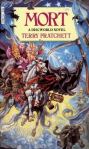
mort by terry pratchett

The Wheeler Centre hosted Sir Terry Pratchett on Tuesday night in a sold-out appearance. There was a reading from an upcoming Discworld book — Snuff, featuring Sam Vimes, still kicking heads and taking names and a little bemused by it all — and the delicious smell of coffee in the foyer and the slightly offputting shades of green in the landscaped ceiling that made me feel I was looking down on some bizarre expressionist landscape, only it was up and I was down. Outside it was raining and inside it was warm and when I left the ‘reserved’ sign taped to my chair – reserved for the embarrassed latecomers, not anyone important — stuck to my back and it was only a kind alarm from the people behind me that saved me from further embarrassment.

Yes, it was a strange old night, sitting there, miles away in the tiered seats, acutely aware that the creative soul on the stage below is having a much more intimate conversation with his old character DEATH than he really ought to be.

It was the elephant in the room, that vile Alzheimer’s announced in 2008, and it roared out from backstage during question time when Pratchett, his trusty hat on his knees, his body thinner than I remember from a previous visit, was asked what we could do to legalise death with dignity.

Tell your government to change the law, he said; point to the countries that are doing it and doing it right; challenge the naysayers to prove their irrational fears of institutionalised malpractice; reject arguments based on God.

Pratchett’s The Colour of Magic, the beginning of the Discworld phenomenon, was all the rage at uni — it came out in 1983 and we were playing catch-up, as avid fantasy readers do. I’ve followed along, dipping a toe in here and there, enamoured of any story featuring Death (who talks in FULL CAPITALS), and quite taken with Carpe Jugulum and Guards! Guards! Along the way have been other projects, and Good Omens, written with Neil Gaiman about the apocalypse, is a standout.

The thing I like about Discworld is not only its humour but its satire. In this universe, Pratchett has found a backdrop to write pretty much any story he pleases, and to sink the boot into pretty much any institution he feels warrants it. He was asked if he felt that frequent commentary on the series — Snuff is the 39th Discworld novel — saying it was getting progressively darker was fair, and he said he considered it to be not so much darker as more pragmatic. (Read some great Pratchett quotes here.)

Still sharp, Sir Terry; still able to deploy observation and wit to poke a laugh, even when talking about death and the right to end life that has run its course.

The conversation covered his journalism career and that industry’s inability to relate the whole truth of incidents — the cause and effect, the story behind the story, the ugly truths that society might not like to take responsibility for — and reflections on his writing career and on his relationships with his characters. The hour-long session was sprinkled with his trademark dry humour, and flavoured with poignancy because there was a feeling that this might be the last time we’d hear this stuff first-hand and, quite frankly, we’re not quite ready to lose that, that and the stories yet untold.

The Wheeler Centre has uploaded video of Sir Terry’s evening here. Pratchett has also been doing the media rounds (an ABC interview is here).

And of course, his books have much to say about our society and its mores. There is some comfort that that wisdom will live on, long after the pen has found its rest. I probably never will know know what the colour of magic is, but I do know that this particular shade wears a battered hat, and will leave the world a little darker when it has gone away. Meantime, write on, Sir Terry; ride on, Sir Knight!