Writing in the pub … living the dream!

In the past couple of weeks, a wee group of us have been trotting down to the local and setting up laptops for a writing session.

The boozer has comfortable booths that offer some seclusion from the hurly burly, such as it is on a weekday afternoon — the occasional zombie stumbling in from the pokies room, that blinking expression that suggests, Has anyone seen my life?; tradies catching a quick liquid lunch; suits huddled over their meal. So not too distracting. The pub also has a really neat ceiling of timber trusses and panelling, a bit like a cathedral, so it rewards that desperate heaven-wards stare for inspiration. And the staff don’t mind us hanging out there, occasionally feeding off their power and keeping the coffee machine burbling away.

Usually we’ll have a chat over lunch (the pub’s got a pretty keen menu) and a glass or two of red, and then it’s down to it. Though the last time, we got down to it first, and then finished off with dinner, because it was parma night. Regardless of the schedule, this is the beauty of the pub session. Our needs are catered for, no one has to wash up, and the loos are clean. And most importantly, there are no domestic distractions: no wifi to tempt a quick google check or email perusal, no sudden urge to go hang out washing or feed the cat; no, ahem, blog post to write instead. No escape from the blinking cursor and the blank page waiting for ideas to fill it. It’s the equivalent of walking up to a brick wall of creativity and bashing your head against it.

We are each other’s dictionary, thesaurus, sounding board. Sympathetic ear (‘yeah, it’s annoying when characters go bad’; whip (‘just right the damn thing!’).

It’s interesting that the three of us who meet regularly are all at different stages of our manuscript: one is editing those final scenes (yay!), another is pushing on past the first one-third mark, and me, I’m still trying to work out what the hell this story is about. Yup, actually doing some planning, trying to work both forward from the start that I’ve got on the page and backwards from the ending I’ve got in my mind.

And the pub session seems to be doing the trick for all of us. Especially now that we’ve figured out the line between greasing the machine and bogging it — somewhere between two and three glasses!

Ellen, one of my cohorts, shares her thoughts about the pub outings here.

Aurealis Awards finalists announced

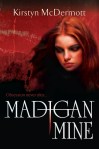
The finalists for Australia’s premier speculative fiction awards have been announced. The Aurealis Awards recognise excellence by Australian writers and editors across the spectrum of fantastic fiction: science fiction, fantasy, horror and all points in between. The winners will be announced at a gala ceremony in Sydney on May 21. The judges had a bumper year to contend with — I judged for anthologies and collections, so I have an inkling of the array of quality shorts the other panels had to choose from — and the lists show some wonderful diversity, with newcomers rubbing shoulders with much-published authors, and a self-published fantasy novel making the final running, which is great to see. And of course, also great to see is Kirstyn’s Madigan Mine in the shortlist for horror novel, along with the most deserving Death Most Definite, by Trent Jamieson, and Jason Fischer’s After the World: Gravesend.

2010 Aurealis Awards – Finalists
CHILDREN’S FICTION (told primarily through words)
Grimsdon, Deborah Abela, Random House
Ranger’s Apprentice #9: Halt’s Peril, John Flanagan, Random House
The Vulture of Sommerset, Stephen M Giles, Pan Macmillan
The Keepers, Lian Tanner, Allen & Unwin
Haggis MacGregor and the Night of the Skull, Jen Storer & Gug Gordon, Aussie Nibbles (Penguin)

CHILDREN’S FICTION (told primarily through pictures)
Night School, Isobelle Carmody (writer) & Anne Spudvilas (illustrator), Penguin Viking
Magpie, Luke Davies (writer) & Inari Kiuru (illustrator), ABC Books (HarperCollins)
The Boy and the Toy, Sonya Hartnett (writer) & Lucia Masciullo (illustrator), Penguin Viking
Precious Little, Julie Hunt & Sue Moss (writers) & Gaye Chapman (illustrator), Allen & Unwin
The Cloudchasers, David Richardson (writer) & Steven Hunt (illustrator), ABC Books (HarperCollins)

YOUNG ADULT Short Story
Inksucker, Aidan Doyle, Worlds Next Door, Fablecroft Publishing
One Story, No Refunds, Dirk Flinthart, Shiny #6, Twelfth Planet Press
A Thousand Flowers, Margo Lanagan, Zombies Vs Unicorns, Allen & Unwin
Nine Times, Kaia Landelius & Tansy Rayner Roberts, Worlds Next Door, Fablecroft Publishing
An Ordinary Boy, Jen White, The Tangled Bank, Tangled Bank Press

YOUNG ADULT Novel
Merrow, Ananda Braxton-Smith, black dog books
Guardian of the Dead, Karen Healey, Allen & Unwin
The Midnight Zoo, Sonya Hartnett, Penguin
The Life of a Teenage Body-Snatcher, Doug MacLeod, Penguin
Behemoth (Leviathan Trilogy Book Two), Scott Westerfeld, Penguin

BEST ILLUSTRATED BOOK/ GRAPHIC NOVEL
Shakespeare’s Hamlet, Nicki Greenberg, Allen & Unwin
EEEK!: Weird Australian Tales of Suspense, Jason Paulos et al, Black House Comics
Changing Ways Book 1, Justin Randall, Gestalt Publishing
Five Wounds: An Illustrated Novel, Jonathan Walker & Dan Hallett, Allen & Unwin
Horrors: Great Stories of Fear and Their Creators, Rocky Wood & Glenn Chadbourne, McFarlane & Co.

BEST COLLECTION
The Library of Forgotten Books, Rjurik Davidson, PS Publishing
Under Stones, Bob Franklin, Affirm Press
Sourdough and Other Stories, Angela Slatter, Tartarus Press
The Girl With No Hands, Angela Slatter, Ticonderoga Publications
Dead Sea Fruit, Kaaron Warren, Ticonderoga Publications

BEST ANTHOLOGY
Macabre: A Journey Through Australia’s Darkest Fears, edited by Angela Challis & Dr Marty Young, Brimstone Press
Sprawl, edited by Alisa Krasnostein, Twelfth Planet Press
Scenes from the Second Storey, edited by Amanda Pillar & Pete Kempshall, Morrigan Books
Godlike Machines, edited by Jonathan Strahan, SF Book Club
Wings of Fire, edited by Jonathan Strahan & Marianne S. Jablon, Night Shade Books

HORROR Short Story
Take the Free Tour, Bob Franklin, Under Stones, Affirm Press
Her Gallant Needs, Paul Haines, Sprawl, Twelfth Planet Press
The Fear, Richard Harland, Macabre: A Journey Through Australia’s Darkest Fears, Brimstone Press
Wasting Matilda, Robert Hood, Zombie Apocalypse!, Constable & Robinson Ltd
Lollo, Martin Livings, Close Encounters of the Urban Kind, Apex Publishing

HORROR Novel
After the World: Gravesend, Jason Fischer, Black House Comics
Death Most Definite, Trent Jamieson, Orbit (Hachette)
Madigan Mine, Kirstyn McDermott, Pan Macmillan

FANTASY Short Story
The Duke of Vertumn’s Fingerling, Elizabeth Carroll, Strange Horizons
Yowie, Thoraiya Dyer, Sprawl, Twelfth Planet Press
The February Dragon, LL Hannett & Angela Slatter, Scary Kisses, Ticonderoga Publications
All the Clowns in Clowntown, Andrew McKiernan, Macabre: A Journey Through Australia’s Darkest Fears, Brimstone Press
Sister, Sister, Angela Slatter, Strange Tales III, Tartarus Press

FANTASY Novel
The Silence of Medair, Andrea K Höst, self-published
Death Most Definite, Trent Jamieson, Orbit (Hachette)
Stormlord Rising, Glenda Larke, HarperVoyager (HarperCollins)
Heart’s Blood, Juliet Marillier, Pan Macmillan
Power and Majesty, Tansy Rayner Roberts, HarperVoyager (HarperCollins)

SCIENCE FICTION Short Story
The Heart of a Mouse, K.J. Bishop, Subterranean Online (Winter 2010)
The Angaelian Apocalypse, Matthew Chrulew, The Company Articles Of Edward Teach/The Angaelian Apocalypse, Twelfth Planet Press
Border Crossing, Penelope Love, Belong, Ticonderoga Publications
Interloper, Ian McHugh, Asimovs (Jan 2011)
Relentless Adaptations, Tansy Rayner Roberts, Sprawl, Twelfth Planet Press

SCIENCE FICTION Novel
Song of Scarabaeous, Sara Creasy, EOS Books
Mirror Space, Marianne de Pierres, Orbit (Hachette)
Transformation Space, Marianne de Pierres, Orbit (Hachette)

Reasons to write short stories

I’ve written two short stories this year. This is big news here at the coffee pot, because short stories aren’t really my thing. They’re tricky suckers, so tight and concise and punchy; no rambling, multi-plotted story with an epic cast of characters here. I envy those who can do them well, and who can do them consistently and frequently. It sucks that shorts, mostly, don’t pay that well. It sucks that the short story struggles for acceptance in the broader community.

But why the flurry over here (two does not a flurry make, granted, but I’m counting the wee outbreak from last year as well) where the long form is by far the norm? I think it’s possibly, partly, mostly, procrastination, but it’s good procrastination. Sure, I’m not working on a novel — pick one, the hard drive’s littered with carcasses and infants — but I am writing.

And that’s one of the beauties of shorts — they’re short. The procrastination will only last so long (I promise).

Here’s my justification, in answer to those whispered accusations of neglect from those aforementioned bits and pieces of novel:

1. Shorts are short. There’s more to this than meets the eye, and not just a pair of knobbly knees sticking out either!

a. Because short stories don’t have a lot of room, they help hone craft. They demand that extraneous matter be discarded. They require a singular devotion to the point of the exercise, without cluttering up the place with overblown description, secondary characters, waffling dialogue, and so forth.

b. Short, theoretically, means they don’t take as long as a novel to write. Some might gestate for ages, but in the actual writing, more often than not, a short should fall out of the oven a whole lot quicker than a novel. Bask in that warm glow of accomplishment. Just think: beginning, middle and The End in just a day, or two, or a week, maybe a month… However long it takes to get it shiny, do then take the next step: send it out to a market. And, if the factors align, score an acceptance. The warm glow is now a roaring fire complete with wine and chocolate.

My short stories are infrequent visitors, so I like to send them to a home made of bricks and mortar. Or dead trees, if you want to be strictly accurate. It might not enjoy the accessibility (and, arguably, the exposure) of a half-decent online mag, but it does look good on my shelf. Ego stroking is important in the depths of discouragement and narrative black holes, when the decision to sit at a keyboard making up stuff seems a stoopid career choice compared to, oh, watching telly, going to the pub and otherwise doing “real” stuff.

c. Because they’re short, you can play. Try different voices, different tenses, different structures. And when they don’t work, you don’t have to spend six months changing it all back to third person, past tense. Shorts are a great sandbox; raking it over and starting again doesn’t hurt quite so much.

d. Sometimes, short is just the right length. How long is a great story? It’s as long as it needs to be. Sometimes, that means short. If you can get your point across in 1000, 3000, 8000 words, then go for it. Don’t waffle. Don’t wander. If it needs 160,000, well, that’s fine, too. You can pretty much always tell when a TV show has been extended halfway through the first season; likewise, a written story can suffer from over-reaching.

e. We now interrupt this program with a news flash … There are times when you hear about an anthology and the theme or the title just zaps you: pow! Instant idea! Run with it. The novel, or whatever other project you’re suddenly neglecting, can wait — it’s only a short break, ain’t it. You don’t wait for those lightning bolts to strike twice. And even if you do miss out on getting into that title, well, maybe you can send the story somewhere else. Anything that gets you enthusiastic about writing must be good.

2. Shorts are fashionable. There are lots of markets for shorts, both in print and online (look at ralan.com and duotrope as starting points for spec fic markets). It means you probably won’t have to wait too long to hear if the baby has found a home. You’d think the commuter set would be lovin’ the shorts, especially when delivered on a wee screen. They should. Everyone should. Because of point 4 (below). But first, there’s another fashion statement to consider:

3. Shorts look cool. Not as cool as a fez, perhaps, but cool, nonetheless, when they’re racked up on a CV. You don’t need them to get a contract for your novel — hey, everyone has a story to tell about how they cracked that first book deal, and not all of them involve a razzle dazzle set of short credits — but it can’t help, can it? To show that you’ve been writing, learning, engaging with the market and the writing community.

4. Shorts can punch above their weight. Oh, how a good short story can leave you gasping. I must’ve been only knee high to a grass hopper when I first read Arthur C Clarke’s “The Nine Billion Names of God” and I still hark back to that final line as one of the best ever. A short is an idea, so very sharp, and when it hits the spot — intellectually or emotionally — it really digs in. I’ve heard it said that a short story makes a great movie while a good book makes a great TV series. Sounds about right.

5. Shorts can value-add. So you’ve got a novel in the works, but that character is a bit of a mystery. Whack him or her or it into a short and see how they fare. It might not go any further, or you might end up with not only some revelation for your long work, but a neat little tie-in. Back story might not fit in a novel, but it might make a handy piece of cross-promotion — if it stands alone as a great little yarn. Fans of the novel will love the extra info, and other readers might gain a yen for finding out more about the world and its characters.

6. Take a short break. Hit the wall in the novel? Even better, finished the first draft? Take a break, go on a literary holiday and write a short. Or two. Explore a new world, a new voice, a new style. Revel in writing something fresh that isn’t the novel. It’s a working holiday and, at the end, you may even have a souvenir acceptance to show for it. Refreshed and ego-stroked, it’s back to the big game. And who knows? That short might, down the track, grow into a novel of its own, now that you’ve planted the seed.

I’m sure there are other reasons to write shorts, other than the sheer love of the form — feel free to share. But I think I’ve procrastinated enough. Writing about writing shorts is probably taking it a step too far. I should probably go write something. But something short or something long? Hmm. I’ll have a coffee and think about it…

Glenda Larke on writing strong female characters

stormlord rising by glenda larke

Caught this link on Facebook today, and instead of it being some cad spam bot thing, it’s fantastic reading for scribes about the nature of the female heroine. See, through the dross, the good stuff does rise to the surface — both on the interwebs and on the bookshelves.

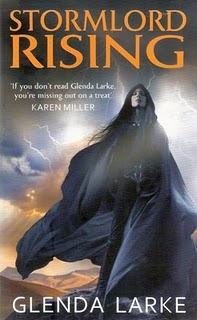
If you haven’t read Glenda Larke, please do. Wonderful stuff. I’d suggest in particular The Aware, one of the most wonderful fantasy dystopias around, and The Last Stormlord, an epic with such solid world building and complex characters. (I’m a little bit peeved that my copy of Stormlord Rising, the sequel to Last Stormlord, doesn’t have the cracking cover of the UK version (pictured). D’oh!)

Wheeler Centre continues to wow, Tut is on his way!

If you haven’t checked out the Wheeler Centre’s amazing program of mostly free events, now is a great time to do so. This month, they are hosting much-awarded Shaun Tan, best-selling Kate Morton and tunesmiths Stephen Cummings and Clare Bowditch, amongst others. Not bad diversity, that.

And in other events to keep an eye on, it’s worth noting that an uber expensive Tutankhamun exhibit is on its way to Melbourne next year. Despite the level of crass commercialism suggested by the article, I still *shiver in anticipation*.

Fonts of creativity

So what typeface do you like to write with? That’s the question asked of these authors at this site, and it’s interesting reading, how a typeface can help a writer grapple with the process. It seems the typewriter era still leaves a mark on the font of choice! A friend changes font with each draft as he edits, to keep the text fresh, which is something I haven’t tried, but probably should if the amount of repetition in my latest piece is any guide.

And while we’re at it, here’s another piece in defence of typography — some interesting history on the evolution of typefaces.

For the record, I prefer to type in Times New Roman — I like my serifs.

Out and about

the darkness withinmadigan mine by kirstyn mcdermott

A couple of bookish outings coming up, with options for the signing of books and drinking of wine for those so inclined:

  • Kirstyn is lining up at the Wheeler Centre’s debut night on Monday, Oct 25: good fun to hear debut novellists read from their work and maybe grab a copy and have a chat over a drink afterwards;
  • We are both joining Bruce Kaplan, Alan Baxter, and Bob Franklin at a Halloween signing at Dymocks at Southland noon-1pm on Oct 31: grab a copy and/or get one signed, stay for a chat
  • Also, there’s a bit of pre-Halloween fun to be had at a trivia night in support of the excellent Continuum convention (next year, June 10-13).
    When: Saturday 30th October, 8pm
    Where: Brian Boru Function Room @ The Celtic Club
    316-320 Queen Street, Melbourne
    Cost of Entry: $5
    For more information or to RSVP send an email with the subject line
    ‘trick or trivia’ to events AT continuum.org.au
    Costumes optional but a prize for the best one will be awarded by the
    Headless Chair.
    Prizes also given out for arriving in a lucky manner!
    Many awesome raffle prizes!

    Sounding the retreat

    Kangaroo at Eumarella Shores

    Writing’s a solitary occupation, and it’s easy to lose sight of things when you’re the scribbling phantom locked away in the skull cave. It’s worth sticking your head out once in a while, not only to check in with the society you’re writing about, but to remind yourself that you’re not alone. All those poison pygmy darts — the doubts, the fears, the cliches that just won’t leave your prose alone — aren’t yours alone, and it’s refreshing to hear others going through the same trials.

    Which is partly why I’ve just spent a month on the road, road-tripping with writerly pals from Adelaide to Melbourne in time for Worldcon, then flying north to my former home country for my Edge writers group annual retreat, and dipping by Sydney on the way home to schmooze with my stablemates at our agent’s annual seminar and banquet.

    Hanging out with writers is fun. It bolsters confidence and stokes ambition, whether over evening meals or at convention panels.

    Our retreat this year was at Eumarella Shores (pictures here), an amazing bushland retreat on the bank of a gorgeous lake, where our group was spread amongst some of the best cottages I’ve ever stayed in, convening for superbly catered lunch and dinner and group critique sessions (check out my piece on how to organise your own writing retreat). Sadly, both my beloved and I were suffering plague this year, so the wordage wasn’t great, but the camaraderie was priceless, especially with energetic and insightful mentors such as Rob Shearman and Jack Dann in attendance, and Sean Williams in the mix to boot.

    It’s hard to come back to the cave after such shoulder rubbing, but here I am, still flu-addled and looking for words, clinging to the energy of my fellows — successes were marked at Sydney’s shindig, and they proved more than anything the value of perseverance and industry. Write, write, write! But don’t forget to take time to share the love!

    Aussiecon4 highs and lows, Voyager blasts off

    Cherie, Kylie, Lindy and Amanda keep me company at the signing desk - a kaffee klatsch without the kaffee!

    Aussiecon4, the 2010 Worldcon, is over, and I’m home snuffling and coughing with a dose of persistent pre-Worldcon flu, feeling totally knackered but yet energised as well.

    This was my first Worldcon and it was thoroughly enjoyable, even with the flu.
    Downsides were:

    • Sean Williams being too ill to attend.
    • Ellen Datlow having to leave early due to sickness in the family — all the more poignant for her Hugo win.
    • The Christchurch earthquake was also worrying, a relief that there were no casualties. The Kiwis are bidding to host Worldcon in 2020.
    • Not catching *anything* involving China Mieville.

    The program was massive, spread across ground floor auditoriums and an array of rooms on the second floor of the convention and exhibition centre, and it just wasn’t possible to attend everything of interest, nor report everything here. What I did catch was generally informative and at times downright inspiring. I particularly enjoyed hearing Peter Brett (The Painted Man) speak of his “survivor’s guilt” after having his novel picked up while pals were still striving to get theirs on the shelf. I also took heart from Will Elliott’s passion and Fiona Macintosh’s work ethic.

    I was chuffed to have people I didn’t know attend my reading and that, despite my hoarse flu voice, they stayed to the end, and was very grateful indeed to have company at the signing desk while the most engaging guest of honour Kim Stanley Robinson made the day for a very long line of fans indeed. His self-interview, complete with coat on-and-off, was a delight. Kyla Ward, who organised the horror stream in which I took part, proved exceptional as an organiser — she also masterminded the horror ball that I sadly failed to attend, though I heard gushing reports. I also really enjoyed talking vampires with a bunch of clued up and inquisitive teenagers and talking taboos with Richard Harland, Deborah Biancotti and Catherynne Valente.

    UK writer Robert Shearman performed a most entertaining reading of a rather poignant story about a boy and his love of love songs, and Kirstyn’s reading of her story from the Scenes from the Second Storey collection (launched at the con) also drew a pleasing response.

    The Hugo awards (full list of winners here) also proved an enjoyable affair, running smoothly and not overlong, with a feeling of camaraderie rather than competition, and absolutely nil ego. MC Garth Nix was, as always, personable and engaging. Lovely to see, amongst others, Aussie artist and con guest of honour Shaun Tan recognised, and to see the splendid movie Moon score a gong.

    My appreciation for George RR Martin has also been cemented thanks to his wit and delightful chuckle. (Do read his Fevre Dream if you haven’t already: one of the best vampire books evah!)

    At the end of the day, after the launches (yay Angela Slatter and Kaaron Warren’s double launch, complete with publisher Russell Farr in a kilt doing the honours; and the massive collection of Aussie horror in Macabre, amongst others) and parties and panels and awards (some well-earned Ditmars were given out — the full list is here), it was the people who made the convention, and it was amazing bumping into so many friends from throughout Australia and overseas.

    Let’s do it again — but not till I’ve had a nap!

    There are some pictures at my flickr site.

    Voyager going global

    Voyager’s 15th birthday party held in conjunction with Aussiecon prompted this (annotated) announcement of a new global (or is that Orbital?) approach to marketing its genre fiction:

    “Eos Books, a US imprint of HarperCollins Publishers, will be rebranded as Harper Voyager, joining together with the celebrated Voyager imprints in Australia/New Zealand and the UK. The move is anticipated to create a global genre-fiction powerhouse.
    “This move enables us to offer authors a strong global publishing platform when signing with HarperCollins – whether the acquiring editor is in New York, Sydney, or London,’ said Brian Murray, president and chief executive officer of HarperCollins Worldwide.
    “Two authors, Karen Azinger and David Wellington (writing as David Chandler), have recently been signed and are expected to publish with Harper Voyager and Voyager for a worldwide debut. The Eos imprint will officially change to Harper Voyager starting with the January 2011 hardcover, trade, mass market, e-book, and audio publications.
    “The Voyager/Harper Voyager editorial leaders are: executive editor Diana Gill in the US; editorial director Emma Coode in the UK (working with publishing director Jane Johnson); and associate publisher Stephanie Smith in Australia.”

    Exciting and interesting stuff with an apparent focus on breaking down the regional publishing territories, or at least making more effort to spread product globally. It’ll be interesting to see the impact this has.