Life is a near death experience

On his 2008 album City That Care Forgot, Dr John sings that ‘life is a near death experience’. Ever the pragmatist, Dr John, and on this album, a rather angry one, addressing the concerns of post-Katrina New Orleans.

It’s an album that takes on wider meaning in the aftermath of Queensland’s devastating run of floods and storms — burdens shared in NSW and Victoria, Tassie too — and WA’s fires and now, most recent horror of horrors, the earthquake that has torn New Zealand’s Christchurch apart.

I can’t imagine it, that suddenness: a terrorist couldn’t have timed it better. A crowded city centre, a lunch time crowd running errands, shopping, eating … and then the moment when it all goes to hell. Buses crushed, buildings collapsed, cliffs fallen…

There’s word that a youth hostel is the site of multiple fatalities, bringing to mind the horrible arson in Childers that killed so many backpackers. That distance from home, that has to add salt to the viciously ripped wound; a long-ago far-away farewell and no homecoming, just a box, and grainy, goofy pictures from the interwebs plastered on websites under the title of ‘coverage’ as we try to make sense of it all.

It’s the arbitrariness of death that helps to make it such a fearsome force. Even when human agencies are at hand, there’s that element of chance, of randomness. That building, that car, that spot on the sidewalk… but not mine. The person next to me. But not me. Not this time.

Dr John’s album is an indictment, a plea, a rallying cry. It points the bone at callous politics and immoral big business; it urges strength in the face of indifference. It urges perseverance and pride, and finds strength in history and community.

My friends scuffling with contractors/permits and roofers/on top of tons property damage/feel like insurance companies screwed us

The song title? We Gettin’ There.

There might be a bit of Aussie irony in Dr John…

Australia and New Zealand are fortunate places; not perfect, by any means, but the ongoing crises demonstrate that the quality of compassion hasn’t been lost. Our musicians don’t have to write protest songs after a national tragedy to make the rest of the country give a damn. The two countries rally around their own, they help any way they can. Mere hours after the earthquake, Australian relief workers were winging their way across the Tasman. The message is clear, from the Government all the way down to the folks leaving messages of support on the interwebs: we share your pain; we’ve got your back. Godspeed.

Things to do in Melbourne #3 — Old Melbourne Gaol by night

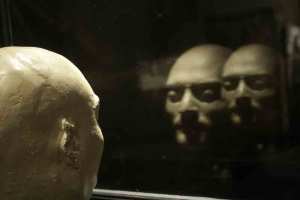
ned kelly's death mask at old melbourne gaol

Ned Kelly's death mask

There’s a definite air to the Old Melbourne Gaol that’s enhanced by a night visit.

Dating back to the mid 1800s, the then imposing building was erected as a response to the lawlessness of the gold rush, our guide told us. It was built according to the latest of law enforcement principles, which did not include plumbing — one of the most notable elements of the rather confined cells is the absence of a loo. Just the thought of a game of pass the bucket in an overcrowded cell after lights out was enough to induce a vow of sticking to the true and narrow.

Our guide, affecting an Irish accent, took the character of one of the gaol’s hangmen, and led us through the three storeys of utilitarian cellblock to point out the conditions of the day, the art of a good hanging, and some of the more infamous inmates, of whom 135 ended their lives at the end of a noose.

Death masks and info boards fill in some details; those waxen countenances, eyes and mouths shut inside their glass boxes, radiate a certain mystique with their crimes outlined around them.

The gaol’s star attraction is Ned Kelly. The bushranger, who was executed here, has a strong presence, including biographical details, death mask and replica armour, as well as several artifacts including a pistol taken from his last stand at Glenrowan, complete with bullet damage to the grip.

After the candlelit tour, we were set loose, with the lights on, to take photographs and explore the various dioramas and information displays, though the building was still far from bright and retained its sense of loneliness.

While the gaol’s ‘haunted’ status is mentioned in PR material, the tour managed to avoid the topic, and there were no ghost stories nor scary theatrics (though a few customers did manage to spook each other; those little screams did travel well!). The atmosphere of the stones and bars was more than enough to conjure a sense of dread and despair.

Photographic conditions were rather dim, but there are some pix over at Flickr.

Global compilation aids Queensland flood victims

Surge & Subside fundraising album

Musicians from around the world have banded together to produce a massive compilation of music, with all proceeds going to the Queensland flood appeal. Called Surge & Subside, the album features musicians with an electronic and industrial bent, including Android Lust, Assemblage 23, Angelspit, Collide and Psyche. More than 40 tracks for the ridiculously reasonable price of $20 for the double cd (including shipping) or $10 for the download. It’s another case of a community rallying to aid their own, and more besides, in a time of strife. Great stuff.

Sunas on the Celtic Road

Two bands played at our wedding. One has had their home flushed by the Brisbane floods and been further left out to dry by red tape and fine print — Tycho Brahe soldiers on, though the road must be bloody rough.

The other, Sunas, are walking a brighter path, with their first label release, Celtic Road, now available from ABC shops and getting a nice dollop of advertising support to boot.

I had the privilege of launching their self-released debut a bunch of years back. I loved them then, I love them more now. And, naturally, the gorgeous cover of The Cure’s Lovesong will always hold a special place …

The musician’s road is not the easiest; here’s hoping it rises to meet both of these splendid outfits.

Spare some change for a flooded muso?

My mates at synth-driven band Tycho Brahe have been washed out of their Brisbane home by the recent floods — luckily, they were able to get most of their gear — and their kids! — out before the flood water inundated their two-storey house — both storeys. Most, but not all, and the clean-up is costing a mint, not to mention the dislocation of renting and having your possessions, right down to your chooks, spread across spare storage space across the city. Tycho supremo Ken shows the studio damage in this blog post and says the easiest way to lend a hand is to pick up some merch from CDBaby. These guys aren’t just great musos, they’re great people: snaffle a cd or a download if you can. Your ears, and the band, will be grateful.

Update: Ken and George of Tycho were in the Brisbane Courier-Mail talking about the flood impact; it’s a brief piece, but you get the picture.

Things to do in Melbourne #2 — Moreau at NGV International

Gustave Moreau has turned out to be something of a surprise package. I rolled up to NGV International for its Gustave Moreau and the Eternal Feminine exhibition expecting a bunch of, well, second-tier oil-rendered classical views of some cool myths, and was pleasantly enlightened.

Mr Moreau, painting in the 19th century and not someone whose works I was acquainted with, might have started in such terrain, but his use of wide-ranging cultures, abstract elements, patterns and different media, proved there was a lot more going on.

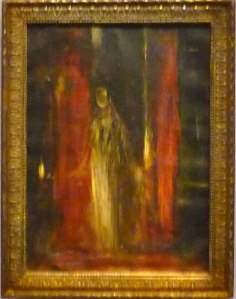
Lady Macbeth by Moreau

Lady Macbeth by Moreau


I loved his Salome series — sadly, this exhibit of more than 100 of his works did not include a couple of key pieces referenced with working sketches — and two exquisite pieces, one showing three sirens as the vaguest of shapes lurking on the shadowed shore, the other a featureless Lady Macbeth roaming the gloomy castle with a taper. There were others, of course, ghostly renderings, emotive splashes of bright oil amidst the dark, textures of oil and inlaid pieces of coloured stones. This article from The Australian gives a much more informed overview.

The Apparition by Moreau, showing Salome encountering the ghost of John the Baptist

Also showing, and free, is Unnerved, a survey of modern art from New Zealand on loan from the Queensland Art Gallery. There are a lot of photographs, a striking sculpture of a seal balancing a piano, and some audio-visual presentations, as well as paintings and installations. Post-colonial themes abound. I particularly liked Lisa Reihana’s large digital images reflecting Maori heritage.

It’s impressive that a collection such as this is free.

I can also recommend lunch at Persimmon, a restaurant tucked away at the rear of the gallery flanked by water features and offering a view of the gardens. For $55 a head, we enjoyed two courses — we had a prawn salad each for starters and lamb backstrap and pork belly for mains, with a glass of chianti and coffee, and tickets to Moreau. The food was delicious — note that the kitchen shuts at 2.30pm, though the restaurant hours are till 4pm, and the gallery’s till 5pm.

Note that you’ve got till the end of February to catch the Rock Chicks exhibition at the nearby Arts Centre: free, and a wonderful introduction to the history of women in Australian rock and pop.

Things to do in Melbourne #1: Shakespeare in the park

How to make the most of a languid Australian summer evening, Melbourne-style … get thee to the Botanic Gardens, ensuring you have a blanket, wine, cheese and other essential victuals. Perhaps some mossie spray, but last night, the bites were few. And enjoy, under a gibbous moon and occasional small aircraft, the romp that is Shakespeare’s Comedy of Errors.

Played by the Australian Shakespeare Company, Comedy added Pythonesque elements and slapstick to the play about mistaken identity to make it absurdly chuckle-worthy.

A simple backdrop, showing German expressionism in its cityscape, featured three doors plus a balcony, all that was needed as the sun went down and the lights came on. (The site is well chosen, with plenty of shade cast across the space.)

The back story about how the two sets of twins have come to meet under such circumstances is told in instalments that intersect with the main story at the climax; cleverly interwoven and and offering some of the play’s driest humour in the person of the bestilted Duke.

The costumes were gorgeously over the top, vaudeville meets Venician masquerade, and the performances were so physical and such good fun, with modern touches to add extra laughs without deconstructing the whole.

I’ve previously seen Midsummer Night’s Dream by the same ensemble here, and I think I’m going to be a regular from now on.

Food and beverages are available to buy, but BYO is welcome. There are chairs for rent.

White Lies — finding comfort in Ritual

The White Lies’ album To Lose My Life was one of my favourites of 2009, so the follow-up — Ritual — was much anticipated.

It’s been taking a while to grow on me; I keep zoning off, hearing reflections of the breakthrough To Lose My Life. And then suddenly, pow!, the track ‘Peace and Quiet’ pounced on my ears and tore all the way to the heart. Which is why I love music. Even the most played album, or song, can take on new shades as the years go by and life lends new perspectives.

The White Lies have pushed on a little from To Lose My Life, bringing in some synths and adding a touch of harmony. Ritual is perhaps a more subtle, mature album.

Noirish imagery and striking turns of phrase abound. The overarching mood tends towards the fatalistic: lost love and a broken planet and a society riven by loneliness. Opener ‘Is Love’ sets the scene with its cynical treatise; the album closer, ‘Come Down’, suggests the brightest moment casts the longest shadow.

Ritual might not have the instantly catchy anthems such as ‘Farewell to the Fairground’ and ‘Death’ To Lose My Life, but it does reward repeated listening. I’ll keep delving, waiting for the next little piece of emotional lightning to strike.

Reasons to write short stories

I’ve written two short stories this year. This is big news here at the coffee pot, because short stories aren’t really my thing. They’re tricky suckers, so tight and concise and punchy; no rambling, multi-plotted story with an epic cast of characters here. I envy those who can do them well, and who can do them consistently and frequently. It sucks that shorts, mostly, don’t pay that well. It sucks that the short story struggles for acceptance in the broader community.

But why the flurry over here (two does not a flurry make, granted, but I’m counting the wee outbreak from last year as well) where the long form is by far the norm? I think it’s possibly, partly, mostly, procrastination, but it’s good procrastination. Sure, I’m not working on a novel — pick one, the hard drive’s littered with carcasses and infants — but I am writing.

And that’s one of the beauties of shorts — they’re short. The procrastination will only last so long (I promise).

Here’s my justification, in answer to those whispered accusations of neglect from those aforementioned bits and pieces of novel:

1. Shorts are short. There’s more to this than meets the eye, and not just a pair of knobbly knees sticking out either!

a. Because short stories don’t have a lot of room, they help hone craft. They demand that extraneous matter be discarded. They require a singular devotion to the point of the exercise, without cluttering up the place with overblown description, secondary characters, waffling dialogue, and so forth.

b. Short, theoretically, means they don’t take as long as a novel to write. Some might gestate for ages, but in the actual writing, more often than not, a short should fall out of the oven a whole lot quicker than a novel. Bask in that warm glow of accomplishment. Just think: beginning, middle and The End in just a day, or two, or a week, maybe a month… However long it takes to get it shiny, do then take the next step: send it out to a market. And, if the factors align, score an acceptance. The warm glow is now a roaring fire complete with wine and chocolate.

My short stories are infrequent visitors, so I like to send them to a home made of bricks and mortar. Or dead trees, if you want to be strictly accurate. It might not enjoy the accessibility (and, arguably, the exposure) of a half-decent online mag, but it does look good on my shelf. Ego stroking is important in the depths of discouragement and narrative black holes, when the decision to sit at a keyboard making up stuff seems a stoopid career choice compared to, oh, watching telly, going to the pub and otherwise doing “real” stuff.

c. Because they’re short, you can play. Try different voices, different tenses, different structures. And when they don’t work, you don’t have to spend six months changing it all back to third person, past tense. Shorts are a great sandbox; raking it over and starting again doesn’t hurt quite so much.

d. Sometimes, short is just the right length. How long is a great story? It’s as long as it needs to be. Sometimes, that means short. If you can get your point across in 1000, 3000, 8000 words, then go for it. Don’t waffle. Don’t wander. If it needs 160,000, well, that’s fine, too. You can pretty much always tell when a TV show has been extended halfway through the first season; likewise, a written story can suffer from over-reaching.

e. We now interrupt this program with a news flash … There are times when you hear about an anthology and the theme or the title just zaps you: pow! Instant idea! Run with it. The novel, or whatever other project you’re suddenly neglecting, can wait — it’s only a short break, ain’t it. You don’t wait for those lightning bolts to strike twice. And even if you do miss out on getting into that title, well, maybe you can send the story somewhere else. Anything that gets you enthusiastic about writing must be good.

2. Shorts are fashionable. There are lots of markets for shorts, both in print and online (look at ralan.com and duotrope as starting points for spec fic markets). It means you probably won’t have to wait too long to hear if the baby has found a home. You’d think the commuter set would be lovin’ the shorts, especially when delivered on a wee screen. They should. Everyone should. Because of point 4 (below). But first, there’s another fashion statement to consider:

3. Shorts look cool. Not as cool as a fez, perhaps, but cool, nonetheless, when they’re racked up on a CV. You don’t need them to get a contract for your novel — hey, everyone has a story to tell about how they cracked that first book deal, and not all of them involve a razzle dazzle set of short credits — but it can’t help, can it? To show that you’ve been writing, learning, engaging with the market and the writing community.

4. Shorts can punch above their weight. Oh, how a good short story can leave you gasping. I must’ve been only knee high to a grass hopper when I first read Arthur C Clarke’s “The Nine Billion Names of God” and I still hark back to that final line as one of the best ever. A short is an idea, so very sharp, and when it hits the spot — intellectually or emotionally — it really digs in. I’ve heard it said that a short story makes a great movie while a good book makes a great TV series. Sounds about right.

5. Shorts can value-add. So you’ve got a novel in the works, but that character is a bit of a mystery. Whack him or her or it into a short and see how they fare. It might not go any further, or you might end up with not only some revelation for your long work, but a neat little tie-in. Back story might not fit in a novel, but it might make a handy piece of cross-promotion — if it stands alone as a great little yarn. Fans of the novel will love the extra info, and other readers might gain a yen for finding out more about the world and its characters.

6. Take a short break. Hit the wall in the novel? Even better, finished the first draft? Take a break, go on a literary holiday and write a short. Or two. Explore a new world, a new voice, a new style. Revel in writing something fresh that isn’t the novel. It’s a working holiday and, at the end, you may even have a souvenir acceptance to show for it. Refreshed and ego-stroked, it’s back to the big game. And who knows? That short might, down the track, grow into a novel of its own, now that you’ve planted the seed.

I’m sure there are other reasons to write shorts, other than the sheer love of the form — feel free to share. But I think I’ve procrastinated enough. Writing about writing shorts is probably taking it a step too far. I should probably go write something. But something short or something long? Hmm. I’ll have a coffee and think about it…

100 Stories for Queensland

The list of authors appearing in 100 Stories for Queensland has been announced and it’s a great looking list drawing writers from all over the place. The anthology is to raise money for Queensland flood victims.

The book is due out on March 8.

I’m particularly interested in seeing what Alan Baxter has contributed, given the antho was looking for uplifting yarns *grin*