
kim wilkins
McKee on Story, and the nature vs nurture argument about writing courses
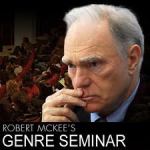 I attended Robert McKee’s seminar on thriller writing recently. It was a revealing event: an entire cinema packed with writers chasing insight into how to write a thriller. It was a microcosm of just how booming the writing industry is, fuelled in part by the opening of the self-publishing market due to affordable and relatively easy ebook and POD technologies. I don’t really think of the other bodies in the room as competitors, just contemporaries: I’m a big believer in the phenomenon in the writing industry perhaps best epitomised by the Amazon button that says if you liked this book, you might also like …
But there I was, me and my contemporaries, for a very long day, receiving a summary of the various styles of thriller, the identifying qualities of same, and then the nitty gritty: component parts, structure, conflict and, perhaps most usefully, the idea of switching positive-negative valencies within each scene, sequence and act.
McKee is famed for his book Story and the seminar industry he’s spun out of it, and I got a lot out of the day (Ellen Gregory provides a handy summary in a series of blog posts). The physical seminar was easier to digest than the written work, I found; McKee’s focus is on screenwriting, but the basics apply equally as well to literature. I was mentally checking off, and occasionally wincing, as McKee unfolded his theories (Se7en was his case study). Anything that makes you look at your process, at the components of your craft, that helps you hone your skills, is valuable: up to a point. You still have to write the damn story. And you still have to have a story worth writing. Ah, now there’s the rub.
Cameron Rogers gives the McKee school of writing class a serve, while finding useful insight in the simple three-act scenario of Lennon and Garant: put a likeable person up a tree; throw rocks at them; get them down from the tree. I like that.
(I’ve only recently discovered Cam’s blog: it’s a time-killer, both erudite and fun with far too many interesting YouTube clips. And, god, Music of Razors is still on the Shelf of Woe, waiting for that heady day when I get to that to-read pile.)
Which suggests, courses for horses. But can ‘writing’ be taught?
As Dmetri Kakmi wrote in a recent defence of writing as vocation, there’s a school of thought that says everyone has a novel in them — which is probably true in terms of content. But perhaps not everyone, even with a McKee seminar and a couple of handy books (I favour Stephen King’s On Writing as an inspirational text) on the desk, is capable of delivering that story in an effective and engaging way.
While I’ve learnt a lot from writing courses — I wish I’d done my Year of the Novel with Kim Wilkins a decade earlier, when I first seriously turned my hand to getting a novel written and having it published (and being paid for it, damn it!) — I like to think, in line with Dmetri’s ‘rant’, that there is a talent as well as a skill. I think the skill can be honed; I think the talent comes from prolific reading, exercising of imagination and curiosity about the human condition. If talent is a pool of creative lava, then a writing course — the right writing course — might help channel that lava into a fruitful channel. No burnt fingers, no gelatinous puddle. There are plenty of good ideas out there, but good ideas well crafted, well, that’s another story.
I’ve read a bunch of yarns that have plenty of spirit, but are let down by deficient craft. I’ve read even more than have a modicum of craft, but little spirit. It’s where craft and spirit combine that we get that story that sticks: the one we have to tell all our friends about.
Dmetri says if you have to ask if you’ve got what it takes, you don’t; I think we prove it to ourselves every time we choose the keyboard over the sunshine, or at least, we test ourselves along those lines. Writers are, by nature, by and large, insecure creatures: as with any artist, their passion is placed in the public arena and invites both the brickbats and bouquets. Do I have what it takes — to get to the end? To sell this story? To make a reader give a damn?
At the end of the day, we’re writing to our own standard. Some folks will be happy to just sell a story to any market, paying or otherwise. The byline is enough. Others want cash up front as recompense for all the days of sunshine they’ve missed out on. Some churn out plastic, others are artists; sometimes, both might make a living out of it. Some have quantitative goals: units sold, cash earned. Others, a qualitative goal: to write as well as their hero, or to write an award-winning work.
We set our own benchmarks and I’m in no position to rank them, but I do set a base level of competence for someone calling themselves a writer: respect for the words, respect for the language. You don’t have to be an uber stylist but at least know where to put the full points. At least know what the words mean. And readers should be discerning on this. A 99c price tag, not even a free download, should excuse abuse of language. Incompetence and willful ignorance should never be excused.
King talks about his ideal reader, and I think that’s part of the benchmark. Who do we want to impress with this story? Who will we hold our breath for, while we wait for the shake or the nod?
I’m glad I did the McKee seminar; I enjoyed the lens his observations brought to my appreciation of my work. But I still have to apply the lessons learnt. And I still have to answer the question: do I have what it takes? No amount of courses is going to solve that riddle; that one is answered only in the doing.
Taking time
The RSS feed has delivered two interesting, and timely, posts from fellow scribes. The first, from Kim Wilkins, talks about the negative effect on productivity of the marvellous interwebs — the distraction of being too busy being a writer to actually write; while the second, from Margo Lanagan guesting at Justine Larbalestier’s web home, concerns the necessity of being fallow for a bit, of stepping back, of letting the mind get over itself. And she asks an interesting question: if you weren’t a writer, what would you be?
Think of all the time you spend writing — not just at the keyboard, but in headspace plotting and dreaming, in reading and watching stuff you think will help, in the PR and communication Kim talks about. Wow. Now, what would you do with that time that would give you the same reward? Another artistic endeavour? Sport? Charity work?
A writer probably can’t not write, but I guess the crux is, what they want to do with that writing. And can those expectations realistically be met.
Awards and more book covers
Ticonderoga has released the book cover of its limited edition reprint of The Infernal by Kim Wilkins, her first novel and still one of my favourites.
Ticon has also recently made available two anthologies: Scary Kisses, involving paranormal romance, and Belong, speculative tales with a migration hook.
And in awards news, Jonathan Strahan, Justine Larbalestier (Liar) and Scott Westerfeld (Leviathan) are Aussies all in the running for Locus Awards. This follows the excellent news that Margo Lanagan is up for a Shirley Jackson award for her novella Sea-Hearts, published in X6.
Here’s a cool trailer for Scott’s Leviathan, a very fun take on the outbreak of World War I:
And one for Liar, a compelling if infuriating read!
And not to be overlooked is this new offering from Rowena Cory Daniells, a fancy trailer for her new (and much awaited) trilogy. Rowena has been a stalwart of the spec fic community in Queensland for many a year, helping to found both the Vision writing group (going strong) and the EnVision writers workshop (now defunct, but in a way living on in the Queensland Writers Centre’s year of the novel program): two things that have been of massive benefit to me as a budding author.
KRKhd from Daryl Lindquist on Vimeo.
Addendum to books of 2009: The Infernal and Poppy Z Brite
The little bird twittering about a new release of Kim Wilkins’ debut novel The Infernal has come home to roost — at this online bookseller, to be precise, where you can order a limited edition, rather cool-sounding copy for the princely sum of $100.
At time of writing, the website is giving a percentage of sales to a Western Australia bushfire appeal.
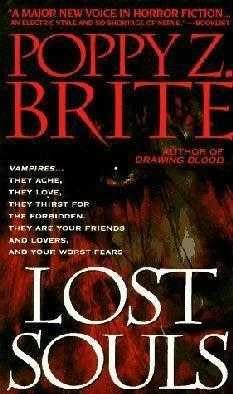
To end the new year, I’m revisiting Lost Souls by Poppy Z Brite. She’s one of my favourite authors. I love her ability to inhabit her characters, to draw that shadowy, downcast world, and her depictions of beloved New Orleans. I’ve uploaded an interview conducted with Brite in 2005, just months before Hurricane Katrina devastated her home town.
I’ve been back to New Orleans twice since Katrina, and found the city tooled up for tourists, but Katrina’s bite is still deep and tenacious for residents, and Fema remains a dirty word.
Keep up to speed with Brite, and her engagement with her home town post-K, as she puts it, at her blog.
Meanwhile, Wilkins, another of my favourite authors, has just returned from a month’s research in England in pursuit of a tasty historical fantasy tale. Something to look forward to on the cusp of a new year.
Have a good one.
Books of 2009
Thank goodness for December. After a tumultuous 2009, it’s nice to have a month to draw breath in, to hunker down and finally get that heart massage I’ve been yearning for.
I owe Chuck McKenzie a favour for getting the ball rolling, passing around an email touting for stories. The anthology died shortly after conception, but it was the rare instance this year when, by the time I’d read the announcement, I had an idea for a story. Two, in fact. I took them both on long leads for a walk in the park, and by the time I was headed for home, had settled on the one I was going to write. I sat down at the keyboard and, naturally, wrote the other one. It’s still not quite finished, and needs a serious going over, and may never see the light of day. Thing is, it happened, it’s there. The wheels were in motion for the first time in far too long.
They’ve kept turning, too. The result is a file featuring a hodge podge of scenes, all as rough as guts, some contradictory, most muddled, but there’s a narrative in there somewhere. It’s slowly emerging out of the mist.
I don’t think it’s a coincidence that the words have started to come as I’ve finally got back into reading. Writing’s a machine: you need words in to get words out. That’s my assessment, anyway.
So what words? A few of us were yakking the other day about our best reads of the year, and I was struggling to recall what I’d read, particularly in the fractured, then limbo, period of the year. Mostly review books, I think. I guess there’s a reason I don’t remember them, but then, memory’s a tricky thing.
I do remember enjoying Glenda Larke’s The Last Stormlord, an engaging fantasy set in a beautifully realised world of desert, drought and political intrigue. Peter M Ball’s novella Horn, an urban noir featuring a murderous unicorn on the sleazy side of town, whetted the appetite for a sequel. Angry Robot offerings Slights by Kaaron Warren and Moxyland by Lauren Beukes were head and shoulders above their packmates.

And then there was the back-catalogue stuff. A copy of Rewired: The Post-cyberpunk anthology proved enjoyable and wide-ranging, from post-apocalyptic (How We Got In Town and Out Again) to post-human (The Wedding Album), obtusely technical (Lobsters) to poetically obtuse (Thirteen Views of a Cardboard City, possible a view or two too many), and two close to my heart thanks to their Mississippi River settings, Calorie Man and Two Dreams on Trains.
A revisiting of Stephen King’s On Writing and Kim Wilkins’ The Infernal (every bit as good as I remember it; and due for a new release, I believe) preceded two visions of life after the apocalypse, sans zombies: Cormac McCarthy’s The Road and Margaret Atwood’s Oryx and Crake. I thoroughly enjoyed both of these science fiction novels, so beautifully told in both language and structure. I stumbled early on in The Road while I adapted to McCarthy’s degeneration of punctuation and assault with sentence fragments, helping to set his scene. The structure was very clever, a series of vignettes, Polaroids of memories, the order not always clear, his protagonists unnamed as they stumble their way through the blighted landscape, living off scavenged goods and in fear of cannibalistic gangs. A world where trust and compassion are casualties of the need for survival. The last scenes left me a little cold, but that might be my cynicism asserting itself. Atwood’s yarn, in which a race of gene-spliced humans have inherited the world, overseen by a wonderfully depicted, mundane narrator with the inside track on the apocalypse, proved compelling from go to whoa.
Films and TV

Not a good year for the moving picture in Jason-land this year, due to a protracted absence from attending either the big or small screen. The few new release movies I’ve seen just haven’t impressed. From the sofa, I’ve been enjoying revisiting Battlestar Galactica, and catching up with True Blood, Dexter, Being Human and Dead Set. I hope the new Sherlock Holmes movie might give the year a kick in the tail.
Gigs
In no particular order, this lot rocked: Nine Inch Nails, Gary Numan, Amanda Palmer, Jeff Martin, Emilie Autumn. At a local level, Sunas, Tycho Brahe, Felinedown, Bridget Handley, Dandelion Wine, Wendy Rule and The Wretched Villains made an impression on the synapses.
Two albums released this year remain on rotation here in the office: The White Lies‘ To Lose My Life and the Yeah Yeah Yeahs’ It’s Blitz!. My retro buy of the year was Beautiful Day by defunct Brisbane duo Stringmansassy: just gorgeous.
now listen here
Keith Stevenson has kindly made a podcast of my short story Smoking, Waiting for the Dawn, at Terra Incognita. It’s up now. The story is the latest in a monthly series that includes Sean Williams reading an unpublished short story and Cat Sparks reading her The Bride Price. I’m looking forward to next month’s story, by Trent Jamieson.
Smoking … was published in Dreaming Again last year. The collection won a Ditmar (for best collection) at the National Science Fiction Convention in Adelaide earlier this month. Cat Sparks also won a Ditmar, and Sean Williams was deservedly awarded the Peter McNamara award for being an all-round awesome dude. This year’s Ditmars were hard to fault, in fact, with very deserving winners across the board. I was quite chuffed to see Rob Hood, Margo Lanagan and Kirstyn McDermott land theirs, and took delight in the awarding of the William Atheling Jnr award for criticism or review go to Kim Wilkins for a superb, scholarly article about genre bias. The full list of winners can be read here.