Rec160: Weapons – a clever vanishing act

MOVIE

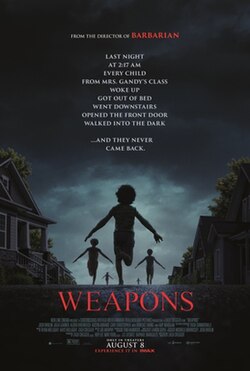
Title: Weapons, 2025

Director: Zach Cregger

Starring: Julia Garner, Josh Brolin

Weapons is a movie that is probably best seen cold, because it does not walk the expected path as it plays out its central mystery. The fan gets hit one morning when a classroom of kids fails to turn up to school – except one. Emotions run high, and the teacher (Garner) falls under suspicion as the days wear on and the kids don’t turn up. The only clue is footage of them all running away from home in the wee hours. From there, things spiral in pleasantly surprising and eerie ways. The story is presented in a series of interconnected viewpoints, both filling in the background and taking the narrative forward. It’s a clever balancing act of horror and dark comedy, light relief turning into dread, and offering one of the bleakest endings I’ve seen in ages. The audience reaction was a reminder of why some flicks are worth seeing in the cinema, as gasps became laughs became gasps. Ouch.

Rec160: Presence

Film

Title: Presence

Director: Steven Soderbergh

Stars: Callina Liang, Lucy Liu, Chris Sullivan, Eddy Maday

This haunted house film is fabulous until it gets tripped up by its final reveal, but it’s worth a watch. The point of view is that of an entity inhabiting the unremarkable suburban home, with a penchant for a particular wardrobe. I was quite happy not knowing the entity’s identity and story, and enjoyed the constraint of having pieces of story provided only by what it can hear or see from its vantage points within the home. A family moves in and the dynamics are built through vignettes: tiger mum has a business secret as well as devotion to her son’s swimming career, dad isn’t coping, daughter is suffering from the death of her best friend from an apparent drug overdose (one of two). But at the end, the time paradox referenced by a medium undermines the simple elegance of the set-up, and narrative coherence – already a little frayed by the side plot of dead students – unspools. That wardrobe? Ew.

Rec160 – Companion

Film

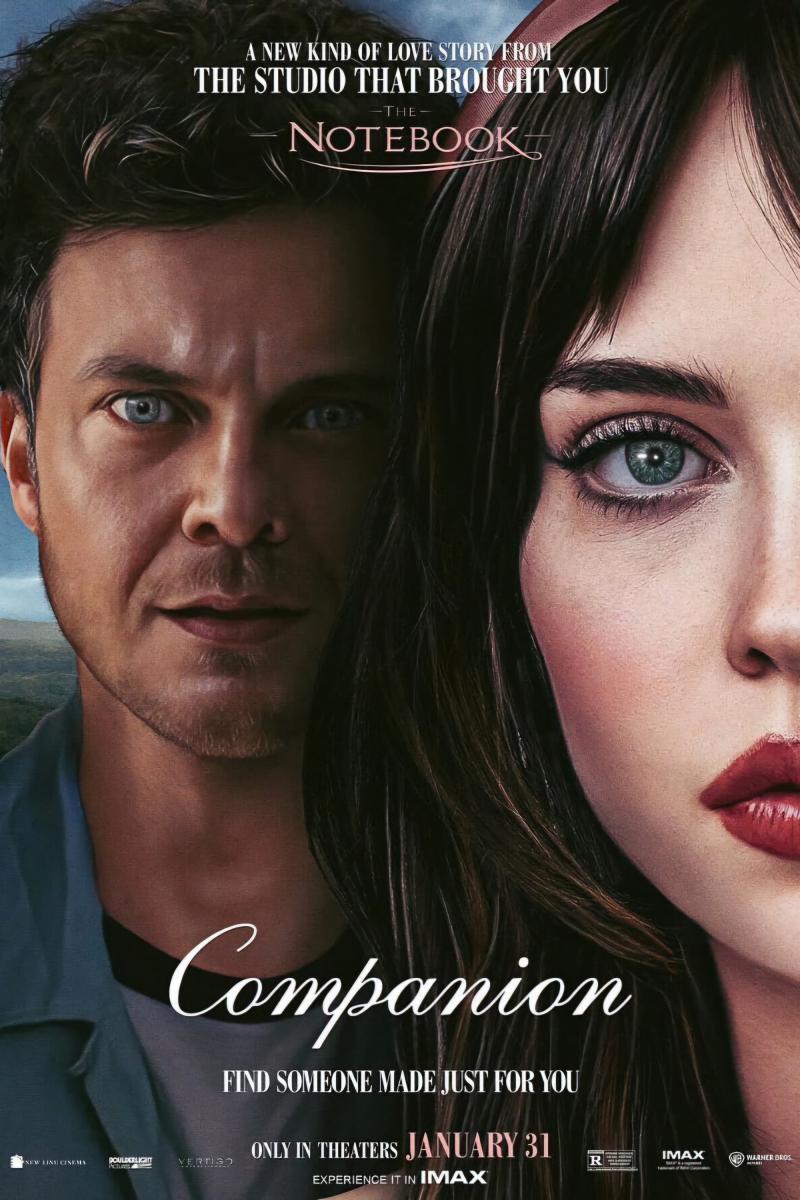
Title: Companion
Director: Drew Hancock
Stars: Sophie Thatcher, Jack Quaid

When it comes to robots being given a rough deal, Companion is right up there with Blade Runner. As with the recent M3gan, Companion poses a question about the role of robots in our society, but where M3gan devolved into a simplistic string of killer robot set pieces, Companion sticks the landing, never abandoning its underlying themes. The only misstep is the announcement at the start about who kills whom. Sophie Thatcher is eminently watchable as Iris, caught up in a plot about which the less said the better so as to enjoy this proficiently composed thriller of reveals and hurdles. It kicks off with a group of friends arriving for a stay at an isolated mansion, whereupon schemes come undone and secrets are unveiled, all with a resultant and refreshingly banal body count as pressure mounts. With shades of Westworld and I, Robot (of course), Companion impresses with its intelligence and focus that would easily reward a second viewing.

rec160 – The Benevolent Society of Ill-Mannered Ladies

NOVEL

Title: The Benevolent Society of Ill-Mannered Ladies

Author: Alison Goodman

Publisher: HarperCollins, 2023

This Regency romp marks a departure of sorts for Goodman, in that there is not a whiff of the fantastical to be had as the Colebrook twins set about righting some wrongs while maintaining the appropriate social graces. Broken into a series of cases, the narrative is held together by ongoing storylines – a caddish brother, the health of stoic Julia and the burgeoning attraction of the bold Augusta to fallen nobleman Evan Belford, himself not without a mystery fit for the unravelling. What starts out as a favour gathers momentum as the unmarried duo take on increasingly challenging rescues of women in peril. Underpinning the adventure is Goodman’s (PhD-stamped) eye for historical detail, ear for a fetching turn of phrase, and consummate skill with characterisation, plot and pace. While Goodman’s YA series appeal equally to older readers, this is her first novel for adult readers since 2007’s Killing the Rabbit, and it doesn’t disappoint. We await book 2 with anticipation.

rec160: Talk To Me

FILM

Talk to Me, 2022

Directors: Danny and Michael Philippou

Starring: Sophie Wilde, Alexandra Jensen, Joe Bird, Miranda Otto

Has there been a better Australian horror film since the Babadook? This debut feature from the Philippous is intelligent filmmaking, twisting the notion of a séance or Ouija board into a gripping teen drama that manages to balance gore and suspense with nary a jump scare in sight. Mia is something of a loner, having lost her mother under tragic circumstances and relying on the company of Jade and her younger brother Riley. Enter the party trick of using a supernatural hand to invite spirits to possess bodies while the gang films the excitement on their mobile phones. Of course things get, ahem, out of hand. It’s a wonderfully contained story, ramping up the stakes without going overboard; well filmed, well acted, with enough backstory to help us care for the characters and understand their relationships. It’s worth seeing on the big screen because the sound direction absolutely nails it, whether it’s creaking, moaning or a haunting lullaby. Highly recommended.

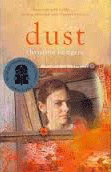
Dust, by Christine Bongers: easy to take a shine to

dust by christine bongersIt’s not hard to see why Dust (Woolshed Press, 2009) was named a Children’s Book Council of Australia notable book, among its many accolades. It’s a simple, powerful coming-of-age story, the sort of thing that’s just the ticket for school libraries. Fairly subtle, too.

Chris Bongers grew up in Biloela and she taps that experience in this tale set in the countryside of her childhood. Like heroine Cecilia, Bongers had a mob of brothers to run amok with, too: how many chinese burns, corkies and horse bites did she trade? Droughts and flood and heaps of strine are, however, only the wonderfully drawn backdrop of this tale, set in the 1970s with a modern bookend.

Cecilia is on the cusp of moving from primary school to high, and there’s a steep learning curve to do with being yourself, of making choices, of caring for those on the fringes who have no one to care for them.

Working up ways to dodge the worst of penance in the confessional is just the start of it.

There’s the mysterious Kapernicky sisters, chalk and cheese and both just a little off; and the new girl, peaches-and-cream Hayley in her revelatory knee-high white boots; and Glenda with her ciggies and alluring coterie of no-gooders … and just what has got into Cecilia’s brother, Punk?

australian women writers review challenge logoBongers has the knack of flipping the switch from larrikin humour to pathos. Of painting her characters in human strokes, the good with the bad with the damn frustrating. Of letting the time go by, incident by incident, letting the allusions grow as the illusions slowly fade.

She perfectly captures that onset of maturity, young people trying to make sense of the world. Coming to realise that the dust of regret accumulates, seeking a way to keep the surfaces clean or at least keep the rug in its place; discovering the power of compassion.

  • This is my third review as part of the 2013 Australian Women Writers Challenge. The first was Glenda Larke’s Havenstar; the second, Krissy Kneen’s Steeplechase.
  • Steeplechase, by Krissy Kneen — that’s quite a ride

    steeplechase by krissy kneenBrisbane writer Krissy Kneen has a deft touch with prose; her character’s voice in Steeplechase (Text, 2013) flows off the page, captivating and intriguing and thoroughly believable. And what a tale she tells, of her and her sister, her mother and Oma, all locked up in a history of mental illness where reality and truth are stretched to breaking point, not unlike a painter’s canvas stretched on a rack.

    For Emily Reich is a painter of renown, having left her sister Bec — our narrator — in the shade.

    Life for the sisters has been insular, to say the least, with their grandmother running the house, father gone, mother herself locked away inside a mental breakdown of sorts, a haunting presence that dominates the rural homestead. Stern Oma restores paintings for a living; she sequesters the girls, perhaps fearful of them falling prey to their mother’s sickness. For naught, as it happens.

    Emily, having had her turn with illness, is in China, living large on her renown, while Bec, still very much in her shadow and more than a little fragile herself, ekes out a living as an art teacher and painter of less renown.

    There’s that student Bec’s bonking — how wrong, but yet, so occasionally right — and there’s the imaginary boy who teased her and her sister so magnificently; the neighbour’s horse of childhood distractions, the games of steeplechase in the back yard, sisterly dynamics and a past disaster that hangs over them both.

    I’ve read the word ‘claustrophobic’ used to describe the first section of this two-parter, and it’s a good choice, the past infusing the present, Bec locked between the two. And in her future, inducing yet further unease, that invitation from her sister to attend an exhibition in China — the second part, less claustrophobic but no less unsettling as Bec flounders in the foreign streets, trying to work through to the truth of the past and forge an understanding with her brilliant, troubled sister.

    My only hesitation of the course was in the denouement: a little too much too soon for me, but I can’t argue that Bec earned her just rewards.

    Identity, mental illness, art and, yes, horses — though equestrians might not find much to please them, here — form this delicious miasma, with the weather — sub-tropical Brisbane, I belatedly realised; and confronting, bird-less Beijing, Kneen drawing on her time there to invoke smells and sights fit to alienate our heroine — used superbly to enhance the mood.

    Kneen debuted sensationally with her gorgeously rendered erotic memoir Affection and followed that with thoughtfully pornographic Triptych (which I have yet to read), both through Text; this, her first foray into less salacious fiction, confirms she’s a writer who deserves to go the distance.

  • This is my second review as part of the 2013 Australian Women Writers Challenge. The first was Glenda Larke’s Havenstar.
  • Salvage on the media tide

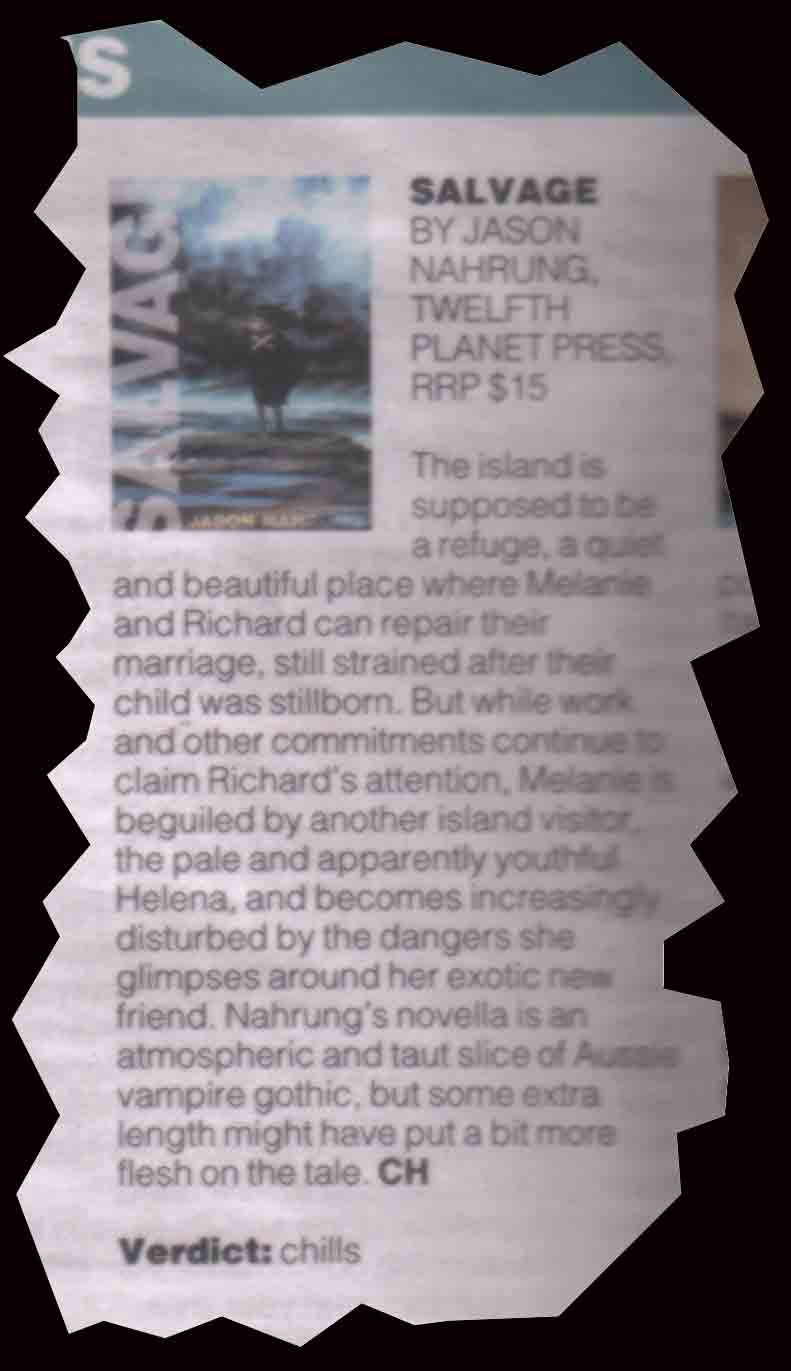
    The Herald Sun‘s ‘Weekend’ section ran a review of Salvage on 25 August by Corinna Hente. Grand to see a novella published by a small press getting a run!

    salvage review in herald sun

    The lovely Sonja at Joy 94.9 FM‘s Sci-fi and Squeam invited Kirstyn and myself into the studio recently to discuss ‘horror’, Gothic and the language of writing. The longplay podcast is online.


    And Noosa Today has run a pic from my visit to the wonderfully supportive Noosa Library earlier this month, sharing the Salvage love and talking writing and publishing. Sorry to the guys who came in a little later and missed the surprise photo op! I love the kaffeeklatsch style of yarning with enthusiastic writers and readers.


    noosa clipping for salvage library visit

    AWWNYRC #2: The Shattered City, by Tansy Rayner Roberts

    This is the second book I’m reading as part of my list of 10 for the Australian Women Writers 2012 National Year of Reading Challenge.

    The Shattered City

    Book 2 of the Creature Court trilogy
    by Tansy Rayner Roberts
    Harper Voyager, 2011, ISBN: 9 780 7322 8944 7

    shattered city by tansy rayner roberts

    IN WHICH the Tasmanian author furthers the tale begun in Power and Majesty (reviewed here). For those who came in late: the city of Aufleur is under attack, with interdimensional rifts trying to destroy it overnight. Defending the city is a bunch of hedonistic and political shape shifters, led by a Power and Majesty. In book 1, the ruling P&M was whisked away through a split in the sky, and was replaced — not by the most likely candidate, the damaged and reluctant Ashiol, but seamstress Velody.

    It’s a complex world, with Italian Renaissance overtones, and both the workings of the magical world and its relationship with the physical are explored further in The Shattered City. Velody grows into her role on the great chess board, introducing a new regime of polite behaviour — of community — into the fractious, scheming Court, while her fellow seamstresses — Rhian, all but neglected for much of this story, and fiery Delphine — also find their place in the new world order.

    australian women writers challenge 2012The actual story that drives this book — an assassin in the ranks and the sense that the city faces its most deadly threat yet — takes a while to get going, but there’s no time for slacking off. There are so many points of view, often thrown altogether within each chapter, and some make only one or few appearances: it’s easy to lose track of just whose head you’re in.

    It’s a strength that the immediate story arcs of books 1 and 2 are both resolved between their covers, while the larger story stretches across them. As with the first, the second delivers some delicious moments, beautifully dressed and dead sexy, and what a relief it is to finally have the plot point that kicked the whole thing off finally out in the open. Rayner Roberts is wise to not present it as a surprise, but use it as leverage for a greater goal. The Creature Court series offers a layered, detailed, credible world, peopled with a cast of complex, motivated individuals. How fortunate that, given the impending showdown foreshadowed here, that book 3, Reign of Beasts, is out now!


    This review has also been posted at Australian Speculative Fiction in Focus, who made the review copy available.

    Previous Challenge reviews:

  • Frantic, by Katherine Howell, crime.
  • AWWNYRC Review #1: Frantic, by Katherine Howell

    I joined up with the Australian Women Writers 2012 National Year of Reading Challenge and have started on my list of 10 books by, you guessed it, Australian women writers to read this year, the national year of reading. Here’s the first review:

    Frantic

    Katherine Howell
    Pan Macmillan, 2007, ISBN: 978 1 4050 3797 6

    frantic by katherine howell


    FRANTIC by name, frantic by nature. And intriguing, too.

    This is the debut novel from Katherine Howell, who drew on her experience as a paramedic in telling the story of heroine Sophie, a Sydney paramedic. Sophie’s husband, Chris, is shot at the door of their house and their baby, Lachlan, is kidnapped. Every parent’s nightmare, right?

    Add in a vicious bunch of bank robbers who might be coppers and a relationship going through a rough patch, and you’ve got a compelling thriller anchored in the world of the emergency services.

    Also starring is police detective Ella Marconi, whose career has stalled due to her run-in with a boss.

    It’s not hard to see why the novel has brought Howell kudos, a series and a following. The medical and police procedural rings true, without the bells and whistles of a Hollywood performance. The law is not so much an ass as a mule that we trust to plod its way across the legal terrain, getting there in the end. But of course, Lachlan doesn’t have time for plodding: Sophie is prepared to do anything to get him back. Howell’s portrayal of the mother’s anxiety is spot-on. Frantic, indeed.

    australian women writers challenge 2012The story puts the reader in an interesting seat. Certain medical emergencies attended by Sophie have varying degrees of import with the core storyline, and the reader must decide which are relevant, and how. The event that triggers the story — the shooting of Sophie’s policeman husband Chris — is clearly not what the police, a little mysteriously, seem to believe it is. Why isn’t Chris dead? Why is Lachlan missing? Why the note? It just doesn’t add up.

    And then Chris gets his own point of view, so his role, while murky, is largely understood. And then, perhaps halfway through the book, the villain is revealed, and the reader is no longer left in the position of a whodunit but, rather, the position of an observer watching the web being woven, and why, and wondering who will be ultimately trapped.

    It’s a methodical tale, competently told, with attention to detail — leaves in drains, the smell of food — and no grandstanding. Marconi is neither Sherlock Holmes nor Dirty Harry. Sophie is not an action hero. Chris is not Chuck Norris. No one gets out unscathed or unaffected, not even Marconi.

    That down-to-earth approach is perhaps the novel’s most endearing feature. The resolution leaves the questions satisfactorily answered. It’s no surprise that Marconi is still going strong, five books later.