Design Desire: Abbe May hits all the right notes

album design desire by abbe may

Greatly enjoying Abbe May’s latest album, Design Desire. It’s one of those long-players that demands the attention of your ears and, while it offers some killer tracks, it provides a complete journey as an album.

The Aussie singer, from Perth, kicks off with the title song, an urgent introduction to the nine tracks that follow. It’s hard to disregard, and once you’re hooked, there’s no wiggling away.

She knows her songcraft, varying light and shade throughout the album and within the songs. ‘Taurus Chorus’ goes from electric guitar wail to sublime croon, for instance; on ‘Mammalian Locomotion‘, the guitars howl like the tyres of dragging cars. There’s lonely echo on ‘Universes’; steel guitar meets slow jazzy groove on ‘No Sleep Tonight’.

The beat varies, too, but blues rock is never far away – ‘Cast That Devil Out’ is hard to go past, and ‘You Could Be Mine’ is a showcase tune. Throughout, there are shades of Sonic Youth, Siouxsie Sioux and the White Stripes, amongst others. ‘Carolina’ has the country guitar soundscape that suggests the song should be set much farther west.

And then the end, ‘Blood River’, a drifting, piano-driven dirge that lasts just long enough, letting the listener go gently.

The vocals mirror the superb guitar control, too, from soft to snarl, delivering musicality as well as lyrics, changing to suit the needs of the song, carrying the emotion.

There’s an honest, almost live, feel to this album. One of the year’s best.

Power and Majesty: a right royal success

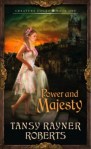
power and majesty

Power and Majesty (HarperCollins Voyager) came out last year. It’s the first volume of the Creature Court series by Tasmanian writer Tansy Rayner Roberts — the second volume, The Shattered City, is out now. I polished Power and Majesty off on the flight to Perth for Swancon at Easter, where it was awarded a Ditmar for best novel of 2010. It’s also up for an Aurealis Award, to be announced later this month.

The story is set in Aufleur, where Velody and two friends run a dress shop. Aufleur comes across as an Italian-style town — Renaissance with steamtrains — where festivals are a prime social and economic activity; even the calendar is set by the celebrations.

Behind the superficiality of the social calendar lurks a different reality, however. The sky is an enemy, raining death and destruction in a most creative way — the population is unawares of their peril from this extradimensional danger. It falls to a band of shape-shifting magic users to defend the plane, but they are far from a cohesive entity. Their number has been whittled down by combat and politics and they hunger for leadership from a king. Ashiol is the prime candidate, but abused and ashamed, he wants none of it. And so the jostling begins, and the fate of the world hangs in the balance…

It’s a superbly crafted world though the lens is focused on core features; there’s a pervading sense of gloom and hedonism, suitable for the end-of-days backdrop that informs the tale. The idea of having a battle for survival being played out in the sky above — of entire towns being erased from map and memory — without anyone much noticing is well handled given its difficulties. The magic also crackles on the page, with depictions of shape changers erupting into mobs of birds and animals, and psychic warfare in the sky, all underpinned by a well thought out science of how it all works.

While Latin is the language of choice for festivities, there’s a fair crack of Australian sensibility in the dialogue (drug users are, for instance, “off their face”), which is in the most part sharp and engaging.

The story itself is a little choppy in the early scenes as the ground is laid and characters set — large swathes of italic monologue and a lot of jumping about felt disorienting. But then the second act kicks off and the pace settles and the world rises up and the characters come into their own. Macready, for instance, brings a welcome dash of Irish humour while offering a pragmatic preparedness for swordplay.

It is in such characters that Power and Majesty truly shines. There’s a large cast, a dozen or more who get their time to strut and fret, each pursuing their own agenda. And the main players have wonderful points of distinction, clear motivations and intertwined histories that still resonate in their actions of the day. Politics and friendship, ambition and jealousy, love and desire, guilt and regret: very real human emotions that drive the narrative and breathe life into the characters and power the plot.

Amid the politics of the Creature Court, Velody is forced to assess just what she wants from her life — is being a dressmaker to high society enough? How much is she willing to sacrifice for her friends, her own happiness, and indeed the world?

I found Power and Majesty to be an enjoyable blend of fantasy and romance with entertaining characters who bring tension and intrigue to the story, all against a well-realised backdrop. Bravo!

Evelyn Evelyn at the Evelyn, with friends

A late start to the morning, now listening to Kim Boekbinder’s The Impossible Girl album hot off the merch stand at last night’s gig at The Evelyn Hotel in Melbourne’s Fitzroy, and again feeling really sorry for her that last night’s late start resulted in her set being reduced to two songs.

Boekbinder, who does wonderful things with loops and squeeze-squeak plastic crocodiles when she’s not simply enthralling with insightful snippets of love and life, backs up tonight and tomorrow, and is hanging in Oz for a while, apparently. Her album shows a wide range of musical styles and some quirky stuff to leaven the heartbreak and acerbic observations. Catch her if you can.

The reason for last night’s foray was Evelyn Evelyn, a concept act put together by Amanda Palmer and Jason Webley. Webley was headlining last night’s bill, which also featured the intriguing Jane Austen Argument (although it was only Tom last night, with support from guitarist-singer Gemma O’Connor whose voice was sensational).

It’s an amazing line-up of talent for a pub gig.

The conceit for the Evelyns is that they are conjoined twins: Palmer and Webely sharing a suit, the illusion given a delightful touch of the absurb by Webley’s beard (the other one should grow a beard, he reckons, to much LOLing). The Evelyns were much fun, though the theatrics did drag out the set a tad — moments of too little happening stretching an uncomfortably crowded room’s attention span, allowing the bar chatter to rise. I couldn’t see much of them when they were playing the keyboards, a hand a’piece and brilliantly clever, ripping out a cover of Lean on Me that was a highlight of the night.

They juggled an accordion, a guitar and then — with a sly wink to a third hand — Amanda’s trademark ukulele, and then did a bit of improv word-by-word Q&A with the audience.

Later, when Webley, ripping through Gypsy-ish accordion tunes (fave: Dance While the Sky Crashes Down), called Amanda back for some duets, the rapport between the two was centre stage. As was the rapport between Amanda and the audience; she strikes me as a natural cabaret star — the cellar kind, not the Vegas kind.

The gig dragged on a bit, given the crowding, the malfunction of Webley’s guitar undercutting his set, and the night stretching out past 1am, but you’d be hard-pressed to get better bang for your buck than this line-up offered.

Monsters – a thoughtful alien ‘invasion’

If you’re looking for a bug hunt, you should probably head over to the aisle with Alien vs Predators or Aliens or somesuch. Gareth Edwards’ Monsters is not about the critters from outer space, but our reaction to them.

The scenario is this: a NASA probe carrying alien life from somewhere in our solor system has burnt up in the atmosphere, but consequently, strange creatures have appeared in Central America, to such an extent that much of that region has been declared a quarantine/infected zone. The creatures have a seasonal migration during which things get particularly hairy for those caught in the zone. In this case, there’s a photographer, Kaulder (Scoot McNairy), and Samantha (Whitney Able), the daughter of his media mogul boss. Kaulder, who would rather be chasing fame and fortune with his camera as the creatures hit the road, is instead saddled with babysitting duty — daddy wants his daughter shipped out on the first available ferry to the USA, where her fiance is waiting.

Naturally, the travel plans are somewhat interrupted, and the two get to reveal certain truths about their personalities and lives.

There’s no real big picture to the alien encounter, and I don’t want to give away much about the nature of the critters, but this is a very localised story — the opening titles annoy with mention of ‘half the country’ without saying which country (we presume America, the movie is set in Mexico); there’s no mention of how the rest of the world is faring, or even why Sam has to leave by ferry rather than say, by air, or by going to a different country south of the zone. Maybe I was dense and missed the salient details. Certainly, at movie’s end, I wished I’d paid more attention to the opening scenes; now I really want to see those again, just to confirm some things.

The thing is, this IS a very personal movie. It’s about the two Yanks and the place they’re in, about how the politicians have responded to the arrival of the alien lifeforms — America, for instance, takes its Mexican border fence a massive step further and builds a modern Great Wall — and how this varies to the response of the people still living within the quarantine zone who are dealing with this change in their natural environment while the jets rain down bombs and chemicals and the tanks rumble through the streets.

Monsters is elegant and understated and beautifully acted, the dialogue so natural in fact I wouldn’t be surprised if some was simply ad libbed. The relationship between Kaulder and Sam unfolds at such an unforced pace, it’s a delight.

The director knows when to use handheld and when not to and the use of the aliens is wonderfully controlled to deliver moments of tension and of wonder. Not a bad effort for a low-budget flick! (IMDB says the estimated budget was a mere $200,000. Amazing.)

There are some clever Jurassic Park/War of the Worlds moments to add tension and action, but it’s the very believable portrayal of two ordinary people, and indeed a nation of ignored people, under stress that makes this movie one of the year’s best, and certainly a sterling addition — following on from District 9‘s alien-as-refugee scenario last year — to the canon of alien invasion movies.

The Hurt Locker

Kathryn Bigelow, the director who gave us splendid vampire movie Near Dark (one of my favourites) and equally enjoyable SF flick Strange Days, really hits the mark with The Hurt Locker.

I finally caught the Oscar-winning movie last night, and wow.

The title is certainly apt, with the film following the events that befall a team of bomb-disposal experts in Baghdad with the arrival of a new leader, Will James (Jeremy Renner).

James is an adrendalin junkie, much to the concern of his new team-mates: after all, when you’re defusing bombs, you’d like a steady hand on the wire-cutters.

This is no Good Morning Vietnam or Blackhawk Down or, thank God, The Green Berets. There is no singular enemy for the team to overcome, no overarching narrative of right vs wrong, no great moralising: it’s a very personal story about men reacting under the most dire of pressure, and the relationship that forms between them.

Bigelow has shot this brilliantly in a semi-documentary style that gives it emphasis without playing too many emotional violin strings (and in fact, music is used scarcely and brilliantly).

The acting is superb (with notable roles for Ralph Fiennes and Guy Pearce, the tension palpable at times, the story unpredictable in its events if not its conclusion. And, like most good war movies, it leaves you asking, why.

I expect The Hurt Locker (official site and YouTube preview) will rank in the best movies of my year.

Here’s a sample of the superb music in the film, Khyber Pass by Ministry, played over the closing credits.

Up in the Air

In Up in the Air, George Clooney plays a professional traveller. He’s got negotiating airports down to a fine art as he closes in on his key goal in life: to be one of the elite travellers to clock 10 million frequent flyer miles. In this goal, he is aided by his job, flying around the globe but chiefly the USA as a hired gun, firing employees for gutless bosses. He also sidelines in presenting talks about his way of living life, known as the empty backpack: Clooney’s character Ryan Bingham doesn’t believe in weighing himself down with possessions nor responsibilities, applying that philosophy to relationships, even family. And yet he can show remarkable understanding, if not compassion, for the victims of corporate downsizing he faces every day.

It is a well-rendered story, the casting spot-on: Vera Farmiga as his love interest gobbled up the screen, and Anna Kendrick fitted her suit as ingenue and foil perfectly.

The movie has a lot to say about family and humanity, and hits emotional buttons without using a sledgehammer. The ending is sublime, and I’m still not sure to what extent Bingham’s journey has been altered. Has he learnt something or is it simply too late for him to make the most of his lesson?

Maybe it’s simply a case of what goes up, must come down…

As someone who loves travel, and has recently battled the burden of an accumulation of possessions, I found much to appreciate in this tale. Life is a balancing act, somewhere between being happy on the ground and being light enough to fly. And happiness, this film tells us in no uncertain terms, is best enjoyed when shared.

Jeff Martin, back in Australia

Cool news to come from the Armada gig at the East Brunswick Club last night: Jeff Martin, Canadian songwriter of note, previously of Ireland, has landed in Australia as a full-time resident. Although the travelling troubadour said he didn’t know just how much time he’d get to spend here.

The gig itself, being recorded, was damn fine, although the amount of inane crowd chatter during and between songs could be a headache for the final cut.

Martin, with Wayne Sheehy on percussion and Jay Cortez on bass (and other bits ‘n’ bobs, such as mandolin and harmonica), was in fine fettle for the two-hour performance in a hot, cramped venue offering superb sound. Seated mid-stage throughout in black shirt and jeans, he paraded a host of instruments during the night, including a hurdy gurdy, esraj, oud (won in a Cairo poker game) and theremin, as well as mainstay Gibson guitars, a classic Les Paul and an Australian-made 12-string.

The set list, similar to last year’s tour with familiar banter, ranged from Tea Party favourites such as Sister Awake and The Bazaar, to his signature solo tune, The Kingdom (album review here), again dedicated to Victoria’s Black Saturday bushfires, and Armada tunes. He again offered crafty blends of NIN’s Hurt and Joy Division’s Love Will Tear Us Apart, and Led Zeppelin’s Whole Lotta Love.

One highlight was Coming Home, given extra gusto by his announcement of a move to Oz, and the closing encore song, Black Snake Blues, with Cortez on slide guitar.

In Sheehy and Cortez, Martin has found ideal complements, and, combined with the regularity of his touring, must bode well for the Armada’s future. Or so I hope.

more Angry Robots

Two out of four ain’t bad, neh?

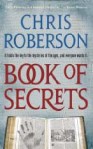
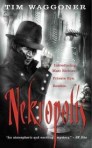
HarperCollins’ new spec fic imprint, Angry Robot, has released four books to launch itself, showing a wide scope. There’s Aussie Kaaron Warren’s Slights (which I’ve reviewed here previously), Chris Roberson’s Book of Secrets, Tim Waggoner’s Nekropolis and Lauren Beukes’ Moxyland.

moxyland book cover, by Lauren Beukes

Beukes, a South African, riffs off that country’s socio-political injustices with her near-future, Orwellian vision. The tale is told through the viewpoints of four characters, each giving an insight into different levels of that society: the rebels, the corporate ladder climbers, the celebrity blogger, and a dysfunctional artist caught up in the latest corporate skullduggery.
The story unfolds at a pedestrian pace and never really accelerates towards a climax, but the characters are effective and Beukes’ world is wonderfully drawn. The conclusion is gorgeous, for a cynic such as myself.
Unlike some others in the Angry Robot range, the text is delightfully clean of typos, perhaps thanks in part to Beukes’ background in journalism (ah, those heady days when sloppy work could be remedied by a whack to the back of the head with a Concise Oxford, or perhaps a tap with a Strunk & White).

book of secrets by chris roberson

Roberson, who I had the pleasure to meet at World Fantasy in San Jose and is a very cool guy, has delivered a story with many stories within it, a conspiracy tale involving a Biblical secret sought by nefarious, homicidal agencies. Into this is thrown a down-at-heel freelance journo with an unusual past — one that is proven to be even more unusual than he realises thanks to his own family mysteries.
This isn’t my kind of story at all, and its structure didn’t warm me to it. The pulp stories contained within the text didn’t need to be there (I’m sure others will love these homages), vying with interminable info dumps for causing the greatest urge to skim read, and the supernatural conclusion left me cold. As I said, not my kind of story, but I suspect those with an inclination towards The Da Vinci Code will find plenty here to entertain (and what a shame it is that that book has become the benchmark for this style of story).

Nekropolis by Tim Waggoner

Which leaves the most disappointing of the four, Nekropolis. A great idea is so quickly hamstrung by some clunky structure and an appallingly Hollywood ending reminiscent of the ugly denouement forced on Ridley Scott’s original Blade Runner. The protagonist is a former cop from Earth who has found himself turned into a zombie in a demon dimension. He has garnered a deep understanding of this bizarre world and its denizens, as well as forging a wide network of contacts of dubious moral worth. It’s a very cool world, filled with neat critters and a bunch of witches and vampires and shapechangers, all competing in a petty pissing contest for status. What wrecked the story for me were the logic potholes: an awful rewind moment regarding a set of lockpicks, a contradictory solution to an ensorcelled door, and a hugely underplayed and slightly farcical showdown with a nemesis. That the author signals that his major characters all survive undermines any suspense, and the aforementioned Blade Runner moment is the salt in the wound. It’s such a pity a little more care couldn’t have been taken, because the premise, and poor Matt the zombie cop, really have legs.