Hurrah! The anthology Winds of Change, published by CSFG in Canberra, was launched at the weekend at Conflux. Sadly, I couldn’t be there to join in the drinking celebration, but Alan Baxter was, and his report is here. Sounds like a fab launch, and a fab con. My story, ‘Wraiths’, is in the anthology, rubbing shoulders with old pals and new. I’m looking forward to reading it.*
Meanwhile, Conflux has opened memberships for 2013. Yes, it’s a ways off, but that’s because it will be the National Convention in that year, just after Anzac Day. Nalo Hopkinson, whose writing I adore and need to get more of, is one of the guest of honours, among others whose writing I also admire. Conflux always puts on a great con, so I’ve already bought my membership. At $140, they’re as cheap as they’re gonna be this month. Check it out.
*I am a judge for the Aurealis Awards. This comment is the personal opinion of the writer, and does not necessarily reflect the opinion of any judging panel, the judging coordinator or the Aurealis Awards management team.
Found out last night that all-round nice person Louise Cusack will have her fantasy series given new e-life by Momentum, Pan Mac’s new e-pub arm. w00t!
And in further good news, Zola Jesus has a new album out. Only heard the single, Vessel, so far, but it’s a corker. Meanwhile, the moratorium on buying new music means Ladytron and the Jezabels are also in the holding pattern. Jury’s still out on the new Evanescence album before it gets queued…
And I owe Jay Kristoff a beer for the late-night ROFL his blog about Twitter gave me. (Speaking of blogging, that writer’s crutch or blessing or curse, check out this post from Patrick O’Duffy.) I don’t go on Twitter much, because I’m desktop-bound and I find Twitter to be the equivalent of white noise when FB (The Twitter Mix) is already frustrating the fuck out of me, but I found it curious that the past two times I’ve logged in, it’s to discover what Peter Ball is eating in Rockhampton, a town I once — twice, actually — lived in, both times for just long enough. The old place just hasn’t been the same since Cactus Jack’s closed down. Oops. I forgot this was the good news update. So, Cactus Jack’s is still serving those awesome chicken tenders in Cairns, or at least they were a year ago.
Do keep an eye out for Lou’s Shadow Through Time, you e-reader types. She totally deserves it!
Glenda Larke’s Stormlord Rising, book 2 of the Watergivers series, and quite superb. Just like book 1, The Last Stormlord (reviewed here). In which Larke beautifully uses landscape to sculpt her cultures, right down to the vernacular. Gives religion a thumping, stage-manages her rather large cast very well, manages to cause her characters a few headaches along the way as well. I was particularly chuffed at how book 2 feels quite self contained, while still managing to provide plenty of reasons to read book 3. Which I will do, very shortly.
Snow Crash by Neal Stephenson. Fair to say that this, along with William Gibson’s Neuromancer (gushed about here), is a core plank of cyberpunk? Still holds up, after all these years, even if no one has bothered to fix that bothersome literal role/roll model. Coolest pizza delivery peeps evah! Will soon be lining up for his massive Reamde — wish me luck.
Kraken, what passes for a romp in the land of far-too-talented China Mieville. A little cloudy in its cleverness in places — inky, one could say — as a vibrantly realised magical London (nice nod to a previous short story concerning cartography, too) and uber-clever dialogue as cults and other interested parties are caught up in the tentacles of a plot to bring about apocalypse. Evolutionary stuff!
The Broken Ones, in which Stephen M Irwin gives Brissie a haunted makeover while trashing the place. Occult conspiracies, a tenacious detective and true chills. It’s Irwin’s second novel and, IMHO, shows the maturation of a mighty promising talent. I’ve burbled on about this one over at ASiF. I’m quite looking forward to Irwin’s next book.
And then there’s Phoenix Rising, by Pip Ballantine and Tee Morris. Sadly, a few factors combined to hobble my reading of this one, the first in a series. I say sadly because I was, despite the steampunk lingerie on the cover, really quite keen, thanks to the combination of a Kiwi heroine and rather spiffy dialogue. But then there’s the solo attack in Antarctica carried out in thigh-high boots and a fur coat, the willy nilly distribution of literal and spelling errors, the (non-authorial) disconcerting use of American spelling in a story about a Commonwealth agency in Victorian London: I do hope the new world order of international publishing isn’t all about the lowest common denominator (that’s you, America, or rather, it’s not ‘u’). It certainly isn’t about proofreading, is it? Anyway, maybe it was my flu making me more ornery than usual, but I just couldn’t wade through the glibness and clumsiness. I’ll keep it on hand for another shot, because I really do like that librarian, sorry, archivist, on the cover sipping tea.
A French detective on the trail of a vampire killer. Two Aussie blokes stealing water from a bunch of fascists. The connect, I hasten to add before tries to have me committed or at least reports me to Archery Australia for drawing a particularly long bow, is between the quote marks.
Yep, dialogue.
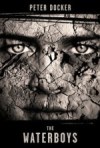
The Waterboys is Peter Docker’s second novel, and it’s a beauty. The Western Australian writer, who also has the acting string on his bow, has delivered a beautiful depiction of an Australia that never was but might’ve been/should’ve been/might yet be/never could be. It deals with a white bloke who’s in tight with the Countrymen: at their core, indigenous Aussies of Western Australia who forged an amazingly enlightened understanding with English colonists. Part alternate history, part science fiction, part fantasy, the rendering of landscape and spirituality is stunning. You can read a full review of Docker’s dystopian/eutopian vision at ASiF.
One of the elements that really struck me about the book was the dialogue. It’s as sparse as that desert country, but it’s steeped in character and personality. As such, it complements the prose very well indeed. There’s very little information relayed, either, just the bare bones, because the story is not about explanation — it’s about acceptance. What will be, will be, already is, already has been: time is a very different fish to our Western linear or even circular understanding.
For a novellist to convey so much information about story and character through virtual stillness is a hell of a feat.
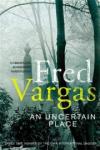
Fred Vargas, French crime writer extraordinaire, is at the other end of the scale, to some extent. I read her An Uncertain Place a little while ago because of the presence of vampires in the text — the crime under investigation relates to the generational damage caused by a family feud in the way back when, with an outbreak of ‘vampirism’ and the resulting bloodshed that followed. So, no fangs, but lots of chinwagging.
Vargas is also a practitioner of sparse, in that the contemporary world is barely sketched. Paris? Pshaw. The inspector’s office? Well, there’s a cat on the photocopier, and it’s a very cool cat; it made me smile to read about it.
I didn’t much enjoy the book — it is an English translation from the French but I don’t think that was a factor — for a couple of reasons, primarily the personality of the chief detective — kind of beige, really, and there’s a sacre bleu comment for Vargas fans — and way too many coincidences propping up the investigation.
But two things I did enjoy: one, the way that little pieces of information, in this case mostly historical anecdotes about men eating unlikely things, kept cycling through the text, sometimes with different metaphorical impact. Tasty.
And secondly, and this is where the bow string twangs even if the arrow goes adrift, the boldness of the dialogue, not just in execution but in display. I had to stop reading at one stage and flip back, because I realised that in the space of some three pages of almost pure dialogue, there were barely any dialogue tags. Admittedly, it was a one-on-one conversation, so keeping up wasn’t that big a task, but still … Obviously, Vargas has nailed her characters in their speech, to be able to pull that off.
The upshot of the two works, and the reason for sharing, is that it made me think of all the nodding and gesturing and sighing and godawful stage directions I throw around in my manuscripts to try to keep the identity of the speaker clear.
And then here are these two very different writers, both saying more with less, and saying it with a distinctive voice.
Alan Baxter shows a pretty cool head on the issue of the .99c prince for e-books, and his post also touches on another issue that’s been banging around since a writers’ group discussion a month ago: what’s my price?
This comment from Alan really hit a nerve with me:
I love getting contributor’s copies of books I have stories in, because I’m a vain fucker and like to point to the brag shelf and say to people, “Yes, I have work in all those anthologies. And those are my novels. Ahaha.” Shut up, I need validation.
Validation. Yes indeed. Because I too like my trophy book, however vain that may sound. Because when the doubt sets in, as it frequently does, it’s comforting to look at a shelf of published works and say, well, those editors all thought my work was okay. So, maybe I should turn the TV off and press on with this yarn.
The thing is, who are those editors? What kind of benchmark are they setting? Is that anthology something I’m proud to have on my CV, or is it just a another centimetre of paper adding weight to the shelf?
It all comes down to what the writer wants. And how much they value their work.
I’m inclined to agree with Cat Sparks, who wrote earlier this year in WQ magazine that, for someone who wants to show they’re serious about their writing, one byline in one well-respected title is worth more than 20 in no-name nil-visibility publications.
Your CV — your bibliography — is an indicator of the kind of writer you are: quirky, top-shelf, developing, esoteric …
There’s a market for any story, I suspect. There seems to be no shortage of cowboys roaming the internet range, offering to publish your finely crafted yarn in return for ‘exposure’. Not even a contributor’s copy, but they might offer you a discount to buy your own. These outfits strike me as being particularly predatory, using their contributors not only as material but as a primary market as well.
Of course, there isn’t a lot of money in publishing at the bottom end of the scale. There’s probably an argument at the moment that there’s not a lot of money at any end of the scale, except for those few exceptional sellers who help finance the rest.
One pay scale that, anecdotally, seems to be increasingly common is the royalty share. It’s nice of the publisher to count you in in the profits, even nicer if that’s in addition to an up-front payment and/or a contributor’s copy, but I wouldn’t be holding my breath waiting for the cash to roll in. Take a look at the formula being used to calculate the royalty, the lifespan of the contract, the likely sales of the antho … It is at least a gesture and it does encourage the contributors to help market the antho.
And then there markets that offer no payment, but contributor copies. I don’t mind this tier at all. It’s honest and it’s contractually clean, and it shows respect for the contributors. It’s your story; of course you want to see what we’ve done with it. Here, show your friends …
And hey, if you can get someone to actually pay you money for your work, a token payment or otherwise, all the better. That’s a serious benchmark. That’s a sign of commitment and professionalism (you hope).
Some anthologies just sound so cool, you want to be in them. Some magazines have serious cache. Some themes stretch your boundaries, challenge your abilities. Some are published for good causes. Some have ace editors. All good reasons to submit, regardless of the pay packet.
It’s fairly common to hear a writer squee, not so much about being in an antho, but about who else is in it. Yeah, there’s a buzz, rubbing shoulders with your role models.
I suspect, too, that your requirements from a market might be more generous if you’re prolific and able to pepper the groovy anthos at all levels of the food chain.
If you’re like me, and squeezing out a short story is akin to pulling a length of barbed wire in one ear and out the other, then you probably want to make those sales count.
Me, I like the pretty, even more than I care about the money, in some ways. Money is good, but money goes away. That book, it lingers. I like a book that looks good, that has an editor who tries to get the best out of my story and a publisher who thinks enough of my work to, at the very least, give me my trophy for effort: my contributor’s copy. In the flesh. On the shelf.
And then, the art
You might notice that the word ‘art’ is contained within ‘artifact’. In the case of books, that’s not the spurious segue it might at first appear to be. Part of my love of physical books is the art: the cover, most obviously, but the stock, the font, the layout, the feel, the comfort … It’s the same reason I still by CDs as my first option.
Lee Battersby has been exploring not so much the physical art of the artifact, but the actual art of the story. I liked his take on it, as illustrated by a carrot — yes indeed! — very much, and added my two bobs’ worth at his invitation.
Alisa Krasnostein (recently profiled over at Locus) has announced that her Twelfth Planet Press will be opening its doors to novels in January. The press has made a major impact on the Australian publishing landscape; this is an exciting development!
There have been a number of new doors opening for manuscript submissions lately. Bring it on!
I saw this headline on a blog post tonight: Dymocks announces game-changing publishing operation set to benefit most writers.
Wow, I thought, can this mean that Dymocks has finally dropped its opposition to parallel import restrictions? Can I rejoin the ranks of Dymocks’ Booklovers?
No, and no. (Yes, those two things are related.)
The gushing headline in fact refers to the recent announcement that Dymocks is launching a printing service for print and e-books, called D Publishing. It’s due to start operation in October, which is probably when we’ll get a look at their cost scale.
Reading between the lines, it sounds like most every other print-on-demand printer in the market. You pay them money, they print your book (in paper and/or pixels). The more you pay, the more they do for you. I can only assume it’s being hailed as ‘game-changing’ because Dymocks already has its chain of stores dangling the carrot of possibly stocking books printed using their imprint. More on that later.
I’m not quite sure how another POD provider in the market is going to ‘benefit most writers’. It will certainly benefit the oodles of frustrated writers who are pursuing self-publishing, by giving them another choice of printer — note that, for example, Lightning Source has now opened an Australian office, offering easy access to UK and US markets. So maybe there’ll be some cost competition for the likes of Sid Harta and Zeus to consider.
Dymocks is also talking about opening up its Booklovers community as a kind of communal feedback service on works in progress: that’s a cool element for sparking ongoing discussion about the WIP. I’d advocate thick skin, as with any critique group, and a solid sense of self-belief before flinging the baby into what could be either a piranha pool or a flock of sheep, or simply a big puddle of meh.
Printing is probably the easiest part of publishing these days, whether on an order-by-order basis or a whole swag of copies for you to hock from your car boot.And we’re seeing a stack of niche small presses opening up, operating of a variety of models: advances, royalty share, sheer old-style vanity.
Dymocks is, like many existing printing firms, layering its services with editing and design services — presumably there’ll be a sliding scale there, too, and if it results in less hideous computer-generated, unreadable and plain ugly self-produced book covers, hooray. A text relatively free of typos and literals would be pleasant, too (this includes you, lazy and tight-fisted major publishers).
And for the self-publishing author, there’s the big hurdle — distribution — which is where Dymocks, with 17 per cent of the market, does carry a big carrot.
Dymocks is talking about, undoubtedly for a price, offering the option of using their imprint and accessing their sales channels. This is particularly good news for those who want paper copies, especially with Aussie distributors doing it tough.
There’s been something of a massive exhalation of relief thanks to e-publishing meaning no requirement to trudge satchels of books from book store to book store with a pleading expression and the incomprehension engendered by that bookselling chestnut, right of return. But e-publishing is only one segment, and it’s a growth industry: the interwebs are filled with e-chaff. Having product readily available is one thing; having people know that it’s available is another entirely. Convincing them to buy it, well, that’s the key, isn’t it.
Book buyers haven’t quite discarded their love of bricks and mortar shops just yet. And e-books still don’t have the cache of the printed product, especially when they’re marked at .99c.
Other advantages of going with an Australian-based company, rather than, say, lulu.com or Smashwords, are paperwork and postage. My understanding is that you can avoid a whole lot of, for example, American tax documentation by going local, and anything that makes it easier to set up the business and then run it must be a good thing. And having the books printed in Australia means domestic customers save cash and time on postage. Access to overseas outlets means saving for customers in those markets, too (cf the Lightning Source comment).
It’s an interesting move from Dymocks, now enjoying a Borders-less market, and a wise move to shore up that vertical integration thing they talk about in economics classes. The company has seen an opening that it’s well placed to exploit. The stats definitely show there are plenty of punters out there willing to throw their money at the great lottery of self-publishing.
It will be interesting to see how Dymocks structure their operation: will there be separate imprints reflecting the level of money spent, for instance — Dymocks Deluxe: guaranteed copy edited/proofread/structually sound?
The thing that struck me, back in the great PIR battle of 2009, was that Dymocks and their economic rationalist allies didn’t really care about books at all. They cared about product and price. Where that product came from didn’t matter a jot, as long as it could be obtained cheaply. There was a profound disrespect for Australian content and ignorance of the role of self-generated literature in a given society.
So the cynic in me takes claims of some kind of altruism towards Australian authors on Dymocks’ behalf with a grain of salt.
I hasten to add, however, that on an individual store basis, that does not necessarily hold true. I know of stores in Melbourne and Brisbane where the local managers have been extremely supportive of writers within their community.
The beauty of being the printer, regardless of the extra services offered, is that you take no risk. It is very much a service “driven by the author”, as Dymocks CEO Don Grover says. That means the author ponies up the money; the printer doesn’t have to filter a slush pile, pay for editing and design, whatever marketing they can find the spare change for. There’s no advance to pay, such as they are these days.
So, well played, Dymocks, and welcome to the new publishing landscape, where even the word “publisher” is up for grabs in these so-very interesting days.
I am returned from Bookcamp. I have seen the future. It is now.
Yes, I am tired, and yes, I have drunk too much coffee, and no I have not joined the Marines or some weird exercise cult. Rather, I joined 70 to 80 interested people at an ‘unconference’ about the publishing industry, run by if:book Australia in conjunction with the Melbourne Writers Festival.
For the most part, the story was comforting and even exciting. Writers write, people called publishers disseminate the written work in the hope of finding an audience and making income for everyone involved. But the publishers ain’t what they used to be — Dymocks has just announced it’s hitting the POD and publishing pathway, for instance, and even agents are (controversially) getting in on the act. And, of course, authors are acting as their own publishers. And, presumably, their own editors, designers, legal department, advertising department and PR firms. And, also importantly, distributors. Or they’re outsourcing those tasks they can’t or don’t want to do, to specialists who can.
For instance, I’ve recently received a handful of press releases from Australian and American public relations outfits touting the attractions of self-published novels. That’s a serious investment.
Probably my greatest, scariest realisation during the course of the day was that, now more than ever, my stories are truly not mine once they’re published. Not only can readers review them, in whatever fashion, and indeed convert them within their mind’s eye to whatever text they want to — the story is, and always has been, theirs to interpret — but they can, more easily than ever, mash them, adapt them and generally fuck them up any which way they choose (within the bounds of copyright at least, if they’re playing fair). There’s a suggestion that this is a good thing, art sparking conversation and more art, art as the centre of community; but part of me shrivels at the thought of all that work being edited, altered and re-visioned. Another part of me asks, what’s my cut? If I’m being remixed, do I at least get my name in brackets?
It is indeed a braver new world.
Another item emerging from the discussions, in amongst the generally accepted wisdom that the traditional publishers are still way behind the 8-ball on the whole digital thing, is the ability to ‘enhance’ e-text with stuff: music, hyperlinks, comments, annotations, pictures, videos, behind-the-scenes … you get the idea. This stuff not only adds interest for readers, but adds to the conversation generated by the text. It’s a cafe chat on the interwebs centred on the text. Which is kind of neat.
A cited example of how a narrative, in this case essentially a children’s picture book, can be enhanced through the web, and spin off user-generated adaptations in the great tradition of fan fiction, was Inanimate Alice, proving a hit in classrooms as a means of getting kids interested in storytelling.
An e-book, one of the guest speakers, Hugh McGuire, said, is essentially a web page with limited functionality. Food for thought, that.
But what if you don’t want bells and whistles? What if you want that escapist submergence in the text and only the text, without pauses for even dictionaries? You just want words making pictures — indeed, an entire world — in your head.
It’s an issue that Louise Cusack has fortuitously blogged about, sparked by an article in Publishers Weekly, which examines the advantage vs disadvantage of e-adding.
Thankfully, we can have our cake and eat it, too. Just as with a DVD with extra features, we can choose which version of the story we want. The Inanimate Alice producers found that their audience was split 50-50 for enhanced vs unenhanced, so new episodes are being made both in enhanced and unenhanced versions.
So now I’m imagining by nasty little outback vampire story romping in the e-wilderness with pop-ups for the Strine-challenged reader. No more Americanisation required (I’m still bemused that English is converted for North American readers but the reverse does not apply — aren’t North Americans insulted by not being trusted to handle colour with that pesky u? Of course, fanny is more problematic…). Don’t know what the boot of a car is? Enable the special features and *pop* — even better than a footnote. With pronunciation guide, aural or text-only. With a picture, even. This would be fun, even better than a glossary at the back of the book. Paul Hogan could resurrect his career doing voice overs for books — “g’day readers: in Aw-strayl-ya, we throw prawns on the barbie; if you throw on a shrimp, you’ve got a small lad with a nasty burn”.
OK, maybe not.
Still, exciting times as the world gets smaller and the barriers between writers and readers are increasingly broken down. But let’s not forget that, regardless of format, regardless of Flash, regardless of publisher, the readers still deserve something worth reading (and please, gods, at the barest minimum, something proofread). Hell, maybe they’ll even consent to pay for it.
Meanwhile, if you’d like more information about the digital age and what it means for writers, check out the Digital Writers conference in Brisbane on October 15, organised by the Emerging Writers Festival with support from if:book Australia, Queensland Writers Centre and Avid Reader.
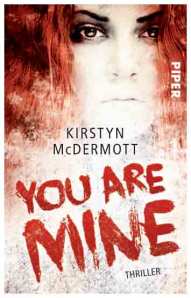
Tasty cover for Kirstyn’s Madigan Mine thanks to Piper, who is publishing the German edition — and keeping an English title. Not quite as poetic as the Aussie version, perhaps, but you get the gist straight up! The edition is due out … later.
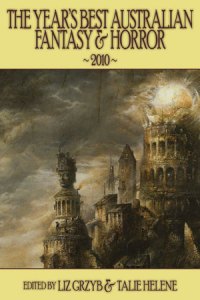
It’s great to see that someone has risen to fill the gap (almost) left by Brimstone (horror and dark fantasy) and MirrorDanse (science fiction and fantasy) no longer compiling a year’s ‘best of’ of Australian spec fic. Awards listings have been the best guide to quality Aussie writing in their absence.
But Ticonderoga Publications is releasing a best of: fantasy and horror published in 2010, edited by Talie Helene and Liz Grzyb. It’s the first of an ongoing annual snapshot. The contents have already been released, and now, the recommended reading list. What a superb springboard into an exploration of flights of fancy from Australian pens!
best australian fantasy and horror 2010 contents
RJ Astruc: “Johnny and Babushka”
Peter M Ball: “L’esprit de L’escalier”
Alan Baxter: “The King’s Accord”
Jenny Blackford: “Mirror”
Gitte Christensen: “A Sweet Story”
Matthew Chrulew: “Schubert By Candlelight”
Bill Congreve: “Ghia Likes Food”
Rjurik Davidson: “Lovers In Caeli-Amur”
Felicity Dowker: “After the Jump”
Dale Elvy: “Night Shift”
Jason Fischer: “The School Bus”
Dirk Flinthart: “Walker”
Bob Franklin: “Children’s Story”
Christopher Green: “Where We Go To Be Made Lighter”
Paul Haines: “High Tide At Hot Water Beach”
L.L. Hannett: “Soil From My Fingers”
Stephen Irwin: “Hive”
Gary Kemble: “Feast Or Famine”
Pete Kempshall: “Brave Face”
Tessa Kum: “Acception”
Martin Livings: “Home”
Maxine McArthur: “A Pearling Tale”
Kirstyn McDermott: “She Said”
Andrew McKiernan: “The Memory Of Water”
Ben Peek: “White Crocodile Jazz”
Simon Petrie: “Dark Rendezvous”
Lezli Robyn: “Anne-droid of Green Gables”
Angela Rega: “Slow Cookin’ ”
Angela Slatter: “The Bone Mother”
Angela Slatter & LL Hannett: “The February Dragon”
Grant Stone: “Wood”
Kaaron Warren: “That Girl”
Janeen Webb: “Manifest Destiny”
recommended reading list, australian fantasy and horror 2010
Deborah Biancotti, ‘Home Turf’ Baggage
Jenny Blackford, ‘Adam’ Kaleidotrope #9
Simon Brown, ‘Sweep’ Sprawl
Mary Elizabeth Burroughs, ‘The Flinchfield Dance’ Black Static #17
Steve Cameron, ‘Ghost Of The Heart’ Festive Fear
Stephanie Campisi, ‘Seven’ Scenes From The Second Storey
Matthew Chrulew, ‘The Nullabor Wave’ World’s Next Door
Bill Congreve, ‘The Traps of Tumut’ Souls Along The Meridian
Rjurik Davidson, ‘The Cinema Of Coming Attractions’ The Library of Forgotten Books
Stephen Dedman, ‘For Those In Peril On The Sea’ Haunted Legends
Felicity Dowker, ‘From Little Things’ Andromeda Spaceways Inflight Magazine #43
——— ‘The House On Juniper Road’ Worlds Next Door
——— ‘Bread And Circuses’ Scary Kisses
Will Elliott, ‘Dhayban’ Macabre: A Journey Through Australia’s Darkest Fears
Mark Farrugia, ‘A Bag Full Of Arrows’ Andromeda Spaceways Inflight Magazine #48
Jason Fischer, ‘The House Of Nameless’ Writers of the Future Vol. xxvi
Bob Franklin, ‘Take The Free Tour’ Under Stones
Christopher Green, ‘Jumbuck’ Aurealis #44
Paul Haines, ‘Her Gallant Needs’ Sprawl
Lisa L Hannett, ‘Singing Breath Into The Dead’ Music For Another World
——— ‘Commonplace Sacrifices’ On Spec
——— Tiny Drops’ Midnight Echo #4
Richard Harland, ‘Shakti’ Tales of the Talisman
——— ‘The Fear’ Macabre: A Journey Through Australia’s Darkest Fears
Narrelle M Harris, ‘The Truth About Brains’ Best New Zombie Tales: Volume 2
Robert Hood, ‘Wasting Matilda’ The Mammoth Book Of The Zombie Apocalypse
George Ivanoff, ‘Trees’ Short & Scary
Trent Jamieson, ‘The Driver’s Assistant’ Ticon4
Pete Kempshall, ‘Dead Letter Drop’ Close Encounters of the Urban Kind
——— ‘Signature Walk’ Sprawl
Martin Livings, ‘Lollo’ Close Encounters of the Urban Kind
Penelope Love, ‘Border Crossing’ Belong
Geoffrey Maloney & Andrew Bakery, ‘Sleeping Dogs’ Midnight Echo #4
Tracie McBride, ‘Lest We Forget’ (audio) Spectrum Collection
Kirstyn McDermott, ‘Monsters Among Us’ Macabre: A Journey Through Australia’s Darkest Fears
Andrew J McKiernan, ‘All The Clowns In Clown Town’; Macabre: A Journey Through Australia’s Darkest Fears
Simon Petrie, ‘Running Lizard’ Rare Unsigned Copy: tales of Rocketry, Ineptitude, and Giant Mutant Vegetables
Michael Radburn, ‘They Own The Night’ Festive Fear
Janeen Samuel, ‘My Brother Quentin’ Andromeda Spaceways Inflight Magazine #44
Angela Slatter, ‘A Porcelain Soul’ Sourdough and other stories
——— ‘Gallowberries’ Sourdough and other stories
——— ‘The Dead Ones Don’t Hurt You’ The Girl With No Hands and other tales
Cat Sparks, ‘All the Love in the World’ Sprawl
Grant Stone, ‘Dead Air’ (poem) Andromeda Spaceways Inflight Magazine #46
Lucy Sussex, ‘Albert & Victoria/Slow Dreams’ Baggage
Anna Tambour, ‘Gnawer Of The Moon Seeks Summit Of Paradise’ Sprawl
Kaaron Warren, ‘Sins Of The Ancestors’ Dead Sea Fruit
——— ‘The Coral Gatherer’ Dead Sea Fruit
——— ‘Hive Of Glass’ Baggage
David Witteveen, ‘Perfect Skin’ Cthulhu’s Dark Cults




 For the most part, the story was comforting and even exciting. Writers write, people called publishers disseminate the written work in the hope of finding an audience and making income for everyone involved. But the publishers ain’t what they used to be —
  So now I’m imagining by nasty little outback vampire story romping in the e-wilderness with pop-ups for the Strine-challenged reader. No more Americanisation required (I’m still bemused that English is converted for North American readers but the reverse does not apply — aren’t North Americans insulted by not being trusted to handle colour with that pesky u? Of course, fanny is more problematic…). Don’t know what the boot of a car is? Enable the special features and *pop* — even better than a footnote. With pronunciation guide, aural or text-only. With a picture, even. This would be fun, even better than a glossary at the back of the book. Paul Hogan could resurrect his career doing voice overs for books — “g’day readers: in Aw-strayl-ya, we throw prawns on the barbie; if you throw on a shrimp, you’ve got a small lad with a nasty burn”.