Aurealis Awards finalists announced

The Aurealis Awards are the premiere award for Aussie speculative fiction. They will be awarded in Sydney on May 12 — tickets for the glam ceremony are on sale. Last year’s ceremony absolutely rocked, a wonderful coming together of all spectra of the spec fic community. Here are the finalists, announced tonight — congratulations all*:

FANTASY NOVEL
The Undivided by Jennifer Fallon (HarperVoyager)
Ember and Ash by Pamela Freeman (Hachette)
Stormlord’s Exile by Glenda Larke (HarperVoyager)
Debris by Jo Anderton (Angry Robot)
The Shattered City by Tansy Rayner Roberts (HarperVoyager)

FANTASY SHORT STORY
‘Fruit of the Pipal Tree’ by Thoraiya Dyer (After the Rain, FableCroft Publishing)
‘The Proving of Smollett Standforth’ by Margo Lanagan (Ghosts by Gaslight, HarperVoyager)
‘Into the Clouds on High’ by Margo Lanagan (Yellowcake, Allen & Unwin)
‘Reading Coffee’ by Anthony Panegyres (Overland #204)
‘The Dark Night of Anton Weiss’ by DC White (More Scary Kisses, Ticonderoga Publications)

SCIENCE FICTION NOVEL
Machine Man by Max Barry (Scribe Publications)
Children of Scarabaeus by Sara Creasy (HarperVoyager)
The Waterboys by Peter Docker (Fremantle Press)
Black Glass by Meg Mundell (Scribe Publications)
The Courier’s New Bicycle by Kim Westwood (HarperVoyager)

SCIENCE FICTION SHORT STORY
‘Flowers in the Shadow of the Garden’ by Joanne Anderton (Hope, Kayelle Press)
‘Desert Madonna’ by Robert Hood (Anywhere but Earth, Couer de Lion)
‘SIBO’ by Penelope Love (Anywhere but Earth, Couer de Lion)
‘Dead Low’ by Cat Sparks (Midnight Echo #6)
‘Rains of la Strange’ by Robert N Stephenson (Anywhere but Earth, Couer de Lion)

HORROR NOVEL
NO SHORTLIST OR WINNING NOVEL – TWO HONOURABLE MENTIONS AWARDED TO:
The Broken Ones by Stephen M Irwin (Hachette)
The Business of Death by Trent Jamieson (Hachette)

HORROR SHORT STORY
‘And the Dead Shall Outnumber the Living’ by Deborah Biancotti (Ishtar, Gilgamesh Press)
‘The Past is a Bridge Best Left Burnt’ by Paul Haines (The Last Days of Kali Yuga, Brimstone Press)
‘The Short Go: a Future in Eight Seconds’ by Lisa L Hannett (Bluegrass Symphony, Ticonderoga Publications)
‘Mulberry Boys’ by Margo Lanagan (Blood and Other Cravings, Tor)
‘The Coffin Maker’s Daughter’ by Angela Slatter (A Book of Horrors, Quercus)

YOUNG ADULT NOVEL
Shift by Em Bailey (Hardie Grant Egmont)
Secrets of Carrick: Tantony by Ananda Braxton-Smith (black dog books)
The Shattering by Karen Healey (Allen & Unwin)
Black Glass by Meg Mundell (Scribe Publications)
Only Ever Always by Penni Russon (Allen & Unwin)

YOUNG ADULT SHORT STORY
‘Nation of the Night’ by Sue Isle (Nightsiders, Twelfth Planet Press)
‘Finishing School’ by Kathleen Jennings (Steampunk! An anthology of fantastically rich and strange stories, Candlewick Press)
‘Seventy-Two Derwents’ by Cate Kennedy (The Wicked Wood – Tales from the Tower Volume 2, Allen and Unwin)
‘One Window’ by Martine Murray (The Wilful Eye: Tales from the Tower Volume 1, Allen and Unwin)
‘The Patrician’ by Tansy Rayner Roberts (Love and Romanpunk, Twelfth Planet Press)

CHILDREN’S FICTION (told primarily through words)
The Outcasts by John Flanagan (Random House Australia)
The Paradise Trap by Catherine Jinks (Allen & Unwin)
‘It Began with a Tingle’ by Thalia Kalkapsakis (Headspinners, Allen & Unwin)
The Coming of the Whirlpool by Andrew McGahan (Allen & Unwin)
City of Lies by Lian Tanner (Allen & Unwin)

CHILDREN’S FICTION (told primarily through pictures)
The Ghost of Annabel Spoon by Aaron Blabey (author and illustrator) (Penguin/ Viking Books)
Sounds Spooky by Christopher Cheng (author) and Sarah Davis (illustrator) (Random House Australia)
The Last Viking by Norman Jorgensen (author) and James Foley (illustrator) (Fremantle Press)
The Deep: Here be Dragons by Tom Taylor (author) and James Brouwer (illustrator) (Gestault Publishing)
Vampyre by Margaret Wild (author) and Andrew Yeo (illustrator) (Walker Books)

ILLUSTRATED BOOK/GRAPHIC NOVEL
Hidden by Mirranda Burton (author and illustrator ) (Black Pepper)
Torn by Andrew Constant (author) and Joh James (illustrator ), additional illustrators Nicola Scott, Emily Smith (Gestalt Publishing)
Salsa Invertebraxa by Mozchops (author and illustrator) (Pecksniff Press)
The Eldritch Kid: Whiskey and Hate by Christian Read (author) and Michael Maier (illustrator) (Gestalt Publishing)
The Deep: Here be Dragons by Tom Taylor (author) and James Brouwer (illustrator) (Gestault Publishing)

ANTHOLOGY
Ghosts by Gaslight edited by Jack Dann and Nick Gevers (HarperVoyager)
Year’s Best Australian Fantasy and Horror 2010 edited by Liz Grzyb and Talie Helene (Ticonderoga Publications)
Ishtar edited by Amanda Pillar and KV Taylor (Gilgamesh Press)
The Best Science Fiction and Fantasy of the Year Volume 5 edited by Jonathan Strahan (Night Shade Books)
Life on Mars edited by Jonathan Strahan (Viking)

COLLECTION
Bad Power by Deborah Biancotti (Twelfth Planet Press)
Last Days of Kali Yuga by Paul Haines (Brimstone Press)
Bluegrass Symphony by Lisa L Hannett (Ticonderoga Publications)
Nightsiders by Sue Isle (Twelfth Planet Press)
Love and Romanpunk by Tansy Rayner Roberts (Twelfth Planet Press)

* I was a judge in this year’s awards so no commentary from me, and nothing here should be seen as anything other than my personal opinion.

Ditmar Award nominations open

The Aussie spec fic fan-voted Ditmar Awards are now open for nominations, using a handy online form, post or email — see the rules page for details about who and how. There’s also a massive list of eligible works that is admittedly not totally comprehensive but is a fine place to start for memory jogging! The awards will be presented at Continuum in Melbourne in June. Electronic nominations close on April 15.

The Courier’s New Bicycle delivers a worthy message

This is the fourth book I’m reading as part of my list of 10 for the Australian Women Writers 2012 National Year of Reading Challenge

AWWNYRC#4: The Courier’s New Bicycle

By Kim Westwood
HarperVoyager, 2011, ISBN: 978 0 7322 8988 1

couriers new bicycle by kim westwood

WHAT a fascinating picture Kim Westwood paints of dystopian Melbourne, right from the striking Darren Holt-designed cover. Australia has been ravaged by a flu vaccination gone wrong – I can hear the shouts of told you so from the anti-vac lobby from here – with the result that fertility levels have fallen through the floor. The religious right has ascended to an almost Orwellian command of the government and the streets, patrolling morality with a puritanical fervour that would make the Rev Nile dance the snoopy dance. Hormones are a hot property in a society where reproduction is a struggle.

Our journey into this well-rendered terrain is through the eyes of Salisbury Forth, a bicycle courier whose life has been characterised by a fight for acceptance of her transgender status. She identifies as androgynous, meaning even her family shun her. Sal (the story is told in first person, so eliminating annoying pronoun conflicts) found a measure of freedom inside the underground community of the inner city, ‘pedalling’ hormone and liberating factory animals; it’s only a matter of time, of course, till the wheels come off.

Intrigue on an almost cyberpunk level ensues as bad drugs are sold, corporate interests clash, desires stoke the belief that the ends justify the means.
Issues of sexuality and identity, and the prejudice levelled against the perceived ‘other’ by the ‘moral majority’, are key issues, and Westwood puts us firmly in the saddle.

The story is narratively more straightforward and the prose more accessible than in her previous, debut title, The Daughters of Moab, a post-apocayptic Australian tale which likewise evoked a most believable world.

australian women writers challenge 2012It’s refreshing that in CNB there are no action heroes; while the world dips into science fiction concepts rooted firmly in the here and now – glow-in-the-dark pets, anyone? say no to battery farming? – the characters are uniformly of the average human variety. They get tired, they make mistakes, they hurt.

There were two minor speed bumps in my reading of the novel, and both probably reflect more on my reading habits than Westwood’s skill and style.

the first was a preponderance of info dumps filling in details about the back story, particularly early on as the stage was being set. There’s a certain level that fits the noir tradition that this story draws on so well, but there’s also a limit to just how much is needed at any one time without interfering with the story, or indeed, interrupting conversations.

The second, equally minor, annoyance was the Salisbury ‘voice’. For a young person who left home at 16, has limited formal education and lives an unsettled life, Sal’s vocabulary is extraordinarily wide and her knowledge of art likewise remarkable. Unfairly assumptive and prejudicial? Perhaps.

These quibbles can’t diminish the impact of Westwood’s world and the gender and social issues she explores. Atmospheric, considered, with likeable characters in a fascinating world: bravo.

Previous Challenge reviews:

  • The Road, by Catherine Jinks, horror.
  • The Shattered City, by Tansy Rayner Roberts, fantasy.
  • Frantic, by Katherine Howell, crime.
  • Vale: Samuel Youd, aka John Christopher

    Image

    Word is spreading of a sad loss in the speculative fiction community, that of British Writer Samuel Youd, on February 3, only two months shy of his 90th birthday. <Update: Locus has confirmed Youd’s passsing.>

    As John Christopher, Youd provided two of the great texts of my childhood, both of which have survived the recent pogroms of excess literature cluttering the household shelves: The Tripods and The Sword of the Spirits trilogies. Tripods in particular made a strong impression.

    This is barely scratching the surface of his output published under numerous pseudonyms.

    He ranked up there with the likes of Garner, Cooper and Le Guin in my early reading. I hope more generations come to appreciate his legacy.

    Update: the Guardian looks at Youd’s work and provides a short obituary and a longer one.

    Aussies on Locus recommended reading list

    A few Australian writers appear on Locus magazine’s list of recommended reading from 2011 — novels by Kaaron Warren, Alison Goodman, Jo Anderton, Scott Westerfeld (who straddles the Pacific divide); collections from Margo Lanagan, Tansy Rayner Roberts and Lucy Sussex; anthologies edited or co-edited by Jack Dann and four (!) by Jonathan Strahan; novelettes by Peter M Ball, Isobelle Carmody and Margo Lanagan; and short stories by Peter M Ball, Damien Broderick, Terry Dowling, Thoraiya Dyer, Margo Lanagan, Chris Lawson, Tansy Rayner Roberts and Kaaron Warren.

    Apologies for anyone I’ve missed through oversight or ignorance.

    Stormlord Rising, Snow Crash, Kraken, The Broken Ones, Phoenix Rising: one of these things is not like the others

    Recent reading:

    stormlord rising by glenda larke

    Glenda Larke’s Stormlord Rising, book 2 of the Watergivers series, and quite superb. Just like book 1, The Last Stormlord (reviewed here). In which Larke beautifully uses landscape to sculpt her cultures, right down to the vernacular. Gives religion a thumping, stage-manages her rather large cast very well, manages to cause her characters a few headaches along the way as well. I was particularly chuffed at how book 2 feels quite self contained, while still managing to provide plenty of reasons to read book 3. Which I will do, very shortly.

    snow crash by neal stephenson

    Snow Crash by Neal Stephenson. Fair to say that this, along with William Gibson’s Neuromancer (gushed about here), is a core plank of cyberpunk? Still holds up, after all these years, even if no one has bothered to fix that bothersome literal role/roll model. Coolest pizza delivery peeps evah! Will soon be lining up for his massive Reamde — wish me luck.

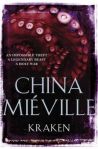
    kraken by china mieville

    Kraken, what passes for a romp in the land of far-too-talented China Mieville. A little cloudy in its cleverness in places — inky, one could say — as a vibrantly realised magical London (nice nod to a previous short story concerning cartography, too) and uber-clever dialogue as cults and other interested parties are caught up in the tentacles of a plot to bring about apocalypse. Evolutionary stuff!

    the broken ones by stephen irwin

    The Broken Ones, in which Stephen M Irwin gives Brissie a haunted makeover while trashing the place. Occult conspiracies, a tenacious detective and true chills. It’s Irwin’s second novel and, IMHO, shows the maturation of a mighty promising talent. I’ve burbled on about this one over at ASiF. I’m quite looking forward to Irwin’s next book.

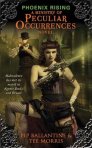
    phoenix rising

    And then there’s Phoenix Rising, by Pip Ballantine and Tee Morris. Sadly, a few factors combined to hobble my reading of this one, the first in a series. I say sadly because I was, despite the steampunk lingerie on the cover, really quite keen, thanks to the combination of a Kiwi heroine and rather spiffy dialogue. But then there’s the solo attack in Antarctica carried out in thigh-high boots and a fur coat, the willy nilly distribution of literal and spelling errors, the (non-authorial) disconcerting use of American spelling in a story about a Commonwealth agency in Victorian London: I do hope the new world order of international publishing isn’t all about the lowest common denominator (that’s you, America, or rather, it’s not ‘u’). It certainly isn’t about proofreading, is it? Anyway, maybe it was my flu making me more ornery than usual, but I just couldn’t wade through the glibness and clumsiness. I’ll keep it on hand for another shot, because I really do like that librarian, sorry, archivist, on the cover sipping tea.

    Disparate dystopian adventures: Wither and America Pacifica

    Dystopia is hot, especially in young adult fiction where The Hunger Games is probably the leader of the pack. I’ve read two new additions to the field recently, and these two debut novels could hardly be more different.

    I don’t normally bother to post negative reviews. I don’t think they do anyone much service, either the book nor the reviewer. After all, most stories will find an audience, and it makes more sense to me to promote good reading rather than deride less satisfactory experiences. Which leads me to Wither, by Lauren DeStefano, with which I’ve made an exception.

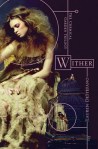
    wither by lauren destefano

    My review is somewhat withering, and I thought long and hard about posting it (in hindsight, I should’ve not used the word bullshit; I do regret any snarkiness). But at the end of the day, the book annoyed me so much, I felt opening the discussion was worth it.

    I have three core beefs with the book. The first is in the world building: a shambolic thing, coming across as shallow and ill-conceived and paying little attention to what could have been, and should have been, an examination of a society in which people barely live past their teens. What does this do the economy, to social cohesion, to the very psychology of those living with built-in expirations?

    The second source of disgruntlement was in the heroine, a passive creature, admittedly caught in a rough spot but not being proactive enough in trying to extricate herself.

    And the third, the thing that really stuck in my craw and induced me to write that dually damning review, was the fact that I just could not get past the fact that this book is built on a foundation of sexual slavery. Not arranged marriage, not some kind of celebrity matchmaking, but slavery; slavery with the apparent purpose of genetic experimentation through procreation. What a dire situation — one existing today — this could’ve been. And as I say in the review, the real pity of it all is that DeStefano can write, and her characters are beautifully drawn and the romantic elements are deftly handled.

    america pacifica by anna north

    By contrast, America Pacifica by Anna North is a dark, gritty visualisation of a world gone down the gurgler. I had a few qualms with the world building here, also — the story is set on a Pacific island where refugees from a new ice age struggle to retain the vestiges of the civilisation they have lost — but found the heroine engaging and gutsy — there was no romance in the sacrifices she had to make to uncover the truth of her mother’s disappearance — and, most satisfactorily, enjoyed the social examination that North brought to the story. It doesn’t hurt that the final scene is to die for. The full review is here.

    Patricia Piccinni’s fantastic body of work

    patricia piccinini vespa sculpturepatricia piccinini sculpture

    And I thought Ron Mueck’s sculptures were amazing…

    And fair enough, they are. But Patricia Piccinni’s work, on show at the Art Gallery of South Australia in Adelaide, blew my socks off. Not only are her sculptures incredibly life-like, right down to the dimples, the hairs in the moles, the subtle blue veins under the skin, but they take us into the future. Strange critters imbued with incredible personality inhabit this vision, a vision largely made in a human laboratory. Cloning and gene splicing are among the issues that Piccinni’s sculptures examine, and most carry more than a hint of melancholy. A purposely spliced pig-like creature carries a litter destined to be spare parts; another creature is made as a breeding ground for hairy-nosed wombats. A young girl plays with over-sized stem cells as though they were blobs of plasticene. Two boys play with a hand-held game machine, but they wear the faces of old men.

    Also in the exhibit are some cool trucks and even cooler mopeds given animalistic life, photography and audio-visual displays.

    But it was the incredible emotion that Piccinni fostered in her fabulous future creatures that elevated this exhibition into the truly remarkable.

    Will we — can we — still love our creations tomorrow?

  • Lisa Hannett also saw the exhibit and describes it with far more eloquence here.
  • Review: Engineering Infinity

    engineeering infinity by jonathan strahan (ed)

    Usually, mention of ‘hard SF’ would make my eyes glaze over. I’m the kind of tech-zombie who is happy to just press the button and have the machine do its thing, without too much thought for the how. It’s only when it doesn’t work that I start to ponder, and even then it’s a case of hard Fs rather than hard SF. So when Engineering Infinity (Solaris) landed in my mailbox and editor Jonathan Strahan started talking about hard SF in his introduction, I started to sweat. But whew – as Strahan says in summarising his anthology, these aren’t necessarily hard SF stories in the classic mould, though they do all have humanity and technology bumping heads and seeing what happens. It’s a superb collection of 14 well-crafted and quite varied yarns. One of the most technical — Peter Watt’s ‘Malak’ — was one of my favourites, along with Greg Benford’s serial killers meet time travel yarn and Charles Stross’s space zombies. Definitely a book to keep an eye out for, regardless of whether you like your SF hard-boiled or runny in in the middle, with that tasty side of humanity. My rather more considered review is up at Asif.

    Anywhere But Earth … T minus X and counting…

    anywhere but earth short story anthology

    Coeur de Lion has released the table of contents for its forthcoming anthology Anywhere But Earth, and wow, I’m very glad indeed to be in this one. Editor Keith Stevenson’s summary of my ‘Messiah on the Rock’: “Arse kicking atheists and messianic alien vampires”. Twenty-seven yarns all set somewhere that isn’t there — this is gonna be fun! This isn’t necessarily the final cover, and the anthology is due out late 2011.