Writerly round-up, including the Big Sleep I’ve just had and the one I’m about to…

the big sleep by raymond chandlerI recently read The Big Sleep. Unfortunately, I’d recently watched the movie, too, so my head is filled with Bogie doing his thing. Unlikeable hero, much? I enjoyed the book, some laugh-out-loud sass, lovely attention to detail, awesome metaphors. Sadly, despite these and other inspirational viewings, I still don’t have more than one scene for the paranormal noir short story I’m trying to write — I do wish the hero would just decide what they want to be and roll with it. Maybe if I try harder to talk like Bogart. OR Bacall… I just dunno.

I’ve also recently read Glenda Larke’s The Stormlord’s Exile — the Aussie cover is by Vincent Chong, who cleaned up at the recent (controversial) British Fantasy Awards. It was an enjoyable end to the series, adding new scenery to the already beautifully sketched world of the Quartern. Respect one another and respect the planet might be the dual themes.

Elsewhere, I’ve been drawing sustenance from Ian Irvine’s blog — I can’t recommend enough his one-page guide to storytelling; it’s a handy little checklist to keep by that nagging chapter rundown spreadsheet. Ian has also updated — or rather, is in the process of updating — his virtually seminal discussion of the Truth About Publishing — it’s worth catching up with.

Louise Cusack has been making the most of a storm to really get into the zone with her characters. This again makes me think of Glenda’s book and how important the weather is, and how much of an old Goth I am, throwing thunderstorms around for dramatic effect — and then using the contrast of a blue, bright day to do the same. Seriously, UV IS bad for you. (LOL)

The zone also came to the fore when I read this piece from Dmetri Kakmi, in particular this line:

“When the individual returns to the mundane, he sees reality as ‘repellent’.”

He’s talking about Nietzsche and Hamlet, but it sounds like a writer coming out of long spell “in the zone” to me!

I’ve had to live vicariously through Narrelle M Harris’s account of SheKilda — that’s a great pun, I can’t believe only now as I typed it that I fully got it; damn, I must be tired. I ditto what she says about finding inspiration at conventions.
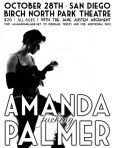
amanda palmer san diego concert posterWhich is my segue for the rest I’m about to have. Sure, the paying job seems determined to bite at my heels for part of the journey, but for the most part, it’s downtime in some of my favourite places in the world with, as luck would have it, a couple of my favourite in the world. Life is good. And there will be convention goodness, thanks to World Fantasy in San Diego. It’s a bit of Gaiman Con this year, we’re told, with added Amanda Palmer — all good — and it’ll be ace to soak up the vibe and maybe make a pal or two. I’m taking a big bag, so I can finally break the moratorium on fun stuff when I hit the dealers’ room. I wonder if I can read Connie Willis’s Doomsday Book before I get there? Will it put me over my weight allowance? Is this another reason to buy an e-reader, and if so, which one?

But first, there’ll be sleeping. It’s been a long couple of weeks, but that burr in the saddle that pays the bills notwithstanding, the to do list is looking pretty clean right about now. One of the things I love about being on the road is being the hell away from the interwebs. This compulsion to be plugged in and engaged can be damn tiring, damn distracting. It’ll be nice to have a rest, even if there’s always a persistent niggle that the world has taken a step to the left without me knowing. Anyhoo, it’s R&R time. Wake me up when we get there, and let me know what I’ve missed.

(It’s worth waiting for the guitar solo!)
Calling out for best of 2011, and launching Anywhere But Earth

Ticonderoga Publications have opened for submissions to their next year’s best of Australian and New Zealand fantasy and horror. Stories published this year are eligible; deadline to sub is January 20.

Anywhere But Earth, Coeur de Lion’s science fiction anthology in which I’ve gone all godbothering vampire conquistador, is launching at a spec fic fest in Sydney in November — sad to miss that. The day includes an opportunity to pitch to ‘an industry professional’.

And there’s more about the e-format for Aurealis at the Aurealis website. Looks as if my Aussie werewolf yarn will be available in the Feb or March issue, which is, I believe, still going to be free to download.

Oh, oh: Louise Cusack is returning to the world of MS assessments — briefly. Catch her while you can; she gives great feedback.

Surviving the End

surviving the end anthologyDark Prints Press has released the table of contents for its Surviving the End anthology, to be launched at the Swancon “Doom Con” in Perth at Easter next year — lovely thematic resonance, there! (Marianne de Pierres is a good choice of guest of honour, given her dystopian outings.) The antho sounds nice and tight, with extra interest thanks to the inclusion of Craig’s between-story interludes and the novella.

As well as my yarn, ‘The Last Boat to Eden’, there is:

  • Unwanted, by Martin Livings
  • The Long Ago, by Amanda J Spedding
  • Hiatus, by Michael Bailey
  • The Stuff of Stories, by Kathryn Hore
  • Harvest, by Ashlee Scheuerman
  • the novella, The Failing Flesh, by Joseph D’Lacey
  • and narrative interludes by the ‘Story Collector’, Craig Bezant
  • The end is in sight — bring it on!

    Cornholed by a thematic devil wombat, and other writerly observations

    “If you dance with the Devil Wombat, you get cornholed by the Devil Wombat.”

    This is an example of a theme, as espoused by Chuck Wendig over at his blog: there are 25 superb points about the importance of theme to a story, and some have got me totally cracked up. Laughing and learning at the same time: gold. Plus, what’s not to love about a devil wombat?

    In other news:

  • From theme to suspense: Ian Irvine, whose website I’ve recommended before due to his insightful advice on the publishing industry, has offered a whole bunch of summaries about building suspense in a story. There’s a bit of crossover, but overall, it’s good stuff.
  • The Australian Horror Writers Association, which fell into something of an open grave this year, looks as if it’s scrambling out, announcing a dedicated page for its mag, Midnight Echo (subs for issue 7, theme of ‘taboos’, open Oct 1 — OMG that’s tomorrow, where has the year gone?) and promising rejuvenation in the new year. The mag is having a subscription drive: you can win stuff.
  • Speaking of zombies, Cam Rogers has expressed his love here. And Chuck McKenzie’s Necroscope is still shambling along nicely, nom nom nom.
  • And Michael Pryor is, for those patient souls looking for almost guilt-free procrastination, has listed a vid of ‘how writers write‘.
  • And then there’s this (reported at the Guardian UK — where, non-writerly, you can listen to the whole new Zola Jesus album, Conatus, but having done so, I think it might be a slow burner, a bit like her Stridulum II which has great tracks but kind of wears all at once…): Amazon’s new line of Kindles, including the Touch and the Fire. Resistance to the juggernaut is becoming futile with the plummeting price point, restrained only by geography, it seems.

  • Vale Sara Douglass

    Australia lost an influential writer today, when the writer known as Sara Douglass died from ovarian cancer. Douglass, 54, was at the sharp end of the Australian industry, the first Australian signed to HarperCollins imprint Voyager, in 1995; her Battleaxe series has won her a legion of fans. Her most recent novel, The Devil’s Diadem, came out earlier this year; a collection of short stories is due out later this year through Ticonderoga Publications.

    Douglass was open about her cancer, and her comments about it and the way our society deals with death made a strong impact on me when she first blogged them. I would highly recommend that post, The Silence of the Dying, to you, and further direct you to Alan Baxter’s response to the news of Douglass’s death, which mirrors my own feelings with simple eloquence.

    Douglass leaves not only lives she has touched and an enviable written legacy, but a message that deserves to be heard.

    An addition…

    Karen Brooks, a long-time friend of Douglass who has recently been treated for cancer herself, posted this beautiful obituary at the Voyager blog that gives some insight into the person behind the name.

    The Waterboys and Fred Vargas: say again?

    A French detective on the trail of a vampire killer. Two Aussie blokes stealing water from a bunch of fascists. The connect, I hasten to add before tries to have me committed or at least reports me to Archery Australia for drawing a particularly long bow, is between the quote marks.

    Yep, dialogue.

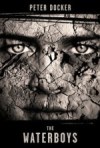
    the waterboys by peter docker

    The Waterboys is Peter Docker’s second novel, and it’s a beauty. The Western Australian writer, who also has the acting string on his bow, has delivered a beautiful depiction of an Australia that never was but might’ve been/should’ve been/might yet be/never could be. It deals with a white bloke who’s in tight with the Countrymen: at their core, indigenous Aussies of Western Australia who forged an amazingly enlightened understanding with English colonists. Part alternate history, part science fiction, part fantasy, the rendering of landscape and spirituality is stunning. You can read a full review of Docker’s dystopian/eutopian vision at ASiF.

    One of the elements that really struck me about the book was the dialogue. It’s as sparse as that desert country, but it’s steeped in character and personality. As such, it complements the prose very well indeed. There’s very little information relayed, either, just the bare bones, because the story is not about explanation — it’s about acceptance. What will be, will be, already is, already has been: time is a very different fish to our Western linear or even circular understanding.

    For a novellist to convey so much information about story and character through virtual stillness is a hell of a feat.

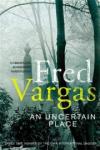
    an uncertain place by fred vargas

    Fred Vargas, French crime writer extraordinaire, is at the other end of the scale, to some extent. I read her An Uncertain Place a little while ago because of the presence of vampires in the text — the crime under investigation relates to the generational damage caused by a family feud in the way back when, with an outbreak of ‘vampirism’ and the resulting bloodshed that followed. So, no fangs, but lots of chinwagging.

    Vargas is also a practitioner of sparse, in that the contemporary world is barely sketched. Paris? Pshaw. The inspector’s office? Well, there’s a cat on the photocopier, and it’s a very cool cat; it made me smile to read about it.

    I didn’t much enjoy the book — it is an English translation from the French but I don’t think that was a factor — for a couple of reasons, primarily the personality of the chief detective — kind of beige, really, and there’s a sacre bleu comment for Vargas fans — and way too many coincidences propping up the investigation.

    But two things I did enjoy: one, the way that little pieces of information, in this case mostly historical anecdotes about men eating unlikely things, kept cycling through the text, sometimes with different metaphorical impact. Tasty.

    And secondly, and this is where the bow string twangs even if the arrow goes adrift, the boldness of the dialogue, not just in execution but in display. I had to stop reading at one stage and flip back, because I realised that in the space of some three pages of almost pure dialogue, there were barely any dialogue tags. Admittedly, it was a one-on-one conversation, so keeping up wasn’t that big a task, but still … Obviously, Vargas has nailed her characters in their speech, to be able to pull that off.

    The upshot of the two works, and the reason for sharing, is that it made me think of all the nodding and gesturing and sighing and godawful stage directions I throw around in my manuscripts to try to keep the identity of the speaker clear.

    And then here are these two very different writers, both saying more with less, and saying it with a distinctive voice.

    I hear what they’re saying.


    Art and artifact and market value

    Alan Baxter shows a pretty cool head on the issue of the .99c prince for e-books, and his post also touches on another issue that’s been banging around since a writers’ group discussion a month ago: what’s my price?

    This comment from Alan really hit a nerve with me:

    I love getting contributor’s copies of books I have stories in, because I’m a vain fucker and like to point to the brag shelf and say to people, “Yes, I have work in all those anthologies. And those are my novels. Ahaha.” Shut up, I need validation.

    Validation. Yes indeed. Because I too like my trophy book, however vain that may sound. Because when the doubt sets in, as it frequently does, it’s comforting to look at a shelf of published works and say, well, those editors all thought my work was okay. So, maybe I should turn the TV off and press on with this yarn.

    The thing is, who are those editors? What kind of benchmark are they setting? Is that anthology something I’m proud to have on my CV, or is it just a another centimetre of paper adding weight to the shelf?

    It all comes down to what the writer wants. And how much they value their work.

    I’m inclined to agree with Cat Sparks, who wrote earlier this year in WQ magazine that, for someone who wants to show they’re serious about their writing, one byline in one well-respected title is worth more than 20 in no-name nil-visibility publications.

    Your CV — your bibliography — is an indicator of the kind of writer you are: quirky, top-shelf, developing, esoteric …

    There’s a market for any story, I suspect. There seems to be no shortage of cowboys roaming the internet range, offering to publish your finely crafted yarn in return for ‘exposure’. Not even a contributor’s copy, but they might offer you a discount to buy your own. These outfits strike me as being particularly predatory, using their contributors not only as material but as a primary market as well.

    Of course, there isn’t a lot of money in publishing at the bottom end of the scale. There’s probably an argument at the moment that there’s not a lot of money at any end of the scale, except for those few exceptional sellers who help finance the rest.

    One pay scale that, anecdotally, seems to be increasingly common is the royalty share. It’s nice of the publisher to count you in in the profits, even nicer if that’s in addition to an up-front payment and/or a contributor’s copy, but I wouldn’t be holding my breath waiting for the cash to roll in. Take a look at the formula being used to calculate the royalty, the lifespan of the contract, the likely sales of the antho … It is at least a gesture and it does encourage the contributors to help market the antho.

    And then there markets that offer no payment, but contributor copies. I don’t mind this tier at all. It’s honest and it’s contractually clean, and it shows respect for the contributors. It’s your story; of course you want to see what we’ve done with it. Here, show your friends …

    And hey, if you can get someone to actually pay you money for your work, a token payment or otherwise, all the better. That’s a serious benchmark. That’s a sign of commitment and professionalism (you hope).

    Some anthologies just sound so cool, you want to be in them. Some magazines have serious cache. Some themes stretch your boundaries, challenge your abilities. Some are published for good causes. Some have ace editors. All good reasons to submit, regardless of the pay packet.

    It’s fairly common to hear a writer squee, not so much about being in an antho, but about who else is in it. Yeah, there’s a buzz, rubbing shoulders with your role models.

    I suspect, too, that your requirements from a market might be more generous if you’re prolific and able to pepper the groovy anthos at all levels of the food chain.

    If you’re like me, and squeezing out a short story is akin to pulling a length of barbed wire in one ear and out the other, then you probably want to make those sales count.

    Me, I like the pretty, even more than I care about the money, in some ways. Money is good, but money goes away. That book, it lingers. I like a book that looks good, that has an editor who tries to get the best out of my story and a publisher who thinks enough of my work to, at the very least, give me my trophy for effort: my contributor’s copy. In the flesh. On the shelf.

    And then, the art

    You might notice that the word ‘art’ is contained within ‘artifact’. In the case of books, that’s not the spurious segue it might at first appear to be. Part of my love of physical books is the art: the cover, most obviously, but the stock, the font, the layout, the feel, the comfort … It’s the same reason I still by CDs as my first option.

    carrotLee Battersby has been exploring not so much the physical art of the artifact, but the actual art of the story. I liked his take on it, as illustrated by a carrot — yes indeed! — very much, and added my two bobs’ worth at his invitation.

    Publishing’s dark clouds and silver linings

    I side-swiped the .99c price point for ebooks in last night’s snark, and it’s something that does concern. Fortunately, I found this morning that someone else (that would be Patrick O’Duffy) has freshly minted what I was going to say. And more besides.

    I’ve come across so many people with Kindles who only use them to download free books – and then almost never read them, because it turns out they don’t want to read Moby Dick, they just want to feel like they own the book

    O’Duffy also links to a discussion at Terrible Minds about the pros and cons of the .99c price tag and how it can be used as a marketing tool.

    For my bit, I can understand trying to make a swag through throughput, but I can’t help wondering what pricing a book at less than a cup of coffee says about the product. I realise that you can by dross from a mainstream publisher priced at over $20; that in books, quality is in the eye of the beholder; that you can find favourite authors languishing in the remainder bin for the price of an espresso. But don’t you just want to save them from that? Don’t you say, oh man, that is worth so much more!

    Thing is, books aren’t like tables and chairs; they aren’t purely functional products. They’re art, and nowhere more than in the art world does the adage that, something is worth what someone is prepared to pay for it, hold true. For me, a book is worth a damn sight more than .99c (especially one that I myself have spent months and years honing), but I guess if I was e-reading and saw something I liked in that particular bargain bin, I’d be saying ‘score’ and downloading it.

    So I’m not preaching or even protesting, really; just conflicted.

    O’Duffy has also linked to two items that caught my eye arising out of the Edinburgh Book Festival but I hadn’t got around to pondering. One, a dire prediction from Ewan Morrison about the future of publishing (to my mind, a dire future for publishing is a future without editors), and the other, an analysis of the uncertain times from Lloyd Shepherd.

    An example from Morrison:

    The digital revolution will not emancipate writers or open up a new era of creativity, it will mean that writers offer up their work for next to nothing or for free. Writing, as a profession, will cease to exist.

    And from Shepherd:

    So where does this sense of authors being squeezed come from? It could simply be a sign that publishing, as an industry, is becoming more commercial, more competitive, more efficient. You may not like that. You probably don’t. There is a profound queasiness which breaks out at the conjunction of art and business. But the pressure is definitely there.

    I’m quite tired, already, of the ‘death of the book’ scenario. We’re talking semantics, splitting hairs between paper and pixels, and I think that people such as myself who prefer the reading mode of a paper book will always be catered for, though perhaps at a price. As e-books, with their non-tree and space-saving advantages and the extra functionality that comes with being essentially a website (see, I learned something at Bookcamp), fill the middle ground now occupied by mass market paperbacks, paper books are likely to become objects of desire: beautiful stories beautifully packaged.

    I’m not even that concerned by the rumoured death of the author. The industry has always been a crap shoot, in which some crap sells gazillions and some truly talented writers get crapped upon, languishing inside their niche of true believers. If anything, e-publishing means more crap to sift through now that the established publishing filters are being broken down — new filters will arise — but those niche talents will have a more accessible audience. At least, those who can harness the potential of the new publishing reality, whatever that turns out to be.

    Putting the eeeeee! into e-books

    I am returned from Bookcamp. I have seen the future. It is now.

    Yes, I am tired, and yes, I have drunk too much coffee, and no I have not joined the Marines or some weird exercise cult. Rather, I joined 70 to 80 interested people at an ‘unconference’ about the publishing industry, run by if:book Australia in conjunction with the Melbourne Writers Festival.

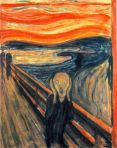
    the scream by edvard munchFor the most part, the story was comforting and even exciting. Writers write, people called publishers disseminate the written work in the hope of finding an audience and making income for everyone involved. But the publishers ain’t what they used to be — Dymocks has just announced it’s hitting the POD and publishing pathway, for instance, and even agents are (controversially) getting in on the act. And, of course, authors are acting as their own publishers. And, presumably, their own editors, designers, legal department, advertising department and PR firms. And, also importantly, distributors. Or they’re outsourcing those tasks they can’t or don’t want to do, to specialists who can.

    For instance, I’ve recently received a handful of press releases from Australian and American public relations outfits touting the attractions of self-published novels. That’s a serious investment.

    Probably my greatest, scariest realisation during the course of the day was that, now more than ever, my stories are truly not mine once they’re published. Not only can readers review them, in whatever fashion, and indeed convert them within their mind’s eye to whatever text they want to — the story is, and always has been, theirs to interpret — but they can, more easily than ever, mash them, adapt them and generally fuck them up any which way they choose (within the bounds of copyright at least, if they’re playing fair). There’s a suggestion that this is a good thing, art sparking conversation and more art, art as the centre of community; but part of me shrivels at the thought of all that work being edited, altered and re-visioned. Another part of me asks, what’s my cut? If I’m being remixed, do I at least get my name in brackets?

    It is indeed a braver new world.

    Another item emerging from the discussions, in amongst the generally accepted wisdom that the traditional publishers are still way behind the 8-ball on the whole digital thing, is the ability to ‘enhance’ e-text with stuff: music, hyperlinks, comments, annotations, pictures, videos, behind-the-scenes … you get the idea. This stuff not only adds interest for readers, but adds to the conversation generated by the text. It’s a cafe chat on the interwebs centred on the text. Which is kind of neat.

    A cited example of how a narrative, in this case essentially a children’s picture book, can be enhanced through the web, and spin off user-generated adaptations in the great tradition of fan fiction, was Inanimate Alice, proving a hit in classrooms as a means of getting kids interested in storytelling.

    An e-book, one of the guest speakers, Hugh McGuire, said, is essentially a web page with limited functionality. Food for thought, that.

    But what if you don’t want bells and whistles? What if you want that escapist submergence in the text and only the text, without pauses for even dictionaries? You just want words making pictures — indeed, an entire world — in your head.

    It’s an issue that Louise Cusack has fortuitously blogged about, sparked by an article in Publishers Weekly, which examines the advantage vs disadvantage of e-adding.

    Thankfully, we can have our cake and eat it, too. Just as with a DVD with extra features, we can choose which version of the story we want. The Inanimate Alice producers found that their audience was split 50-50 for enhanced vs unenhanced, so new episodes are being made both in enhanced and unenhanced versions.

    paul hogan in shrimp on the barbie tourism advertisementSo now I’m imagining by nasty little outback vampire story romping in the e-wilderness with pop-ups for the Strine-challenged reader. No more Americanisation required (I’m still bemused that English is converted for North American readers but the reverse does not apply — aren’t North Americans insulted by not being trusted to handle colour with that pesky u? Of course, fanny is more problematic…). Don’t know what the boot of a car is? Enable the special features and *pop* — even better than a footnote. With pronunciation guide, aural or text-only. With a picture, even. This would be fun, even better than a glossary at the back of the book. Paul Hogan could resurrect his career doing voice overs for books — “g’day readers: in Aw-strayl-ya, we throw prawns on the barbie; if you throw on a shrimp, you’ve got a small lad with a nasty burn”.

    OK, maybe not.

    Still, exciting times as the world gets smaller and the barriers between writers and readers are increasingly broken down. But let’s not forget that, regardless of format, regardless of Flash, regardless of publisher, the readers still deserve something worth reading (and please, gods, at the barest minimum, something proofread). Hell, maybe they’ll even consent to pay for it.

    Meanwhile, if you’d like more information about the digital age and what it means for writers, check out the Digital Writers conference in Brisbane on October 15, organised by the Emerging Writers Festival with support from if:book Australia, Queensland Writers Centre and Avid Reader.

    Melbourne in one day: food, writers, art, music

    Yesterday’s touch of summer, and spring, and winter, and oh, yes, well, autumn, fine, it IS Melbourne, but at least it didn’t rain, was just dandy for a day in the city.

    First, there was lunch at Time Out in Federation Square — the staff there are amazingly efficient and efficiently friendly and the food is tasty and well-priced, though a wine will set you back the best part of $10 a glass — with a Brisbane contingent (including two of us expats and one wannabe). The sun was warm, the wind chill, the quesadillas suitably chilli, the friendship warm. This is what weekend afternoons are all about, hey?

    vienna art and design at ngvFrom there, I wandered off to the Vienna: Art & Design exhibition at the National Gallery of Victoria. The exhibit showcases the Secessionist movement. Here, I again learnt that I do like Klimt (I never knew he drew erotica, so those drawings were educational), that I want to know more about Schiele and Kokoschka (awesome portraiture!), and have sadly little interest in tea pot design.

    The exhibit kicked off with architecture (loved the Die Zeit facade re-creation in aluminium and glass, all very Metropolis*) and ran through visual art, including wicked posters and a couple of exquisitely processed photographs, furniture and cutlery n stuff. In those heady days, the architect was not just designing the building, but the entire fit-out. This was perhaps most strikingly presented by having two sets of furniture on either side of the same room, both products of the era but showcasing the two directions that design took: decorative and pragmatic (in my layman’s terms).

    I also ducked upstairs to check out the Deep Water exhibition: a small collection of photographs ranging from creeks and waterfalls to icebergs and people swimming. Makes you appreciate the power of a black and white landscape, and indeed of nature itself (fingers crossed for those in the path of Hurricane Irene, who would, I’m sure, be happy just with photographs).

    melbourne writers festival 2011

    There followed a long coffee — there may also have been a beer, the day being turned to summer again — and scribbled notes (ink slashing akin to wrist slitting; infernal story, I hate you as much as you hate me) — and then, as the dial turned to a shady phase of winter, my first Melbourne Writers Festival event: Kim Scott, Marie Munkara, Arnold Zable (chair) and John Bradley talking about indigenous language and politics.

    My summary: language is an important if not essential plank of cultural identity. So this move to herd folks from their country and teach them exclusively English: don’t. (What year is this again? Have we learnt nothing?)

    Bradley made one of the most striking comments of the panel, when he described the Aboriginal language he’d learnt as ‘rising up from the country’, or words to that effect.

    Powerful stuff, language; dangerous, too.

    PEN International sponsored this panel, and an empty chair on the stage represented writers who have been killed or jailed for daring to not only have an opinion, but to air it.

    To balance out this heavy topic, a short walk up Swanson St, the Toff in Town was hosting Stories Unbound. At the Toff, I’ve learnt, it pays to order two drinks at a time, especially when the house is packed. And it was, with punters turning up to hear Tishani Doshi, Brissie’s Nick Earls, Leslie Cannold, Anna Krien, Michael Robotham and MC David Astle share, without notes, an unpublished anecdote from their lives.

    Doshi: her love for the woman who introduced her to dance and so freed her to pursue an artistic life; Earls: how the Pope helped him pass medicine — funny stuff, involving testicles and Gaviscon; Cannold: a Jewish mother having to decide whether to get her sons circumcised; Krien: a tonguey from a 90-year-old man in the name of journalism; Robotham: separate misadventures involving pornographers and a redneck. All with sign interpretation. So a good mix of serious and humorous in a convivial atmosphere.

    Oh, the music: on the train, there was a guy strumming his guitar, but it was kind of dull so I plugged in my mp3 player. And then got home to the awesome announcement of friend Sarah’s solo album deal with ABC Classics. As Night Falls is the name of the album: can’t wait!

    * speaking of Metropolis, it’s as good a throw as I could come up with with to preview the upcoming exhibition of Modernity in German Art 1910-37: it’s hip to be square!