Awards and more book covers

Ticonderoga has released the book cover of its limited edition reprint of The Infernal by Kim Wilkins, her first novel and still one of my favourites.

Ticon has also recently made available two anthologies: Scary Kisses, involving paranormal romance, and Belong, speculative tales with a migration hook.

And in awards news, Jonathan Strahan, Justine Larbalestier (Liar) and Scott Westerfeld (Leviathan) are Aussies all in the running for Locus Awards. This follows the excellent news that Margo Lanagan is up for a Shirley Jackson award for her novella Sea-Hearts, published in X6.

Here’s a cool trailer for Scott’s Leviathan, a very fun take on the outbreak of World War I:

And one for Liar, a compelling if infuriating read!

And not to be overlooked is this new offering from Rowena Cory Daniells, a fancy trailer for her new (and much awaited) trilogy. Rowena has been a stalwart of the spec fic community in Queensland for many a year, helping to found both the Vision writing group (going strong) and the EnVision writers workshop (now defunct, but in a way living on in the Queensland Writers Centre’s year of the novel program): two things that have been of massive benefit to me as a budding author.

KRKhd from Daryl Lindquist on Vimeo.

Clarion South, set for 2012

A bit of news from the team at Clarion South, the excellent writers (boot camp) workshop run in Brisbane every two years — it’s been put back a year to 2012. I’ve not had the pleasure of attending myself, but I know a bunch of folks who have (and who’ve taught there), and I’ve seen the stories they’ve produced, and wow: if you can muster the time and the money, it’s a hell of a kickalong. For details, check out the Clarion South website.

Writing space – a QWC blog tour

I consider myself to be a full-time Melburnian since November, when the move into my fiancee’s rental had been accomplished and my car was parked in the driveway.

At the end of November, we were given notice that our house was to be sold and we’d need a new abode. The nest, so recently feathered, was to be torn down, figuratively if not literally.

So it’s apt that the Queensland Writers Centre has asked me to profile my writing space as part of a blog tour: a little slice of space and time, recorded on the interwebs. This is the workroom. It’s a shared office, poor Kirstyn having surrendered her haven in my favour, so that I could set up the desktop. The result is a gloriously messy meld of her stuff and mine.

jason nahrung's writing desk

Some of the features:

The desktop PC. I don’t mind writing on a laptop, but I prefer the solidity of the PC, especially for editing. It’s got everything on it — email and old files and a bunch of RAM — and a full-size keyboard with all the keys in the right place. Stuck to its side is a picture I took of a sunset over the farm on which I grew up — my heart’s home.

The CD player. I love writing with music playing. It’s part mood-maker, part white noise generator. The caveat is that it must, for the most part, be familiar, so it can indeed fade into the background once I’ve got the groove.

Sekhmet and friends. One of the things Kirstyn didn’t have to move in the office when I merged in was her Egyptian stuff. I’ve always been interested in the ancient place, with a special affinity for Sekhmet (especially since a visit to Karnak). I’ve got a couple of figurines of her and the great scribe Thoth watching over the keyboard.

The screen saver. This changes, but this one is a picture of New Orleans’ French Quarter, taken from the Algiers ferry. If the farm is my heart’s home, the Vieux Carre could well be my soul’s home. It’s my most favourite of cities.

So that’s the den. But there’s more to writing space than where the words hit the page.

park gates

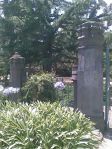
Our abode, about to be vacated, is near several small parks that have provided much-needed respite from the four walls and screen. One has these amazing gateposts and a leafy path, the other is an ‘urban forest’: an overly sculpted strip of scrub flanked by houses on both sides, with a couple of muddy ponds supporting ducks and a bunch of other birdlife. To stretch the knees, feel the breeze and the sun or, occasionally, the coming rain wet on the wind, and allow the ideas and characters to jumble around in free-thought has become one of my favourite parts of the process.

duck pond

Now there’s a new park to be explored and a new desk waiting bound in cardboard in the garage. We’re hoping to have room enough for both of us to have our own dedicated writing space in the new house. For now, though, I’d better go make use of this one while I can.

This post is part of the Queensland Writers Centre blog tour, happening February to April 2010. To follow the tour, visit Queensland Writers Centre’s blog.

Aurealis Awards, judges’ reports now online

Further to my musings about the nature of horror, as a literary genre, as evidenced at the recently announced and fabulously conducted Aurealis Awards in Brisbane, the judges’ reports are now up at the awards site. I’m still grappling with the horror content of the winning novel, I confess. Maybe it’s because I grew up in the bush, but I don’t share the sense of menace supposedly posed by the landscape in Red Queen at all. And I wasn’t aware of the characters reacting that way. Why would country boys respond like that? The only thing they were frightened of in the Australian bush was other people — in this case, plague carriers. I think it’s very cool that a book like this can nudge ahead of a field with comparatively quite strong horror tropes; it certainly broadens the horizon. Anyway, food for thought, and I’ll continue to digest. (I certainly concur with other comments in this report, though not all.) (My musings shouldn’t detract in any way from the decision, by the way, nor the fact that Red Queen is a solid debut novel with plenty to recommend it; that’s not the purpose of this blog. I write ‘horror’ stories, call them what you will. I’m always interested to know what other people think of as horror.)

Liar by Justine Larbalestier, and the unreliable narrator

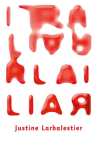
Australian cover of Liar by Justine Larbalestier

The Australian cover of Liar

I finished Liar, a tasty tale from the rather accomplished pen of Justine Larbalestier, last night, and it’s got me thinking, even the morning after and before I’ve finished my first coffee.

The story is excellent. The prose is delightful, told in first person from the point of view of Micah, a teenager in New York City. Her dad is black and her mother white French. She’s a loner at school who takes delight in running through the streets and especially Central Park; she’s very good at running, she tells us. But her real skill is lying. And there’s the rub.

Larbalestier has taken the notion of the unreliable narrator and stuck it right out there, in big red letters in the case of the Australian cover (the covers in the US caused quite a stir due to the foolish attempt of the publisher to feature a white face on the cover when the narrator is black – a lie too far: read about the covers at Justine’s blog) (side note: how many writers get 167 comments on a blog post? wicked!).

The book is broken into three parts, each one promising to tell even more of the truth, and each one correcting statements that have gone before. The event that triggers the story is the death of one of the students at the school. It is the fulcrum: the slices of narrative are told as before or after this key event, with a few background notes thrown in (in exactly the right place). The fact that the boy is dead appears true. The rest is pretty much up for grabs: Micah’s relationship with him, her relationship with her family and their background, an illness that defines how her family treats her and, in part, why Micah is the way she (maybe) is. It’s all seen through the lens of a practised liar.

Even though I knew I was being lied to, but not knowing when or in which way, the prose — the voice — sucked me in and I found the book compelling. Little truths used to enhance big lies, revised, revisited, compounded, revealed. At story’s end, I really don’t know what to believe. In fact, Micah challenges me in those last pages; even if I had worked out what I reckoned the truth was, or even what I wanted to believe it was, she’s poking her tongue at me, saying, You sure about that?

No, I’m not sure about it. And that’s what’s bugging me. I want to be able to call up some newspaper files and see what the recorded truth is. I want to know what the truth of Micah’s situation is, there at the end: I’m happy to not be sure about the actuality of the journey, but I’d like to be sure about the destination. Would a second, more attentive reading, result in more surety, or would it just compound the frustration?

Liar is a gorgeous teenage mystery. That much is true.

Cracked plot holes

A chum sent me to Cracked mag’s website to check out the structure of an evil empire — recommended research for thriller writers, by the way — and I got a little lost in the zany but erudite observations the writers had to make about storylines, and stuff. This section about 6 movie plots made possible by bad decisions is laugh out loud funny, often because it’s true. They saved the best for last: 28 Weeks Later and The Matrix. Read, learn and laugh!**

28 Weeks Later review at Cracked magazine

A sign that could have saved the day but would have killed the sequel

** WARNING: the site is highly addictive. Make your coffee first.

Dan Brown writing lesson

The Da Vinci Code by Dan Brown

Doing the rounds at the moment is this article outlining 20 woeful lines from the pen of Da Vinci Code writer Dan Brown. It’s worth a read, not to knock Brown, but to learn from his mistakes.

I’m going back through my current manuscript, removing all extraneous mentions of Mickey Mouse watches.

And taking heart that you can bollox things up and still make a mint.

Books of 2009

Thank goodness for December. After a tumultuous 2009, it’s nice to have a month to draw breath in, to hunker down and finally get that heart massage I’ve been yearning for.

I owe Chuck McKenzie a favour for getting the ball rolling, passing around an email touting for stories. The anthology died shortly after conception, but it was the rare instance this year when, by the time I’d read the announcement, I had an idea for a story. Two, in fact. I took them both on long leads for a walk in the park, and by the time I was headed for home, had settled on the one I was going to write. I sat down at the keyboard and, naturally, wrote the other one. It’s still not quite finished, and needs a serious going over, and may never see the light of day. Thing is, it happened, it’s there. The wheels were in motion for the first time in far too long.

They’ve kept turning, too. The result is a file featuring a hodge podge of scenes, all as rough as guts, some contradictory, most muddled, but there’s a narrative in there somewhere. It’s slowly emerging out of the mist.

I don’t think it’s a coincidence that the words have started to come as I’ve finally got back into reading. Writing’s a machine: you need words in to get words out. That’s my assessment, anyway.

So what words? A few of us were yakking the other day about our best reads of the year, and I was struggling to recall what I’d read, particularly in the fractured, then limbo, period of the year. Mostly review books, I think. I guess there’s a reason I don’t remember them, but then, memory’s a tricky thing.

I do remember enjoying Glenda Larke’s The Last Stormlord, an engaging fantasy set in a beautifully realised world of desert, drought and political intrigue. Peter M Ball’s novella Horn, an urban noir featuring a murderous unicorn on the sleazy side of town, whetted the appetite for a sequel. Angry Robot offerings Slights by Kaaron Warren and Moxyland by Lauren Beukes were head and shoulders above their packmates.

rewired post-cyberpunk anthology

And then there was the back-catalogue stuff. A copy of Rewired: The Post-cyberpunk anthology proved enjoyable and wide-ranging, from post-apocalyptic (How We Got In Town and Out Again) to post-human (The Wedding Album), obtusely technical (Lobsters) to poetically obtuse (Thirteen Views of a Cardboard City, possible a view or two too many), and two close to my heart thanks to their Mississippi River settings, Calorie Man and Two Dreams on Trains.

A revisiting of Stephen King’s On Writing and Kim Wilkins’ The Infernal (every bit as good as I remember it; and due for a new release, I believe) preceded two visions of life after the apocalypse, sans zombies: Cormac McCarthy’s The Road and Margaret Atwood’s Oryx and Crake. I thoroughly enjoyed both of these science fiction novels, so beautifully told in both language and structure. I stumbled early on in The Road while I adapted to McCarthy’s degeneration of punctuation and assault with sentence fragments, helping to set his scene. The structure was very clever, a series of vignettes, Polaroids of memories, the order not always clear, his protagonists unnamed as they stumble their way through the blighted landscape, living off scavenged goods and in fear of cannibalistic gangs. A world where trust and compassion are casualties of the need for survival. The last scenes left me a little cold, but that might be my cynicism asserting itself. Atwood’s yarn, in which a race of gene-spliced humans have inherited the world, overseen by a wonderfully depicted, mundane narrator with the inside track on the apocalypse, proved compelling from go to whoa.

Films and TV

true blood dvd series

Not a good year for the moving picture in Jason-land this year, due to a protracted absence from attending either the big or small screen. The few new release movies I’ve seen just haven’t impressed. From the sofa, I’ve been enjoying revisiting Battlestar Galactica, and catching up with True Blood, Dexter, Being Human and Dead Set. I hope the new Sherlock Holmes movie might give the year a kick in the tail.

Gigs

In no particular order, this lot rocked: Nine Inch Nails, Gary Numan, Amanda Palmer, Jeff Martin, Emilie Autumn. At a local level, Sunas, Tycho Brahe, Felinedown, Bridget Handley, Dandelion Wine, Wendy Rule and The Wretched Villains made an impression on the synapses.

Two albums released this year remain on rotation here in the office: The White LiesTo Lose My Life and the Yeah Yeah Yeahs’ It’s Blitz!. My retro buy of the year was Beautiful Day by defunct Brisbane duo Stringmansassy: just gorgeous.

Aurealis Awards finalists announced

The finalists for Australia’s premier speculative fiction awards, the Aurealis Awards, have been announced on the website.

Great to see some new names in the mix as well as the stalwarts, and Brisbane’s Peter Ball running for the greatest over-achiever award with his swag of nominations.

The winners will be announced in Brisbane on January 23, which will mark the end of Fantastic Queensland’s tenure as hosts of the awards. No word yet on who will be taking over the prestigious but invidious task.

How to write a novel (the Justine method)

In her acceptance speech at the World Fantasy Awards ceremony this year, Margo Lanagan paid tribute to a blog post by fellow Aussie writer Justine Larbalestier about how to write a novel. Given I’m meant to be doing just that at the moment (writing a novel, that is), I looked up that post, and found it helpful indeed. Here it is. I’ve used the spreadsheet tracking method and it’s uncomfortably illuminating!

I also thought her expurgated version held quite a lot of truth.

Enjoy, and then get to it…