The Courier’s New Bicycle delivers a worthy message

This is the fourth book I’m reading as part of my list of 10 for the Australian Women Writers 2012 National Year of Reading Challenge

AWWNYRC#4: The Courier’s New Bicycle

By Kim Westwood
HarperVoyager, 2011, ISBN: 978 0 7322 8988 1

couriers new bicycle by kim westwood

WHAT a fascinating picture Kim Westwood paints of dystopian Melbourne, right from the striking Darren Holt-designed cover. Australia has been ravaged by a flu vaccination gone wrong – I can hear the shouts of told you so from the anti-vac lobby from here – with the result that fertility levels have fallen through the floor. The religious right has ascended to an almost Orwellian command of the government and the streets, patrolling morality with a puritanical fervour that would make the Rev Nile dance the snoopy dance. Hormones are a hot property in a society where reproduction is a struggle.

Our journey into this well-rendered terrain is through the eyes of Salisbury Forth, a bicycle courier whose life has been characterised by a fight for acceptance of her transgender status. She identifies as androgynous, meaning even her family shun her. Sal (the story is told in first person, so eliminating annoying pronoun conflicts) found a measure of freedom inside the underground community of the inner city, ‘pedalling’ hormone and liberating factory animals; it’s only a matter of time, of course, till the wheels come off.

Intrigue on an almost cyberpunk level ensues as bad drugs are sold, corporate interests clash, desires stoke the belief that the ends justify the means.
Issues of sexuality and identity, and the prejudice levelled against the perceived ‘other’ by the ‘moral majority’, are key issues, and Westwood puts us firmly in the saddle.

The story is narratively more straightforward and the prose more accessible than in her previous, debut title, The Daughters of Moab, a post-apocayptic Australian tale which likewise evoked a most believable world.

australian women writers challenge 2012It’s refreshing that in CNB there are no action heroes; while the world dips into science fiction concepts rooted firmly in the here and now – glow-in-the-dark pets, anyone? say no to battery farming? – the characters are uniformly of the average human variety. They get tired, they make mistakes, they hurt.

There were two minor speed bumps in my reading of the novel, and both probably reflect more on my reading habits than Westwood’s skill and style.

the first was a preponderance of info dumps filling in details about the back story, particularly early on as the stage was being set. There’s a certain level that fits the noir tradition that this story draws on so well, but there’s also a limit to just how much is needed at any one time without interfering with the story, or indeed, interrupting conversations.

The second, equally minor, annoyance was the Salisbury ‘voice’. For a young person who left home at 16, has limited formal education and lives an unsettled life, Sal’s vocabulary is extraordinarily wide and her knowledge of art likewise remarkable. Unfairly assumptive and prejudicial? Perhaps.

These quibbles can’t diminish the impact of Westwood’s world and the gender and social issues she explores. Atmospheric, considered, with likeable characters in a fascinating world: bravo.
Previous Challenge reviews:

  • The Road, by Catherine Jinks, horror.
  • The Shattered City, by Tansy Rayner Roberts, fantasy.
  • Frantic, by Katherine Howell, crime.
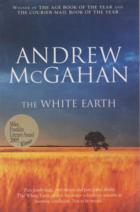
  • Andrew McGahan’s White Earth chosen for Our Story

    white earth by andrew mcgahan

    As part of the National Year of Reading, the Our Story program set out to select one text from each state and territory to fly the flag for a reading campaign. Six titles were shortlisted for each; the winners were announced earlier today.

    Queensland’s book is The White Earth, by Andrew McGahan, and it’s a cracker story. It riffs off the Mabo land rights decision and the incredible fear and uncertainty in rural Australia about the right to continue to live on and work land that had, in some instances, been in the same family for several generations. A lot of terra nullius talk, a lot of right wing clap trap, some very real concerns.

    McGahan draws on his childhood in setting the piece on the Darling Downs, where a young boy and his widowed mother come to live on their grandfather’s property, there to see the politics of the era played out and to uncover some unsettling family truths harking back to the days of white occupation and settlement.

    The other finalists in the Queensland selection were:

  • Affection, by Ian Townsend (Townsville, 1900, the plague, a social scandal)
  • Brisbane, by Matthew Condon (one in a series of capital city ‘biographies’)
  • House on the Hill, by Estelle Pinney (romance in the west)
  • Journey to the Stone Country, by Alex Miller (a collision of colonial past and the impact in the present present)
  • The Tall Man, by Chloe Hooper (Doomadgee and Palm Island under the microscope, with a wider view).
  • AWWNYRC #3: The Road, by Catherine Jinks

    This is the third book I’m reading as part of my list of 10 for the Australian Women Writers 2012 National Year of Reading Challenge.

    The Road

    by Catherine Jinks
    Allen & Unwin, 2004, ISBN: 1 74114 356 X

    the road by catherine jinks

    IT’S no surprise that The Road namechecks The Twilight Zone and The X-Files several times. It’s premise is quite supernatural, taking more than a dozen travellers and subjecting them to the strange phenomenon of not being able to get anywhere. This particular stretch of rural road is cursed, it seems; running out of petrol is the least of their problems.

    The story begins with a woman and her infant son hiding from her abusive partner on a rural property. He finds them, bad things happen, and then the weirdness kicks in.

    Out on the bitumen, car after car of disparate travellers — holiday makers, a truckie, locals going about their business — are caught up in the loop, driving without getting anywhere outside a certain radius.

    It takes a while for this large cast to be assembled, primarily because each group gets its own point of view. We find out who they are, what has brought them to be driving this stretch of highway, what they hope to find at their destination. The characters are wonderfully drawn, but the back stories become tedious, a way of trying to provoke some care for the fate of each increasingly desperate set of travellers, but ultimately operating more like speed bumps or cattle grids, forcing the story to slow right down while the latest piece is introduced to the board. Few of the pieces have much to do; their back stories generally tend to be of negligible connection to their plight or the situation’s resolution.

    australian women writers challenge 2012There are two characters who provide some continuity, thankfully, but this is a far cry from the incredible tension to be found in the work of another master of this kind of ensemble story, Stephen King. Perhaps because the situation the stranded travellers find themselves in never manifests a deeper message — ordinary people behave ordinarily — or because the characters have only the vague sense of the danger they’re in. The reader knows, which is where the suspense comes from as the story picks up its pace.

    Having said that, however, the story is, once it gets out of low range somewhere around the halfway mark, most enjoyable, primarily for its use of landscape. There are some wonderfully descriptive scenes of nature gone awry; provoked, it seems, into being an agent of justice. And Jinks’ prose is a delight.

    This is one of those yarns where patience is rewarded — where the destination is actually more rewarding than the journey.


    Previous Challenge reviews:

  • The Shattered City, by Tansy Rayner Roberts, fantasy.
  • Frantic, by Katherine Howell, crime.
  • Vale: Samuel Youd, aka John Christopher

    Image

    Word is spreading of a sad loss in the speculative fiction community, that of British Writer Samuel Youd, on February 3, only two months shy of his 90th birthday. <Update: Locus has confirmed Youd’s passsing.>

    As John Christopher, Youd provided two of the great texts of my childhood, both of which have survived the recent pogroms of excess literature cluttering the household shelves: The Tripods and The Sword of the Spirits trilogies. Tripods in particular made a strong impression.

    This is barely scratching the surface of his output published under numerous pseudonyms.

    He ranked up there with the likes of Garner, Cooper and Le Guin in my early reading. I hope more generations come to appreciate his legacy.

    Update: the Guardian looks at Youd’s work and provides a short obituary and a longer one.

    Aussies on Locus recommended reading list

    A few Australian writers appear on Locus magazine’s list of recommended reading from 2011 — novels by Kaaron Warren, Alison Goodman, Jo Anderton, Scott Westerfeld (who straddles the Pacific divide); collections from Margo Lanagan, Tansy Rayner Roberts and Lucy Sussex; anthologies edited or co-edited by Jack Dann and four (!) by Jonathan Strahan; novelettes by Peter M Ball, Isobelle Carmody and Margo Lanagan; and short stories by Peter M Ball, Damien Broderick, Terry Dowling, Thoraiya Dyer, Margo Lanagan, Chris Lawson, Tansy Rayner Roberts and Kaaron Warren.

    Apologies for anyone I’ve missed through oversight or ignorance.

    AWWNYRC #2: The Shattered City, by Tansy Rayner Roberts

    This is the second book I’m reading as part of my list of 10 for the Australian Women Writers 2012 National Year of Reading Challenge.

    The Shattered City

    Book 2 of the Creature Court trilogy
    by Tansy Rayner Roberts
    Harper Voyager, 2011, ISBN: 9 780 7322 8944 7

    shattered city by tansy rayner roberts

    IN WHICH the Tasmanian author furthers the tale begun in Power and Majesty (reviewed here). For those who came in late: the city of Aufleur is under attack, with interdimensional rifts trying to destroy it overnight. Defending the city is a bunch of hedonistic and political shape shifters, led by a Power and Majesty. In book 1, the ruling P&M was whisked away through a split in the sky, and was replaced — not by the most likely candidate, the damaged and reluctant Ashiol, but seamstress Velody.

    It’s a complex world, with Italian Renaissance overtones, and both the workings of the magical world and its relationship with the physical are explored further in The Shattered City. Velody grows into her role on the great chess board, introducing a new regime of polite behaviour — of community — into the fractious, scheming Court, while her fellow seamstresses — Rhian, all but neglected for much of this story, and fiery Delphine — also find their place in the new world order.

    australian women writers challenge 2012The actual story that drives this book — an assassin in the ranks and the sense that the city faces its most deadly threat yet — takes a while to get going, but there’s no time for slacking off. There are so many points of view, often thrown altogether within each chapter, and some make only one or few appearances: it’s easy to lose track of just whose head you’re in.

    It’s a strength that the immediate story arcs of books 1 and 2 are both resolved between their covers, while the larger story stretches across them. As with the first, the second delivers some delicious moments, beautifully dressed and dead sexy, and what a relief it is to finally have the plot point that kicked the whole thing off finally out in the open. Rayner Roberts is wise to not present it as a surprise, but use it as leverage for a greater goal. The Creature Court series offers a layered, detailed, credible world, peopled with a cast of complex, motivated individuals. How fortunate that, given the impending showdown foreshadowed here, that book 3, Reign of Beasts, is out now!


    This review has also been posted at Australian Speculative Fiction in Focus, who made the review copy available.

    Previous Challenge reviews:

  • Frantic, by Katherine Howell, crime.
  • Fantastic news: Lanagan, McGahan and double the Alison!

    Firstly, Margo Lanagan is being feted at Adelaide Writers Week. A thoroughly deserved recognition of a very fine author.

    Secondly, the Wheeler Centre is back in the swing, and has posted a video of Alison Goodman and Alison Croggon discussing their approach to fantasy: something both write extremely well (cf The Two Pearls of Wisdom/Eon and The Gift, respectively).

    And thirdly, I’ve reviewed The Coming of the Whirlpool, the first book of Andrew McGahan’s YA fantasy series, over at ASiF. An enjoyable, intriguing read for anyone who’s had an eye(patch) on swashbuckling.

    AWWNYRC Review #1: Frantic, by Katherine Howell

    I joined up with the Australian Women Writers 2012 National Year of Reading Challenge and have started on my list of 10 books by, you guessed it, Australian women writers to read this year, the national year of reading. Here’s the first review:

    Frantic

    Katherine Howell
    Pan Macmillan, 2007, ISBN: 978 1 4050 3797 6

    frantic by katherine howell


    FRANTIC by name, frantic by nature. And intriguing, too.

    This is the debut novel from Katherine Howell, who drew on her experience as a paramedic in telling the story of heroine Sophie, a Sydney paramedic. Sophie’s husband, Chris, is shot at the door of their house and their baby, Lachlan, is kidnapped. Every parent’s nightmare, right?

    Add in a vicious bunch of bank robbers who might be coppers and a relationship going through a rough patch, and you’ve got a compelling thriller anchored in the world of the emergency services.

    Also starring is police detective Ella Marconi, whose career has stalled due to her run-in with a boss.

    It’s not hard to see why the novel has brought Howell kudos, a series and a following. The medical and police procedural rings true, without the bells and whistles of a Hollywood performance. The law is not so much an ass as a mule that we trust to plod its way across the legal terrain, getting there in the end. But of course, Lachlan doesn’t have time for plodding: Sophie is prepared to do anything to get him back. Howell’s portrayal of the mother’s anxiety is spot-on. Frantic, indeed.

    australian women writers challenge 2012The story puts the reader in an interesting seat. Certain medical emergencies attended by Sophie have varying degrees of import with the core storyline, and the reader must decide which are relevant, and how. The event that triggers the story — the shooting of Sophie’s policeman husband Chris — is clearly not what the police, a little mysteriously, seem to believe it is. Why isn’t Chris dead? Why is Lachlan missing? Why the note? It just doesn’t add up.

    And then Chris gets his own point of view, so his role, while murky, is largely understood. And then, perhaps halfway through the book, the villain is revealed, and the reader is no longer left in the position of a whodunit but, rather, the position of an observer watching the web being woven, and why, and wondering who will be ultimately trapped.

    It’s a methodical tale, competently told, with attention to detail — leaves in drains, the smell of food — and no grandstanding. Marconi is neither Sherlock Holmes nor Dirty Harry. Sophie is not an action hero. Chris is not Chuck Norris. No one gets out unscathed or unaffected, not even Marconi.

    That down-to-earth approach is perhaps the novel’s most endearing feature. The resolution leaves the questions satisfactorily answered. It’s no surprise that Marconi is still going strong, five books later.

    Brisbane Writers Festival dates announced

    The calendar of literary events has been updated, including the dates for Brisbane Writers Festival (Sep 5-9), the Sunshine Coast’s Reality Bites in June (recently seeking submissions for attendees) and the Aurealis Awards ceremony in Sydney in May. Additions and corrections to the calendar are welcome.

    Angry Robot opens its doors again, and other writerly news

    Hot on the heels of Penguin’s new open door program, British press Angry Robot is again appealing to unagented authors — they signed three debut novelists from last year’s program — but this time are being quite specific about what they want: classic fantasy and YA SF and fantasy. The submission period is April 16-30 using a website uploader. Details are here.

  • Tansy Rayner Roberts is sharing the love — a combined book launch with Margo Lanagan for those lucky enough to have easy access to Hobart (Lanagan has riffed her Sea Hearts novella from X6 into a novel, how tasty!) — and a reprint that shows even a story written for a specific universe can have legs outside it (and indeed, TRR’s yarn breaks more boundaries than that little piffle).
  • Alan Baxter has shared his love, too: the forthcoming ‘paranoirmal’ anthology Damnation and Dames from Ticonderoga with its whoop arse cover and two collaborations in its TOC. I look at the bare scraping of confused and contradictory notes on my hard drive and lament; there are two more upcoming titles I doubt I’ll be able to submit to, but they’re worth a look: issue 7 of Midnight Echo, closing this month, and another paranormal anthology, Bloodstones, open February–May.
  • And here’s pause for thought in the aftermath of Australia Day, in which Lit-icism considers the call for renewed focus on Australian literature. The part that especially struck a chord with me was this, from Italian academic Tim Parkes:

    Parkes laments what is essentially a globalisation of literature in which novels provide no authentic sense of place at all, but are instead tailored to a global market by dealing with ‘universal’ – read: more widely marketable and international prizewinning – themes.

    This is partly why I took up the pen with a view to being published — to see my country, my culture, reflected in the types of stories that I like to read. It’s heartening to see authors such as Trent Jamieson able to set their fiction in Brisbane — Brisbane! — and still find not only a wider audience, but an overseas publisher willing to run with it. It’s pleasing to see someone send some Aussie sensibility across the water, rather than regurgitating a trope-laden backdrop of New York or London.

    It’s not just eucalyptus trees (hey, they have plenty in California, anyway) — it’s viewpoint. It’s attitude. It’s how we see the world. Sharing these things is how we help us all to understand each other — not just the different priorities or approaches we might take, but also the similarities: parents what a better world for their children, for instance. Language plays an incredibly powerful part in informing culture, and where else to find its evolution than in literature?

    Parkes is talking about more than setting: he’s talking about themes and those, he suggests, can be culturally specific and deserve attention. Sure, though I’m not convinced that domestic themes don’t have wider resonance.

    Australia doesn’t have the history of European countries in dealing with certain social ills, for instance — no civil war, no religious schisms — but the social history of those events can still impact on us; we can see movements here, we can relate to the humanity of the issue, we can learn a lesson.

    And I wouldn’t be so quick to dismiss universal themes. Harking back to Australia Day, is the Australian experience of colonialism, from invader or invaded viewpoint, any different to that of Canada or South Africa? How? What does it do to us? Perhaps a culture’s, or a subculture’s, response to those universal themes is equally important as those purely domestic discussions (assuming they exist).