Ewoks fight better than Na’vi

I finally succumbed to the allure of James Cameron’s 3D SF extravaganza Avatar, partly because of all the mixed reports about it, primarily because it was really hot here today and three hours in air-conditioning (with choc-top icecream!) was not to be sneezed at.

Don’t really want to dwell on it, the thing has been hashed around all over the net (for instance, at Talking Squid), but my quick reaction is: thank goodness for the 3D effects. I thought they were handled so very well. The depth of field is the real highlight of the format for me, rather than things popping out of the screen at you, and the scenery shots and even the live action stuff provided plenty of this kind of immersion.

And Sam Worthington and Sigourney Weaver were pleasures to watch, too.

Regrettably, the storyline was thin and hackneyed, the theme overly overt, the indigent aliens the same old patois of Earth tribes minus any of the nasty stuff — some kind of Jamaica meets Native America. And their tactics, even with a Marine at the helm (because you need a Great White Hunter to save you when you’re a native), woeful. Honestly, the Ewoks did better using bows and ropes against mechanised troops. And the Empire at least had a reason for staging a ground assault. Anyhow, I guess I shouldn’t knock the good old Gaia message too much; friends in the northern hemisphere are dodging blizzards while we’re dodging forest fires.

If Cameron had chopped the film back to even two thirds of its length, and used the money he’d have saved to fund some truly alien aliens and a storyline with a little more moral complexity, Avatar could really have been something.

In other words, it delivered pretty much what I expected. And the cinema was cool.

You can see the Avatar trailer here for a taste.

Another flick with some groovy special effects I saw recently was The Lovely Bones. I’d had high hopes for it, because Peter Jackson also directed Heavenly Creatures, which used special effects brilliantly to convey two girls’ fantasy world. (And, um, that little Lord of the Rings movie. All three of ’em.)The Lovely Bones showed us images of a pre-Heaven limbo, which were striking. Largely irrelevant to the story, but striking. Sadly, this movie also left me feeling a little underwhelmed, mainly because the narrator has so little to do with the story. She’s an observer for the most part, after her death sets balls in motion, and so we’re always kept at a remove from the characters and the action. It was too sweet and had too many endings for my taste.

So, who’s up for The Wolfman (out in Oz February 25) – trailer here?

Books of 2009

Thank goodness for December. After a tumultuous 2009, it’s nice to have a month to draw breath in, to hunker down and finally get that heart massage I’ve been yearning for.

I owe Chuck McKenzie a favour for getting the ball rolling, passing around an email touting for stories. The anthology died shortly after conception, but it was the rare instance this year when, by the time I’d read the announcement, I had an idea for a story. Two, in fact. I took them both on long leads for a walk in the park, and by the time I was headed for home, had settled on the one I was going to write. I sat down at the keyboard and, naturally, wrote the other one. It’s still not quite finished, and needs a serious going over, and may never see the light of day. Thing is, it happened, it’s there. The wheels were in motion for the first time in far too long.

They’ve kept turning, too. The result is a file featuring a hodge podge of scenes, all as rough as guts, some contradictory, most muddled, but there’s a narrative in there somewhere. It’s slowly emerging out of the mist.

I don’t think it’s a coincidence that the words have started to come as I’ve finally got back into reading. Writing’s a machine: you need words in to get words out. That’s my assessment, anyway.

So what words? A few of us were yakking the other day about our best reads of the year, and I was struggling to recall what I’d read, particularly in the fractured, then limbo, period of the year. Mostly review books, I think. I guess there’s a reason I don’t remember them, but then, memory’s a tricky thing.

I do remember enjoying Glenda Larke’s The Last Stormlord, an engaging fantasy set in a beautifully realised world of desert, drought and political intrigue. Peter M Ball’s novella Horn, an urban noir featuring a murderous unicorn on the sleazy side of town, whetted the appetite for a sequel. Angry Robot offerings Slights by Kaaron Warren and Moxyland by Lauren Beukes were head and shoulders above their packmates.

rewired post-cyberpunk anthology

And then there was the back-catalogue stuff. A copy of Rewired: The Post-cyberpunk anthology proved enjoyable and wide-ranging, from post-apocalyptic (How We Got In Town and Out Again) to post-human (The Wedding Album), obtusely technical (Lobsters) to poetically obtuse (Thirteen Views of a Cardboard City, possible a view or two too many), and two close to my heart thanks to their Mississippi River settings, Calorie Man and Two Dreams on Trains.

A revisiting of Stephen King’s On Writing and Kim Wilkins’ The Infernal (every bit as good as I remember it; and due for a new release, I believe) preceded two visions of life after the apocalypse, sans zombies: Cormac McCarthy’s The Road and Margaret Atwood’s Oryx and Crake. I thoroughly enjoyed both of these science fiction novels, so beautifully told in both language and structure. I stumbled early on in The Road while I adapted to McCarthy’s degeneration of punctuation and assault with sentence fragments, helping to set his scene. The structure was very clever, a series of vignettes, Polaroids of memories, the order not always clear, his protagonists unnamed as they stumble their way through the blighted landscape, living off scavenged goods and in fear of cannibalistic gangs. A world where trust and compassion are casualties of the need for survival. The last scenes left me a little cold, but that might be my cynicism asserting itself. Atwood’s yarn, in which a race of gene-spliced humans have inherited the world, overseen by a wonderfully depicted, mundane narrator with the inside track on the apocalypse, proved compelling from go to whoa.

Films and TV

true blood dvd series

Not a good year for the moving picture in Jason-land this year, due to a protracted absence from attending either the big or small screen. The few new release movies I’ve seen just haven’t impressed. From the sofa, I’ve been enjoying revisiting Battlestar Galactica, and catching up with True Blood, Dexter, Being Human and Dead Set. I hope the new Sherlock Holmes movie might give the year a kick in the tail.

Gigs

In no particular order, this lot rocked: Nine Inch Nails, Gary Numan, Amanda Palmer, Jeff Martin, Emilie Autumn. At a local level, Sunas, Tycho Brahe, Felinedown, Bridget Handley, Dandelion Wine, Wendy Rule and The Wretched Villains made an impression on the synapses.

Two albums released this year remain on rotation here in the office: The White LiesTo Lose My Life and the Yeah Yeah Yeahs’ It’s Blitz!. My retro buy of the year was Beautiful Day by defunct Brisbane duo Stringmansassy: just gorgeous.

Wendy Rule, Midsummer fairies and the Christmas club

wendy rule

Wendy Rule

It’s Midsummer tomorrow here in Melbourne and we’re in the swing of the season with drinks tonight and what should be a fab outing to the Botanic Gardens for A Midsummer Night’s Dream tomorrow. We kicked off last night with Wendy Rule’s Fairy Ball at the gorgeous Thornbury Theatre (except for the loos, which smelled like a bat cave by the end of the night, and the absence of napkins to accompany the scrummy finger food).

Rule is a Melbourne singer-songwriter with an international reputation in pagan circles. She and her guitars were backed with cello, vibraphone, percussion, violin and clarinet last night, playing two sets that included songs from her forthcoming album, Guided by Venus, as well as favourites such as Wolf Sky, Artemis and Hecate.

The first set, heavy on slow songs, struggled to make an impact over the chatter and the delightful squeals of children dancing and playing with balloons, but the second, ramping up the tempo and volume, got us where we needed to be, and filled the dance floor.

The most powerful gig I’ve seen Rule play was in a delicious venue in Brisbane, a converted church, where, to judge by the vibe and appreciative quiet in the room, the audience was mostly pagan, there not just for the music but for the message as well. There was a similar atmosphere last year when Rule and cellist Rachel Samuel played a gig in our backyard. That was a different ‘our’, and a different backyard, but the magic of that night endures.

A highlight of last night’s gig was Zero, a song Rule dedicated to the energy of creativity. Midsummer was a good time, she said, for looking ahead to projects about to begin, and back to those accomplished. A time to take stock, and draw up energy for the year ahead.

Sitting at the gig, watching the parade of fairy wings and glitter faces, I was reminded of a recent discussion on Radio National about atheism. The discussion itself was illuminating, offering a wide variety of experiences explaining why callers did not believe, or had abandoned their belief, in a deity. (The Life Matters episode was anchored off a new collection of essays about atheism, 50 Voices of Disbelief co-edited by Aussie Russell Blackford.)

The program’s website has a comment board, where one delightful respondent opined that those who didn’t belong to the Jesus club had no right to celebrate Christmas. So, presumably, all these little fairy kids in front of me, prancing and laughing in their colourful costumes, were denied a present under the tree because of their parents’ non-Christian beliefs. As if Santa Claus has anything to do with the Christian faith. Given the festival has been appropriated from pagan origins anyway, how downright cheeky and short-sighted. And, of course, how bloody typical of the fascism that turned me off organised religion in the first place.

Humans are social animals who like to feel they belong. I get that. What I don’t get is that we make this feeling through a policy of exclusion. You can belong to God’s love club, but only if you meet certain requirements. Otherwise, you burn, and good riddance to you. Is this “with us or against us” approach really the best social construct we can find?

Don’t get me wrong. I fully appreciate the commonsense laws, fundamentally Christian, that grease the wheels of modern Western society. The do unto others, the shalt not kills and covets… a lot of these make perfect sense. But to tell me who I should love? To dictate my path to understanding my spirituality and my relationship with the world and the people around me? To tell a whole lot of other people that they’re damned because they belong to a different club, and treat them as such? I don’t think so.

Christmas is a time to get in touch and share the love. We should be doing it all year round, but we’re busy, aren’t we? But to take time out as a community, to draw a breath, once a year, and remind ourselves of who and what’s important, of our blessings and our achievements and our goals, well, that seems a good idea to me. Regardless of which club you belong to.

Merry Christmas. Or whatever you call it, and however you celebrate it. Enjoy, and share the love. Blessed be.

The Flood at La Mama and thoughts of home

Home is where the heart is, or it’s wherever you lay your hat. I think it goes deeper than either of those aphorisms, certainly the latter. It’s something that’s been on my mind lately, now that I’m looking down the barrel at my third move in 12 months.

So when I went to La Mama Theatre’s production of The Flood the other night, I found myself plunged into the theme.

This was my first outing to La Mama, and what a wonderful theatre it is. The entrance is in a courtyard reached from an alley, with a plumbed thunderbox standing at the gate like a sentry box. There’s a wee bar on the porch with quite reasonable wine, and plunger coffee if you’re quick.

Inside, the theatre is the size of a lounge room. Quite possibly it was, once. It gives enough space for a couple of rows of seats along two walls. We sat in the front and our feet were touching the props. It’s what a real estate agent might call intimate.

The set design for The Flood was superb. A two-seater lounge buried in domestic detritus so only one person could sit on it with any comfort. Piles of magazines turning the floor into a maze. Lamps added to the minefield. The walls of the set were of timber and mesh, evoking the image of a country fly screen, with painted dark foliage backdrops. Lighting and sound effects were admirable for creating mood with the minimum of fuss, such as dawn’s soft light and the morning song of birds.

It was not bucolic.

Set on an isolated, dilapidated homestead, the story concerned an ageing mother and her two adult daughters coming to terms with the truth of the absent father’s role in their lives, and their reaction to it.

One sister, Cathy, is returned from London after living abroad for more than a decade. The other, Dorothy, has manned the post, propped up by alcohol now that her husband has abandoned her, caring for their mother who is flirting with the border of senility. The sheep have been sold, the dogs have been given away. It is the sense of home and duty that keeps mother and daughter there.

Rising floodwaters mean Cathy is stuck in the house, unable to take her room at the motel in town. Thus begins the atmosphere of entrapment, enhanced by the cage-like, restrictive set, as the three women thrust and parry about the past, and their future.

More than once, Cathy proclaims her interest in the station as being her home. She was happy there, she says, though Dorothy disagrees, pointing out that Cathy’s memories of a rural childhood are rose-coloured.

It’s a tense little play, nothing too complicated, leavened with deadpan, dry Aussie humour, and the actors are each superb within their roles and utterly believable. Even the weather got in on the act, providing mood rain.

And it got me thinking. What is it about ‘home’ that keeps us coming back, even when the home itself is gone? How long does it take to make a home, and is it a function of people, place or both? Can you have more than one? And how do you know that you’ve found it, or is it only when you lose it that you realise you had it?

Paranormal Activity review

The short, alliterative review of Paranormal Activity: plotless and pointless.

The longer, non-alliterative review: The flick demonstrates how technology can allow even a low-budget movie look and sound good these days. There are even a few moments of suspense. But someone forgot to include a story in this tale of a young couple (well acted, too) plagued by a demon with poltergeist tendencies. As the pressure of the nocturnal visitations increases, the pair become increasingly stupid. Maybe it’s the lack of sleep.

The movie is filmed as a first-person shooter, the alleged ‘found reel’ concept that helped make Blair Witch such a hit, with the couple filming themselves in hope of proving the existence of the activity plaguing their two-bedroom abode. What this means is that, while initially an effective way of creating immediacy and intimacy and some measure of authenticity, much of the drama is lost as the action ramps up and disappears off-screen. It also means an increasingly unbelievable tendency for one of the pair to pick up the camera during the midst of the action, such as it is.

As for story, well, there isn’t much. The haunting is ascribed to being a completely random hit on the young woman who is powerless to fight back. No assistance is forthcoming, though the pair make feeble efforts to attain it, and seem to be unable to use their footage as leverage with either the authorities, the church or members of the demo-hunting fraternity. There are some other inane moments, one in which the demon apparently warns the pair about itself, but I won’t go on. I’d hate to spoil the surprise.

The only credits were a disclaimer shattering the movie’s illusion of this being a depiction of real events, so you can look up cast and crew at always dependable IMDB, and watch the trailer at the official site.

Dead Set: zombies and Big Brother

I’ve always though the Big Brother artificial reality shows were daft, but finally, here they are in a context I can appreciate. The Brits have done a gorgeous job of setting up a bunch of BB cast and crew (some real, such as host Davina McCall) caught up in a zombie apocalypse in Dead Set. It’s gritty, visceral viewing, well crafted and superbly acted, and very clever. And in true British fashion, short and sweet and to the point. Tasty indeed! Here’s a trailer.

Jeff Martin, back in Australia

Cool news to come from the Armada gig at the East Brunswick Club last night: Jeff Martin, Canadian songwriter of note, previously of Ireland, has landed in Australia as a full-time resident. Although the travelling troubadour said he didn’t know just how much time he’d get to spend here.

The gig itself, being recorded, was damn fine, although the amount of inane crowd chatter during and between songs could be a headache for the final cut.

Martin, with Wayne Sheehy on percussion and Jay Cortez on bass (and other bits ‘n’ bobs, such as mandolin and harmonica), was in fine fettle for the two-hour performance in a hot, cramped venue offering superb sound. Seated mid-stage throughout in black shirt and jeans, he paraded a host of instruments during the night, including a hurdy gurdy, esraj, oud (won in a Cairo poker game) and theremin, as well as mainstay Gibson guitars, a classic Les Paul and an Australian-made 12-string.

The set list, similar to last year’s tour with familiar banter, ranged from Tea Party favourites such as Sister Awake and The Bazaar, to his signature solo tune, The Kingdom (album review here), again dedicated to Victoria’s Black Saturday bushfires, and Armada tunes. He again offered crafty blends of NIN’s Hurt and Joy Division’s Love Will Tear Us Apart, and Led Zeppelin’s Whole Lotta Love.

One highlight was Coming Home, given extra gusto by his announcement of a move to Oz, and the closing encore song, Black Snake Blues, with Cortez on slide guitar.

In Sheehy and Cortez, Martin has found ideal complements, and, combined with the regularity of his touring, must bode well for the Armada’s future. Or so I hope.

more Angry Robots

Two out of four ain’t bad, neh?

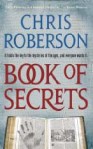
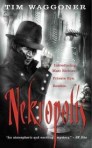
HarperCollins’ new spec fic imprint, Angry Robot, has released four books to launch itself, showing a wide scope. There’s Aussie Kaaron Warren’s Slights (which I’ve reviewed here previously), Chris Roberson’s Book of Secrets, Tim Waggoner’s Nekropolis and Lauren Beukes’ Moxyland.

moxyland book cover, by Lauren Beukes

Beukes, a South African, riffs off that country’s socio-political injustices with her near-future, Orwellian vision. The tale is told through the viewpoints of four characters, each giving an insight into different levels of that society: the rebels, the corporate ladder climbers, the celebrity blogger, and a dysfunctional artist caught up in the latest corporate skullduggery.
The story unfolds at a pedestrian pace and never really accelerates towards a climax, but the characters are effective and Beukes’ world is wonderfully drawn. The conclusion is gorgeous, for a cynic such as myself.
Unlike some others in the Angry Robot range, the text is delightfully clean of typos, perhaps thanks in part to Beukes’ background in journalism (ah, those heady days when sloppy work could be remedied by a whack to the back of the head with a Concise Oxford, or perhaps a tap with a Strunk & White).

book of secrets by chris roberson

Roberson, who I had the pleasure to meet at World Fantasy in San Jose and is a very cool guy, has delivered a story with many stories within it, a conspiracy tale involving a Biblical secret sought by nefarious, homicidal agencies. Into this is thrown a down-at-heel freelance journo with an unusual past — one that is proven to be even more unusual than he realises thanks to his own family mysteries.
This isn’t my kind of story at all, and its structure didn’t warm me to it. The pulp stories contained within the text didn’t need to be there (I’m sure others will love these homages), vying with interminable info dumps for causing the greatest urge to skim read, and the supernatural conclusion left me cold. As I said, not my kind of story, but I suspect those with an inclination towards The Da Vinci Code will find plenty here to entertain (and what a shame it is that that book has become the benchmark for this style of story).

Nekropolis by Tim Waggoner

Which leaves the most disappointing of the four, Nekropolis. A great idea is so quickly hamstrung by some clunky structure and an appallingly Hollywood ending reminiscent of the ugly denouement forced on Ridley Scott’s original Blade Runner. The protagonist is a former cop from Earth who has found himself turned into a zombie in a demon dimension. He has garnered a deep understanding of this bizarre world and its denizens, as well as forging a wide network of contacts of dubious moral worth. It’s a very cool world, filled with neat critters and a bunch of witches and vampires and shapechangers, all competing in a petty pissing contest for status. What wrecked the story for me were the logic potholes: an awful rewind moment regarding a set of lockpicks, a contradictory solution to an ensorcelled door, and a hugely underplayed and slightly farcical showdown with a nemesis. That the author signals that his major characters all survive undermines any suspense, and the aforementioned Blade Runner moment is the salt in the wound. It’s such a pity a little more care couldn’t have been taken, because the premise, and poor Matt the zombie cop, really have legs.