Food for thought: Ursula K Le Guin on the book and the reader, plus, the missing ingredient in the Hunger Games movie

Ursula K Le Guin offers this about the ‘death’ of the book:

There certainly is something sick about the book industry, but it seems closely related to the sickness affecting every industry that, under pressure from a corporate owner, dumps product standards and long-range planning in favor of ‘predictable’ sales and short-term profits

Uh-huh. In the Book View Cafe piece, she goes on to talk about the differentiation between books and reading, and the definition of books. Plenty to applaud.

  • And there’s this interesting thought about the structure of writing in the face of technology, specifically the amount of a Kindle book revealed in an Amazon sample. Leave’em on a cliff-hanger, seems to the be the idea. The potential for narrative convolutions is immense. I can’t help feeling that if you’ve read 10 per cent of a book and you still don’t know whether you want to read it or not, the book’s in trouble. But then, I like the slow burn; you don’t have to hook me with a big bang or a plot twist if your voice is on the money.
  • Yay: this analysis of the Hunger Games movie helps explain why I came away feeling I’d been served a snack instead of a meal. Seems there’s a whole layer of social snark that got discarded, as well as the fact that I might’ve misread who was playing games of the heart. All the more reason to read the book, methinks.
  • And in case you missed it: the long list of the Miles Franklin. Lots of memories of the war, family secrets, a little bit of inner city, a touch of paddock, some foreign climes, the way we were and what happens next. That’s all very well, but at this time of the week, I’m thinking Sean Williams in power armour* wins hands down!
  • * See this interview for the background to Sean’s powering up!

    Hachette joins the open season for manuscript submissions

    UPDATE: a list of major publishers accepting unagented submissions in on the website!

    Hachette Australia has joined the ranks of legacy publishers accepting unsolicited manuscripts. Unlike its contemporaries, it has not restricted when submissions can be sent, and promises a three-week response (or rejection by non-response) for fiction, non-fiction and children’s. They’ll look at the first chapter or 50 pages; non-fic needs a chapter breakdown. Sorry, poets: no joy for you.

    Others accepting submissions: Penguin’s Monthly Catch on the first week of each month; Pan Macmillan’s Manuscript Monday and its e-only arm Momentum’s Momentum Monday; and Allen & Unwin’s long-running Friday Pitch.

    Mieville and the bleak Arthur C Clarke finalists, and other writerly news

    embassytown by china mieville

    The finalists of the Arthur C Clarke award for best science fiction novel published in the UK last year include China Mieville for Embassytown, the fifth time he’s been nominated and what could be he his fourth win.

    The interesting comment from the chair of the judging panel, Andrew M Butler, quoted in the Guardian, for those worried about over-genrification:

    “It’s got something for everyone: alien contact, post-apocalyptic disaster, near future cyberpunkish police procedural,” he said, adding that the variety demonstrates the health of the SF scene. “It’s exciting because you can’t fit it in a box.”

    Others in the running are Charlie Stross, Booker longlisted Jane Rogers, Drew Magary, Sherri S Tepper and Greg Bear.

    Says Butler about the dystopian line-up,

    “We’re in a dark place at the moment and SF writers are responding to that. These are not books to turn to for escape – they’re not afraid to confront the dark side of life.”

    The award is announced in May.

  • Canberra’s Nicole Murphy, author of the Secret Ones, has launched an interesting project in which she mentors a writer to develop a 2,000-word spec fic story each month, publishes the finished story on the project’s website and, eventually, makes 12 available as an anthology. The chosen submission each month scores $100 and a cut of the anthology royalties.
  • Also taking submissions in April is UK publisher Angry Robot, who have an open door for classic fantasy and YA SF&F.
  • Stephanie Smith has stepped down from her role at HarperCollins Voyager, where as editor and publisher she has overseen the growth of Australia’s fantasy industry, Bookseller+Publisher reports. She’s quite the icon on the local scene and will be missed. Her replacement is respected editor Deonie Fiford, starting on April 2. OMG that’s Monday! Where has the year gone? Voyager’s farewell message is here.
  • The Gold Coast Literati event in May has announced its line-up, including spec fic authors Stephen M Irwin, Marianne de Pierres, Trent Jamieson, Louise Cusack, Kylie Chan and Rowena Cory Daniells, as well as talented comics creator Queenie Chan, crime writer Katherine Howell and many more. It looks like most of the bases have been covered, from YA to poetry to non-fiction. It’s held the same weekend as Melbourne’s Emerging Writers Festival kicks off. See the calendar for more literary events.
  • Aurealis Awards finalists announced

    The Aurealis Awards are the premiere award for Aussie speculative fiction. They will be awarded in Sydney on May 12 — tickets for the glam ceremony are on sale. Last year’s ceremony absolutely rocked, a wonderful coming together of all spectra of the spec fic community. Here are the finalists, announced tonight — congratulations all*:

    FANTASY NOVEL
    The Undivided by Jennifer Fallon (HarperVoyager)
    Ember and Ash by Pamela Freeman (Hachette)
    Stormlord’s Exile by Glenda Larke (HarperVoyager)
    Debris by Jo Anderton (Angry Robot)
    The Shattered City by Tansy Rayner Roberts (HarperVoyager)

    FANTASY SHORT STORY
    ‘Fruit of the Pipal Tree’ by Thoraiya Dyer (After the Rain, FableCroft Publishing)
    ‘The Proving of Smollett Standforth’ by Margo Lanagan (Ghosts by Gaslight, HarperVoyager)
    ‘Into the Clouds on High’ by Margo Lanagan (Yellowcake, Allen & Unwin)
    ‘Reading Coffee’ by Anthony Panegyres (Overland #204)
    ‘The Dark Night of Anton Weiss’ by DC White (More Scary Kisses, Ticonderoga Publications)

    SCIENCE FICTION NOVEL
    Machine Man by Max Barry (Scribe Publications)
    Children of Scarabaeus by Sara Creasy (HarperVoyager)
    The Waterboys by Peter Docker (Fremantle Press)
    Black Glass by Meg Mundell (Scribe Publications)
    The Courier’s New Bicycle by Kim Westwood (HarperVoyager)

    SCIENCE FICTION SHORT STORY
    ‘Flowers in the Shadow of the Garden’ by Joanne Anderton (Hope, Kayelle Press)
    ‘Desert Madonna’ by Robert Hood (Anywhere but Earth, Couer de Lion)
    ‘SIBO’ by Penelope Love (Anywhere but Earth, Couer de Lion)
    ‘Dead Low’ by Cat Sparks (Midnight Echo #6)
    ‘Rains of la Strange’ by Robert N Stephenson (Anywhere but Earth, Couer de Lion)

    HORROR NOVEL
    NO SHORTLIST OR WINNING NOVEL – TWO HONOURABLE MENTIONS AWARDED TO:
    The Broken Ones by Stephen M Irwin (Hachette)
    The Business of Death by Trent Jamieson (Hachette)

    HORROR SHORT STORY
    ‘And the Dead Shall Outnumber the Living’ by Deborah Biancotti (Ishtar, Gilgamesh Press)
    ‘The Past is a Bridge Best Left Burnt’ by Paul Haines (The Last Days of Kali Yuga, Brimstone Press)
    ‘The Short Go: a Future in Eight Seconds’ by Lisa L Hannett (Bluegrass Symphony, Ticonderoga Publications)
    ‘Mulberry Boys’ by Margo Lanagan (Blood and Other Cravings, Tor)
    ‘The Coffin Maker’s Daughter’ by Angela Slatter (A Book of Horrors, Quercus)

    YOUNG ADULT NOVEL
    Shift by Em Bailey (Hardie Grant Egmont)
    Secrets of Carrick: Tantony by Ananda Braxton-Smith (black dog books)
    The Shattering by Karen Healey (Allen & Unwin)
    Black Glass by Meg Mundell (Scribe Publications)
    Only Ever Always by Penni Russon (Allen & Unwin)

    YOUNG ADULT SHORT STORY
    ‘Nation of the Night’ by Sue Isle (Nightsiders, Twelfth Planet Press)
    ‘Finishing School’ by Kathleen Jennings (Steampunk! An anthology of fantastically rich and strange stories, Candlewick Press)
    ‘Seventy-Two Derwents’ by Cate Kennedy (The Wicked Wood – Tales from the Tower Volume 2, Allen and Unwin)
    ‘One Window’ by Martine Murray (The Wilful Eye: Tales from the Tower Volume 1, Allen and Unwin)
    ‘The Patrician’ by Tansy Rayner Roberts (Love and Romanpunk, Twelfth Planet Press)

    CHILDREN’S FICTION (told primarily through words)
    The Outcasts by John Flanagan (Random House Australia)
    The Paradise Trap by Catherine Jinks (Allen & Unwin)
    ‘It Began with a Tingle’ by Thalia Kalkapsakis (Headspinners, Allen & Unwin)
    The Coming of the Whirlpool by Andrew McGahan (Allen & Unwin)
    City of Lies by Lian Tanner (Allen & Unwin)

    CHILDREN’S FICTION (told primarily through pictures)
    The Ghost of Annabel Spoon by Aaron Blabey (author and illustrator) (Penguin/ Viking Books)
    Sounds Spooky by Christopher Cheng (author) and Sarah Davis (illustrator) (Random House Australia)
    The Last Viking by Norman Jorgensen (author) and James Foley (illustrator) (Fremantle Press)
    The Deep: Here be Dragons by Tom Taylor (author) and James Brouwer (illustrator) (Gestault Publishing)
    Vampyre by Margaret Wild (author) and Andrew Yeo (illustrator) (Walker Books)

    ILLUSTRATED BOOK/GRAPHIC NOVEL
    Hidden by Mirranda Burton (author and illustrator ) (Black Pepper)
    Torn by Andrew Constant (author) and Joh James (illustrator ), additional illustrators Nicola Scott, Emily Smith (Gestalt Publishing)
    Salsa Invertebraxa by Mozchops (author and illustrator) (Pecksniff Press)
    The Eldritch Kid: Whiskey and Hate by Christian Read (author) and Michael Maier (illustrator) (Gestalt Publishing)
    The Deep: Here be Dragons by Tom Taylor (author) and James Brouwer (illustrator) (Gestault Publishing)

    ANTHOLOGY
    Ghosts by Gaslight edited by Jack Dann and Nick Gevers (HarperVoyager)
    Year’s Best Australian Fantasy and Horror 2010 edited by Liz Grzyb and Talie Helene (Ticonderoga Publications)
    Ishtar edited by Amanda Pillar and KV Taylor (Gilgamesh Press)
    The Best Science Fiction and Fantasy of the Year Volume 5 edited by Jonathan Strahan (Night Shade Books)
    Life on Mars edited by Jonathan Strahan (Viking)

    COLLECTION
    Bad Power by Deborah Biancotti (Twelfth Planet Press)
    Last Days of Kali Yuga by Paul Haines (Brimstone Press)
    Bluegrass Symphony by Lisa L Hannett (Ticonderoga Publications)
    Nightsiders by Sue Isle (Twelfth Planet Press)
    Love and Romanpunk by Tansy Rayner Roberts (Twelfth Planet Press)

    * I was a judge in this year’s awards so no commentary from me, and nothing here should be seen as anything other than my personal opinion.

    Notions Unlimited opens, and other writerly news

    Yay for Chuck McKenzie who, after four years running a Dymocks shop, has gone it alone with Notions Unlimited spec fic book store at Melbourne’s bayside Chelsea. Ensconced between a coffee shop and a liquour outlet and with a sushi store right outside the door, he must be occupying some prime real estate. Add in an amazingly wide range of genre reading — a dedicated small press section, graphic novels, and all the F, SF and H you can point a stick at, whether big guns or more oscure or up-and-coming writers — and a seriously luxurious looking set of sofas, and he might be needed a bouncer to kick the customers out at closing time. It’s a tough time for bricks and mortar enterprises, but a niche store with a knowledgeable and welcoming owner is in with a chance. There’s nothing quite like that human element when it comes to, ‘if you bought this, you might also like…’

  • In what at times feels like a stampede to be published — by someone, anyone, even ourselves — it’s worth taking a breath and deciding just how much we value our written words and the time and effort (yes, it takes effort!) taken to tell that particular story. Check out these posts at Writer Beware, giving pause for thought about writing contests and dodgy publisher deals.
  • Ellen Datlow, much awarded and respected editor of all things grim and ghoulish, has a new Best Horror on the way — Aussie Margo Lanagan flies the flag in the TOC. Ellen’s listed her honourable mentions, and Antipodeans Alan Baxter, John Harwood, Terry Dowling and Kaaron Warren are included. Nice.
  • Ian Irvine is giving away an iPad3 as part of a Facebook promotion.
  • Salvage: words in the seawrack

    salvage by jason nahrung

    As part of the Wednesday Writers guest post series over at Ebon Shores, I’ve offered some background to the inspiration and development of the novella Salvage that Twelfth Planet Press is publishing this year. The story took four years to appear on the page — that’s about 10,000 words a year — and arrived in response to three years of rather bruising disappointment. Bottom line: keep swimming.

    Tales from the Bell Club opens it electronic doors

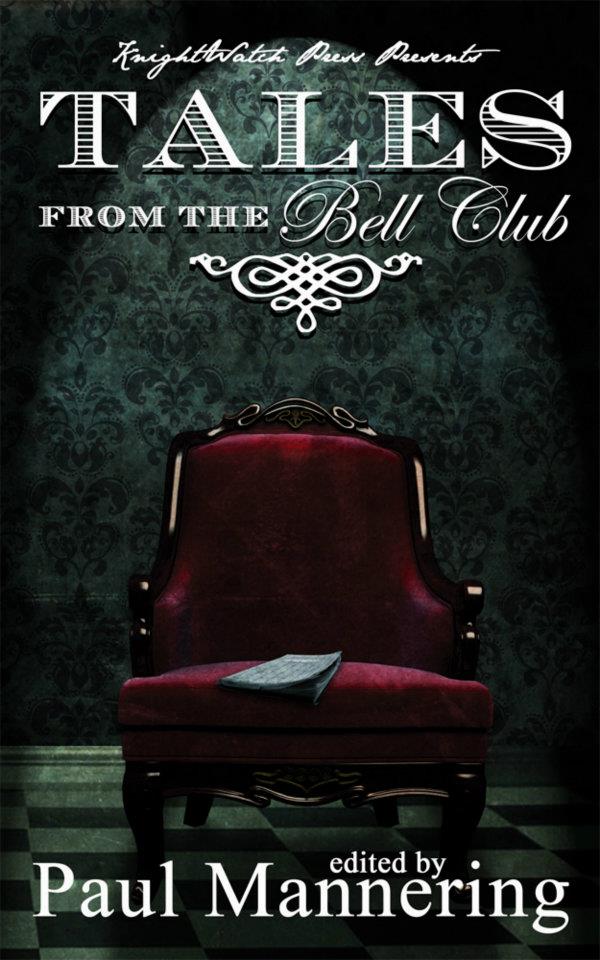
    tales from the bell club anthology

    Tales from the Bell Club, an anthology of ghastly and gloomy fiction set around the turn of the 20th century and edited by Paul Mannering, is now available as an Amazon download. A print version is to follow. I’ve mentioned the table of contents and the process behind my story ‘The Kiss’ previously. If you’re curious, the yarn is actually readable in its entirety as part of the Amazon book sample. Please enjoy.

    UPDATE: Print edition is now available right here right now, and will be available from Amazon (US$14.99).

    Writerly news

    Catching up after time away and largely off-line at Adelaide Writers Week, and there’s good news:

    when we have wings by claire corbettBarbara Jefferis Award shortlist: Claire Corbett’s SF novel When We Have Wings (which I am STILL to read, damnit) is on the shortlist of the Barbara Jefferis Award. Sean the Bookonaut, who I met for the first time in Adelaide, recently interviewed Claire: listen here.

    Mythic Resonance: editor Stephen Thompson — how long has it been since he compiled the Vision writers group’s Glimpses anthology? — has a new anthology, Mythic Resonance, which, as the name suggests, riffs off myths. Excerpts are available at the Specusphere.

    Thirteen O’Clock: a new aggregator of dark fiction news has hit the interwebs. The blog also posted an excellent piece on the difference between horror and dark fantasy recently.

    Narrelle Harris reveals Showtime: The Melbourne author of The Opposite of Life is the latest in Twelfth Planet Press’s Twelve Planets series, offering ghosts, vampires and zombies in a four-story collection that includes an appearance of some old friends.

    Aurealis #48 in the ether: Aurealis #48, with stories by Rick Kennett and Greg Mellor, is available from Smashwords.

    Ticonderoga living large in 2013: the WA press already has an exciting schedule for 2013, including several collections by both veteran and tyro writers and the continuing Year’s Best Fantasy and Horror.

    And Chris Meade on Queensland’s writing future: the if:book pioneer reflects on his experience in Queensland and considers how my home state might leverage itself in the global literary landscape with ‘big sky writing‘. It’s also worth checking out if:book Australia’s 24 Hour Book Project for a hands-on view of how technology is changing the publishing industry.

    Up a tree, with vampires

    kathleen jennings illo of Jason Nahrung up a tree

    A belated note to acknowledge that the wonderful Dr Brains have picked my grey matter for ruminations on things writerly and vampiric over at their Lair — if the wonderful Kathleen Jennings illo is anything to judge by, I’ve truly gone out on a limb! (Because the Brains, aka Angela Slatter and Lisa Hannett both host — a kind of left and right brain thing, perhaps — I’m linking to them both!)

    For those who haven’t seen the blog that this illo riffs off, Goths Up Trees is not only photographically interesting but comes with the kind of endearing snark one would expect — great fun.

    AWWNYRC#5: Burn Bright, indeed!

    This is the fifth book I’m reading as part of my list of 10 for the Australian Women Writers 2012 National Year of Reading Challenge.

    Burn Bright

    by Marianne de Pierres
    Random House, 2011, ISBN: 978 1 86471 988 8

    burn bright by marianne de pierres

    THERE’S a lot to enjoy in Burn Bright, the first of a YA dystopian series by Marianne de Pierres. Mdp has scored avid followings with her previous series — the cyberpunk dystopia of Parrish Plessis, the sprawling space opera of Sentients of Orion and her Tara Sharp crime series — and this has tapped the fanatical YA market with even more gusto: a soundtrack song, online campaigns … whoa.

    It’s no surprise, as MdP knows how to put a story together, and this one comes in some truly cool trappings: a nocturnal, youthful party world watched over by vampire-like sentinels, and lots of secrets in the dark. Her heroine, Retra, has quite the journey too, right down to a name change, though by story’s end, one wonders if Naif is really so accurate. Clearly, she’s still got some learning to do, but she’s well on her way to adulthood. Yes, this book packs some powerful metaphors.

    This first volume introduces Inoxia, a hilly realm of constant night in which the pursuit of pleasure is paramount for its young population who are runaways from other surrounding realms of various fantastic, and not so fantastic, proportions. In one, a hunter-gatherer society can trap bat-like creatures for mounts. In Retra’s, it’s Puritanism 101, right down to child abuse dressed up as moral policing.

    Inoxia is a fantasy land, reached through a kind of vortex beset by pirates. If this sounds a little like Alice sliding down a rabbit hole, it’s a far updated version, and the lost boys and girls don’t so much stay young, as disappear once they reach a certain point in their early 20s. While the pirates are the nemesis of the land, the faires are also fearsome. Called Ripers, the vampire-like overlords police the young party animals, dolling out drugs, food and clothing as required. Of course there is no free lunch, and Retra discovers the true dark side of Inoxia’s society. Freedom, or at least escape, comes at a price.

    australian women writers challenge 2012Mdp has created a distinctive and believable world and her character work is a delight as Retra, through a transformative experience key to adolescent maturity, grows into a new individual. While the second half suffers from annoying, but perhaps unavoidable repetition of recent events, it charges towards its climax and the jumping off point – a new bright day – for book 2.

    With Burn Bright, we’ve been given a strong starting point and an enticing look into a world where colonisation has taken some bizarre avenues. Quite the delight.


    Previous Challenge reviews:

  • The Courier’s New Bicycle, by Kim Westwood, fantasy.
  • The Road, by Catherine Jinks, horror
  • The Shattered City, by Tansy Rayner Roberts, fantasy.
  • Frantic, by Katherine Howell, crime.