Food for thought: Ursula K Le Guin on the book and the reader, plus, the missing ingredient in the Hunger Games movie

Ursula K Le Guin offers this about the ‘death’ of the book:

There certainly is something sick about the book industry, but it seems closely related to the sickness affecting every industry that, under pressure from a corporate owner, dumps product standards and long-range planning in favor of ‘predictable’ sales and short-term profits

Uh-huh. In the Book View Cafe piece, she goes on to talk about the differentiation between books and reading, and the definition of books. Plenty to applaud.

  • And there’s this interesting thought about the structure of writing in the face of technology, specifically the amount of a Kindle book revealed in an Amazon sample. Leave’em on a cliff-hanger, seems to the be the idea. The potential for narrative convolutions is immense. I can’t help feeling that if you’ve read 10 per cent of a book and you still don’t know whether you want to read it or not, the book’s in trouble. But then, I like the slow burn; you don’t have to hook me with a big bang or a plot twist if your voice is on the money.
  • Yay: this analysis of the Hunger Games movie helps explain why I came away feeling I’d been served a snack instead of a meal. Seems there’s a whole layer of social snark that got discarded, as well as the fact that I might’ve misread who was playing games of the heart. All the more reason to read the book, methinks.
  • And in case you missed it: the long list of the Miles Franklin. Lots of memories of the war, family secrets, a little bit of inner city, a touch of paddock, some foreign climes, the way we were and what happens next. That’s all very well, but at this time of the week, I’m thinking Sean Williams in power armour* wins hands down!
  • * See this interview for the background to Sean’s powering up!

    Hachette joins the open season for manuscript submissions

    UPDATE: a list of major publishers accepting unagented submissions in on the website!

    Hachette Australia has joined the ranks of legacy publishers accepting unsolicited manuscripts. Unlike its contemporaries, it has not restricted when submissions can be sent, and promises a three-week response (or rejection by non-response) for fiction, non-fiction and children’s. They’ll look at the first chapter or 50 pages; non-fic needs a chapter breakdown. Sorry, poets: no joy for you.

    Others accepting submissions: Penguin’s Monthly Catch on the first week of each month; Pan Macmillan’s Manuscript Monday and its e-only arm Momentum’s Momentum Monday; and Allen & Unwin’s long-running Friday Pitch.

    Mieville and the bleak Arthur C Clarke finalists, and other writerly news

    embassytown by china mieville

    The finalists of the Arthur C Clarke award for best science fiction novel published in the UK last year include China Mieville for Embassytown, the fifth time he’s been nominated and what could be he his fourth win.

    The interesting comment from the chair of the judging panel, Andrew M Butler, quoted in the Guardian, for those worried about over-genrification:

    “It’s got something for everyone: alien contact, post-apocalyptic disaster, near future cyberpunkish police procedural,” he said, adding that the variety demonstrates the health of the SF scene. “It’s exciting because you can’t fit it in a box.”

    Others in the running are Charlie Stross, Booker longlisted Jane Rogers, Drew Magary, Sherri S Tepper and Greg Bear.

    Says Butler about the dystopian line-up,

    “We’re in a dark place at the moment and SF writers are responding to that. These are not books to turn to for escape – they’re not afraid to confront the dark side of life.”

    The award is announced in May.

  • Canberra’s Nicole Murphy, author of the Secret Ones, has launched an interesting project in which she mentors a writer to develop a 2,000-word spec fic story each month, publishes the finished story on the project’s website and, eventually, makes 12 available as an anthology. The chosen submission each month scores $100 and a cut of the anthology royalties.
  • Also taking submissions in April is UK publisher Angry Robot, who have an open door for classic fantasy and YA SF&F.
  • Stephanie Smith has stepped down from her role at HarperCollins Voyager, where as editor and publisher she has overseen the growth of Australia’s fantasy industry, Bookseller+Publisher reports. She’s quite the icon on the local scene and will be missed. Her replacement is respected editor Deonie Fiford, starting on April 2. OMG that’s Monday! Where has the year gone? Voyager’s farewell message is here.
  • The Gold Coast Literati event in May has announced its line-up, including spec fic authors Stephen M Irwin, Marianne de Pierres, Trent Jamieson, Louise Cusack, Kylie Chan and Rowena Cory Daniells, as well as talented comics creator Queenie Chan, crime writer Katherine Howell and many more. It looks like most of the bases have been covered, from YA to poetry to non-fiction. It’s held the same weekend as Melbourne’s Emerging Writers Festival kicks off. See the calendar for more literary events.
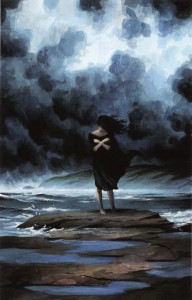
  • Salvage: words in the seawrack

    salvage by jason nahrung

    As part of the Wednesday Writers guest post series over at Ebon Shores, I’ve offered some background to the inspiration and development of the novella Salvage that Twelfth Planet Press is publishing this year. The story took four years to appear on the page — that’s about 10,000 words a year — and arrived in response to three years of rather bruising disappointment. Bottom line: keep swimming.

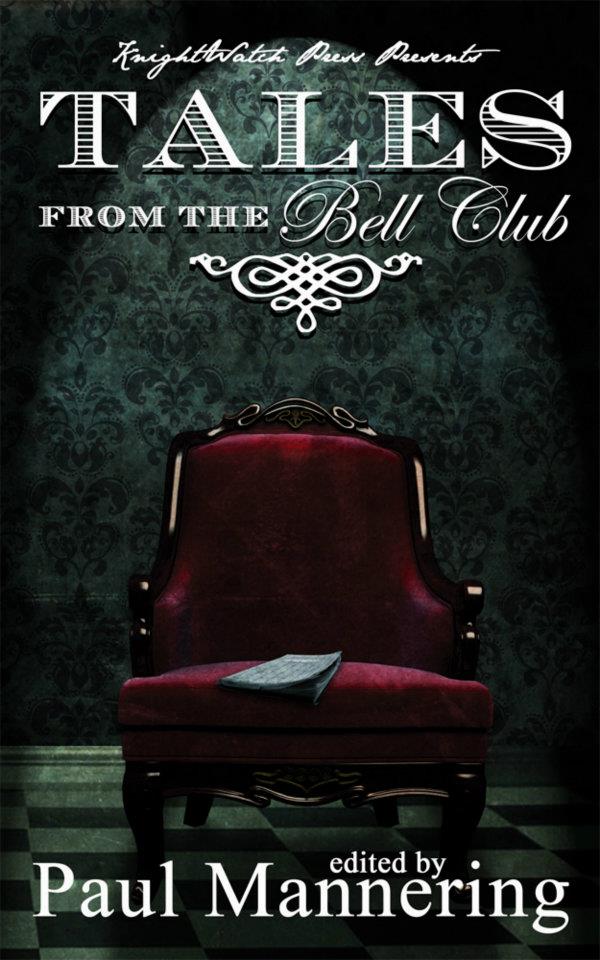
    Tales from the Bell Club opens it electronic doors

    tales from the bell club anthology

    Tales from the Bell Club, an anthology of ghastly and gloomy fiction set around the turn of the 20th century and edited by Paul Mannering, is now available as an Amazon download. A print version is to follow. I’ve mentioned the table of contents and the process behind my story ‘The Kiss’ previously. If you’re curious, the yarn is actually readable in its entirety as part of the Amazon book sample. Please enjoy.

    UPDATE: Print edition is now available right here right now, and will be available from Amazon (US$14.99).

    Observations from Adelaide Writers Week

    adelaide writers week

    The Adelaide Writers Week, parcelled within the Adelaide Festival (and how the city’s hotels must have been gleeful), last week was much fun, mainly because it provided a wonderful opportunity to catch up with good friends from four states.

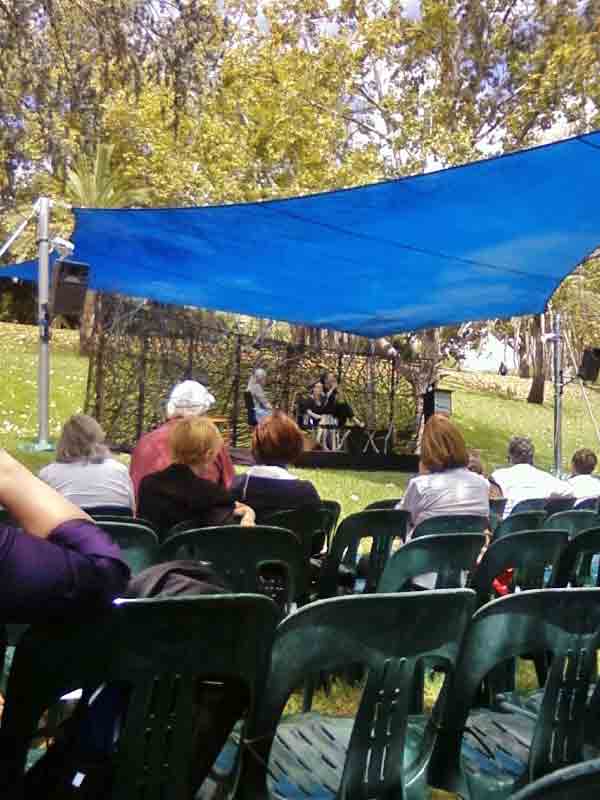
    The festival set-up promoted conviviality. It was centred on two marquees in a park in a relatively quiet area of the city: jet flypasts for the Clipsal street race added some aerial interest and background noise occasionally during the opening weekend, and presumably the Fringe festival’s open-air gigs up the hill were the source of occasional summer beats laying down a groove in the background, but generally speaking, sirens notwithstanding, quiet.

    With only two streams of programming, skiving off to see people didn’t require a great sacrifice of panels, and a book store tent close at hand and plenty of shady trees outside the (somewhat expensive — kranski sausage in a slice of bread, $8) refreshments tent made chilling out with those people quite easy. Plus the city’s cafes were only a short walk up the hill, so finding affordable lunches and snacks and after-festival dinners was very easy indeed.

    Social pictures by Cat Sparks

    The weather was kind, overcast and relatively cool in the main, only on the last two days really beaming down some sunshine to give a hint of how languorous and sweaty it might’ve been. With the greenery and the marquees and the heat, it reminded me a lot of early Brisbane Writers Festivals down on the river at South Bank, before it went corporate.

    The panels at Adelaide were diverse but weighted towards the literary. US noir writer Megan Abbott was a find. Boori Monty Pryor was engaging and fun with a very real message. Garry Disher was sharp. Jenny Erpenbeck gave an East Berliner’s view of life in reunited Germany, as told through the medium of a summer house from her childhood. A chance meeting with Favel Parrett at the airport revealed she was also a Sisters of Mercy fan. Margo Lanagan and Kelly Link were delightful, flying the fantasy flag. There was also a touch of SF with Ian Mond and Rob Shearman providing a commentary to Rob’s episode of Dr Who, one of the few paid events at AWW and quite fun; we missed Garth Nix’s appearance on the last day, but an earlier encounter revealed a forthcoming (Australia: next month!) YA space opera title, A Confusion of Princes, that sounds truly awesome.

    adelaide writers week megan abbott interview

    Megan Abbot (centre) discussion with Susanna Moore, with Auslan interpreter in background.

    One of the things that struck me was the impact to be had of reading out a section of one’s work. This isn’t something that necessarily fits well in the format of genre conventions, where panels address topics with the authors treated as learned sources. But at Adelaide, where the focus was very much on the authors and their latest work, reading a small passage to illuminate a point did fit, and more than once hearing the authors’ words from the page cast their work in a totally different, and more alluring, light. Case in point was the personable Michael Crummey, whose Galore hadn’t been given much of a talking up, really, until he read the opening pars, in which a man is pulled from the belly of a whale on a Newfoundland beach. We now have a copy sitting on the to-be-read pile.

    Listening to Lanagan and Crummey talk to each other, without a moderator, was a highlight of the festival: two interested and interesting authors, who had read each other’s work, who had established a rapport before the panel, exploring the themes and methods each employed.

    The welcome party on the Sunday night also revealed the emphasis carried by social media, with festival director Laura Kroetsch commenting that the event had been ‘trending’ on Twitter, and the hashtag being part of the housekeeping before every panel.

    The panels ensured time for audience questions, but the use of a single, central microphone hampered accessibility for those unwilling to scramble across their fellow audience members.

    AWW was largely free, totally relaxed and extremely welcoming, with a little bit of most things to cater to all tastes. With the right couple of drawcards on the guest list and the promise of good friends on the ground, AWW will be an attractive addition to our annual event list.

    Writerly news

    Catching up after time away and largely off-line at Adelaide Writers Week, and there’s good news:

    when we have wings by claire corbettBarbara Jefferis Award shortlist: Claire Corbett’s SF novel When We Have Wings (which I am STILL to read, damnit) is on the shortlist of the Barbara Jefferis Award. Sean the Bookonaut, who I met for the first time in Adelaide, recently interviewed Claire: listen here.

    Mythic Resonance: editor Stephen Thompson — how long has it been since he compiled the Vision writers group’s Glimpses anthology? — has a new anthology, Mythic Resonance, which, as the name suggests, riffs off myths. Excerpts are available at the Specusphere.

    Thirteen O’Clock: a new aggregator of dark fiction news has hit the interwebs. The blog also posted an excellent piece on the difference between horror and dark fantasy recently.

    Narrelle Harris reveals Showtime: The Melbourne author of The Opposite of Life is the latest in Twelfth Planet Press’s Twelve Planets series, offering ghosts, vampires and zombies in a four-story collection that includes an appearance of some old friends.

    Aurealis #48 in the ether: Aurealis #48, with stories by Rick Kennett and Greg Mellor, is available from Smashwords.

    Ticonderoga living large in 2013: the WA press already has an exciting schedule for 2013, including several collections by both veteran and tyro writers and the continuing Year’s Best Fantasy and Horror.

    And Chris Meade on Queensland’s writing future: the if:book pioneer reflects on his experience in Queensland and considers how my home state might leverage itself in the global literary landscape with ‘big sky writing‘. It’s also worth checking out if:book Australia’s 24 Hour Book Project for a hands-on view of how technology is changing the publishing industry.

    Up a tree, with vampires

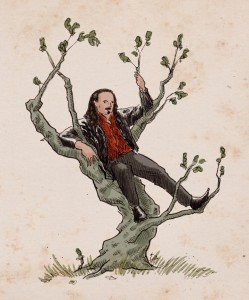
    kathleen jennings illo of Jason Nahrung up a tree

    A belated note to acknowledge that the wonderful Dr Brains have picked my grey matter for ruminations on things writerly and vampiric over at their Lair — if the wonderful Kathleen Jennings illo is anything to judge by, I’ve truly gone out on a limb! (Because the Brains, aka Angela Slatter and Lisa Hannett both host — a kind of left and right brain thing, perhaps — I’m linking to them both!)

    For those who haven’t seen the blog that this illo riffs off, Goths Up Trees is not only photographically interesting but comes with the kind of endearing snark one would expect — great fun.

    Vale Paul Haines

    On Monday, I was sitting in the dappled shade of a park enjoying a lovely late-morning chat at Adelaide Writers Festival with some of my fellows. And then the phones beeped and vibrated, and the word arrived that Paul Haines had died.

    Around us, the bon homie continued, and I found myself asking how it could. Where was the silence? The announcement? The respect?

    How could the audience — an audience of writers and readers and publishers — not be shaken by this news? Not be struck mute and sombre as were we?

    There was no such silence on the internet, which has been carrying tributes on Facebook and Twitter and on blogs, showing just how much impact Paul had in his too-short career. His too-short life.

    I knew Paul as a writer of wonderful and daring and confronting fiction. Fearless in fiction, fearless in life. His documentation of his long and brutal fight with cancer, the hopes and the setbacks and the sorrows for the wife and daughter and family to be left behind, have touched hearts and minds well outside the speculative fiction community who proudly claimed him as one of ours. His writing career was just taking off, suggesting the delivery of the wonderful promise that anyone who’s read his short fiction would recognise.

    I’m glad I got to know him, however briefly. I’ve drawn strength from his honest, challenging prose and warmth from his company, and I will miss him and lament the stories he might’ve given us. I feel terrible for his family, to have lost such a personality, such a person.

    One of my favourite moments: reading his story ‘Doof Doof Doof’ at work and bursting out laughing, chuckling all the way through. I’ll always thank him for that.

    The Thirteen O’Clock blog has posted a wonderfully detailed overview of Paul’s work. There is some small comfort in having that legacy. But there are times when this life and death thing seems far too cruel for words.

    There’s a memorial service on Saturday and I expect it will be crowded. We will try to remember the good stuff, the Doof Doof Doof, and try not to rail too much at this wolf that is cancer, that has ripped yet another chunk out of our light.

    On time and technique, with Nicole Murphy

    Canberra’s Nicole Murphy (The Secret Ones) had me over at her blog recently to gab (in two parts) about the technical stuff — how to organise a writing schedule, look after health and get stuck into the words. It’s always fun, though perhaps also confronting, answering questions such as Nicole’s, because it makes you check the balance between intentions and practice. Note to self: must get act together and get nose to writing grindstone.