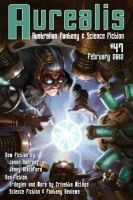
It’s also worth noting that Aurealis is once again open to submissions. It publishes 10 issues a year in the newly adopted digital format.

It’s also worth noting that Aurealis is once again open to submissions. It publishes 10 issues a year in the newly adopted digital format.
Congratulations to the Aussies who have crossed the sea to make the final ballot for the Bram Stoker horror awards (five I’m aware of made the long list):
Kaaron Warren for her short story ‘All You Do Is Breathe’ in Blood and Other Cravings.
Jack Dann as editor (with Nick Gevers) for Ghosts by Gaslight.
Rocky Wood for his non-fiction Stephen King: A Literary Companion. Note that Rocky’s Stephen King: Uncollected, Unpublished
has been updated with a Q&A from the King himself, with profits to go Rocky’s ALS Fund. Available as pre-order only from Overlook Connection Press.
This is the fourth book I’m reading as part of my list of 10 for the Australian Women Writers 2012 National Year of Reading Challenge
By Kim Westwood
HarperVoyager, 2011, ISBN: 978 0 7322 8988 1

Our journey into this well-rendered terrain is through the eyes of Salisbury Forth, a bicycle courier whose life has been characterised by a fight for acceptance of her transgender status. She identifies as androgynous, meaning even her family shun her. Sal (the story is told in first person, so eliminating annoying pronoun conflicts) found a measure of freedom inside the underground community of the inner city, ‘pedalling’ hormone and liberating factory animals; it’s only a matter of time, of course, till the wheels come off.
Intrigue on an almost cyberpunk level ensues as bad drugs are sold, corporate interests clash, desires stoke the belief that the ends justify the means.
Issues of sexuality and identity, and the prejudice levelled against the perceived ‘other’ by the ‘moral majority’, are key issues, and Westwood puts us firmly in the saddle.
The story is narratively more straightforward and the prose more accessible than in her previous, debut title, The Daughters of Moab, a post-apocayptic Australian tale which likewise evoked a most believable world.
 It’s refreshing that in CNB there are no action heroes; while the world dips into science fiction concepts rooted firmly in the here and now – glow-in-the-dark pets, anyone? say no to battery farming? – the characters are uniformly of the average human variety. They get tired, they make mistakes, they hurt.
There were two minor speed bumps in my reading of the novel, and both probably reflect more on my reading habits than Westwood’s skill and style.
the first was a preponderance of info dumps filling in details about the back story, particularly early on as the stage was being set. There’s a certain level that fits the noir tradition that this story draws on so well, but there’s also a limit to just how much is needed at any one time without interfering with the story, or indeed, interrupting conversations.
The second, equally minor, annoyance was the Salisbury ‘voice’. For a young person who left home at 16, has limited formal education and lives an unsettled life, Sal’s vocabulary is extraordinarily wide and her knowledge of art likewise remarkable. Unfairly assumptive and prejudicial? Perhaps.
These quibbles can’t diminish the impact of Westwood’s world and the gender and social issues she explores. Atmospheric, considered, with likeable characters in a fascinating world: bravo.
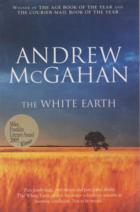
Queensland’s book is The White Earth, by Andrew McGahan, and it’s a cracker story. It riffs off the Mabo land rights decision and the incredible fear and uncertainty in rural Australia about the right to continue to live on and work land that had, in some instances, been in the same family for several generations. A lot of terra nullius talk, a lot of right wing clap trap, some very real concerns.
McGahan draws on his childhood in setting the piece on the Darling Downs, where a young boy and his widowed mother come to live on their grandfather’s property, there to see the politics of the era played out and to uncover some unsettling family truths harking back to the days of white occupation and settlement.
The other finalists in the Queensland selection were:
This is the third book I’m reading as part of my list of 10 for the Australian Women Writers 2012 National Year of Reading Challenge.
by Catherine Jinks
Allen & Unwin, 2004, ISBN: 1 74114 356 X

The story begins with a woman and her infant son hiding from her abusive partner on a rural property. He finds them, bad things happen, and then the weirdness kicks in.
Out on the bitumen, car after car of disparate travellers — holiday makers, a truckie, locals going about their business — are caught up in the loop, driving without getting anywhere outside a certain radius.
It takes a while for this large cast to be assembled, primarily because each group gets its own point of view. We find out who they are, what has brought them to be driving this stretch of highway, what they hope to find at their destination. The characters are wonderfully drawn, but the back stories become tedious, a way of trying to provoke some care for the fate of each increasingly desperate set of travellers, but ultimately operating more like speed bumps or cattle grids, forcing the story to slow right down while the latest piece is introduced to the board. Few of the pieces have much to do; their back stories generally tend to be of negligible connection to their plight or the situation’s resolution.
There are two characters who provide some continuity, thankfully, but this is a far cry from the incredible tension to be found in the work of another master of this kind of ensemble story, Stephen King. Perhaps because the situation the stranded travellers find themselves in never manifests a deeper message — ordinary people behave ordinarily — or because the characters have only the vague sense of the danger they’re in. The reader knows, which is where the suspense comes from as the story picks up its pace.
Having said that, however, the story is, once it gets out of low range somewhere around the halfway mark, most enjoyable, primarily for its use of landscape. There are some wonderfully descriptive scenes of nature gone awry; provoked, it seems, into being an agent of justice. And Jinks’ prose is a delight.
This is one of those yarns where patience is rewarded — where the destination is actually more rewarding than the journey.
Previous Challenge reviews:
Looking back at last night’s opening performance of the four-night run at Melbourne’s Rod Laver Arena of The Wall, the stadium spectacular led by Pink Floyd great Roger Waters: what a triumph for staging.
Drawing heavily from both previous Floyd gigs and the movie of The Wall, there’s an aeroplane and an inflatable pig, giant marionettes, fireworks and gunfire; a performance stage that extrudes from the main stage and a living room that extends from a wall. There’s the trademark Pink Floyd circular screen above the stage, though the high tiers probably didn’t see much of it past the massive speaker stacks suspended from the ceiling. Fortunately, it was only really in play during the first half. And of course, there’s the wall itself: an extremely clever edifice stretching the width of the arena, constructed to full height — between 20 and 30 feet, I’d guess — during the first half, and then forming a backdrop during the second, until its eventual demise — almost an anticlimax, coming quite suddenly, as it does on the album, at the end of The Trial.
The wall, in all its stages of construction, acts as a massive screen for various film clips — some from the movie The Wall, most successfully perhaps the marching hammers — and effects, even a projection of various walls on the wall. A subway train is brilliantly detailed.
For ‘Hey You’, the opening song of the first half, there is only the wall: a gutsy bit of performance to have an entire song sung with no one on stage and fairly minimalist projections as well.
For ‘Comfortably Numb’, a real crowd favourite, Waters is alone in front of the wall, with a second singer doing some of the heavy vocal lifting from the top; he doesn’t have a hell of a lot to do, Roger, standing out from his black-suited compatriots due to his white trainers for the duration of that tune. He came across as a man in need of a guitar. Which he gets, on and off, and very nice it is, too.
It really is a hell of a production, but the politics are a little dodgy. Trying to update the work, essentially a nightmarish autobiography about a wretched childhood, a dead solider father and the high cost of fame, into a plea for world peace feels like a stretch at times. Still, great art work; massive heart. ‘Bring the Boys Back Home’, indeed, but let’s not oversimplify here. There was at least one casualty of 9/11 on the memorial wall screened during intermission; the solutions aren’t as simple as we might like.
Still, I love the way that religions, warmongers and multicorporates are lumped into the same basket of Bad (a real game of pick your fascist!), although given I’ve just paid a hundred bucks to see it, there might be a degree of irony going begging there as Shell, Mercedes and McDonalds logos rain down amid dollar signs like 1000-pound bombs from hoopy Stratofortresses.
Highlights? Well, the album brims with them, but seeing the school kids on stage wagging their fingers at the giant school master is pretty cool; ‘Run Like Hell’ lifts the pace wonderfully. The sound is superb and the band and backing singers first-rate. Definitely worth a gander if you’re lacking a little rock opera in your diet. Hell, you might even leave with a sudden urge to donate to a famine-relief charity or buy a poppy on Anzac Day. Assuming you don’t already.
No support act, two halves of about an hour each, plus 20-minute intermission.
Meanwhile, here’s one of my favourite songs from the album, ‘Comfortably Numb’, and a spine-tingling moment of reconciliation when Dave Gilmour joined Waters in London to play it. Tear down the wall!

Word is spreading of a sad loss in the speculative fiction community, that of British Writer Samuel Youd, on February 3, only two months shy of his 90th birthday. <Update: Locus has confirmed Youd’s passsing.>
As John Christopher, Youd provided two of the great texts of my childhood, both of which have survived the recent pogroms of excess literature cluttering the household shelves: The Tripods and The Sword of the Spirits trilogies. Tripods in particular made a strong impression.
This is barely scratching the surface of his output published under numerous pseudonyms.
He ranked up there with the likes of Garner, Cooper and Le Guin in my early reading. I hope more generations come to appreciate his legacy.
Update: the Guardian looks at Youd’s work and provides a short obituary and a longer one.
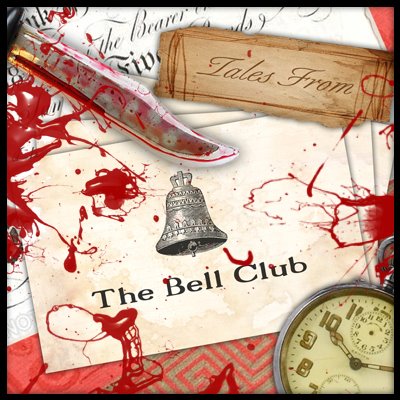
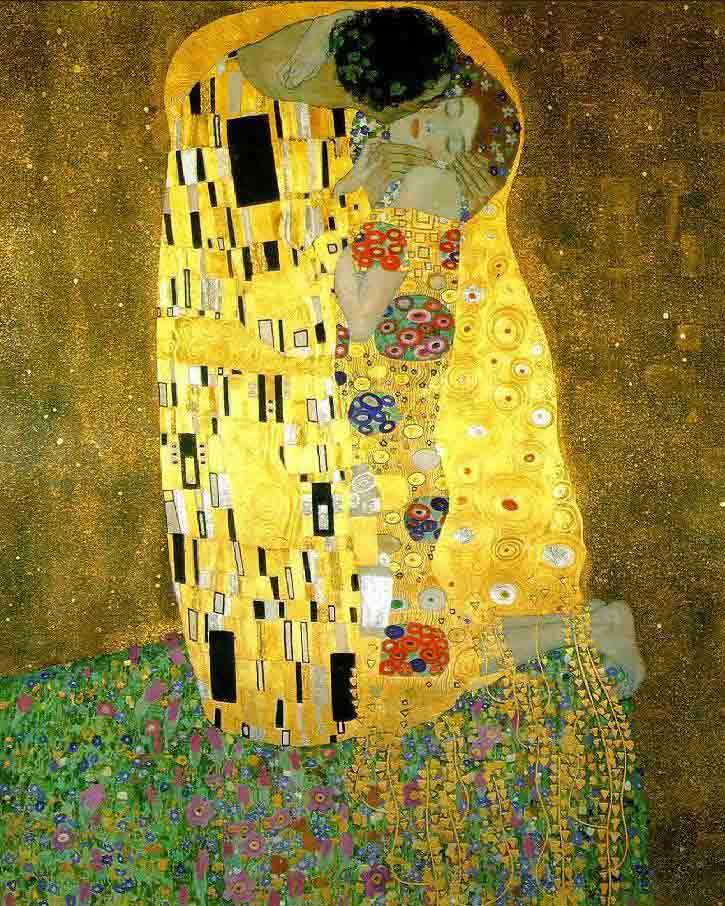
It was one of those yarns that popped up out of the ether, a happy collision between a visit to the gallery to see an exhibition about the Secessionist painters of early 20th century Vienna and the announcement of the anthology. In particular, a painting of Count Verona by Oskar Kokoschka and the unavoidable if enigmatic presence of Emilie Floge. It took a while to get this one to come together; I was dreading trying to reconfigure it if it missed the mark for the Bell Club. I realise now that, with last year’s riff on the disappearance of Harold Holt, I’ve definitely joined the ranks of alternative history; bless you, Emilie Floge, and your crazy band of artists! It will be interesting to see who else is rubbing shoulders in the Bell Club halls…

Emilie Floge

Count Verona, 1910
The TOC:
The Adventure of the Laboratory – Kathleen Brandt
Tell Tom Tildrum – Edward M. Erdelac
The Quarrantine Station – Lee Zumpe
A Gentleman’s Folly – Phil Hickes
The Kiss – Jason Nahrung
Divine Providence – Robert J. Santa
The Widow Dotridge – Jason D. Moore
Spawn Of The Crocodile God – John McNee
Life and Limb – Andrew Freudenberg
The Girl In The Cabin – Richard Barnes
The Wager – Jeff C. Carter
Sayuri’s Revenge – Helen Stubbs
Fluke (originally: untitled) – Lynne Jamneck
The Shrieking Woman – Doug Manllen
A few Australian writers appear on Locus magazine’s list of recommended reading from 2011 — novels by Kaaron Warren, Alison Goodman, Jo Anderton, Scott Westerfeld (who straddles the Pacific divide); collections from Margo Lanagan, Tansy Rayner Roberts and Lucy Sussex; anthologies edited or co-edited by Jack Dann and four (!) by Jonathan Strahan; novelettes by Peter M Ball, Isobelle Carmody and Margo Lanagan; and short stories by Peter M Ball, Damien Broderick, Terry Dowling, Thoraiya Dyer, Margo Lanagan, Chris Lawson, Tansy Rayner Roberts and Kaaron Warren.
Apologies for anyone I’ve missed through oversight or ignorance.
This is the second book I’m reading as part of my list of 10 for the Australian Women Writers 2012 National Year of Reading Challenge.
Book 2 of the Creature Court trilogy
by Tansy Rayner Roberts
Harper Voyager, 2011, ISBN: 9 780 7322 8944 7

It’s a complex world, with Italian Renaissance overtones, and both the workings of the magical world and its relationship with the physical are explored further in The Shattered City. Velody grows into her role on the great chess board, introducing a new regime of polite behaviour — of community — into the fractious, scheming Court, while her fellow seamstresses — Rhian, all but neglected for much of this story, and fiery Delphine — also find their place in the new world order.
The actual story that drives this book — an assassin in the ranks and the sense that the city faces its most deadly threat yet — takes a while to get going, but there’s no time for slacking off. There are so many points of view, often thrown altogether within each chapter, and some make only one or few appearances: it’s easy to lose track of just whose head you’re in.
It’s a strength that the immediate story arcs of books 1 and 2 are both resolved between their covers, while the larger story stretches across them. As with the first, the second delivers some delicious moments, beautifully dressed and dead sexy, and what a relief it is to finally have the plot point that kicked the whole thing off finally out in the open. Rayner Roberts is wise to not present it as a surprise, but use it as leverage for a greater goal. The Creature Court series offers a layered, detailed, credible world, peopled with a cast of complex, motivated individuals. How fortunate that, given the impending showdown foreshadowed here, that book 3, Reign of Beasts, is out now!
This review has also been posted at Australian Speculative Fiction in Focus, who made the review copy available.
Previous Challenge reviews: