
Snapshot 2012: Ian Irvine

australian speculative fiction snapshot 2012 logoIAN Irvine, a marine scientist who has developed some of Australia’s national guidelines for protection of the marine environment and continues to work in this field, has written 28 novels. These include the internationally bestselling Three Worlds fantasy sequence (The View from the Mirror, The Well of Echoes and Song of the Tears), which has sold over a million copies, a trilogy of thrillers set in a world undergoing catastrophic climate change, Human Rites, and 12 books for younger readers, the most recent being the humorous fantasy quartet, Grim and Grimmer.

Ian’s latest fantasy novel is Vengeance, Book 1 of The Tainted Realm trilogy. He’s currently doing the final edits of the second book, Rebellion, which will be published in Australia in October 2012, and the US and UK in early 2013.

Keep up with Ian at his website www.ian-irvine.com and on Facebook.

Your eco-thrillers have been recently re-released: how has the market for such stories changed since they were first published?
I don’t know that it has, actually. As far as I can tell, the market for eco-thrillers has never been a huge one. Even at times when the public had a high level of concern about environmental issues, and has been flocking to eco-disaster movies such as The Day After Tomorrow, I’m told that sales of eco-thriller books have generally been modest. I’m not sure why – perhaps it’s a bit close to home.


Your latest novel is called Vengeance. What topics have you found that fantasy can talk about more easily or more effectively than other genres, if any?
I’ve long been fascinated by the ways that seizing or maintaining political power can undermine the legitimacy of a realm – it happens all the time in history. For instance in Australia, the current Gillard government is constantly being white-anted because of the way its previous prime minister was overthrown. Malcolm Fraser’s government 30 years ago also suffered from the way the previous Whitlam government was deposed.

This issue formed the germ of the idea behind The Tainted Realm – a nation, scarred by a deep sense of national guilt about its own origins, that now faces a resurgent enemy it has no idea how to fight.


Your recent releases include a series for younger readers and now this new, epic fantasy. What are the different joys and challenges you’ve experienced in writing for these two audiences?
One of the best things about being a writer is the ‘next-book dream’ – that the story I’m about to write will be original or provocative or funny or life-changing, or non-stop, edge-of-the-seat suspenseful. Sometimes, in moments of authorial madness, I imagine that it can be all of the above. And everything in my life: every snippet of research, every odd idea jotted down or moment of inspiration can go into the pot, get a good stir, simmer for weeks or years, then miraculously and effortlessly flow into the story. Ha!

One of the worst aspects is grinding out the first draft. It usually starts well, and sometimes runs well for as much as eight or 10 chapters. Vengeance did. And I was lulled, poor fool that I am. Yes, I thought, this book is going to be a snap.
Then suddenly I was in the writer’s ‘death zone’ where every word came with an effort, every sentence sounded banal, every character was done to death, every situation boring and repetitive. Nothing worked; nothing felt inspired. What had gone wrong? Had I used all my ideas up and burned myself out as a writer? I started to think that I’ll never write anything worth reading again.

Nearly every novel has this stage, which generally occurs about a quarter of the way in, and sometimes lasts until half-way. Of all my books, the only ones I’ve not been stuck on were the last two books of my humorous adventure stories for younger readers, Grim and Grimmer. They were written to such short deadlines and with such wild and wacky enthusiasm that there wasn’t time to get into the death zone. It was the first time I’d ever completely let go as a writer, and they were the most fun I’ve had writing.

Vengeance, on the other hand, was one of the worst because I had so many interruptions from other deadlines – pre-existing commitments for the last Runcible Jones YA novel plus the four Grim and Grimmers. Writing is hard work at the best of times, but doubly hard when I’m forced to jump back and forth between different kinds of books.

Also, because really big books present a writing challenge that doesn’t occur with small ones – it’s difficult to keep the whole vast canvas in mind at once. The only way to write such books (for me, anyway) is in long, uninterrupted slabs of time, otherwise every interruption hurls me out of the characters’ heads and I have to laboriously write my way back in again. And no matter how well yesterday’s writing went, each new day presents the same challenge.


What Australian works have you loved recently?
I’m a big fan of Richard Harland’s steampunk world, as exemplified in his terrific World Shaker and Liberator. I’ve also enjoyed Stephen Irwin’s dark thriller The Dead Path, and Trent Jamieson’s excellent trilogy The Business of Death. Apart from that, I’ve bought lots of Aussie speculative fiction recently but it’s still on the ever-growing unread pile.

What have been some of the biggest changes in Australian speculative fiction in the past two years since Aussiecon 4?
Sorry, I don’t have the faintest idea. I’m only now emerging from the busiest time of my writing life, and I rarely read short stories, so any emerging trends in Aussie speculative fiction have passed me by.

However, looking at the publishing and bookselling side of things, we face challenges we haven’t seen in the past decade and a half, since Aussie SF publishing, sales and international success exploded in the mid-to-late ’90s. From now on, due to the high dollar, the demise of book chains and the explosion in e-books and self-publication, it’s going to be a lot harder to get published by a traditional print publisher than it has been at any time since 1995, and sales, for the most part, are liable to be smaller because we’re also competing with a million self-published e-book titles. They might only sell a handful of copies individually, but because there’s so many of them, they add up to a significant chunk of the market. So, tough times ahead, but fantastic opportunities as well.

* * *

THIS interview was conducted as part of the 2012 Snapshot of Australian Speculative Fiction. We’re blogging interviews from 1-8 June and archiving them at Australian Speculative Fiction in Focus. You can read interviews at:
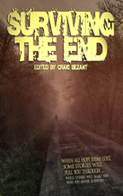
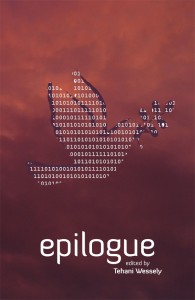
Surviving the End, Epilogue: such beautiful apocalypses

I haven’t had time to read the yarns yet — and it would probably be gauche for me to comment on them, given I’m a contributor — but I have to say, Craig Bezant’s Dark Prints Press has done a beautiful job on Surviving the End: an anthology of post-apocalypse stories. Craig’s linked the yarns with his own narrative. It *feels* great and looks great. Aussie small press are certainly rising to the occasion. The anthology is now available in print and e-version — the Jonathan Maberry story is available only in the print edition. (An aside: Mr Maberry is joining Ramsey Campbell and Caitlín R. Kiernan as author guests at next year’s World Horror Convention in that heart of hearts, New Orleans… oooh.)

Here’s the contributor list:

‘Hiatus’ by Michael Bailey
‘The Long Ago’ by Amanda J Spedding
‘The Last Boat to Eden’ by Jason Nahrung
‘Harvest’ by Ashlee Scheuerman
‘Unwanted’ by Martin Livings
‘The Stuff of Stories’ by Kathryn Hore
‘The Failing Flesh’ by Joseph D’Lacey
‘The Wind Through the Fence’ by Jonathan Maberry (print edition only)
With narrative interludes by the ‘Story Keeper’, Craig Bezant


epilogue - tales of hope after the apocalypseNOT to be outdone is Epilogue, Fablecroft’s anthology of hopeful post-apocalyptic stories which arrived TODAY! Editor Tehani Wessely has presented such a pleasant tactile end to the world with its striking cover and intriguing binary code symbolism.

Its contents:

‘Sleeping Beauty’ by Thoraiya Dyer
‘Time and tide’ by Lyn Battersby
‘A Memory Trapped in Light’ by Joanne Anderton
‘Fireflies’ by Steve Cameron
‘The Fletcher Test’ by Dirk Flinthart
‘Ghosts’ by Stephanie Gunn
‘Sleepers’ by Kaia Landelius
‘Solitary’ by Dave Luckett
‘Cold Comfort’ by David McDonald
‘Mornington Ride’ by Jason Nahrung
‘Only the Books Survive’ by Tansy Rayner Roberts
‘The Last Good Town’ by Elizabeth Tan


Epilogue is being given away at Goodreads until 8 June.

Snapshot 2012: Australia’s speculative fiction scene

australian speculative fiction snapshot 2012 logo
The Aussie Spec Fic Snapshot has taken place three times over the past eight years. In 2005, Ben Peek spent a frantic week interviewing 43 people in the Australian spec fic scene, and since then, it’s grown every time, now taking a team of interviewers working together to accomplish! In the lead up to Continuum 8 in Melbourne, I will join Alisa Krasnostein, Kathryn Linge, David McDonald, Helen Merrick, Ian Mond, Alex Pierce, Tansy Rayner Roberts, Tehani Wessely and Sean Wright in blogging interviews conducted over the past couple of weeks. To read the interviews hot off the press, check these blogs below daily from today to 7 June 2012.

As we celebrate the breadth and depth of the Australian spec fic scene, 2012 Snapshot is also a bittersweet time and we take the opportunity to remember two well-loved members of the community who sadly passed away in the past year; Paul Haines and Sara Douglass.

You can find the past three Snapshots at the following links: 2005, 2007 and 2010.

Salvage launches on June 8!

salvage by jason nahrungThe time has been confirmed! Salvage will join the Twelfth Planet Press flotilla being celebrated in Melbourne at Continuum at 7pm on Friday 8 June. And the good news: the convention is entry by gold coin donation on Friday. Also on the hot release list: Kaaron Warren’s Through Splintered Walls and Margo Lanagan’s Cracklescape, two of the latest Twelve Planets series by Aussie women writers. Twelfth Planet is a dynamic press with a real commitment to quality: it’s a pleasure to be working with them on Salvage. Come join us: there will be books and there will be … cupcakes!

You can read more about Continuum here!

Meanwhile, I’m down for four panels — Australian settings, vampires, awards, e-publishing — a reading and an ‘in conversation’ with Aussie guest of honour Alison Goodman.

Other launches to keep an eye out for: fellow TPP author Narrelle M Harris’s sequel to The Opposite of Life (I’m launching Walking Shadows, published by Clan Destine Press, on the Friday night — busy and wonderful!), a belated Ishtar party, Felicity Dowker’s collection and an ASIM 10th birthday party bash.

It’s also pleasing to see time set aside to remember our recently lost Paul Haines and Sara Douglass.

If that wasn’t enough, Kelly Link is international guest of honour, and Lucy Sussex gets to practise for her guest turn at next year’s Swancon by being an invited guest this year. It’s gonna be HUGE.

Year’s Best Fantasy and Horror 2011

years best australian fantasy and horror 2011


A gorgeous cover and a splendid table of contests, a real feast of Aussie writers working in fantasy and horror: and me! I am so thrilled that ‘Wraiths’, from Winds of Change, made the fantasy list of Ticonderoga’s Year’s Best Australian Fantasy and Horror 2011 (now available to order), edited by Talie Helene and Liz Grzyb. Well done, all; what splendid company to be keeping — my wife included: here, look for yourself!

Year’s Best Australian Fantasy and Horror 2011 selected stories

  • Peter M Ball, ‘Briar Day’ (Moonlight Tuber)
  • Lee Battersby, ‘Europe After The Rain’ (After the Rain, Fablecroft Press)
  • Deborah Biancotti, ‘Bad Power’ (Bad Power, Twelfth Planet Press)
  • Jenny Blackford, ‘The Head in the Goatskin Bag’ (Kaleidotrope)
  • Simon Brown, ‘Thin Air’ (Dead Red Heart, Ticonderoga Publications)
  • David Conyers and David Kernot, ‘Winds Of Nzambi’ (Midnight Echo #6, AHWA)
  • Stephen Dedman, ‘More Matter, Less Art’ (Midnight Echo #6, AHWA)
  • Sara Douglass and Angela Slatter, ‘The Hall of Lost Footsteps’ (The Hall of Lost Footsteps, Ticonderoga Publications)
  • Felicity Dowker, ‘Berries & Incense’ (More Scary Kisses, Ticonderoga Publications)
  • Terry Dowling, ‘Dark Me, Night You’ (Midnight Echo #5, AHWA)
  • Jason Fischer, ‘Hunting Rufus’ (Midnight Echo #5, AHWA)
  • Christopher Green, ‘Letters Of Love From The Once And Newly Dead’ (Midnight Echo #5, AHWA)
  • Paul Haines, ‘The Past Is A Bridge Best Left Burnt’ (The Last Days of Kali Yuga, Brimstone Press)
  • Lisa L Hannett, ‘Forever, Miss Tapekwa County’ (Bluegrass Symphony, Ticonderoga Publications)
  • Richard Harland, ‘At The Top Of The Stairs’ (Shadows and Tall Trees #2, Undertow Publications)
  • John Harwood, ‘Face To Face’ (Ghosts by Gaslight, HarperCollins)
  • Pete Kempshall, ‘Someone Else To Play With’ (Beauty Has Her Way, Dark Quest Books)
  • Jo Langdon, ‘Heaven’ (After the Rain, Fablecroft Press)
  • Maxine McArthur, ‘The Soul of the Machine’ (Winds of Change, CSFG)
  • Ian McHugh, ‘The Wishwriter’s Wife’ (Daily Science Fiction)
  • Andrew J McKiernan, ‘Love Death’ (Aurealis #45, Chimaera Publications)
  • Kirstyn McDermott, “Frostbitten” (More Scary Kisses, Ticonderoga Publications)
  • Margaret Mahy, “Wolf Night” (The Wilful Eye – Tales From the Tower #1, Allen & Unwin)
  • Anne Mok, ‘Interview with the Jiangshi’ (Dead Red Heart, Ticonderoga Publications)
  • Jason Nahrung, ‘Wraiths’ (Winds of Change, CSFG)
  • Anthony Panegyres, ‘Reading Coffee’ (Overland, OL Society)
  • Tansy Rayner Roberts, ‘The Patrician’ (Love and Romanpunk, Twelfth Planet Press)
  • Angela Rega, ‘Love In the Atacama or the Poetry of Fleas’ (Crossed Genres, CGP)
  • Angela Slatter, ‘The Coffin-Maker’s Daughter’ (A Book of Horrors, Jo Fletcher Books)
  • Lucy Sussex, ‘Thief of Lives” (Thief of Lies, Twelfth Planet Press)
  • Kyla Ward, ‘The Kite’ (The Land of Bad Dreams, P’rea Press)
  • Kaaron Warren, ‘All You Can Do Is Breathe’ (Blood and Other Cravings, Tor)
  • AWWNYRC#7: The Resurrectionists adds to a fine body of work

    This is the seventh book I’m reading as part of my list of 10 for the Australian Women Writers 2012 National Year of Reading Challenge.

    The Resurrectionists

    by Kim Wilkins

    HarperCollins, 2000, ISBN: 073226797 8


    resurrectionists by kim wilkins

    THIS is the third novel by Brisbane’s Kim Wilkins, one I’ve criminally and unaccountably not read until now. It’s interesting to look back at this, seeing how accomplished she was even back then: the prose is fairly tight, the narrative spot on, the characters engaging.

    The story is told in two time lines, one in 1790s England and the other contemporary. In the past, a pair of daring lovers move into a cottage in a village near, and modelled on, it would appear, Whitby, there to encounter some seriously unnatural goings on in the suitably Gothic basement of the church. In the modern era, Aussie cellist Maisie Fielding journeys to the same cottage in the wake of her grandmother’s death, to find that those goings on are still, ahem, going on.

    The setting lends itself wonderfully to the creeping dread: coastal storms, winter snow and isolation, and a village that keeps its secrets close and viciously guarded.

    Maisie is going through a rough time personally, filled with doubt about her relationship with her opera singer lover Adrian, at sixes and sevens with her overbearing mother and ineffectual father; a few months sifting through her grandmother’s life — a life she never got to know, her mother and grandmother not having got on — seems like just the ticket for getting her head straight.

    australian women writers challenge 2012But there’s the diary left by Georgette, and there’s her grandmother’s legacy, the attractive gypsy boy down the road and the not small matter of Maisie’s hidden psychic power to contend with. This is no simple holiday … especially when the spooky strangers come a’knocking and Maisie is left to feel very unwelcome indeed.

    Told from several points of view, the Aurealis Award-winning story is a compelling jigsaw: Georgette sets the scene, Adrian adds domestic pressure, the unlikely villain offers tension as plans collide … and it all comes together as Maisie faces both her past and her future against a very old magic indeed.

    While there are a couple of niggling elements in the plot — the way in which Georgette’s diary is compiled, the absence of a possible ally — they are more than overshadowed by the bold denouement that makes this a truly memorable read.

    Previous Challenge reviews:


    ‘Salvage’ cover unveiled!

    salvage by jason nahrung

    My novella Salvage, a seaside Gothic, is available for pre-order in paperback from Twelfth Planet Press for $15 plus postage.

    The novel was primarily written on, and is set on a fictional version of, Bribie Island, over a three-year stretch of writing retreats.

    About Salvage:

    “Seeking to salvage their foundering marriage, Melanie and Richard retreat to an isolated beach house on a remote Queensland island.

    “Intrigued by a chance encounter with a stranger, Melanie begins to drift away from her husband and towards Helena, only to discover that Helena has her own demons, ageless and steeped in blood.

    “As Richard’s world and Helena’s collide, Melanie must choose which future she wants, before the dark tide pulls her under … forever.”

    Aurealis Awards: catching up with the tribe

    We are home from Sydney, having feted our peers in the speculative fiction community at last night’s Aurealis Awards. Once again, organisers SpecFaction NSW put on a smooth show with plenty of time to mingle at Rydges North Sydney before and after, with a gettogether at the nearby gorgeous awards venue The Independent theatre as well.

    I recognised writers and publishers from all states and the ACT in the crowd that pretty much filled the theatre with a veritable who’s who, which once again demonstrated the generosity and openness of the community.

    The audience saw a virtual passing of the torch from HarperVoyager stalwart editor Stephanie Smith to the new top ed in the hot seat, the much respected Deonie Fiford.

    The late Sara Douglass and Paul Haines were in our thoughts, and it was wonderful to see Haines’s rivetting story ‘The Past is a Bridge Best Left Burnt’ score a win. His widows, Jules, sent a lovely acceptance message read by Cat Sparks which addressed the importance of writing to Paul and the value he placed on the spec fic community.

    Sean the Bookonaut provides a storified rundown of the awards

    Scott Westerfeld, Kim Westwood and — by iPhone, via Alan Baxter — Robert N Stephenson provided some of the other memorable speeches, and Kate Forsyth was the most delightful host one could ask for.

    I think it was a tie between Sean Williams and Marty Young for having the shirt most people wanted to own… but that might just have been at our breakfast table. Robert Hood should be in the running for a Ditmar next year for ‘best use of a cow in a science fiction slideshow’.

    I believe the awards will be held in Sydney for a third year next year — bring it on!

    Pictures of the night by Cat Sparks

    AUREALIS AWARD WINNERS FOR WORKS PUBLISHED IN 2011

    Children’s fiction told primarily through words: City of Lies by Lian Tanner (Allen & Unwin)
    Children’s fiction told primarily through pictures: Sounds Spooky by Christopher Cheng (author) and Sarah Davis (illustrator) (Random House Australia)
    Young Adult Short Story: ‘Nation of the Night’ by Sue Isle (Nightsiders, Twelfth Planet Press)
    Young Adult Novel: Only Ever Always by Penni Russon (Allen & Unwin)
    Illustrated Book/Graphic Novel: TIE Hidden by Mirranda Burton (author and illustrator) (Black Pepper)
    The Deep: Here be Dragons by Tom Taylor (author) and James Brouwer (illustrator) (Gestalt Publishing)
    Collection: Bluegrass Symphony by Lisa L Hannett (Ticonderoga Publications)
    Anthology: Ghosts by Gaslight edited by Jack Dann and Nick Gevers (HarperVoyager)
    Horror Short Story: TIE ‘The Past is a Bridge Best Left Burnt’ by Paul Haines (The Last Days of Kali Yuga, Brimstone Press)
    ‘The Short Go: a Future in Eight Seconds’ by Lisa L Hannett (Bluegrass Symphony, Ticonderoga Publications)
    Horror Novel: No winner or shortlist.
    Fantasy Short Story: ‘Fruit of the Pipal Tree’ by Thoraiya Dyer (After the Rain, FableCroft Publishing)
    Fantasy Novel: Ember and Ash by Pamela Freeman (Hachette)
    Science Fiction Short Story: ‘Rains of la Strange’ by Robert N Stephenson (Anywhere but Earth, Coeur de Lion)
    Science Fiction Novel: The Courier’s New Bicycle by Kim Westwood (HarperCollins)
    Peter McNamara Convenors’ Award: Galactic Suburbia podcast –- Alisa Krasnostein, Alex Pierce, Tansy Rayner Roberts, Andrew Finch (producer)
    Kris Hembury Encouragement Award: Emily Craven of Adelaide

    Dracula on the airwaves

    dracula by bram stoker, 1916 coverBrisbane community radio 4ZZZ’s Book Club show is celebrating Dracula tomorrow night (3 May) at 7 o’clock. As part of the program, host Amy and I had a wee chat about Stoker’s magnificent creation and the impact the novel has had since. Fangstastic fun! This cover illo from a 1916 edition of the book illustrates one of the scenes we talked about. *shiver* The show is available on the net, too.

    UPDATE: You can listen to the interview portion of the show here.

    The timing was cool, because I’d just finished listening, albeit in a distracted fashion, to the novel read by Christopher Lee. Overall, an entertaining and atmospheric reading, enhanced by background music, with Lee investing himself in the telling. All those first-person narratives certainly come to the fore, and his link to the cinematic Dracula just adds to the glee.