Submissions open for Queensland Literary Awards, and other writerly news

queensland literary awards logoBehind the 8-ball on this news: submissions are open for the Queensland Literary Awards — these are the community-based awards put together in quick time after newly elected premier Campbell Newman scrapped the government-supported awards in short order after this ascension. Subs close May 6, and winners are due to be announced on September 5.

Awards on offer are:
Fiction Book Award
Emerging Queensland Author – Manuscript Award (UQP will be offered publishing rights for the winning MS)
Unpublished Indigenous Writer – David Unaipon Award (UQP will be offered publishing rights for the winning MS)
Non-Fiction Book Award History Book Award
Children’s Book Award
Young Adult Book Award
Science Writer Award
Poetry Collection – Judith Wright Calanthe Award
Australian Short Story Collection – Steele Rudd Award
Literary or Media Work Advancing Public Debate – The Harry Williams Award
Film Script Award
Drama Script (Stage) Award
Television Script Award


This piece in The Age by Jane Sullivan helps to explain why what the Australian newspaper brands the ‘vocal minority’ — a new collective noun for writers, apparently — got so vocal about Newman’s ill’conceived and poorly executed move.

  • Amazon sniffing around in Australia? That’ll save some postage. But it might cause a fresh cold sweat for bricks and mortar shops …
  • Speaking of Amazon, here’s an article about how Amazon is a happy hunting ground for knock-off merchants, as opposed to simple plagiarists.
  • Affirm Press seeks writers for its Slow Guides to Brisbane and Melbourne.
  • Check out the Ellen Datlow news, as reported at 13 O’Clock: a bunch of Aussies made her honourable mentions list, and a couple even made the print-book shortlist — Margo Lanagan flies the Southern Cross in the actual TOC of selected yarns — and the venerable US editor is on the prowl for this year’s best horror yarns. Send ’em in!
  • WriteFest windows of opportunity, and other writerly news

    Bundaberg’s WriteFest is a great event, one of those fairly intimate occasions when everyone’s just chilled out yet totally keen. This year the organisers have upped the ante, offering a workshop with Louise Cusack — her writing advice is always worth it — as well as the chance to get feedback from Allen & Unwin’s Rachael Donovan on how to improve a submission to a publisher, and a chance to talk to Clan Destine Press’s Lindy Cameron about a manuscript. But you want to be quick: applications for the feedback sessions close on Sunday April 15. Check out the website: there’s plenty more on, including two workshops with Marianne de Pierres and seminars on many things writerly. WriteFest is held on May 19.

  • Michael Hauge provides insight into story structure and the rules of engagement for hero and ‘reflection character’.
  • The horror of having a book go to print without its opening line, and a constructive way of dealing with the misdeed, courtesy of Kirstyn McDermott.
  • I’ve recently had cause to chinwag with a.rawlings, this year’s Arts Queensland poet in residence hosted by Queensland Poetry Festival, and was again struck by the power of the written word when read out loud. I found her poem, ‘a hoosh a ha’, inside her collection Wide Slumber for Lepidopterists, and then this clip on YouTube of her performing the piece. It’s a gorgeous book, beautifully laid out, but to hear those words out loud: wow. To complete the narrative circle of this post, it’s worth the mention that one of Louise Cusack’s suggestions for improving self-editing is to read the work out loud. Advice I really wish I’d take more often, because it really does highlight awkwardness, errors and repetition.


  • Callout to Queensland authors of 2011, and other writerly news

    queensland writers centre logoQueensland Writers Centre is compiling a booklet, Books from our Backyard, of Queensland authors to have had a book published in 2011. Must be first edition, paper or e-book, with ISBN and cover image. Details at the website.

    Also, the centre has compiled a website of reaction to the summary cancellation of the Queensland Premier’s Literary Awards by incoming premier Campbell Newman. The centre is looking to salvage something from the debacle and provides some avenues for reaction to the move. A separate push is underway to establish the Queensland Literary Awards.

  • In award news, and much more positive all round, Aussies Jonathan Strahan and the gang from Galactic Suburbia podcast have made the shortlist for the Hugo Awards — Strahan twice, for best short form editor and also his co-hosted Notes from Coode St podcast. Way to go!
  • The Blood-Red Pencil hosts two posts about the life of agents, including their changing role in an industry where self-publishing is no longer the path of last resort.
  • At the Lair, Sean Williams and Karen Miller talk joining Forces with the Star Wars franchise.
  • In Lisa Hannett’s Tuesday Therapy (it’s been a busy week), Kim Falconer offers some down-to-earth advice about setting goals and achieving them despite all the good advice. In today’s Theraphy, Angela Slatters offers excellent advice about both offering and receiving favours of a literary nature.
  • Looking ahead: Swancon 2013 has announced a guest list of Gail Simone, Charles Stross, John Birmingham and Lucy Sussex. w00t!

  • Tansy Rayner Roberts’ Creature Court series is pushing into overseas markets — great to see a publisher investing in local talent.
  • And finally, this piece from Call My Agent! about the cultural cringe and Australian novels. I’d like to think that the efforts of our fantasy, crime and romance writers, in particular, are changing the apparent reluctance of readers to buy locally … This post riffs off a previous one about why it’s hard to get an Aussie novel published, which kicked along a meme about ‘what Australian book have you bought recently’. You don’t buy local just because it is local, of course, but because it’s local and good: it’s that last part that has had buyers doubting, but they’re out of excuses these days. Now it’s how to raise awareness in an ever-crowded market place.
  • Late addition: I’ve been meaning to add 20c to this excellent post about the value of a book cover over at Patrick O’Duffy’s place, but that’s gonna have to wait for another day. When you see the amount of quality info Angry Robot has packed onto that back cover … wow. The absence of a back cover on an e-book — that requirement that the browser has picked up that info on the web page — is an interesting quandary that I haven’t got around to pondering in any meaningful way. Patrick, it’s up to you!
  • Queensland Literary Awards to go ahead, sans philistine premier

    This item from ABC News is something to cheer about. Only days after the premier of Queensland withdrew government support from the state’s literary awards, established by then premier Peter Beattie in 1999, a group of volunteers have rallied around the organisers to see the awards go ahead. And blow a big raspberry to that petty little autocrat, premier Campbell Newman. Good luck, guys. I’m sure you’ll do the state proud, even if your government can’t.

    UPDATE: Krissy Kneen says there’s a meeting at Avid Reader book shop, in West End, on Tuesday (April 10) at 10am to discuss the revamped awards. All welcome.

    UPDATE 7 Apr: The organisers of the Queensland Literary Awards have a nascent website as they scramble to ensure this year’s awards go ahead and cover the previous categories: queenslandliteraryawards.com

    Campbell Newman, subsidised arts and the popular vote

    Sadly, today’s editorial in the Australian doesn’t surprise. Had it not been self-published, an editor would’ve have a field day cutting out the tired old tropes. The piece shows as little awareness of the reality of publishing in Australia, I can’t help but wonder if the editor was a board member of Borders.

    Good on Campbell Newman for cancelling the Queensland Premier’s Literary Awards. They deserved it. How dare they short-list a bio from that terrorist David Hicks? What do they think this is: a democracy?

    Scary stuff, literature, especially that high-falutin’ stuff that goes to pains to use big, fancy words and literary balderdash to criticise and question today’s society and the people who run it.

    First ones against the wall, that lot.

    ‘If (Newman) restores the awards in future, as he has hinted, he would do well to ensure they reward the best-quality writing, including that which appeals to the broader public.’

    What is clear from the editorial is that the editor has fallen for the PR from his own circulation department and believes that quantity is a measure of quality. He hasn’t eaten at McDonald’s lately, it appears. See, books aren’t one size fits all. It’s what makes them such an interesting product to try to market. There’s no accounting for taste. Clearly, the work of the Qld Premier’s Lit Awards hasn’t been to the editor’s taste, nor that of the LNP. Tough.

    As Nick Earls said in his response to the axing:

    While I’ve had little personal reason to love the Premier’s Literary Awards, I’ve been glad they’ve been there.

    It might not be my cup of tea, either, but I don’t doubt for a second that it’s important. Just as important as the popular fiction that I write. Maybe even more important, at certain levels.

    I wouldn’t mind if someone was throwing cash awards around for the stuff I write. Hey, here’s an idea. How about the Oz step up, take the editor’s philosophy and run with it. Out with the old men like Patrick White, a recent front-page feature of the Oz’s venerable lit pages, and in with the popular fiction. The crime, the romance, the YA. Dare I suggest, the horror? And before the movie gets made. That’d be a bonus.

    ‘Newer writers will also build loyal readerships, if they are good enough,’ the Oz says.

    Define good enough. And then tell me how they build that readership. I would’ve thought the Queensland Premier’s Literary Awards with sections for unpublished manuscript and unpublished Indigenous manuscript was a perfect avenue for that new writer to be noticed. It’s back to the table outside the local bookstore, huh?

    Maybe the Oz can up the Vogel to remove the age restriction — after all, those young guns have got an entire lifetime ahead of them in which to make their career – if they’re ‘good’ enough. Maybe the Logies can add a book category and the Oz can print the ballot. Twilight for the win.

    Here we sit in 2012 still arguing about what makes a great read, and how to recognise the practitioners who provide it. The bean counters still treat books like tins of pineapple and tell us homegrown or imported, it doesn’t matter.

    The Oz is appalled at writers, and artists in general, sucking on the public tit. This ‘vocal minority’ should be standing on its own economic two feet.

    That’s an interesting precedent to set, isn’t it? No seed funding for industry, is what it amounts to. No subsidy for innovative new tech. Government-funded apprenticeships? You want a library? Better start charging admission and rental fees. Reading’s a luxury, after all, not a right. You want an oval? Build it and maintain it yourself — stand on your own two feet. If you build it, they will come.

    In a separate article in the same day’s Oz, the comment is made that Campbell isn’t planing to cut other government awards, not even for drama. I guess there’s something appealing about taking one’s lobbyists and business pals out to see a show, maybe do some deals in the intermission. No, he’s singled out the lit awards, and why?

    Because he knows that the ‘vocal minority’ that is the country’s writers don’t have a lot of support in the wider community. Not even in newspaper offices where economic rationalism reigns, and the idea of a good read starts at the back of the paper, where ‘good’ is measured by dollar signs. Campbell’s looking for easy money to bolster a bottom line, hoping those pennies he loves so much will become pounds. What a bleak hole he’s digging for Queenslanders.

  • The Queensland Writers Centre has compiled a great list of responses to Campbell’s axing of the awards. The centre has taken a very reasonable, proactive approach to the debacle. You can plug into it here.

    And there’s this thoughtful piece from TLC Books about just what lit awards offer, and why they’re good things to have, both for the community and for writers.

  • Campbell Newman chases the dubious dollar sign

    This news just in: Queensland has the proud title of being the only state in Australia not to have a state literary award. Wow, way to go Campbell Newman: make those creative industries feel welcome. Arsehat. He can really plough that $250,000 of savings into some serious infrastructure projects. And THIS is why the landslide LNP victory gave me the shivers, even from the other end of the country. They ain’t got no soul, people.

    UPDATE: I think John Birmingham has summarised the situation nicely in his comments (at the updated above link), including:

    He’s not going to lose many if any votes out of getting rid of this prize, and out of slashing the hell out of a lot of arts budgets … in terms of the state budget, there’s probably bigger tough cuts that he could make, but they’re much tougher to sell

    Mieville and the bleak Arthur C Clarke finalists, and other writerly news

    embassytown by china mieville

    The finalists of the Arthur C Clarke award for best science fiction novel published in the UK last year include China Mieville for Embassytown, the fifth time he’s been nominated and what could be he his fourth win.

    The interesting comment from the chair of the judging panel, Andrew M Butler, quoted in the Guardian, for those worried about over-genrification:

    “It’s got something for everyone: alien contact, post-apocalyptic disaster, near future cyberpunkish police procedural,” he said, adding that the variety demonstrates the health of the SF scene. “It’s exciting because you can’t fit it in a box.”

    Others in the running are Charlie Stross, Booker longlisted Jane Rogers, Drew Magary, Sherri S Tepper and Greg Bear.

    Says Butler about the dystopian line-up,

    “We’re in a dark place at the moment and SF writers are responding to that. These are not books to turn to for escape – they’re not afraid to confront the dark side of life.”

    The award is announced in May.

  • Canberra’s Nicole Murphy, author of the Secret Ones, has launched an interesting project in which she mentors a writer to develop a 2,000-word spec fic story each month, publishes the finished story on the project’s website and, eventually, makes 12 available as an anthology. The chosen submission each month scores $100 and a cut of the anthology royalties.
  • Also taking submissions in April is UK publisher Angry Robot, who have an open door for classic fantasy and YA SF&F.
  • Stephanie Smith has stepped down from her role at HarperCollins Voyager, where as editor and publisher she has overseen the growth of Australia’s fantasy industry, Bookseller+Publisher reports. She’s quite the icon on the local scene and will be missed. Her replacement is respected editor Deonie Fiford, starting on April 2. OMG that’s Monday! Where has the year gone? Voyager’s farewell message is here.
  • The Gold Coast Literati event in May has announced its line-up, including spec fic authors Stephen M Irwin, Marianne de Pierres, Trent Jamieson, Louise Cusack, Kylie Chan and Rowena Cory Daniells, as well as talented comics creator Queenie Chan, crime writer Katherine Howell and many more. It looks like most of the bases have been covered, from YA to poetry to non-fiction. It’s held the same weekend as Melbourne’s Emerging Writers Festival kicks off. See the calendar for more literary events.
  • Writerly news

    Catching up after time away and largely off-line at Adelaide Writers Week, and there’s good news:

    when we have wings by claire corbettBarbara Jefferis Award shortlist: Claire Corbett’s SF novel When We Have Wings (which I am STILL to read, damnit) is on the shortlist of the Barbara Jefferis Award. Sean the Bookonaut, who I met for the first time in Adelaide, recently interviewed Claire: listen here.

    Mythic Resonance: editor Stephen Thompson — how long has it been since he compiled the Vision writers group’s Glimpses anthology? — has a new anthology, Mythic Resonance, which, as the name suggests, riffs off myths. Excerpts are available at the Specusphere.

    Thirteen O’Clock: a new aggregator of dark fiction news has hit the interwebs. The blog also posted an excellent piece on the difference between horror and dark fantasy recently.

    Narrelle Harris reveals Showtime: The Melbourne author of The Opposite of Life is the latest in Twelfth Planet Press’s Twelve Planets series, offering ghosts, vampires and zombies in a four-story collection that includes an appearance of some old friends.

    Aurealis #48 in the ether: Aurealis #48, with stories by Rick Kennett and Greg Mellor, is available from Smashwords.

    Ticonderoga living large in 2013: the WA press already has an exciting schedule for 2013, including several collections by both veteran and tyro writers and the continuing Year’s Best Fantasy and Horror.

    And Chris Meade on Queensland’s writing future: the if:book pioneer reflects on his experience in Queensland and considers how my home state might leverage itself in the global literary landscape with ‘big sky writing‘. It’s also worth checking out if:book Australia’s 24 Hour Book Project for a hands-on view of how technology is changing the publishing industry.

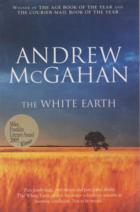
    Andrew McGahan’s White Earth chosen for Our Story

    white earth by andrew mcgahan

    As part of the National Year of Reading, the Our Story program set out to select one text from each state and territory to fly the flag for a reading campaign. Six titles were shortlisted for each; the winners were announced earlier today.

    Queensland’s book is The White Earth, by Andrew McGahan, and it’s a cracker story. It riffs off the Mabo land rights decision and the incredible fear and uncertainty in rural Australia about the right to continue to live on and work land that had, in some instances, been in the same family for several generations. A lot of terra nullius talk, a lot of right wing clap trap, some very real concerns.

    McGahan draws on his childhood in setting the piece on the Darling Downs, where a young boy and his widowed mother come to live on their grandfather’s property, there to see the politics of the era played out and to uncover some unsettling family truths harking back to the days of white occupation and settlement.

    The other finalists in the Queensland selection were:

  • Affection, by Ian Townsend (Townsville, 1900, the plague, a social scandal)
  • Brisbane, by Matthew Condon (one in a series of capital city ‘biographies’)
  • House on the Hill, by Estelle Pinney (romance in the west)
  • Journey to the Stone Country, by Alex Miller (a collision of colonial past and the impact in the present present)
  • The Tall Man, by Chloe Hooper (Doomadgee and Palm Island under the microscope, with a wider view).
  • Vale: Samuel Youd, aka John Christopher

    Image

    Word is spreading of a sad loss in the speculative fiction community, that of British Writer Samuel Youd, on February 3, only two months shy of his 90th birthday. <Update: Locus has confirmed Youd’s passsing.>

    As John Christopher, Youd provided two of the great texts of my childhood, both of which have survived the recent pogroms of excess literature cluttering the household shelves: The Tripods and The Sword of the Spirits trilogies. Tripods in particular made a strong impression.

    This is barely scratching the surface of his output published under numerous pseudonyms.

    He ranked up there with the likes of Garner, Cooper and Le Guin in my early reading. I hope more generations come to appreciate his legacy.

    Update: the Guardian looks at Youd’s work and provides a short obituary and a longer one.