Snapshot 2012: Paul Garrety

australian speculative fiction snapshot 2012 logoQUEENSLANDER Paul Garrety says he started to take writing seriously about nine years ago, when he began writing his debut novel The Seventh Wave. It and its sequel, The Emerald Tablets, were published by HarperCollins Voyager last year. He’s also written a number of short stories and picked up ‘an occasional’ prize both here and overseas.

He says, ‘When The Seventh Wave and its sequel The Emerald Tablets were released last year, instead of trying to establish a personal profile, I made the mistake of using the book name as the website URL (www.theseventhwave.com.au). This might work if you happen to be promoting a movie, or have a few more zeroes in your publishing advance than I did to support a sophisticated viral and mainstream marketing campaign, but it’s not a route I’d choose again.’


You scored a deal with HarperCollins Voyager for a two-book series in which you mix magic and technology. How many headaches did that genre-blending cause you? What about joys?
I really don’t think there is any difference between magic and technology. What once would have been magic even a hundred years ago, now is commoditised. Magic as we all know comes at a price and now comes to us in window-faced envelopes.
I suspect genre blending can be a challenge for some dedicated spec fic readers though; those who like to keep their peas and potatoes separate — I acknowledge that. However, I was incredibly humbled by many (yes, there were many) emails that I received from readers who weren’t fans of spec fic, had even gone out of their way to avoid it in the past, yet when they happened to stumble across my books they went to the trouble of letting me know how much they enjoyed them. I think that’s a kind of magic, too.


You’ve also had success with crime short stories. What’s your favourite genre to write and why?
As a species we love to categorise, don’t we? Give us a lifestyle threat or a fatal disease we know absolutely nothing about and the first thing we’ll do is give it a nickname, or, preferably, an acronym. The reason, I guess, is to make it appear that we are in control. I’ll fess up now. I’m not in control. I’m a ‘pantser writer’ so even though I like order with my chaos, when I sit down to write there is no plan around what, if anything, will appear on the screen. Of course I have a vague idea, perhaps even a clever acronym, but always-always-always it will come out differently with gravy slopped all over those carefully positioned peas and taties. Hopefully, though, it will taste better as a result.


What are you working on now, and is it easier or harder now that you’ve got two novels under your belt?
I’ll use a hackneyed analogy here. Like most writers getting my first book to publication was like climbing the proverbial. I believed that when I finally cleared the summit I would have made ‘It’. However, when publication day finally arrived, not only did I just see a lot more mountains on the horizon, but I also realised that the one I’d just climbed was only a hill by comparison. Right now, I’m on the other side, slogging my way down towards the valley in between.

The novel I’m half way through is another ‘bitzer’: crime/urban fantasy/sci-time. Biting at its heels though is an idea for the next book that wants to jump the queue. I haven’t worked out yet whether it’s a bling thing –- bright/new/shiny diversion — or whether there’s a stronger yarn underneath waiting to be revealed. I hope it’s the latter.

What Australian works have you loved recently?
Black Glass, Meg Mundell; The Business of Death, Trent Jamieson; The Rook, Daniel O’Malley; When We Have Wings, Claire Corbett.


What have been some of the biggest changes in Australian speculative fiction in the past two years?
I think the biggest change, certainly for speccy writers, is that the blinkers are now well and truly off around publishing opportunities. Increasingly writers are submitting e-globally instead of waiting for a shot at the traditional hard copy (read credible) route within their home market. This huge rush towards e-publishing and the 0.99c reading hit is perhaps reminiscent of the 1800s penny dreadful, where new markets were created simply by making writing more accessible and affordable. Sure, there’s a lot of material floating around out there and for many it’s like sifting through the Yellow Pages without a directory, but the number of sales being made debunks the theory that reading as an entertainment form is dying.

This naturally impacts on all genres, but the beauty for spec fic writers in Oz is that they now have easy access to specialist online publishers who can sell to anyone, anywhere. Combining clever target marketing and low overheads, many e-publishers are providing quality reads cheaply and rewarding authors with relatively — often absolutely — higher royalties than they would otherwise have earned.

In tandem with this is the increased pressure for spec fic writers to produce work faster, establish a back list, and at the same time grow their profiles across multiple awareness platforms. There is a definite quickening in the pace. Where it is heading? Well that’s another story.

* * *

THIS interview was conducted as part of the 2012 Snapshot of Australian Speculative Fiction. We’re blogging interviews from 1-8 June and archiving them at Australian Speculative Fiction in Focus. You can read interviews at:
Snapshot 2012: Traci Harding

australian speculative fiction snapshot 2012 logoTRACI Harding’s books blend the esoteric mysteries, time travel and quantum physics in adventurous romps through history, alternative dimensions, universes and states of consciousness. She has had 16 books published by HarperCollins Voyager (four trilogies and three stand alone novels). The first book of The Timekeepers trilogy, Dreaming of Zhou Gong, is due for release in February 2013, with another trilogy to follow. Her first book, The Ancient Future, has featured regularly on the Dymocks’ Top 101 Books. It also made the ABC’s lists of Most Loved Books of All Time and Favourite Australian Book, and has been reprinted more than 35 times. It and her stand-alone novel The Alchemist’s Key have been published in Complex Chinese, while The Mystique Trilogy has been published in Russian, Czech, Slavic and Romanian. The Alchemist’s Key has been optioned to Dragonlight Productions and is being developed as a feature film project.

Traci’s website is at traciharding.com.


You were able to arrange to have free short stories made available as part of promotion for your most recent novel. Did you find that readers appreciated this?
The readers loved this, and it certainly served to get the traffic flowing through my web pages and Facebook Fan pages. This was actually an idea I came up with while chatting to Kim Falconer and our editor at the Byron Bay Writers’ Festival last year – thanks girls – it was a great success! It was a hell of a promotion to get organised to happen over the Christmas break, but HarperCollins did an amazing job and the entire promotion flowed really smoothly.


What are some of the outstanding perils and pleasures of writing in historical periods other than the present that you’ve encountered?
The pleasure of writing ancient history is uncovering little know facts buried throughout time; the peril is not finding them LOL.

I have just had an extended stint in Ancient China, and although I felt really very at home there, I have found a gentleman in Hong Kong who has kindly agreed to proof read the MS for me and he has already pointed out several amusing mistakes – when I mess with other cultures I like to get it right, if I can.


Is there a genre you’re dying to write in other than your SF/fantasy realm? Perhaps another collection of supernatural stories?
I wouldn’t mind having a crack at non-fiction, actually. I have shares in a company Gamma Power who have recently rediscovered Tesla’s free energy and are doing all sorts of amazing things with it. They are calling it ambient energy and I would very much like to write about that rediscovery in the not too distant future.


What Australian works have you loved recently?
So many good Aussie authors, but here are those I’ve enjoyed lately: my fav Aussie author is Kim Wilkins aka Kimberley Freeman, Belinda Alexandra, Grant Hyde, Christopher Ride, Kate Morton, Nathan Burrage and Jessica Shirvington. There is so many really great Australian authors out there; I wish I had more time to read them all!


What are some of the biggest changes in Australian speculative fiction in the past two years (since Aussiecon 4)?
The most obvious change that I am aware of is that e-books have sent hardback book sales plummeting – we’re seeing the collapse of the big book chains, and its a much tougher market now for new authors. But, on the upside, I see the independent book stores doing better and they’ll keep local authors alive and thriving, and e-books can reach a bigger a market. Yet with so many different delivery formats and troublesome data transfers, one wonders how long it will be before people discover that you cannot beat having the book in your hand.

* * *

THIS interview was conducted as part of the 2012 Snapshot of Australian Speculative Fiction. We’re blogging interviews from 1-8 June and archiving them at Australian Speculative Fiction in Focus. You can read interviews at:

Snapshot 2012: Scott Westerfeld

australian speculative fiction snapshot 2012 logoSCOTT Westerfeld is the author of five books for adults and 13 for young adults, including the New York Times-bestselling Uglies and Leviathan series. The latter was illustrated by Keith Thompson, and the former has just been adapted as a graphic novel series scripted by Devin Grayson, with art by Stephen Cummings. Scott’s work in progress is a meta-paranormal romance. Find Scott online at scottwesterfeld.com.


How exciting is it to see Uglies being given a manga treatment — the sign of more cross-platform excursions to come?
I’ve always wanted to rewrite the series from Shay’s point of view, simply as an exercise in perspective, but it seemed a bit lazy re-tell a story I’ve already told. But when the idea of a graphic novel adaptation came up, I realised that a different medium would be the right place to effect the shift in perspective. I’m working on an original graphic novel at the moment, having learned a lot from watching Devin Grayson adapt my outline for Shay’s Story.


When you were writing your Leviathan series (which includes illustrations), did you expect it to be such a fashion hit in terms of the fan art? (I note that Uglies seems pretty popular, too…)
Lots of people think that adding pictures to a book makes it younger, but in reality it just means reaching a different set of readers: those with a more visual bent, many of whom come out of manga and graphic novel traditions. So yes, there is a lot more fan art and cosplay for Leviathan than any of my other books. It really does change the kinds of questions readers ask. What are the dominant colors in this society? How do people dress for breakfast? Like fan fiction, fan art opens up countless new kettles of fish and makes the world of the book much bigger.


You were on a panel about the fiction of the fantastic at the Sydney Writers Festival. What are some of the key ideas about writing fantasy and science fiction?
World-building is a fundamental concern of our genre. Speculative writing quite often starts with a world and lets the stories, characters and conflicts come out of that world.


What Australian works have you loved recently?
Sea Hearts is a glorious read. It’s full of lovely sentences, as one would expect from Margo Lanagan, but also it’s one of the few multi-generational sagas I’ve read that doesn’t lose its flow as the decades pass. The bleak island setting is so unchanging and inescapable that the story can last a century and yet you always know right where you are.

I’m also enjoying Library of Forgotten Books, a collection by Rjurik Davidson. The shorts stories are all darkly atmospheric, both in their themes and their language, which gives them an impact that’s more like a novel than a divertimento.


What have been some of the biggest changes in Australian speculative fiction in the past two years since Aussiecon 4?
I don’t know.

* * *

THIS interview was conducted as part of the 2012 Snapshot of Australian Speculative Fiction. We’re blogging interviews from 1-8 June and archiving them at Australian Speculative Fiction in Focus. You can read interviews at:

Snapshot 2012: Peter Docker

australian speculative fiction snapshot 2012 logoWEST Australian Peter Docker studied writing at Curtin University of Technology and acting at the Victorian College of the Arts in Melbourne. His fiction credits include Fremantle Press novels Someone Else’s Country (2005) and Aurealis Award nominee for best science fiction novel The Waterboys (2011) (review) and short story collection The Kid on the Karaoke Stage (2011), one-act play A Million Miles from Ulcer Gulch and radio play Marrying My Family (1995). He has outback revenge thriller Sweet One, YA illustrated comedy Toecutters and autobiographical TLC (The Love of Country) in the works.

Does setting a story such as The Waterboys in the future and the alternate past allow you to discuss topics more freely than a contemporary story?
The trouble with white Australia is that we’re not black enough. With Waterboys I went searching for answers, which led me simultaneously to the past and the future (no doubt influenced by my rudimentary understanding of the only true Australian expression of spirituality -– The Dreaming –- which is a place/time/situation existing simultaneously in the past, present, and future). This certainly gave me the freedom to explore themes like the inevitable failure of democracy, and the ultimate outcomes of ‘constant growth’-based capitalism on the land, and the peoples whose entire material and spiritual existence is tied to that land. I am constantly searching for grand metaphors to discuss the soul of our nation.


The Waterboys, as well as being a study in race relations, depicts a future where water is a scarce resource. Are these themes likely to recur in your work?
In some ways it’s a great irony to me that, on the eve of publication of Waterboys, eastern Australia was experiencing the worst flooding in a hundred years. The secret of timing is comedy. My forthcoming work Sweet One is set against the background of the mining industry and the undeclared on-going secret war that the states are waging against the traditional owners.


In what ways has your background in acting helped or influenced your writing?
The vast majority of my acting work (once I got away from Neighbours and Blue Heelers) has been on Aboriginal projects -– in many ways they are like research tours. I certainly use acting techniques in my writing. For example, a great acting dictum is ‘give the problem to the character’. When a plot point or character illumination issue arises, I allow the problem to be solved by the character and not the writer. This means that I often don’t know which way the character will jump until I get that pen in my fist and give the character power over my hand. I also use filmic techniques to avoid the very tricky issue of me putting thoughts into the heads of my indigenous characters. I report dialogue but the inner workings are left to the reader. This also allows the reader to realise that I am no expert in Aboriginal people or cultures, although I do know something about what happens when we come together.


What Australian works have you loved recently?
5. The Biggest Estate on Earth by Bill Gammage is a meticulously researched game changer for everything Europeans have ever thought about pre-Cook Australia. Carpentaria by Alexis Wright is an Australian War & Peace, or Great Expectations. And That Deadman Dance by Kim Scott: the layering in Kim’s work is mind blowing. He takes us into a profound emotional place in such a subtle way that we are deep inside the emotional and spiritual system without quite realising how we got there.


What have been some of the biggest changes in Australian speculative fiction in the past two years?
We are a new country with an emerging culture and the spec fic we produce reflects this. It is no coincidence that as we mature the literature from here is finding a bigger international audience. The rawness of Aussie lit compared to nations with much longer histories and traditions than ours seems to be part of the appeal. I particularly like the way that brilliant writers like John Birmingham do not confine themselves to just writing about Australia (unlike yours truly) but are capable of taking on massive issues like the end of America.

* * *

THIS interview was conducted as part of the 2012 Snapshot of Australian Speculative Fiction. We’re blogging interviews from 1-8 June and archiving them at Australian Speculative Fiction in Focus. You can read interviews at:

Surviving the End, Epilogue: such beautiful apocalypses

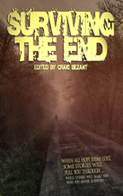
I haven’t had time to read the yarns yet — and it would probably be gauche for me to comment on them, given I’m a contributor — but I have to say, Craig Bezant’s Dark Prints Press has done a beautiful job on Surviving the End: an anthology of post-apocalypse stories. Craig’s linked the yarns with his own narrative. It *feels* great and looks great. Aussie small press are certainly rising to the occasion. The anthology is now available in print and e-version — the Jonathan Maberry story is available only in the print edition. (An aside: Mr Maberry is joining Ramsey Campbell and Caitlín R. Kiernan as author guests at next year’s World Horror Convention in that heart of hearts, New Orleans… oooh.)

Here’s the contributor list:

‘Hiatus’ by Michael Bailey
‘The Long Ago’ by Amanda J Spedding
‘The Last Boat to Eden’ by Jason Nahrung
‘Harvest’ by Ashlee Scheuerman
‘Unwanted’ by Martin Livings
‘The Stuff of Stories’ by Kathryn Hore
‘The Failing Flesh’ by Joseph D’Lacey
‘The Wind Through the Fence’ by Jonathan Maberry (print edition only)
With narrative interludes by the ‘Story Keeper’, Craig Bezant


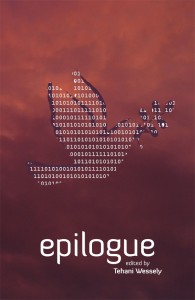
epilogue - tales of hope after the apocalypseNOT to be outdone is Epilogue, Fablecroft’s anthology of hopeful post-apocalyptic stories which arrived TODAY! Editor Tehani Wessely has presented such a pleasant tactile end to the world with its striking cover and intriguing binary code symbolism.

Its contents:

‘Sleeping Beauty’ by Thoraiya Dyer
‘Time and tide’ by Lyn Battersby
‘A Memory Trapped in Light’ by Joanne Anderton
‘Fireflies’ by Steve Cameron
‘The Fletcher Test’ by Dirk Flinthart
‘Ghosts’ by Stephanie Gunn
‘Sleepers’ by Kaia Landelius
‘Solitary’ by Dave Luckett
‘Cold Comfort’ by David McDonald
‘Mornington Ride’ by Jason Nahrung
‘Only the Books Survive’ by Tansy Rayner Roberts
‘The Last Good Town’ by Elizabeth Tan


Epilogue is being given away at Goodreads until 8 June.

Snapshot 2012: Australia’s speculative fiction scene

australian speculative fiction snapshot 2012 logo
The Aussie Spec Fic Snapshot has taken place three times over the past eight years. In 2005, Ben Peek spent a frantic week interviewing 43 people in the Australian spec fic scene, and since then, it’s grown every time, now taking a team of interviewers working together to accomplish! In the lead up to Continuum 8 in Melbourne, I will join Alisa Krasnostein, Kathryn Linge, David McDonald, Helen Merrick, Ian Mond, Alex Pierce, Tansy Rayner Roberts, Tehani Wessely and Sean Wright in blogging interviews conducted over the past couple of weeks. To read the interviews hot off the press, check these blogs below daily from today to 7 June 2012.

As we celebrate the breadth and depth of the Australian spec fic scene, 2012 Snapshot is also a bittersweet time and we take the opportunity to remember two well-loved members of the community who sadly passed away in the past year; Paul Haines and Sara Douglass.

You can find the past three Snapshots at the following links: 2005, 2007 and 2010.

Snapshot 2012: Vale Sara Douglass

australian speculative fiction snapshot 2012 logoAUSTRALIAN writer Sara Warneke, who wrote as Sara Douglass, died in Hobart after a long battle with cancer on 27 September 2011 at age 54. She was one of the vanguard who opened international doors for Australian fantasy writers with her Axis Trilogy (beginning with her debut novel BattleAxe in 1995). Her last publications were the novel The Devil’s Diadem and a collection of short stories, The Hall of Lost Footsteps, which both came out last year. She wrote more than 20 books; three won Aurealis Awards for best fantasy novel.


From the obituary by Sara’s friend and carer Karen Brooks:
She was a very solitary person who lived in her imagination as much as she did in the real world. I think she would be overwhelmed by what people are expressing on various forums now; she would be laughing in her unrestrained and contagious way and shaking her head in bewilderment. Read the full post.


Writer and critic Lucy Sussex, in an obituary in the Sydney Morning Herald:
Middle Ages history informed the imaginary sword and sorcery realms of her novels, and made them credible, lived-in worlds. Read the full article.

Sara, from a 1999 interview:
I work in life as an historian, but not in academia as such, no. I found that life very restrictive where one has to justify every statement one says and add at least 56 footnotes to every page. Writing historical fantasy — or fantasy as a genre is tremendously liberating. I am having such a ball! Read the full interview.


Sara, on her Silence on the Dying blog post:
When it comes to death and dying, we impose a dreadful silence on the dying lest they discomfort the living too greatly. Read the full post.


A Locus review appearing with the 2003 edition of BattleAxe (HarperCollins Voyager):
Douglass has the breadth of vision necessary to create sweeping epics and the storyteller’s gift that makes readers love her.


* * *


THIS tribute is posted here as part of the 2012 Snapshot of Australian Speculative Fiction. We’re blogging interviews from 1-8 June and archiving them at Australian Speculative Fiction in Focus. You can read interviews at:

Roil: full steam ahead!

roil by trent jamiesonRoil is the first book of the The Nightbound Land duology (Angry Robot) by Brisbane author Trent Jamieson, and it’s fabulous — in more than one meaning of the word.

Trent’s always had a way with words — in all fairness, his debut series, The Business of Death — didn’t do him justice. It was a different style, quick and spare to match that corporate clickety-click of deeds done darkly. Roil is sumptuous, taking me back to some of his short fiction I remember fondly (that reading in Toowong cemetery? priceless; ditto Wordpool, ah); from its prose to its world building, you can sink into Roil in near perfect comfort.

In this fantasy world, a vast bank of preying darkness is creeping north to devour the few remaining human cities. A cruelly prgamatic mayor plots how to save his people; an Old Man is unleashed to try to stave off the inevitable, no matter the cost; a young drug-addled man and militant woman are caught up in the plots and violence.

Our hero, David, while addled, is capable, and has some surprises in store as Old Man Cadell takes him, however grudgingly, under his wing. Heroine Margaret is ruled by vengeance and packs a mean ice pistol. The support cast is well drawn but add to the edginess — Trent doesn’t shirk in the dispatch department.

He also handles horror tropes beautifully, whether it be zombies — both Haitian and Romero varieties — or the vampire-like Old Men, dragons, hellhounds and other fabulous members of his imaginative bestiary.

Likewise, the technology melds the best of steampunk, akin to Scott Westerfeld style, with living airships and jet-powered fighter planes, lasers and cool swords, steam trains, magic and mechanisations blended to produce icy weaponry and devastating weapons of destruction.

This is society on the edge of destruction and pragmatism rules. Has their industrial complex triggered this quasi environmental calamity?

Each chapter is introduced by an extract from a text — historical, autobiographical — lending the book a sense of timeliness, contrasting real events with recorded ones. For someone familiar with the Brisbane writing scene, some of the names of places and historians spark a grin, too.

The prose slips from omniscient reportage to intimate point of view, and it’s here on the nitty gritty level that there’s ash in the eye. Not much, but enough to cause the occasional blink. Angry Robot really does need to clean up its act in the proofing department — it’s not doing its writers nor its readers any favours with such shoddy work. Inconsistencies abound, in: line spacing to indicate a change of point of view within the scene; italics for direct thoughts; capitalisation; the spelling of focussed. No text is without its typos, and there are a couple of missing words; but the repeated old brought/bought blunder? haphazard punctuation and run-on sentences…?

This book, thankfully, more than overcomes these typographical quibbles. How fortunate that it’s taken me so long to get to Roil that the second and final book, Night’s Engines, is out now!

Salvage launches on June 8!

salvage by jason nahrungThe time has been confirmed! Salvage will join the Twelfth Planet Press flotilla being celebrated in Melbourne at Continuum at 7pm on Friday 8 June. And the good news: the convention is entry by gold coin donation on Friday. Also on the hot release list: Kaaron Warren’s Through Splintered Walls and Margo Lanagan’s Cracklescape, two of the latest Twelve Planets series by Aussie women writers. Twelfth Planet is a dynamic press with a real commitment to quality: it’s a pleasure to be working with them on Salvage. Come join us: there will be books and there will be … cupcakes!

You can read more about Continuum here!

Meanwhile, I’m down for four panels — Australian settings, vampires, awards, e-publishing — a reading and an ‘in conversation’ with Aussie guest of honour Alison Goodman.

Other launches to keep an eye out for: fellow TPP author Narrelle M Harris’s sequel to The Opposite of Life (I’m launching Walking Shadows, published by Clan Destine Press, on the Friday night — busy and wonderful!), a belated Ishtar party, Felicity Dowker’s collection and an ASIM 10th birthday party bash.

It’s also pleasing to see time set aside to remember our recently lost Paul Haines and Sara Douglass.

If that wasn’t enough, Kelly Link is international guest of honour, and Lucy Sussex gets to practise for her guest turn at next year’s Swancon by being an invited guest this year. It’s gonna be HUGE.

Year’s Best Fantasy and Horror 2011

years best australian fantasy and horror 2011


A gorgeous cover and a splendid table of contests, a real feast of Aussie writers working in fantasy and horror: and me! I am so thrilled that ‘Wraiths’, from Winds of Change, made the fantasy list of Ticonderoga’s Year’s Best Australian Fantasy and Horror 2011 (now available to order), edited by Talie Helene and Liz Grzyb. Well done, all; what splendid company to be keeping — my wife included: here, look for yourself!

Year’s Best Australian Fantasy and Horror 2011 selected stories

  • Peter M Ball, ‘Briar Day’ (Moonlight Tuber)
  • Lee Battersby, ‘Europe After The Rain’ (After the Rain, Fablecroft Press)
  • Deborah Biancotti, ‘Bad Power’ (Bad Power, Twelfth Planet Press)
  • Jenny Blackford, ‘The Head in the Goatskin Bag’ (Kaleidotrope)
  • Simon Brown, ‘Thin Air’ (Dead Red Heart, Ticonderoga Publications)
  • David Conyers and David Kernot, ‘Winds Of Nzambi’ (Midnight Echo #6, AHWA)
  • Stephen Dedman, ‘More Matter, Less Art’ (Midnight Echo #6, AHWA)
  • Sara Douglass and Angela Slatter, ‘The Hall of Lost Footsteps’ (The Hall of Lost Footsteps, Ticonderoga Publications)
  • Felicity Dowker, ‘Berries & Incense’ (More Scary Kisses, Ticonderoga Publications)
  • Terry Dowling, ‘Dark Me, Night You’ (Midnight Echo #5, AHWA)
  • Jason Fischer, ‘Hunting Rufus’ (Midnight Echo #5, AHWA)
  • Christopher Green, ‘Letters Of Love From The Once And Newly Dead’ (Midnight Echo #5, AHWA)
  • Paul Haines, ‘The Past Is A Bridge Best Left Burnt’ (The Last Days of Kali Yuga, Brimstone Press)
  • Lisa L Hannett, ‘Forever, Miss Tapekwa County’ (Bluegrass Symphony, Ticonderoga Publications)
  • Richard Harland, ‘At The Top Of The Stairs’ (Shadows and Tall Trees #2, Undertow Publications)
  • John Harwood, ‘Face To Face’ (Ghosts by Gaslight, HarperCollins)
  • Pete Kempshall, ‘Someone Else To Play With’ (Beauty Has Her Way, Dark Quest Books)
  • Jo Langdon, ‘Heaven’ (After the Rain, Fablecroft Press)
  • Maxine McArthur, ‘The Soul of the Machine’ (Winds of Change, CSFG)
  • Ian McHugh, ‘The Wishwriter’s Wife’ (Daily Science Fiction)
  • Andrew J McKiernan, ‘Love Death’ (Aurealis #45, Chimaera Publications)
  • Kirstyn McDermott, “Frostbitten” (More Scary Kisses, Ticonderoga Publications)
  • Margaret Mahy, “Wolf Night” (The Wilful Eye – Tales From the Tower #1, Allen & Unwin)
  • Anne Mok, ‘Interview with the Jiangshi’ (Dead Red Heart, Ticonderoga Publications)
  • Jason Nahrung, ‘Wraiths’ (Winds of Change, CSFG)
  • Anthony Panegyres, ‘Reading Coffee’ (Overland, OL Society)
  • Tansy Rayner Roberts, ‘The Patrician’ (Love and Romanpunk, Twelfth Planet Press)
  • Angela Rega, ‘Love In the Atacama or the Poetry of Fleas’ (Crossed Genres, CGP)
  • Angela Slatter, ‘The Coffin-Maker’s Daughter’ (A Book of Horrors, Jo Fletcher Books)
  • Lucy Sussex, ‘Thief of Lives” (Thief of Lies, Twelfth Planet Press)
  • Kyla Ward, ‘The Kite’ (The Land of Bad Dreams, P’rea Press)
  • Kaaron Warren, ‘All You Can Do Is Breathe’ (Blood and Other Cravings, Tor)